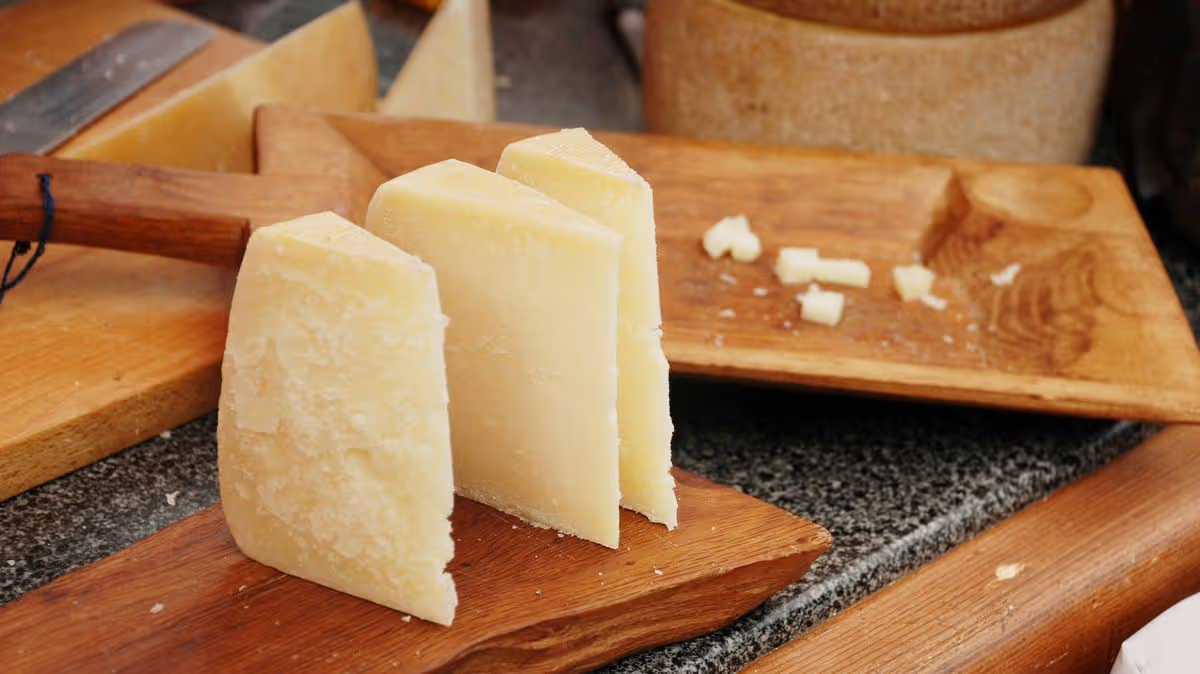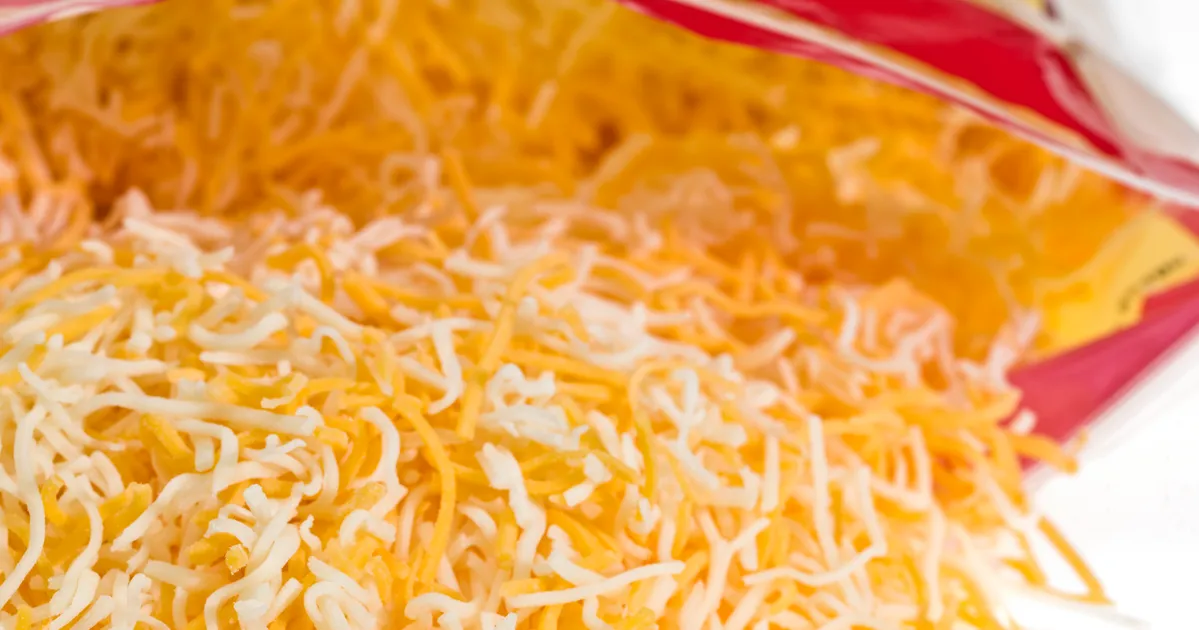
When the fabulousness that is Ina Garten speaks, we all lean forward a little bit to listen. She has great ideas to make everything taste better, like when she’s making her signature grilled cheese sandwiches for lunch with Jeffrey or whipping up mac and cheese for a cozy gathering of culinary cognoscenti.When her recipe calls for cheese, she never — never!— uses a bag of the pre-shredded stuff. For the Barefoot Contessa, only cheese grated on the wide holes of her vintage box grater will do.That’s because, when looking for a seriously gooey melt and a yards-long pull, the “extra” ingredients that are added to pre-shredded cheese will seriously mess up a dish’s more molten qualities. Wait, there’s something in there besides cheese? Yes, there is something else besides a dairy product in that bag of shredded cheese, and while it won’t hurt you, it won’t do your sauces any favors, either.Juanmonino / GettyPre-shredded cheese often contains anti-caking agents like cellulose, corn starch, tapioca starch or potato starch.Michael H. Tunick, the author of “The Science of Cheese” and an adjunct associate clinical professor of food science at Drexel University, explains it like this: “Pre-shredded cheese contains anti-caking agents like cellulose and corn starch, tapioca starch or potato starch. While these additions keep the shred from clumping in the bag, they prevent the cheese from fully melting under heat, and they can make the final dish have a somewhat chalky texture.” While the addition of starch might seem reasonable, you’re probably wondering what “cellulose” is. It’s a purified plant fiber that comes from wood pulp, cotton, corn, soybeans and other vegetable byproducts. So if you’ve ever heard a rumor about wood content in bags of cheese, it’s true in one sense, but the wood is highly processed into a fine powder that becomes an anti-caking agent.Those agents are what keep you from finding a sodden lump of cheese in the bottom of the pre-shredded bag, said Grace Lewis, assistant professor at the University of Wisconsin - River Falls, Dairy Innovation Hub. “I can confidently say that if anti-caking agents were not used, shredded and pre-packaged products would be far less convenient. Without the application of those agents, moisture migration causes cheese shreds to clump during storage, making them difficult to separate and use.”The very factor that keeps those shredded strands separated is what can cause issues, Lewis said. “Imagine you’re trying to melt those shreds into a smooth, delicious and continuous mass. Well, you just added something to hinder that, so you will inevitably get a decrease in meltability. That’s why I would say the more flow you want, the less likely you would be to pick a pre-shredded variety with anti-caking agents.”How will those added ingredients make a difference in your recipe? Adding starches and cellulose to shredded cheese can yuck a lot of the yum that’s the secret to smooth, creamy sauces (like Ina’s mac and cheese) or simple dishes that are mostly cheese (like her grilled cheese sandwiches). Experts say it’s a poor choice for melted dishes. Especially if you’re making a dish with just a few ingredients, where cheese is the star, you may want to reconsider using cheese that’s already shredded. “When fewer ingredients are used in the recipe, the shredded product’s drawbacks are more noticeable,” Tunick said.Kaya Freiman is the brand manager of Cowgirl Creamery, an artisan and organic cheese company based in Petaluma, California. She explained the chemistry of what’s happening when pre-shreds hit the heat. “Those anti-caking agents don’t prevent cheese from melting entirely, but they can ever-so-slightly interfere with how smoothly the cheese flows when heated,” she said. “Instead of forming a completely uniform melted layer, the cheese may melt a bit more slowly or produce a slightly less creamy texture.” That lack of melt makes a difference in the final dish, Freiman said. “Freshly shredded cheese tends to melt more smoothly and create a creamier texture. People may notice the difference in dishes where cheese is the star ingredient and melt quality is critical, like fondue or pizza with a high cheese load.” Food experts say that while there are some pre-shredded cheeses that may get close to the meltiness of home-grated cheese, they don’t reach the same level, no matter what they cost. “The meltability comes down to the thickness of the shred and the anti-caking agents, not the price point alone,” said registered dietitian Toby Amidor, author of the “Healthy Living High Protein Cookbook.” “If you’re really looking for ultimate creaminess and melt, then shred it from a block of cheese. You can use a food processor to shred it for increased convenience.”Banusevim / Getty ImagesThe anti-caking agents in pre-shredded cheese will prevent your macaroni and cheese from being its creamiest.When to use which product?Going ahead and using pre-shredded cheese is fine when it’s used as toppers for tacos, burgers, casseroles and omelets, Freiman said, noting its significant time-saving benefits. “It’s one of the most successful convenience products in the dairy aisle for a reason,” she said. Matthew M. Britt is an associate professor at the College of Food Innovation & Technology (CFIT) at Johnson & Wales University. He’s offered an easy rule of thumb to follow: “If you want a sauce, grate the cheese yourself, but if you’re using it as a topping, pre-shredded is OK. That said, if possible, shredding yourself should be the goal.” What to look for if you really want pre-shredded cheeseA bit of label reading might be helpful if you want to stick with the pre-shredded option, Britt said: “If you do your research, you can find which brands use fewer anti-caking agents or contain higher moisture content. Brands with thicker shreds, like Tillamook, are better, since that greater surface area is a benefit.”Freiman offered some other shopping help. “In general, higher-quality shredded cheeses start with higher-quality natural cheese, so look for products with shorter ingredient lists and cheeses that identify the specific variety,” she said. She also noted that freshness is another factor: “A freshly opened package of shredded cheese often performs better than a bag that has spent weeks in a refrigerator drawer after opening.”She also noted that a premium shredded cheese made from high-quality natural cheese can outperform a lower-quality block cheese. “Consumers often focus exclusively on format, but the quality of the cheese itself matters more than whether it was shredded in a factory or at home,” she said.Less processing, better meltThese experts won’t judge you harshly if you resort to a pre-shred in a pinch. But they want you to be prepared for less-than-ideal outcomes in your meltiest recipes. And they caution that the addition of one more highly processed ingredient might be something you want to stay away from. “If you’re passionate about cooking and cooking well, then minimizing the number of processed foods should be a goal at every meal,” Britt said. “Health benefits aside, cooking from scratch, which in this case means grating your own cheese from a block, in my opinion, makes the cook connect more with the dish.” “Of course, there are only so many hours in a day and sometimes, conveniences are required. But if you can, grate, because if you want the best result and melt, grating cheese yourself is the only way to go,” he added.
There's A Reason You Shouldn't Buy Those Bags Of Pre-Shredded Cheese – And It's Not What You Think
What’s added to bags of pre-shredded cheese explains why your mac and cheese tastes grainy.
1,216 words~6 min read