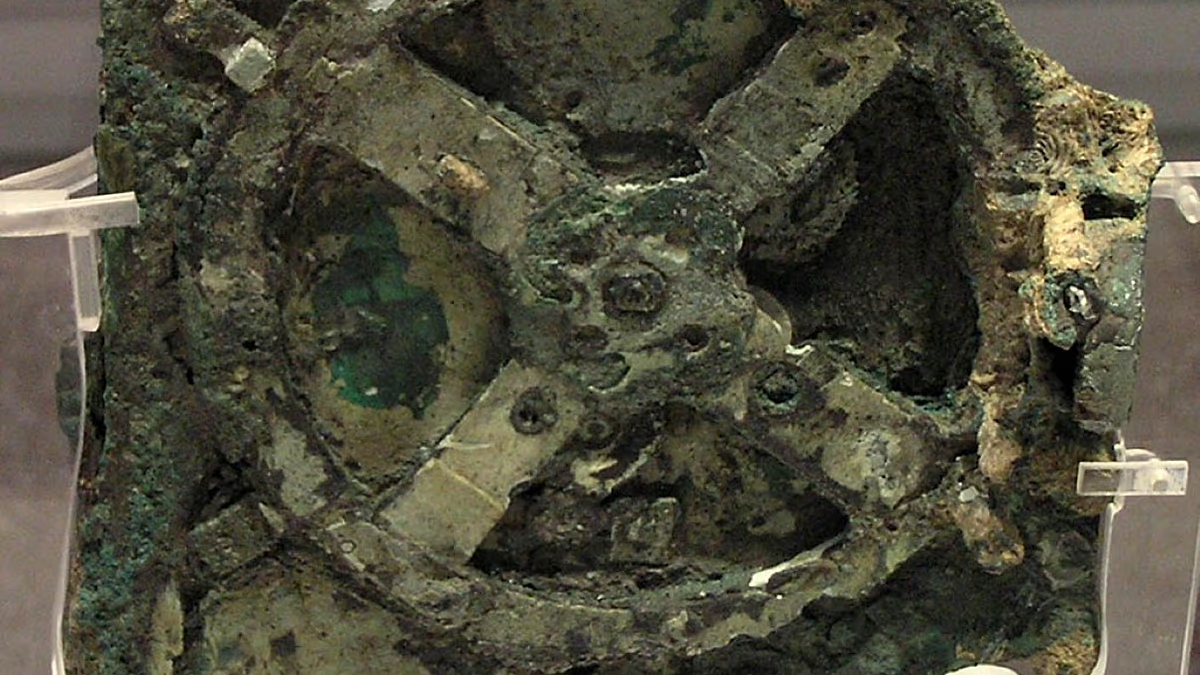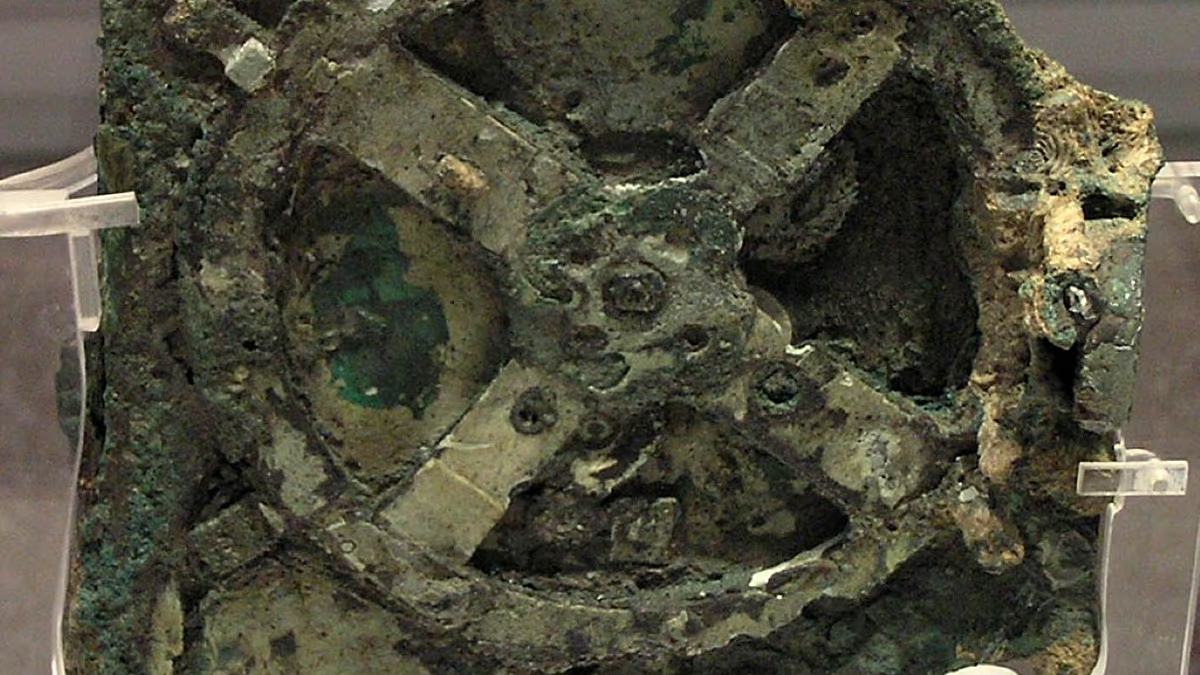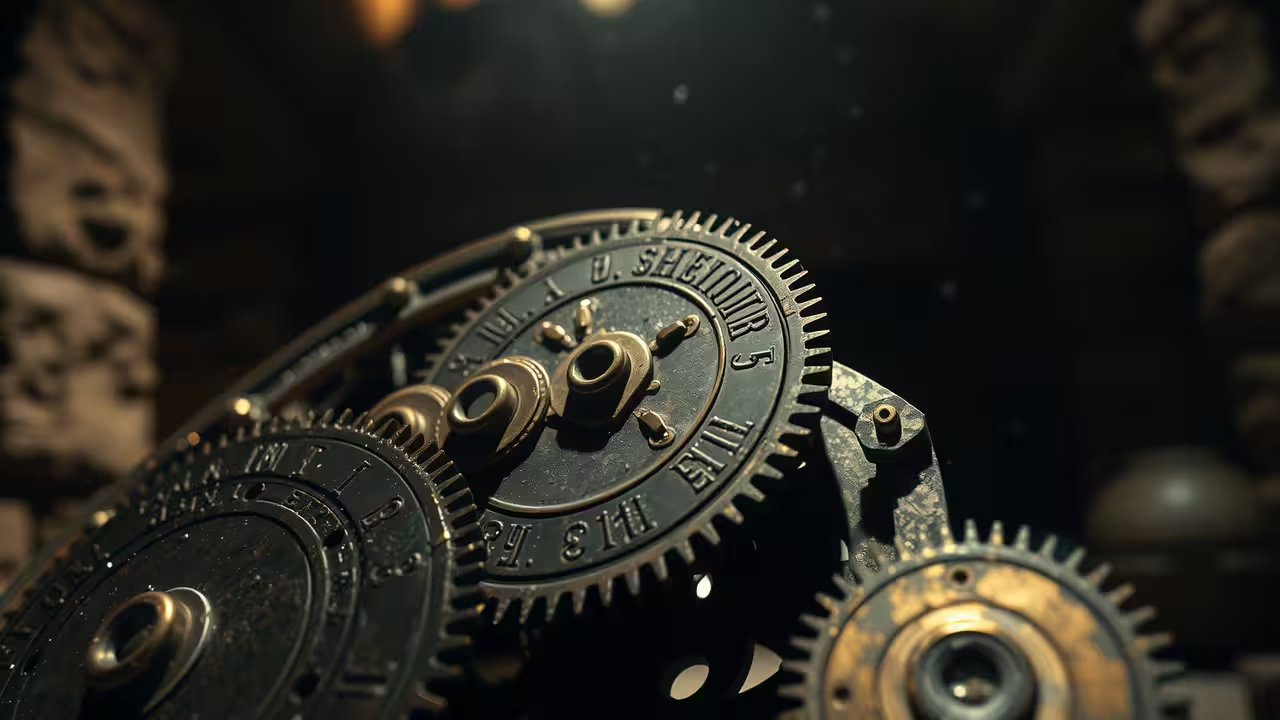
In 1901, a group of sponge divers searching the waters off the Greek island of Antikythera stumbled upon the wreck of an old Roman cargo ship. Along with statues, glassware and pottery, they pulled up a small, badly corroded lump of bronze and wood that no one could immediately explain. That lump would go on to become one of the most studied objects in the history of science, a geared mechanism built somewhere between 150 and 100 BCE that could track the movements of the sun and moon and even predict eclipses. Today it is widely regarded as the oldest known analogue computer, a device whose complexity would not be matched again for well over a thousand years.Inside the mechanism found in the Antikythera shipwreckThe device now sits in the National Archaeological Museum of Athens, and its construction is generally dated to the late second or early first century BCE, close to the time the ship carrying it sank. According to the study Decoding the ancient Greek astronomical calculator known as the Antikythera Mechanism, the mechanism was built using more than thirty hand-cut bronze gears designed to model the cycles of the moon, the sun and the five planets known at the time, relying on a clever gearing system to account for the fact that these bodies do not move across the sky at a constant speed. On the front face, a small sphere painted half white and half black rotated to show the current phase of the moon, while the back carried several dials tracking longer astronomical cycles used to time events years in advance.How eclipse prediction was built into an ancient Greek calendarA follow-up study titled Calendars with Olympiad display and eclipse prediction on the Antikythera Mechanism found that the back of the device combined a nineteen-year lunar calendar with a longer eclipse cycle, alongside a separate dial recording the four-year calendar of pan-Hellenic games that included the Olympics. This meant the machine was not built purely for astronomy but blended civic timekeeping with celestial prediction, allowing its user to know both when an eclipse was likely and which game year was currently underway, all from a single handheld object roughly the size of a large book.Why it took decades of X-rays to understand the gearsMaking sense of the device took the better part of a century. Physicist Derek de Solla Price began examining the eighty two surviving fragments in 1959, and later worked with nuclear physicist Charalampos Karakalos to capture the first X-ray images of the mechanism's interior, revealing gear wheels hidden inside the corroded metal for the first time. Building on this work decades later, a more recent reconstruction published in A model of the cosmos in the ancient Greek Antikythera Mechanism used modern microfocus X-ray computed tomography to read fine inscriptions describing the sun, moon, stars and all five known planets, allowing researchers to propose a far more complete model of how the front display may have worked as a miniature version of the ancient Greek cosmos.Where the mechanism may have come fromIts exact origin remains debated. One widely referenced idea, developed through the long-running Antikythera Mechanism Research Project, points to a possible connection with Corinthian colonies, particularly Syracuse, which would place the device within the same intellectual tradition as Archimedes, though no inscription has ever confirmed a single named creator. What is clear from the surviving fragments is the level of craftsmanship involved, with some gears carrying well over a hundred teeth cut with a precision that surprised even the researchers studying it under X-ray imaging.Did the ancient computer actually work as intendedNot every question about the mechanism has been settled. Researchers who have built working simulations based on the recovered gear ratios have noted that certain planetary positions could drift noticeably out of alignment over time, an issue traced not to sloppy construction but to the genuine limits of Greek astronomical knowledge in that period, since the underlying cycles used were themselves imperfect approximations of real planetary motion. Some researchers have also raised the possibility that even small manufacturing imperfections could have caused the delicate gear train to jam or slip during use, leaving open the debate over whether the device functioned smoothly as a working instrument or proved difficult to operate in practice.Why the device still fascinates researchers todayInterest in the mechanism has only grown rather than faded. Full-scale working replicas have been built at various institutions for teaching purposes, letting modern students of physics and engineering interact with a functioning version of the ancient design. What continues to draw researchers back is the mechanism's blend of Babylonian astronomical data, Greek mathematics and physical engineering into a single object, offering a rare, tangible window into how precisely the ancient world had already begun to measure and predict the movements of the sky more than two thousand years before the modern computer existed.
The 2,000-year-old ancient Greek machine that could predict eclipses and track the movements of the sky
In 1901, a group of sponge divers searching the waters off the Greek island of Antikythera stumbled upon the wreck of an old Roman cargo ship. Along with statues, glassware and pottery, they pulled up a small, badly corroded lump of bronze and wood that no one could immediately explain.
810 words~4 min read