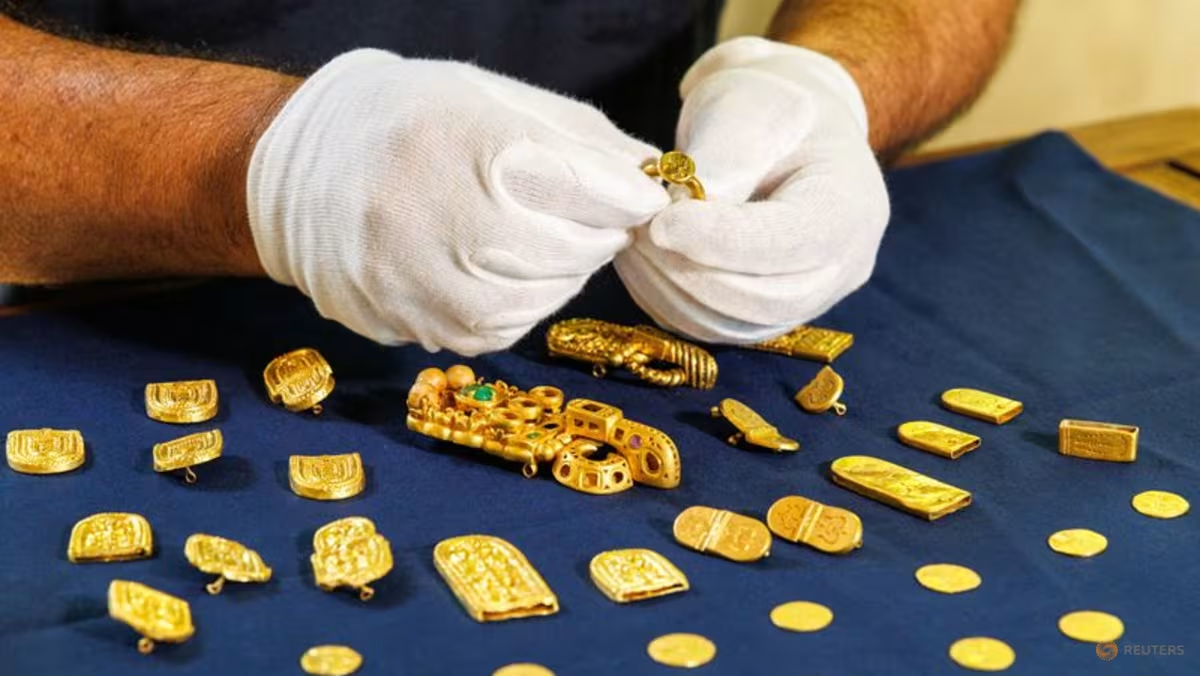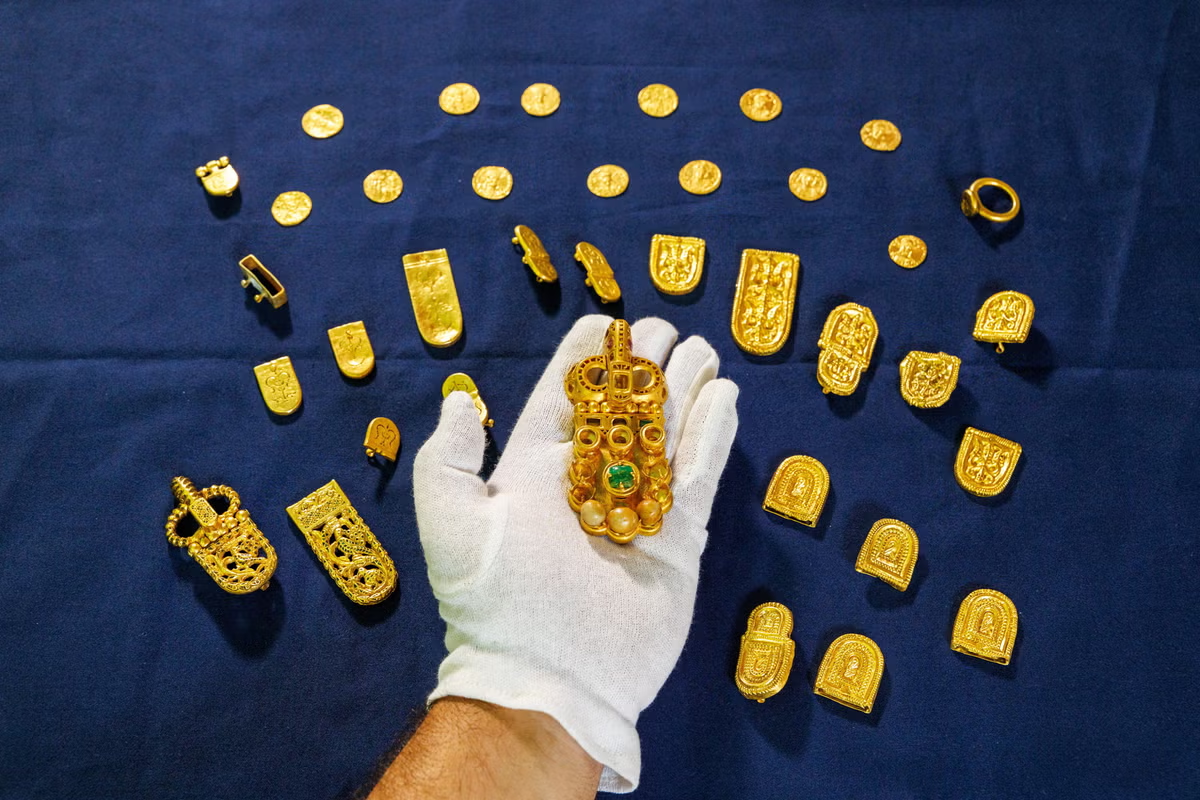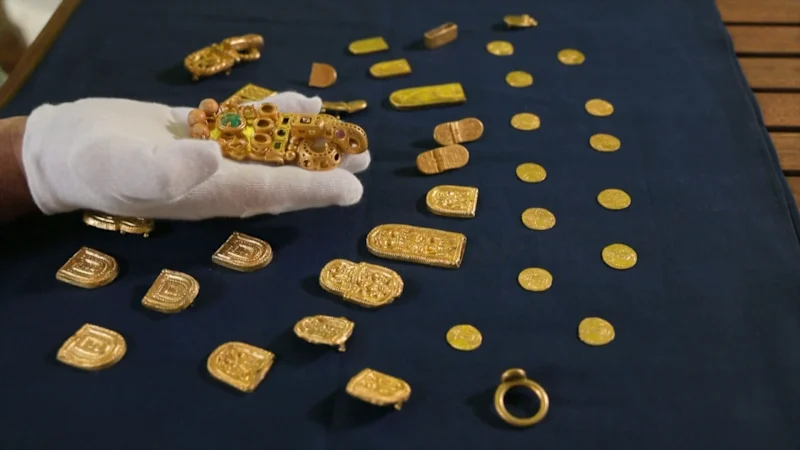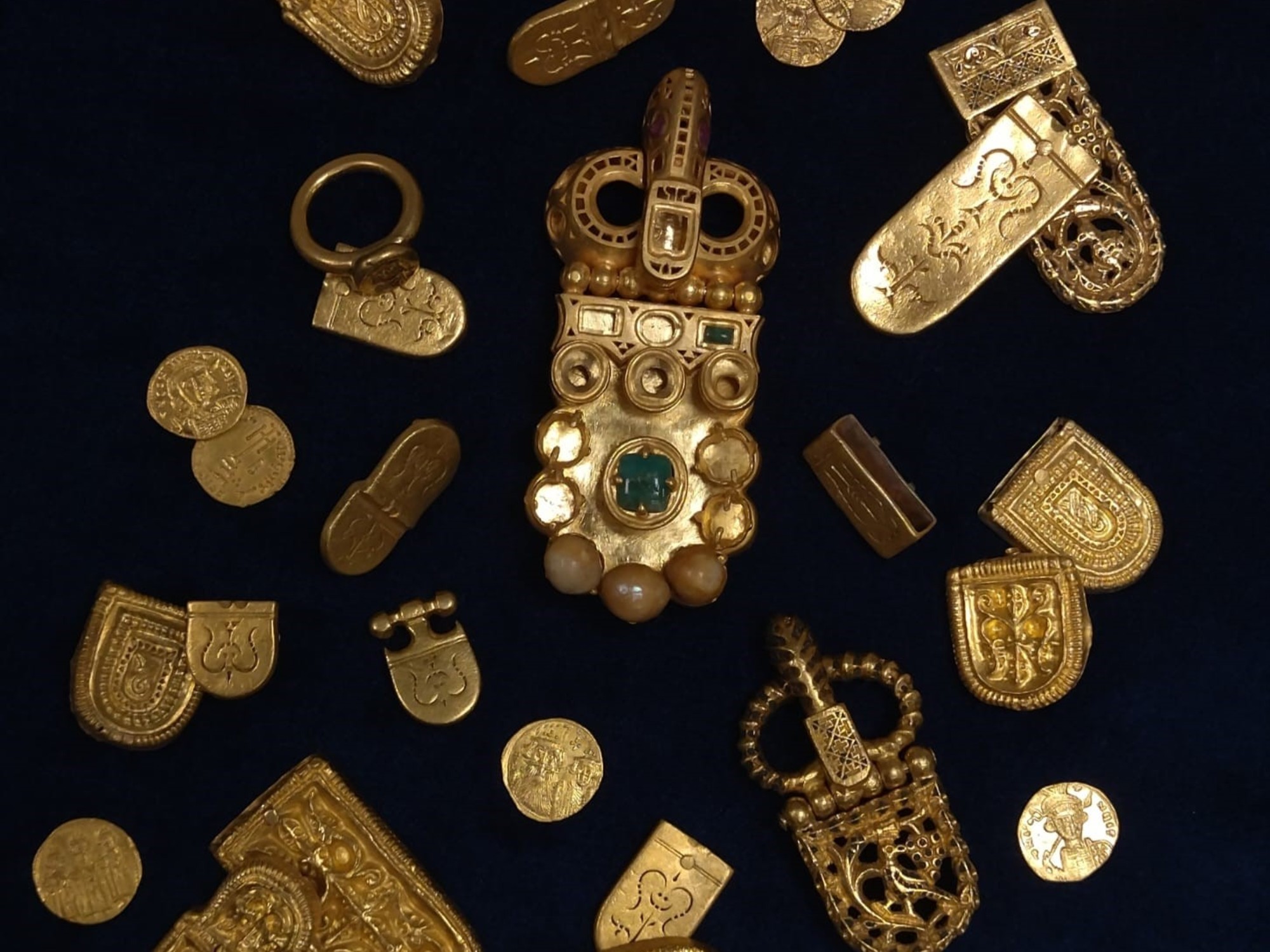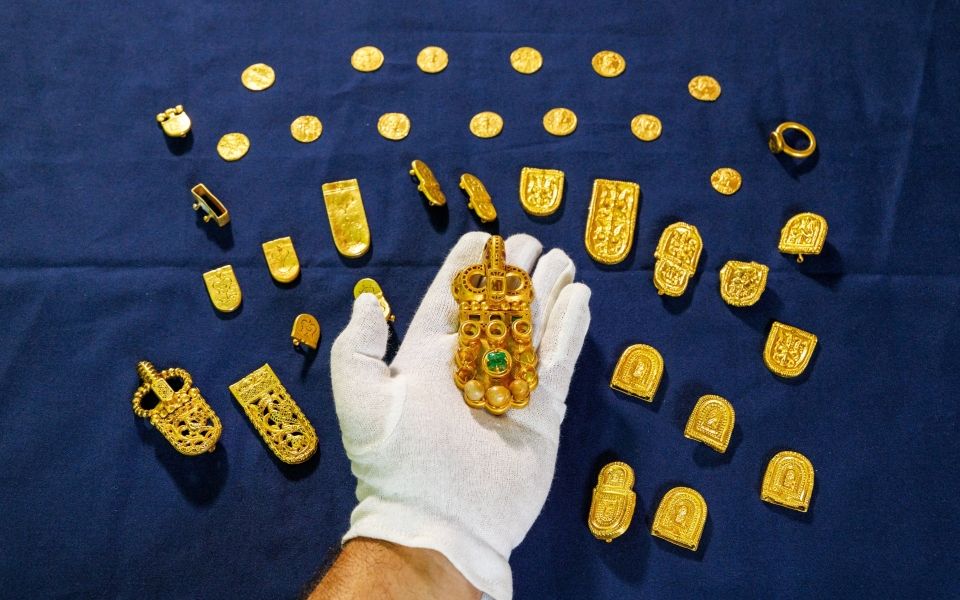
Igor Miholjek, head of research, Croatian Conservation Institute, Department of Underwater Archaeology, shows the gold found in a Byzantium shipwreck near Polace on the island of Mljet, Croatia, Tuesday. [Antonio Bronic/Reuters]
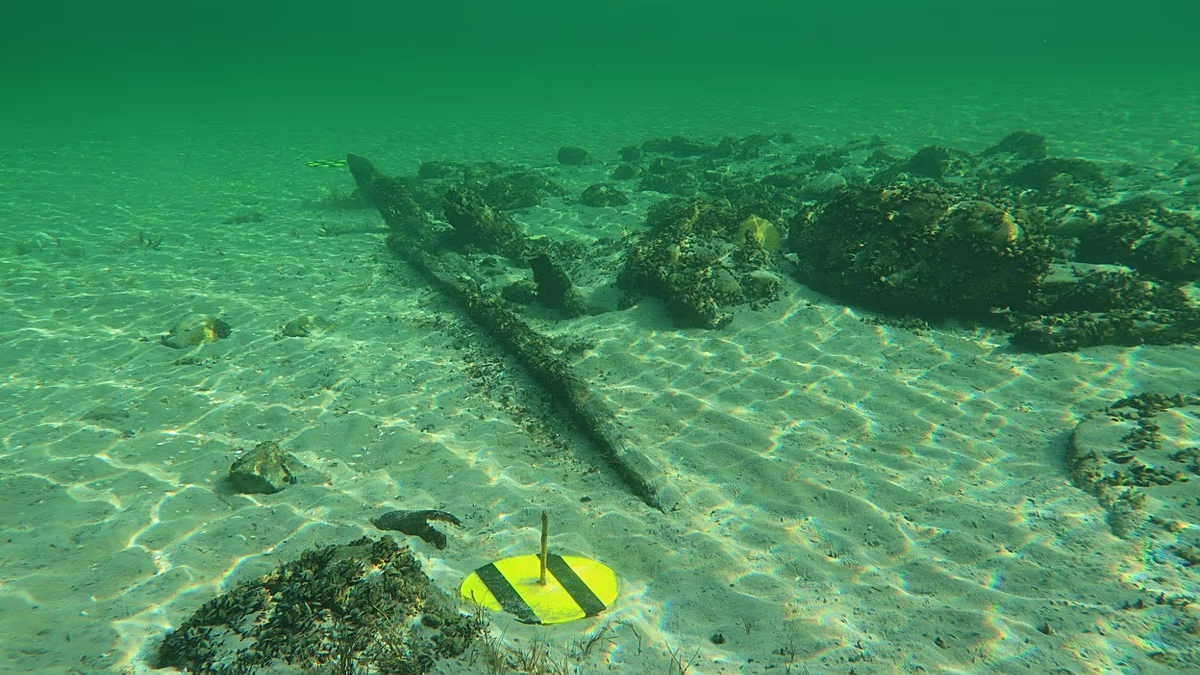
A Byzantine-era ship discovered more than a decade ago on the seabed off Croatia’s southern coast was probably carrying a high-ranking person and his entourage, judging by the gold jewelry found in the wreckage, according to archaeologists.
Announcing for the first time on Thursday the results of their years-long underwater excavation, they said the shipwreck could be dated to the 7th or 8th century and that the artefacts on board indicated that this was no ordinary merchant vessel.
Igor Miholjek, head of research, Croatian Conservation Institute, Department of Underwater Archaeology, shows the golden signet ring, which they believe has the image of Emperor Constantine the Fourth, found in a Byzantium shipwreck near Polace on the island of Mljet, Croatia, Tuesday. [Antonio Bronic/Reuters]
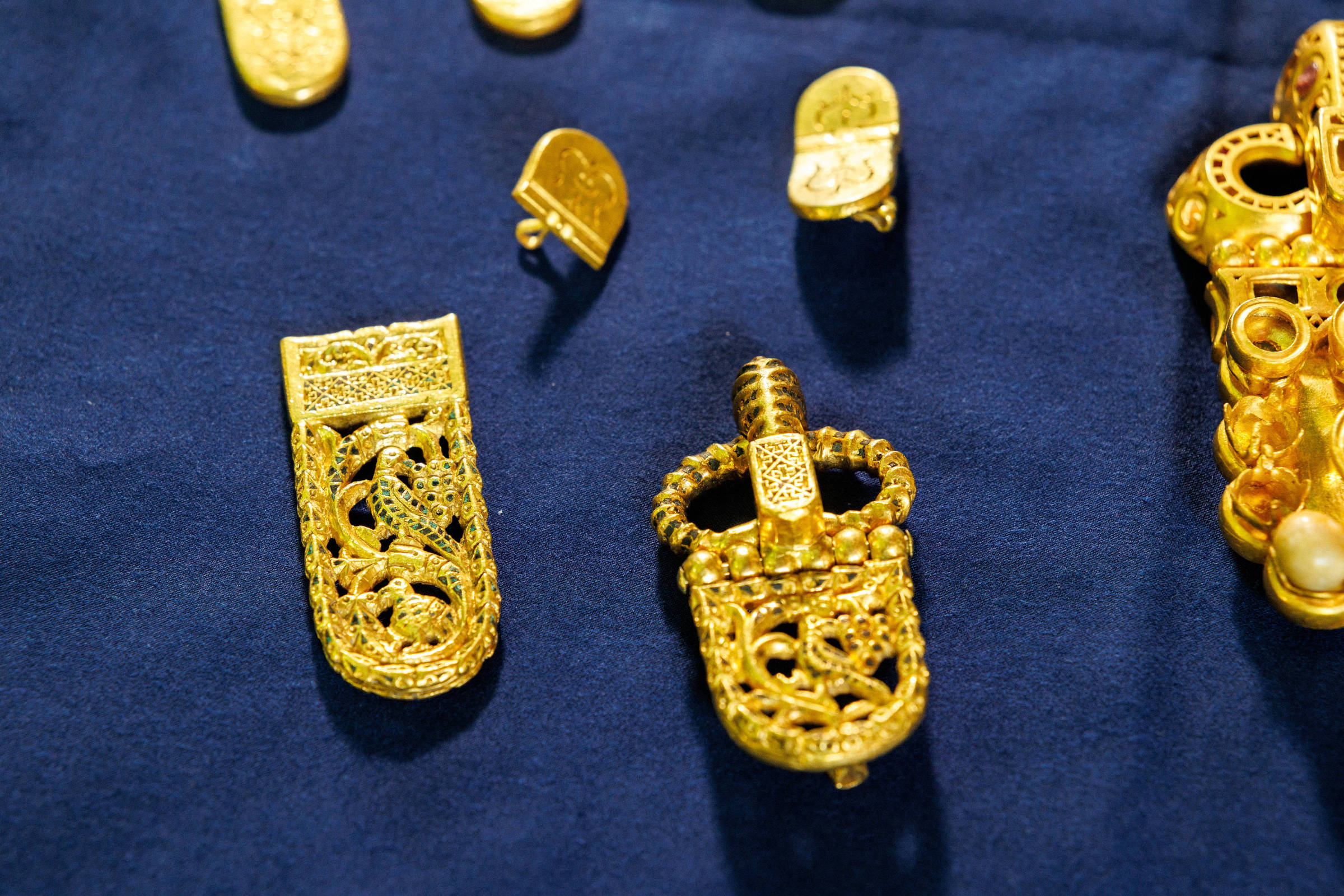
These included gold coins dating to the Heraclius dynasty of four emperors, buckles decorated with rubies, emeralds and pearls, and a golden signet ring with a picture of the emperor “that certainly wouldn’t be worn by just anyone,” Pavle Dugonjic, head of the Department of Underwater Archaeology at the Croatian Conservation Institute, told Reuters.