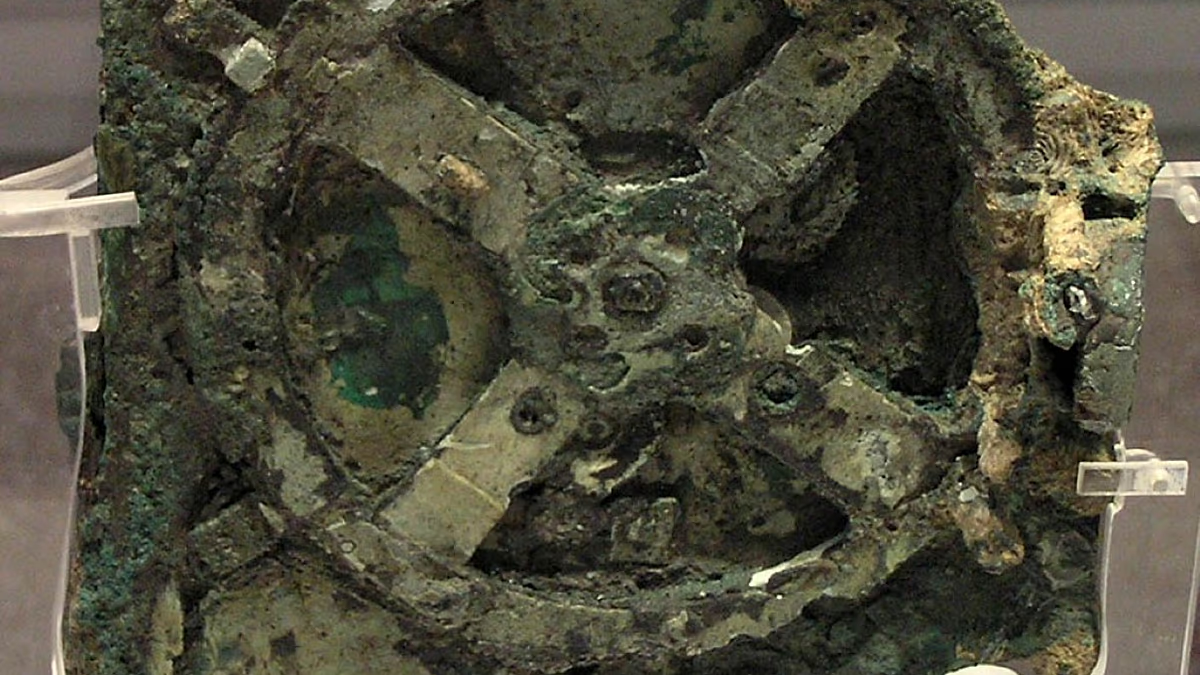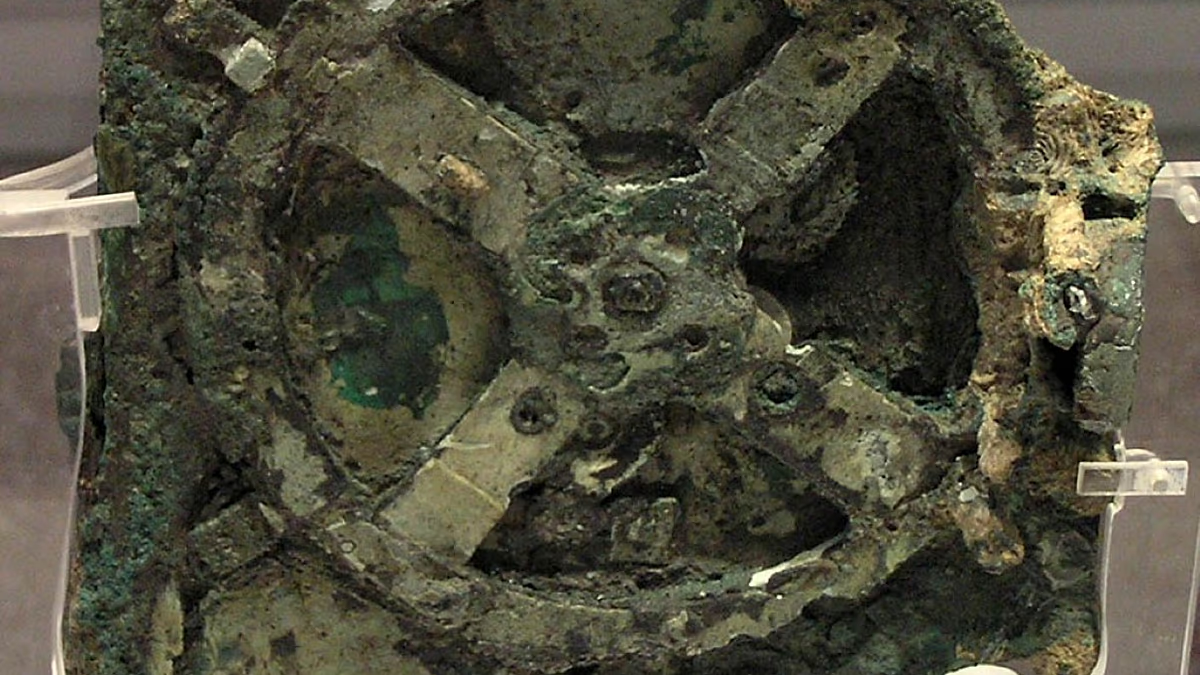
In 1901, a group of sponge divers came across, off the Greek island of Antikythera, the remains of a Roman shipwreck. Amid amphorae and statues they found a corroded block of bronze and wood which, for years, no one quite knew how to interpret. In time it would become one of the most closely studied objects in archaeology: a geared mechanism dated to between 150 and 100 BCE, designed to calculate astronomical positions and predict eclipses.
A shipwreck hiding more than it seemed
The artefact is now kept in the National Archaeological Museum of Athens, and its dating places its manufacture in the late 2nd or early 1st century BCE, coinciding with the sinking of the ship that was carrying it.
One of the most widely cited hypotheses, set out in the Antikythera Mechanism Research Project, points to an origin linked to the Corinthian colonies, possibly Syracuse, and therefore to the school of Archimedes, although its exact authorship remains unconfirmed.
The device incorporated more than 30 hand-operated bronze gears that modelled the cycles of the Moon, the Sun and the known planets, and used an epicyclic gearing system, similar to a modern differential, to compensate for orbital irregularities.