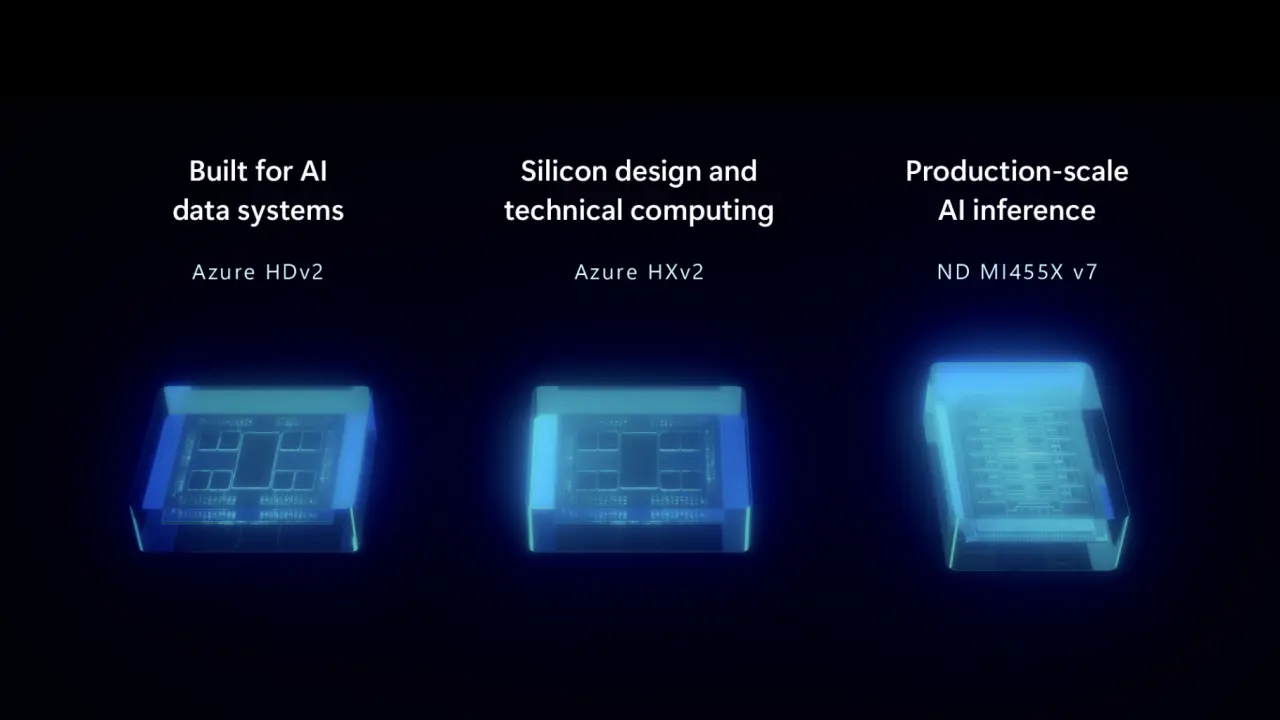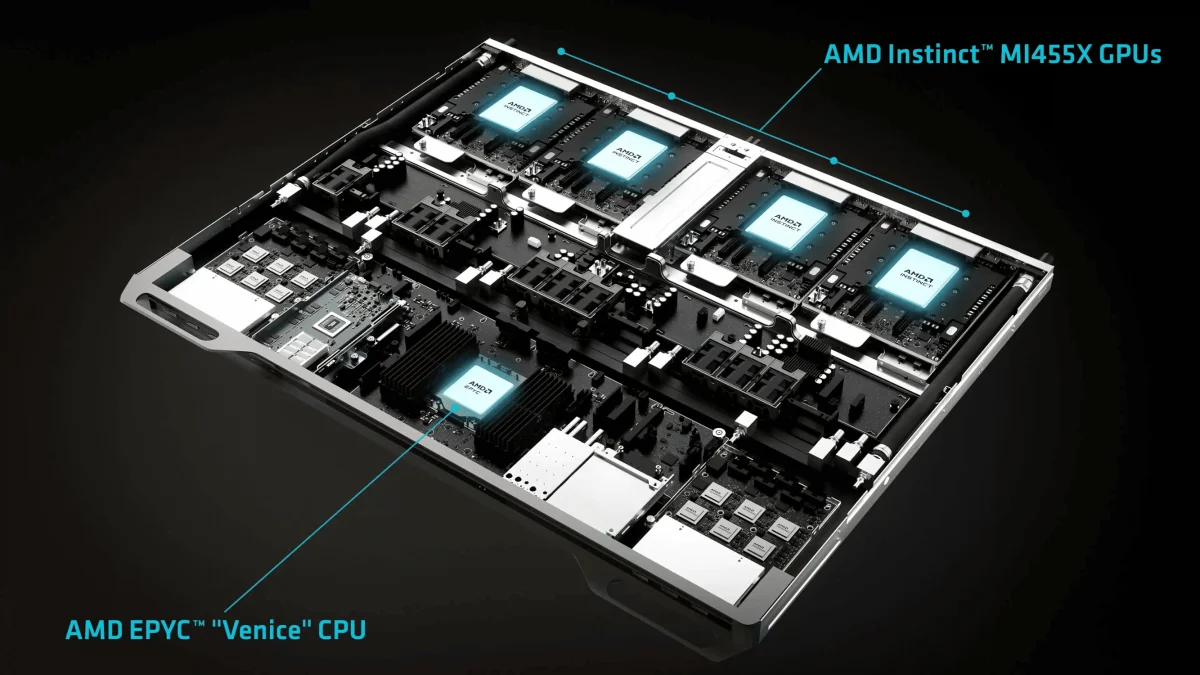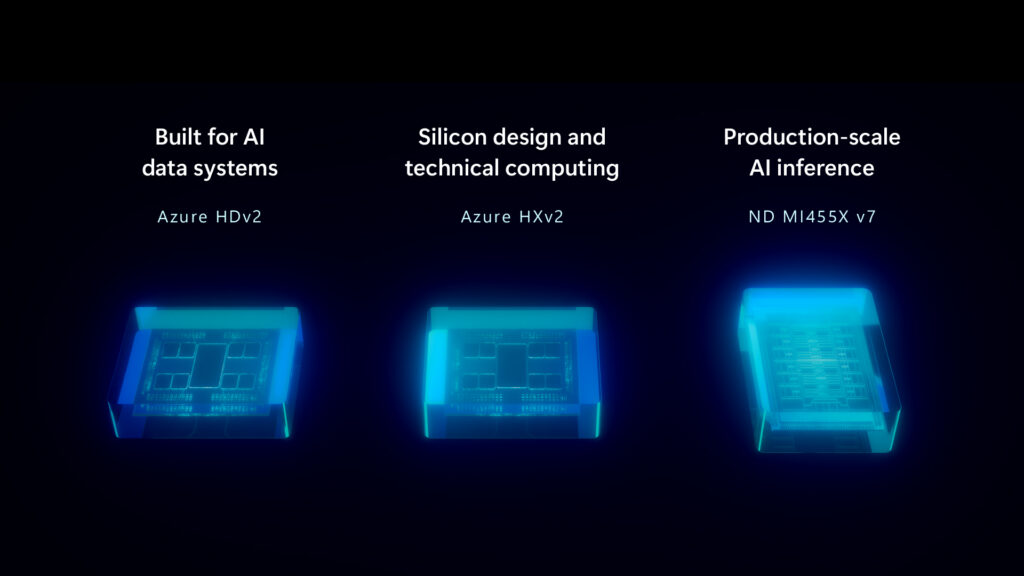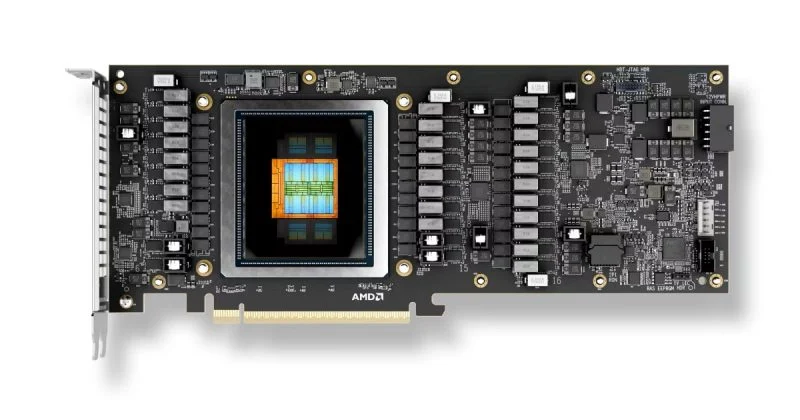
Microsoft is going all-in on AMD’s next-generation silicon, committing to deploy the chipmaker’s upcoming Instinct MI455X GPUs and 6th-generation EPYC “Venice” processors across its Azure cloud infrastructure.
AMD’s EPYC Venice chips are expected to pack up to 256 cores, built on the company’s Zen 6 architecture. Microsoft has already been running AMD Instinct hardware, including the MI300X, for GPT-4 inference inside Azure. In English: when you ask ChatGPT a question, there’s a non-trivial chance an AMD chip is doing the thinking.
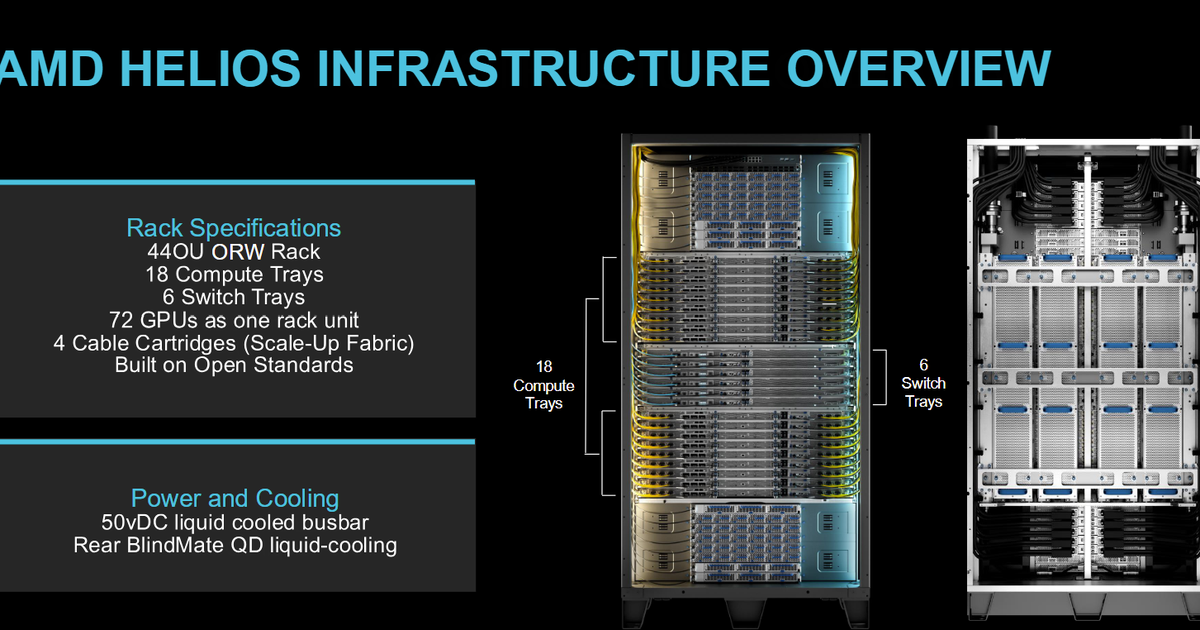
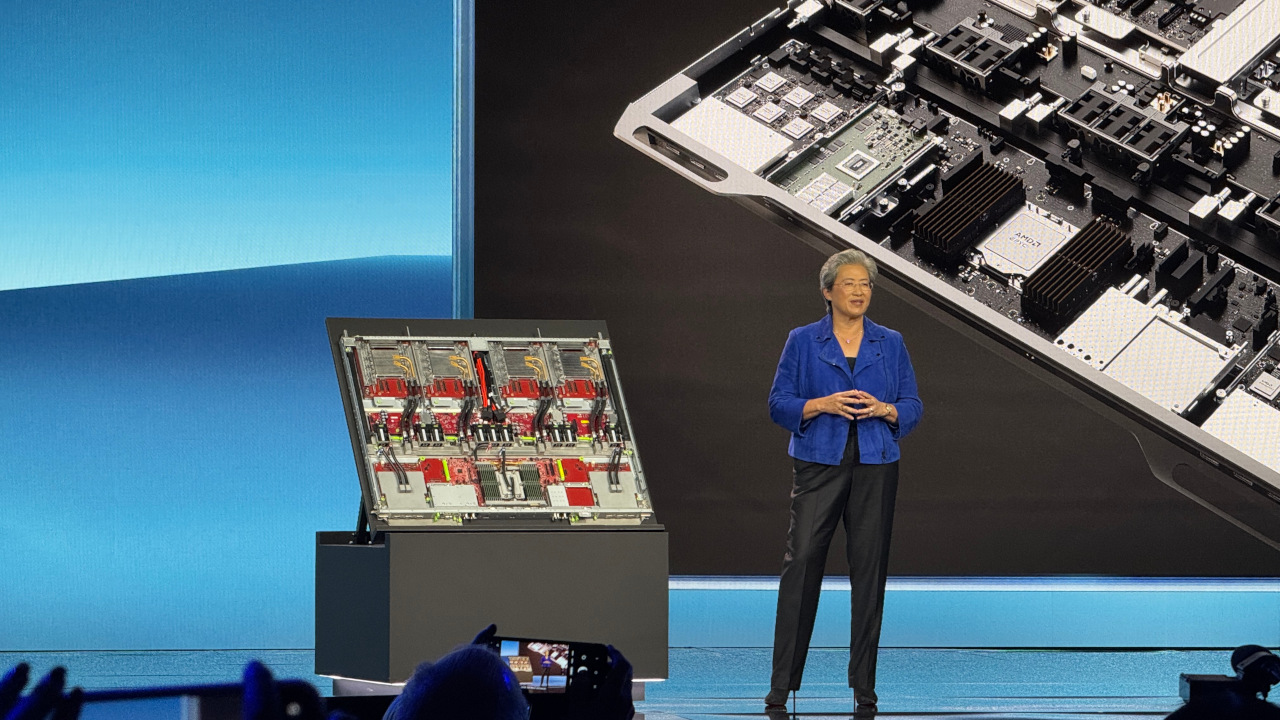
The new deployment builds on AMD’s Helios rack-scale platform, which bundles MI455X GPUs, Venice CPUs, and Pensando Vulcano network interface cards into an integrated system. No specific volumes or deployment dates have been publicly disclosed.
EPYC deployments across cloud providers have climbed 50% year-over-year. CES 2026, Computex, and Microsoft’s own Build 2026 conference all featured AMD showcasing its roadmap and its collaboration with Microsoft. A recurring theme at these events has been AMD’s open-source ROCm software stack. Microsoft’s Azure VM support tailored specifically for AMD silicon gives developers a reason to actually try it.
There’s a second-order effect worth considering. The expansion of AI compute capacity eventually makes AI services cheaper and more accessible. That has downstream implications for crypto projects building AI-adjacent products, from decentralized compute networks like Render and Akash to AI-focused tokens that promise to democratize access to machine learning. If centralized cloud providers keep scaling their AI offerings aggressively, the value proposition for decentralized alternatives gets harder to articulate.