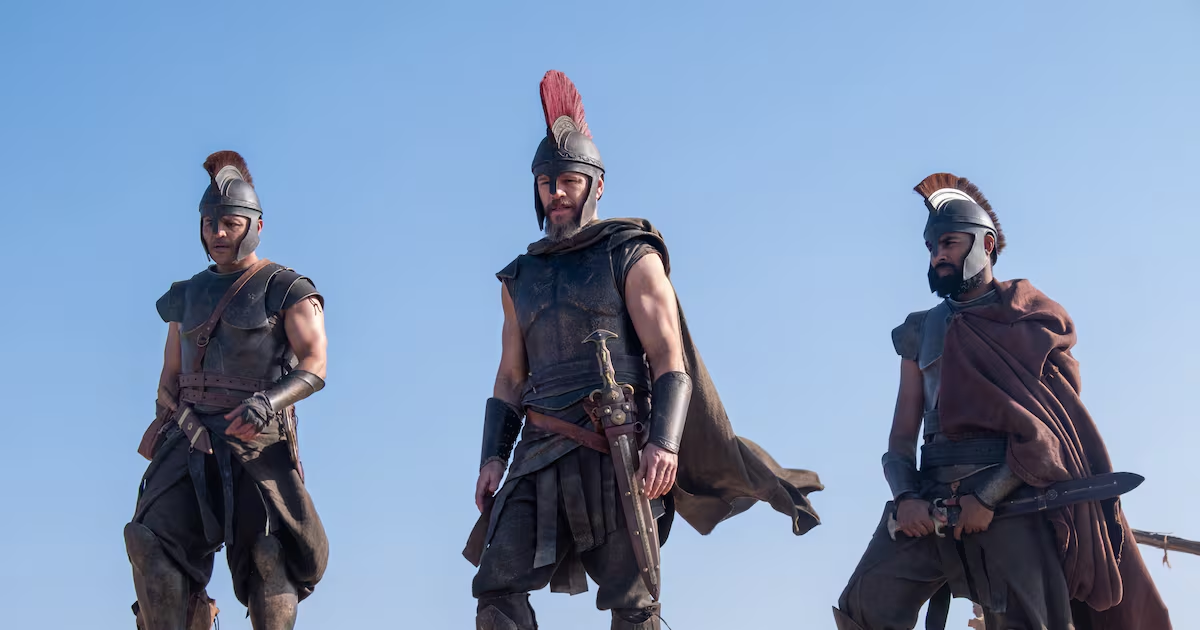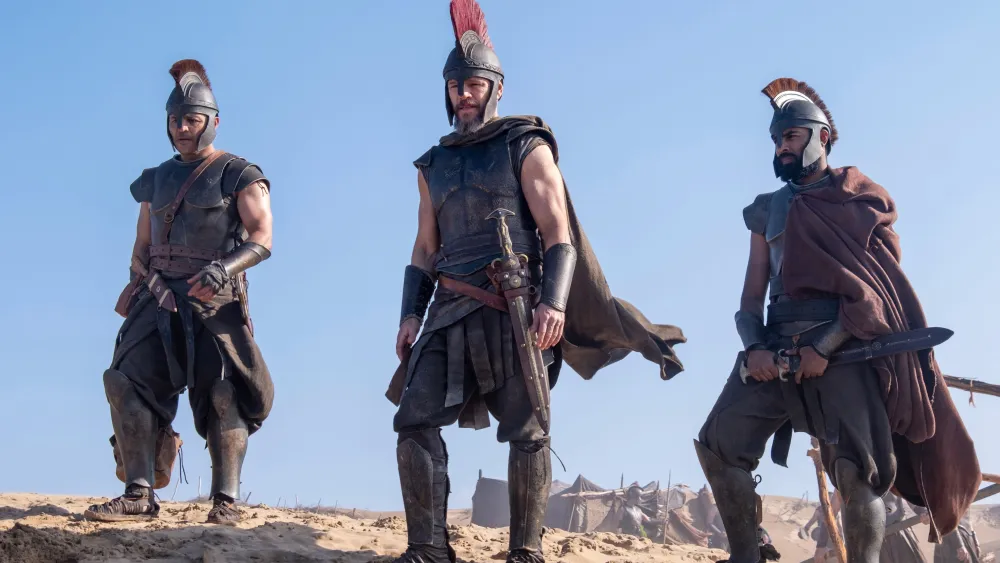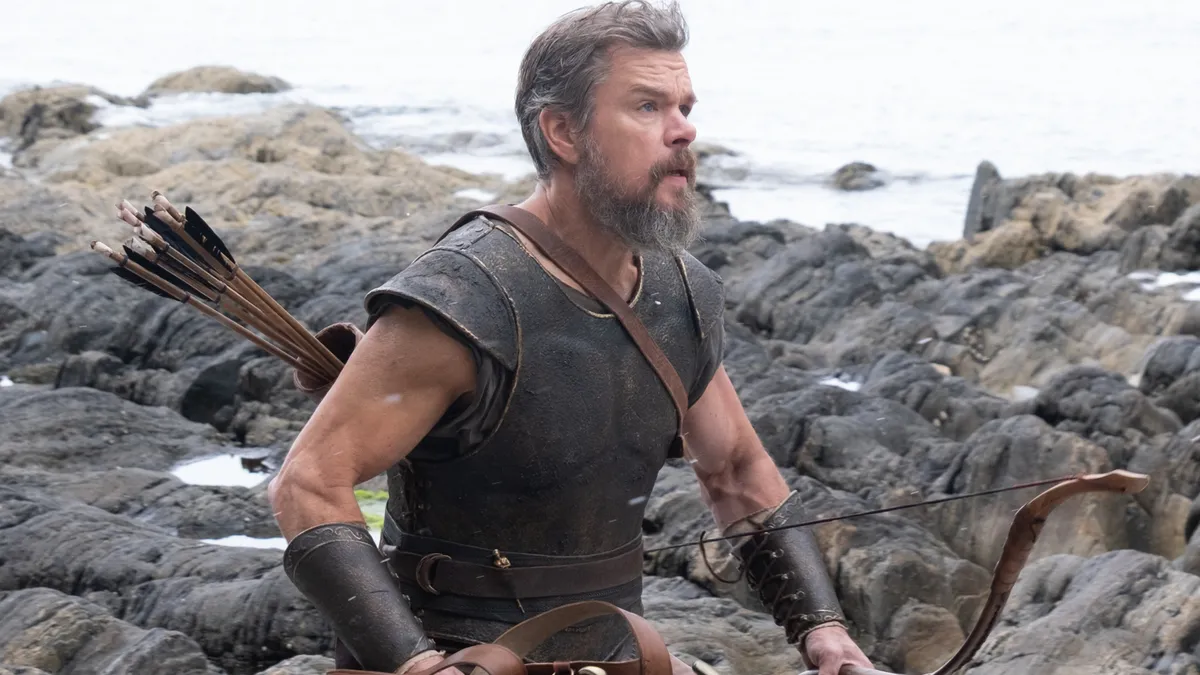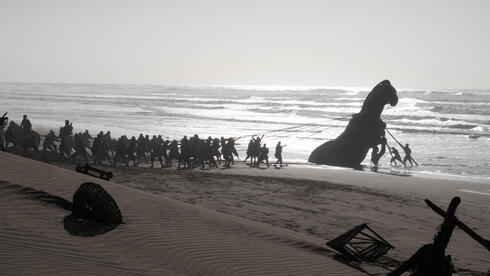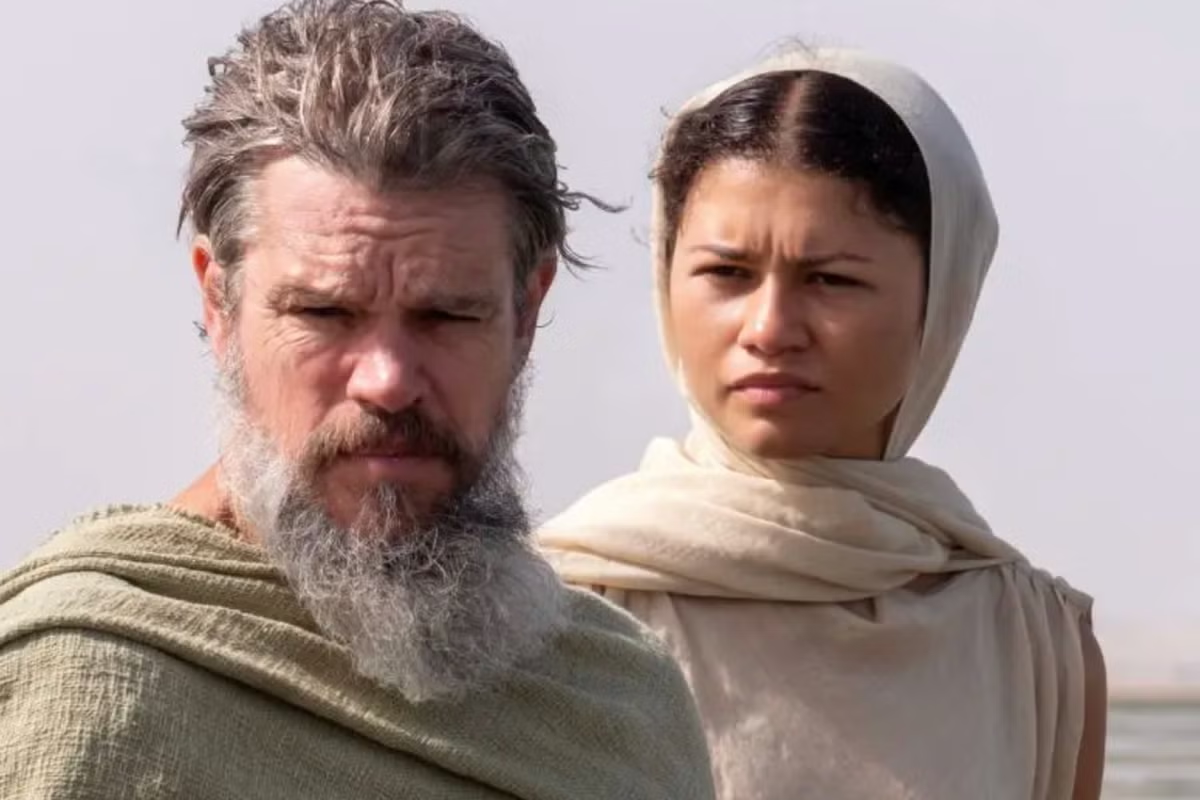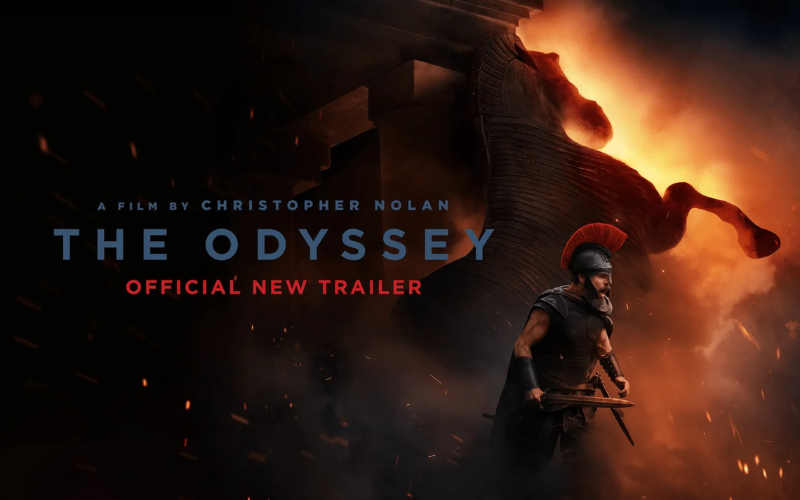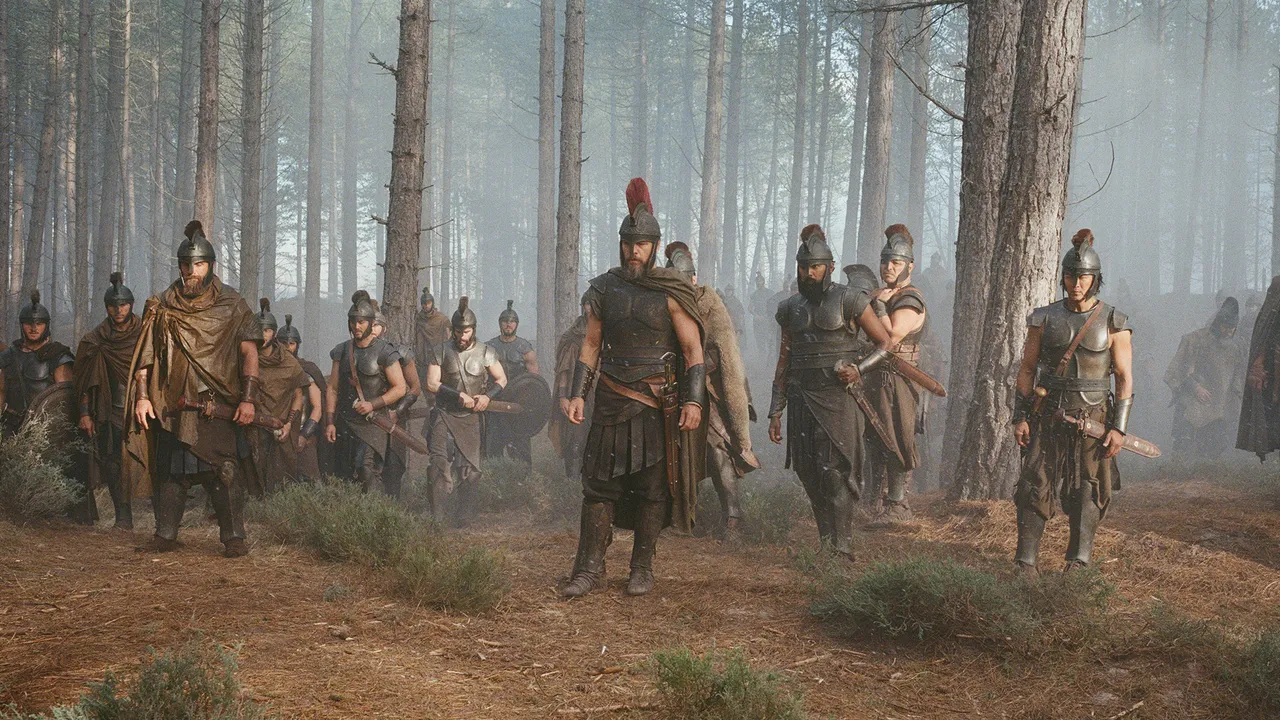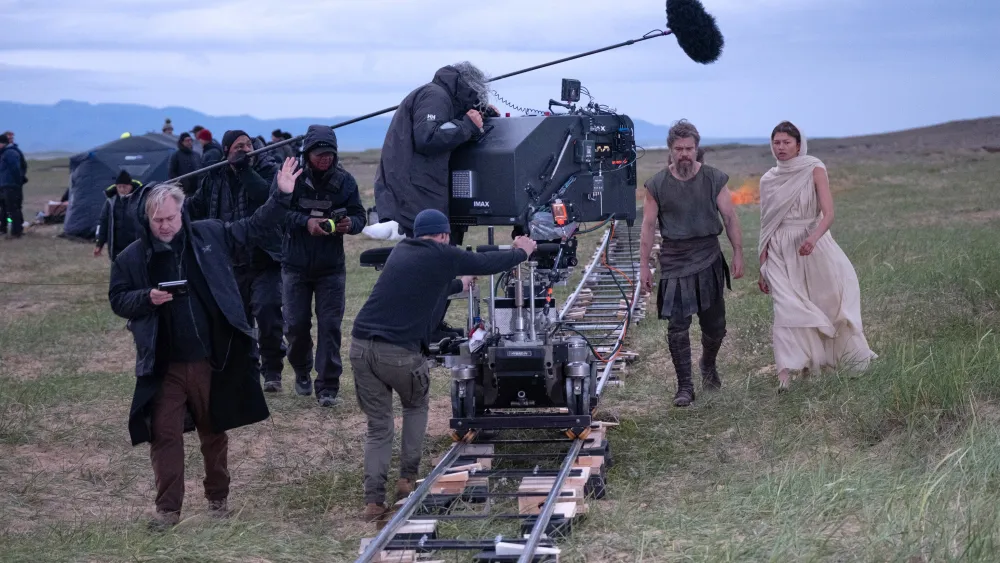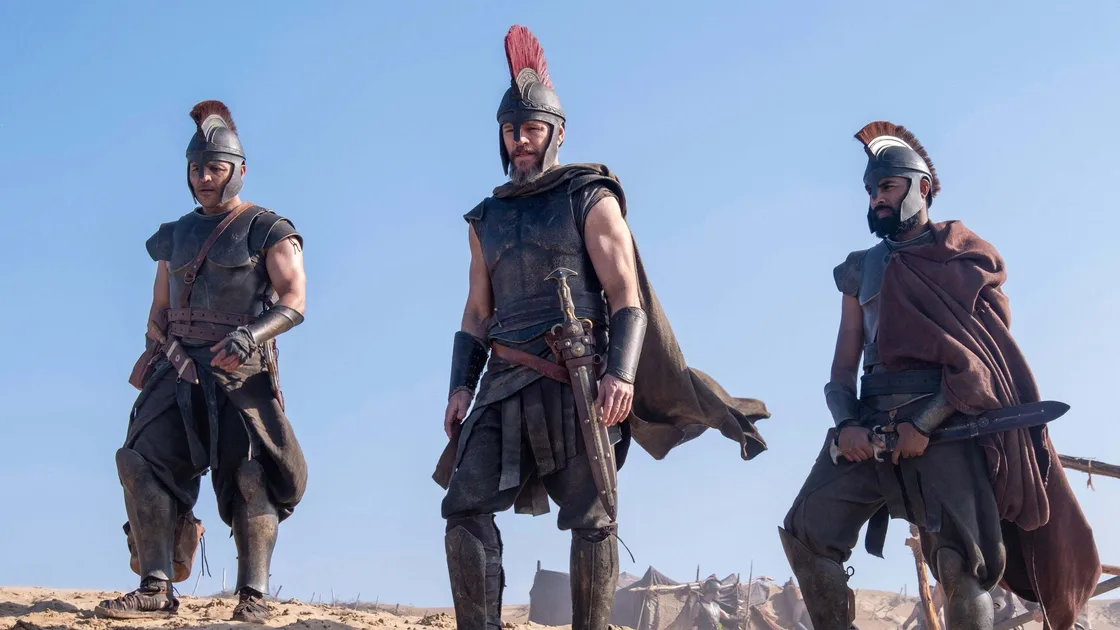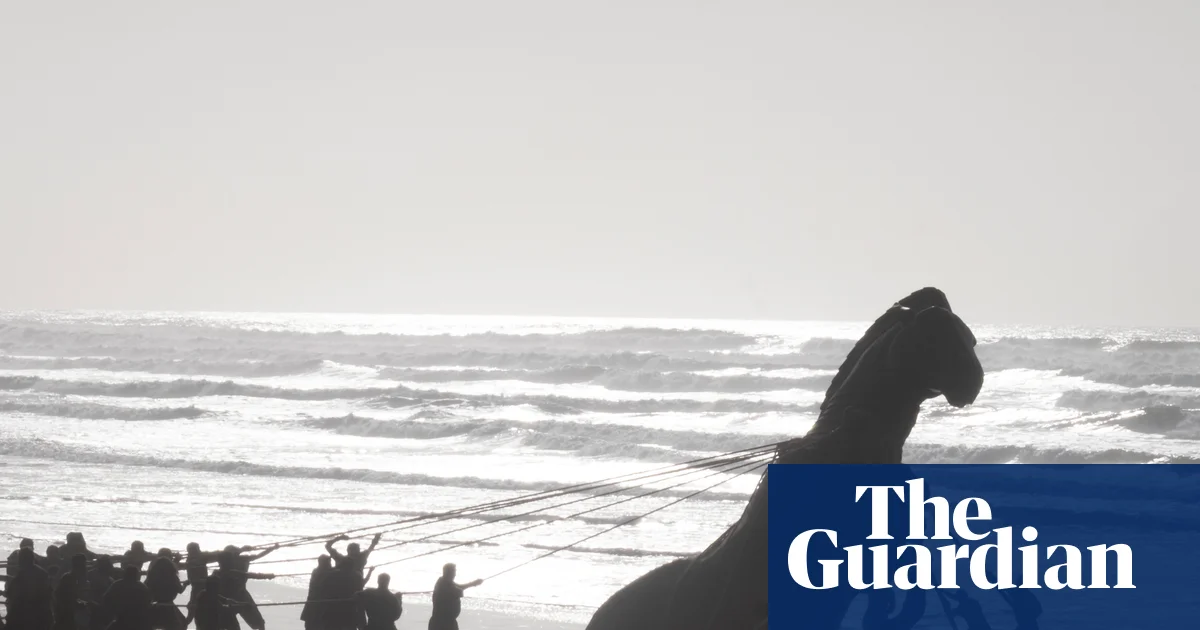
Turning a 12,000-line poem that takes a day to read aloud into a three-hour film was always going to require some pruning. So it has proved with Christopher Nolan’s The Odyssey, which dispenses with a number of scenes and characters from Homer’s ancient Greek epic. The director has also changed the emphasis in some of the story’s most famous episodes and made a few of his own additions. Here we run down the most significant alterations.What Nolan has left outThe godsHomer’s Odyssey opens with a discussion between Zeus and Athena on Olympus; with Zeus’s blessing, Athena plays an active role in guiding Odysseus home, supporting him in vanquishing the suitors and offering encouragement to his son, Telemachus, while adopting multiple disguises. Meanwhile, Poseidon frustrates Odysseus’s progress and Hermes is sent on a couple of key missions. The only god Nolan depicts is Athena (Zendaya), who appears as a vision seen only by Odysseus (Matt Damon) and seems to represent his conscience rather than being a fully realised divine entity.Nausicaa and the PhaeaciansOne of the Odyssey’s most celebrated scenes is the meeting between Odysseus and the young princess Nausicaa; he has washed up naked on a strange island where she and her maids are playing with a ball. After they handle this awkward situation with delicacy, Odysseus follows Nausicaa to the city of the Phaeacians, where he recounts his tales of the Cyclops, Circe, Scylla and Charybdis before being given safe passage back to Ithaca. Nolan leaves out the Phaeacians entirely and has Odysseus tell those stories to Calypso (Charlize Theron) as recovered memories.Some major ghostsThe film shows Odysseus meeting his former commander Agamemnon (Benny Safdie) in the realm of the dead (Nolan is correct not to depict it as an underworld). But we don’t see Achilles, the greatest of the Greek warriors, nor Ajax, who in the poem silently rebuffs Odysseus’s attempt at reconciliation. Neither do we meet Odysseus’s mother, whom he tries and fails to embrace three times. Another character omitted is the luckless Elpenor, who plunges to his death after drinking too much and then pleads to be properly buried. It’s easy to see why Nolan wanted to economise on these spiritual encounters, despite their power and resonance in the poem.No pushover … Anne Hathaway as Penelope with Tom Holland as Telemachus. Photograph: Melinda Sue Gordon/Universal PicturesThe execution of the disloyal womenIt comes as no surprise that Nolan shies away from including the Odyssey’s nastiest scene, in which 12 enslaved women who have been disloyal to the household and slept with the suitors are hanged by Telemachus. But Nolan invents a detail along the same lines when he shows one of those treacherous women, Melantho (Mia Goth), effectively condemned to death by Odysseus’s wife, Penelope (Anne Hathaway), who shoves her into the carnage while the suitors are being slaughtered. He spares us the grisly spectacle of what happens in the poem to the odious goatherd Melanthius, who has his nose, ears, hands, feet and genitals chopped off.Penelope’s bed testHomer’s Penelope is no pushover when Odysseus returns, and to satisfy herself that the beggar who has just slaughtered the suitors is, in fact, her husband, she draws him into describing their marital bed, as only he and Penelope know that Odysseus had fashioned it from an olive tree. Nolan omits this detail, which demonstrates how Penelope matches her husband for guile; instead, Odysseus shows her a figurine of Athena to prove his identity.Agamemnon, commander of the Greek forces, seen from behind in The Odyssey Photograph: Collection Christophel/AlamyWhat Nolan has addedThe wooden horseHomer does not tell the full story of the wooden horse, but it is mentioned on three occasions in the the Odyssey (and not at all in the Iliad). Given that using the horse to break into Troy was Odysseus’s idea and crucial to the Trojan saga, it seems appropriate to include it in the film.SinonThe character of Sinon (Elliot Page), who is shown in the film unwittingly tricking the Trojans into accepting the wooden horse, does not appear anywhere in Homer. Nolan is drawing on Virgil’s account of the fall of Troy in the second book of the Aeneid. He also invents the backstory of Sinon being made to take the place of Antinous (Robert Pattinson) in the Greek army at Troy.The people from the seaThere is much talk in the film about the world of the Greek heroes being threatened by “people from the sea”. This is not a preoccupation of Homer’s Odyssey. Nor does any Homeric character say, as Nolan’s Odysseus does, that the Trojan war was really all about “trading routes”. But these nods to the concerns of ancient historians show Nolan has done his research.What Nolan has changedCalypsoNolan’s Calypso sedates Odysseus with lotus flowers to make him lose his memories, but somehow develops pity for him and lets him go on his way. The Calypso of the poem doesn’t do drugs but is very much into sex (not something we see in the film), forcing Odysseus to share her bed night after night even though he is desperate to get home. She releases him only after Hermes shows up to tell her that Zeus has decided she must do so; as a mere nymph, she knows she must defer to the authority of Olympus. Once it is clear he can leave, Odysseus is able to enjoy a last bit of lovemaking before heading off on his raft.The CyclopsNolan’s Cyclops doesn’t speak (much), whereas in the poem he engages in lethally comic banter with Odysseus. The lack of dialogue in the film makes the one-eyed giant scarier, but it means we lose a couple of important details from the poem: the ruse whereby Odysseus identifies himself as Nobody so the other Cyclopes won’t come to the blinded monster’s aid, and the moment when Odysseus recklessly reveals his real name, which the Cyclops can then use to ask his father, Poseidon, to curse Odysseus’s return journey. These changes fit with Nolan’s decision to downplay Odysseus’s abilities as a trickster and foreground his battle-hardened resilience and trauma.Director Christopher Nolan (left) with Matt Damon and Zendaya during the making of the film. Photograph: Melinda Sue Gordon/Universal PicturesCirceIt is never explained why Homer’s Circe turns some of Odysseus’s comrades into pigs. She turns them back into men because Odysseus has proved immune to her potion (thanks to a herb Hermes has given him) and then agrees to have sex with her. She proves to be a very helpful ally and he stays with her for a whole year. Nolan’s Circe (Samantha Morton) seems to be motivated by anger towards animalistic male behaviour, but then meekly agrees to restore Odysseus’s men to their human bodies after he intuits that he really shouldn’t touch that stew and makes her feel sorry for a bunch of guys who just want to get home.The ambush and father-son reunionIn the film, a band of villains hired by Antinous attempt to kill Telemachus (Tom Holland) at a temple, only to be thwarted by Odysseus, who has arrived on the scene in disguise. Soon afterwards, Telemachus realises his saviour is his father. In the poem, the ambush is led by Antinous out at sea and is easily (and undramatically) evaded by Telemachus, who then meets his father back in Ithaca in a reunion carefully stage-managed by Athena.The endingHomer’s Odyssey comes to a notoriously unsatisfactory conclusion. Nolan sensibly discards all the poem’s final scenes: the suitors’ arrival in the realm of the dead; Odysseus’s encounter with his father, Laertes, whom he needlessly upsets by adopting yet another fake persona; and the anticlimactic battle between Odysseus and the relatives of the suitors. In the film, Telemachus becomes king of Ithaca, allowing Odysseus and Penelope to sail off into the sunset on a mission to honour his fallen comrades.
Sex, beds and grisly executions: what Christopher Nolan’s The Odyssey changed, invented – and left out
From missing scenes and characters to a brand new ending, the director has taken some artistic liberties with Homer’s epic poem
1,301 words~6 min read