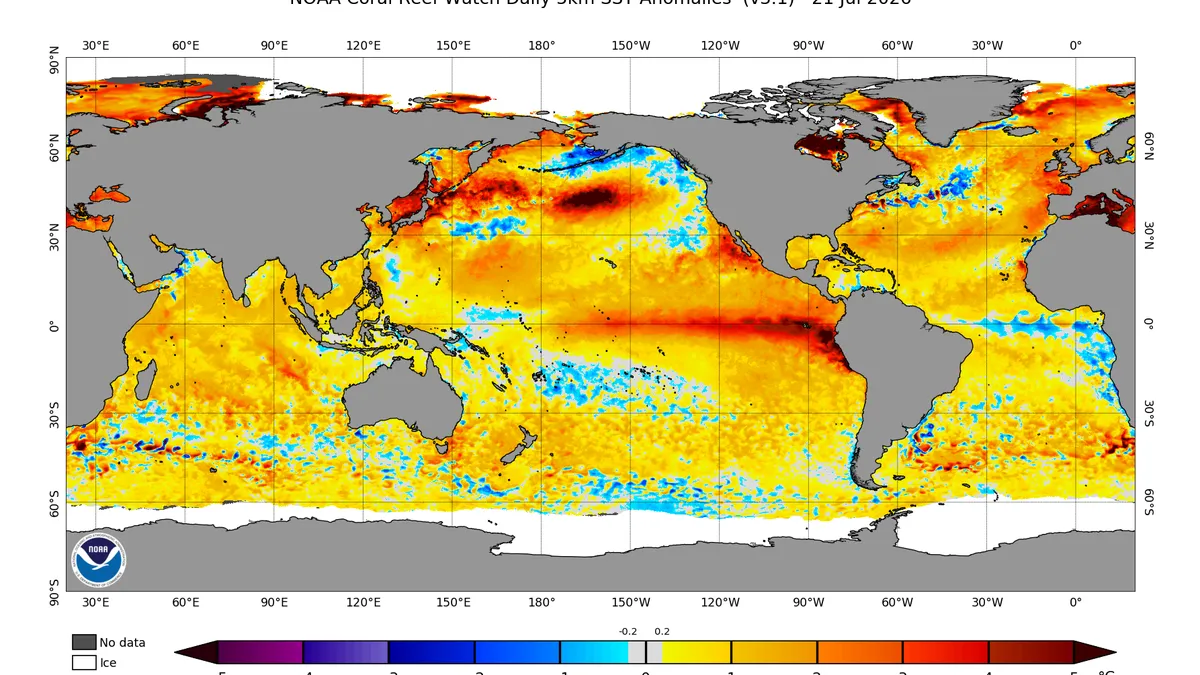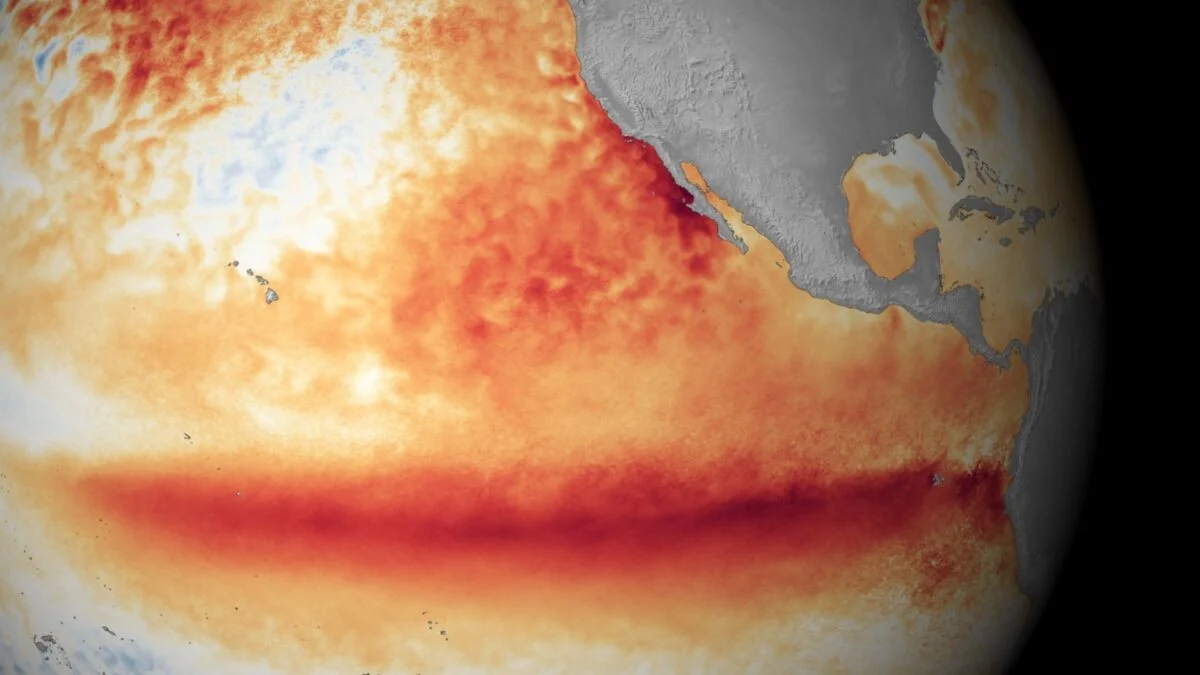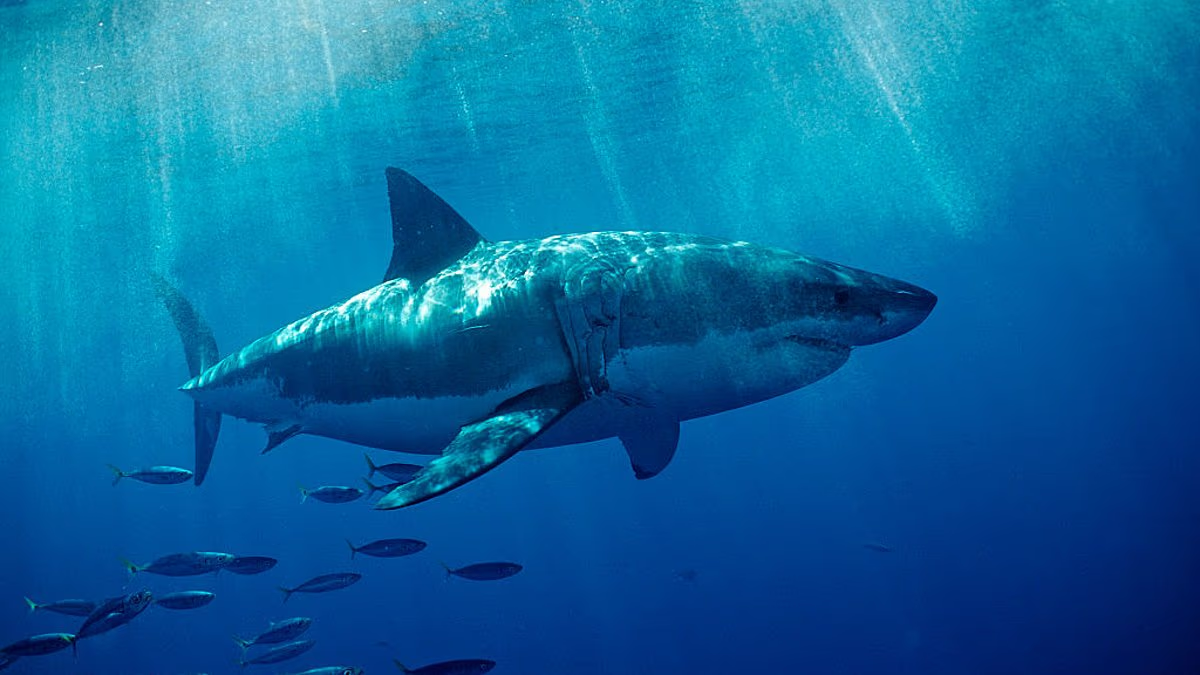
The Super El Niño could not only wreak havoc on global weather systems – but could also spark a surge in great white shark attacks. That's according to Chris Lowe, a shark expert at California State University, Long Beach, who warns that sharks are being forced to move beyond their natural habitats in search of cooler waters.Normally, great whites congregate off the Pacific coast of Mexico during the summer and autumn months. However, as the Super El Niño causes water temperatures to rise in this area, the sharks are travelling north. According to Professor Lowe, great whites could flood California's coastline – with the invasion expected between July and September. 'We have been monitoring the great white sharks in Southern California since 2009,' Professor Lowe explained to The California Post. 'Since then we have tagged and trapped 350. 'And that's how we know temperature affects their migration.' The Super El Niño could not only wreak havoc on global weather systems – but could also spark a surge in great white shark attacks In 2025, there were 25 confirmed cases in the US, including five in California – one of which was fatal. Pictured: map of confirmed unprovoked shark attacks in California from 1926–todayLast month, scientists confirmed that Super El Niño is 'underway', following satellite observations of sea surface height across the Pacific.Measurements taken by the Sentinel–6 Michael Freilich satellite showed that sea levels across parts of the equatorial Pacific were elevated by the end of June.'When ocean water warms, it expands in volume and causes the sea surface to rise—making the water's height a reliable indicator of ocean temperatures,' NASA explained.'Warmer–than–normal temperatures, hence higher sea surface heights, in parts of the equatorial Pacific Ocean are associated with El Niño.'Professor Lowe's team have been monitoring California's waters, and first started noticing a surge in baby sharks back in February. This is early, according to the experts, who explained that they'd usually expect to see this surge in mid–April. Importantly, young sharks do not like warm waters. This suggests southern California's beaches – where the water is cooler than Mexico – could become a magnet for great whites. How will a Super El Niño impact global temperatures? According to the WMO, we can expect above–normal temperatures in 'nearly all parts of the globe'.The strongest heat signals are forecast across southern and western North America, Central America, the Caribbean, Europe, North Africa, and much of Asia.In the Southern Hemisphere, Northern South America is likely to see the strongest warming, while Southern Africa is forecast to experience widespread above–normal temperatures.In Australia, warmer conditions are mainly expected along the western, southern, and eastern coasts, with no clear trend in the north.Tropical regions are also forecast to be hotter than normal, especially Equatorial Africa and parts of Southeast Asia and the Maritime Continent. Professor Lowe warned: 'Those are the same beaches we use. 'And because this summer is going to be hotter than normal, we expect a larger than normal beach attendance.'We also expect there's going to be more juvenile white sharks than normal along the Southern California coastline up to Monterey.'And it's not just great whites that beachgoers will need to be on the lookout for. Professor Lowe predicts we'll also see an influx of smooth hammerhead sharks. According to the International Shark Attack Files, which records attacks around the world, the US leads the world in the number of unprovoked shark attacks. These are attacks in which a person did not initiate contact with a shark intentionally or unintentionally.In 2025, there were 25 confirmed cases in the US, including five in California – one of which was fatal.
Super El Niño could spark a surge in great white SHARK attacks
The Super El Niño could not only wreak havoc on global weather systems - but could also spark a surge in great white shark attacks.
861 words~4 min read