Academia
As the TNI swaps rigid seniority for an ill-defined model of "meritocracy," the rhetoric of professional advancement increasingly serves as a convenient cover for dynastic privilege and political patronage.
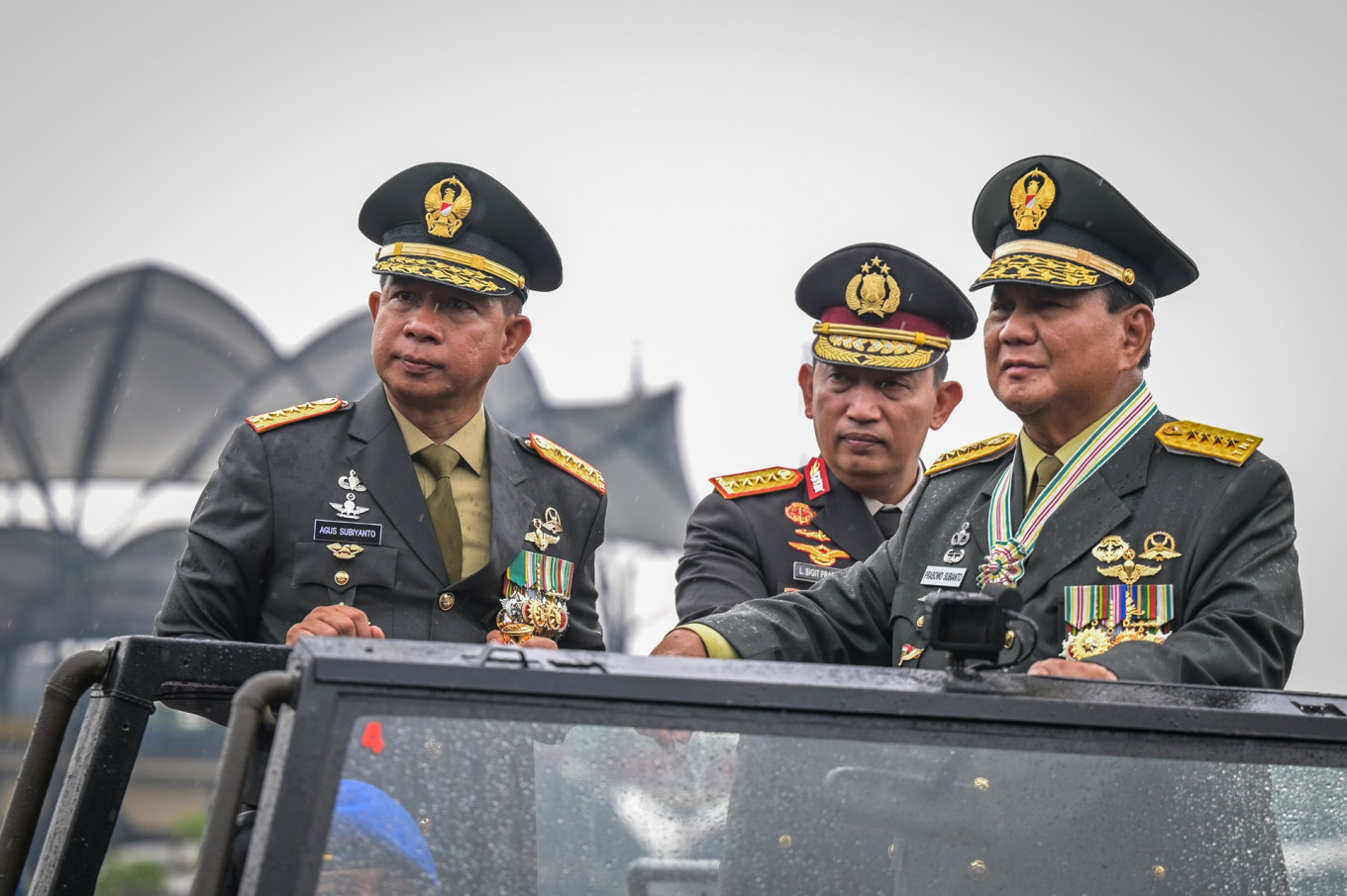
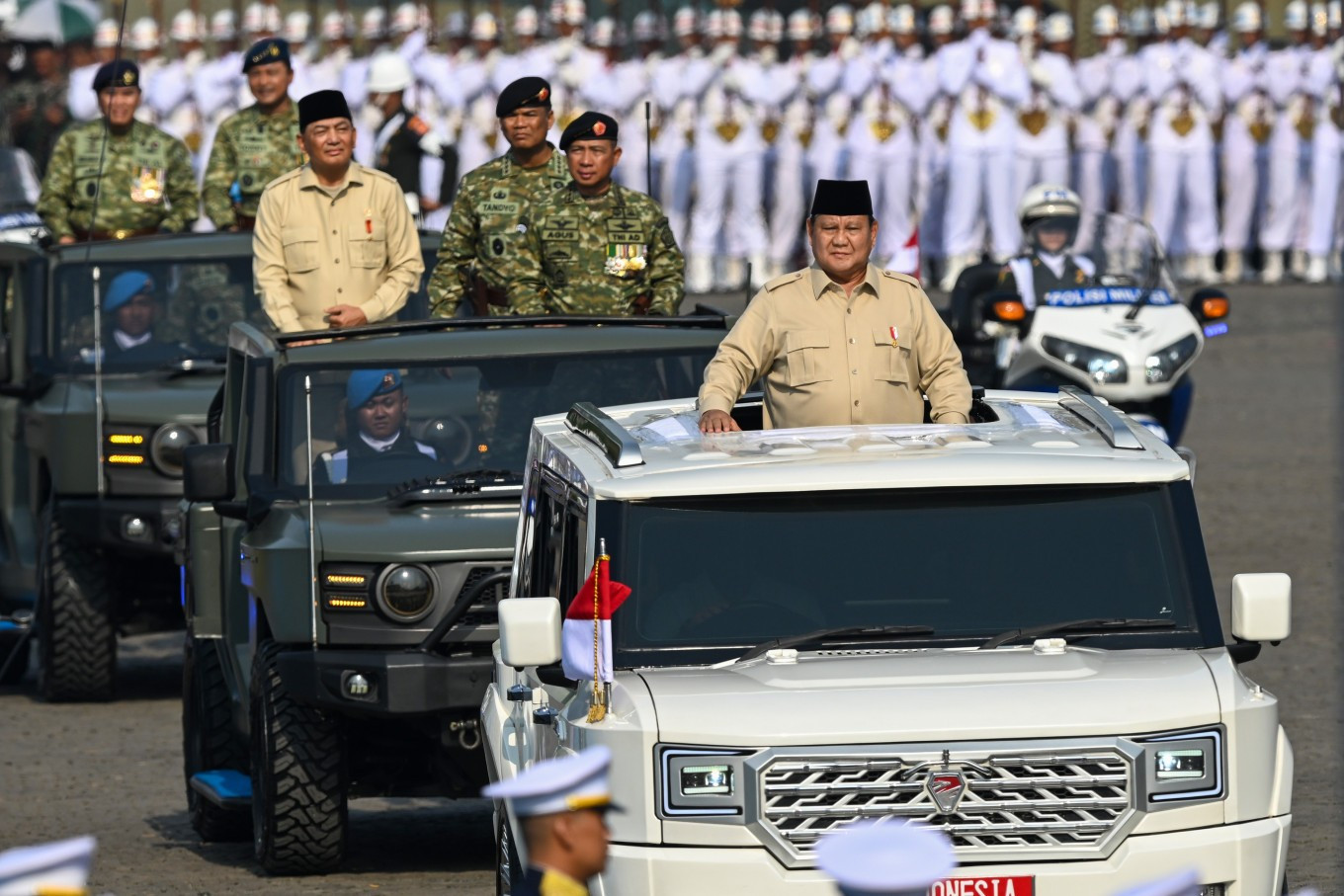
President Prabowo Subianto (front), accompanied by Defense Minister Sjafrie Sjamsoeddin (left, second row), Indonesian Military (TNI) commander Gen. Agus Subiyanto (right, second row) and other military leaders, inspects forces from his presidential vehicle in October ahead of a ceremony to celebrate the 80th anniversary of the TNI at the National Monument (Monas) complex in Central Jakarta. (Antara/Fauzan)
The promotion architecture within the Indonesian Military (TNI) is undergoing a significant structural shift under President Prabowo Subianto. Seniority and conventional command rotations, long the bedrock of military advancement, are increasingly being superseded by a broader, more subjective set of criteria: competence, achievement, dedication and nationalism.In principle, this modernizing shift is designed to fast-track high-performing officers into strategic commands. In practice, however, these criteria lack clear benchmarks and transparent procedures. Without consistent, measurable metrics, the rhetoric of "meritocracy" risks becoming a convenient facade for institutional discretion and political favoritism.