Editorial
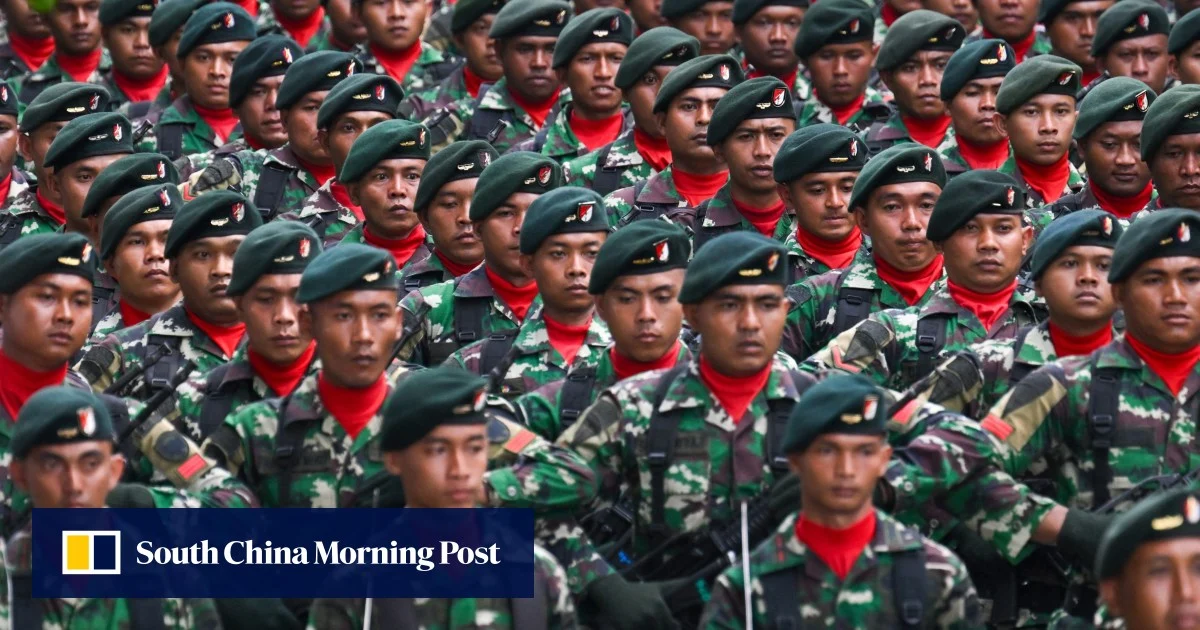
As the Indonesian Military (TNI) submitted to civilian control in the first two decades of the reform era and scaled down their non-defense roles, the police have only grown in stature and clout.
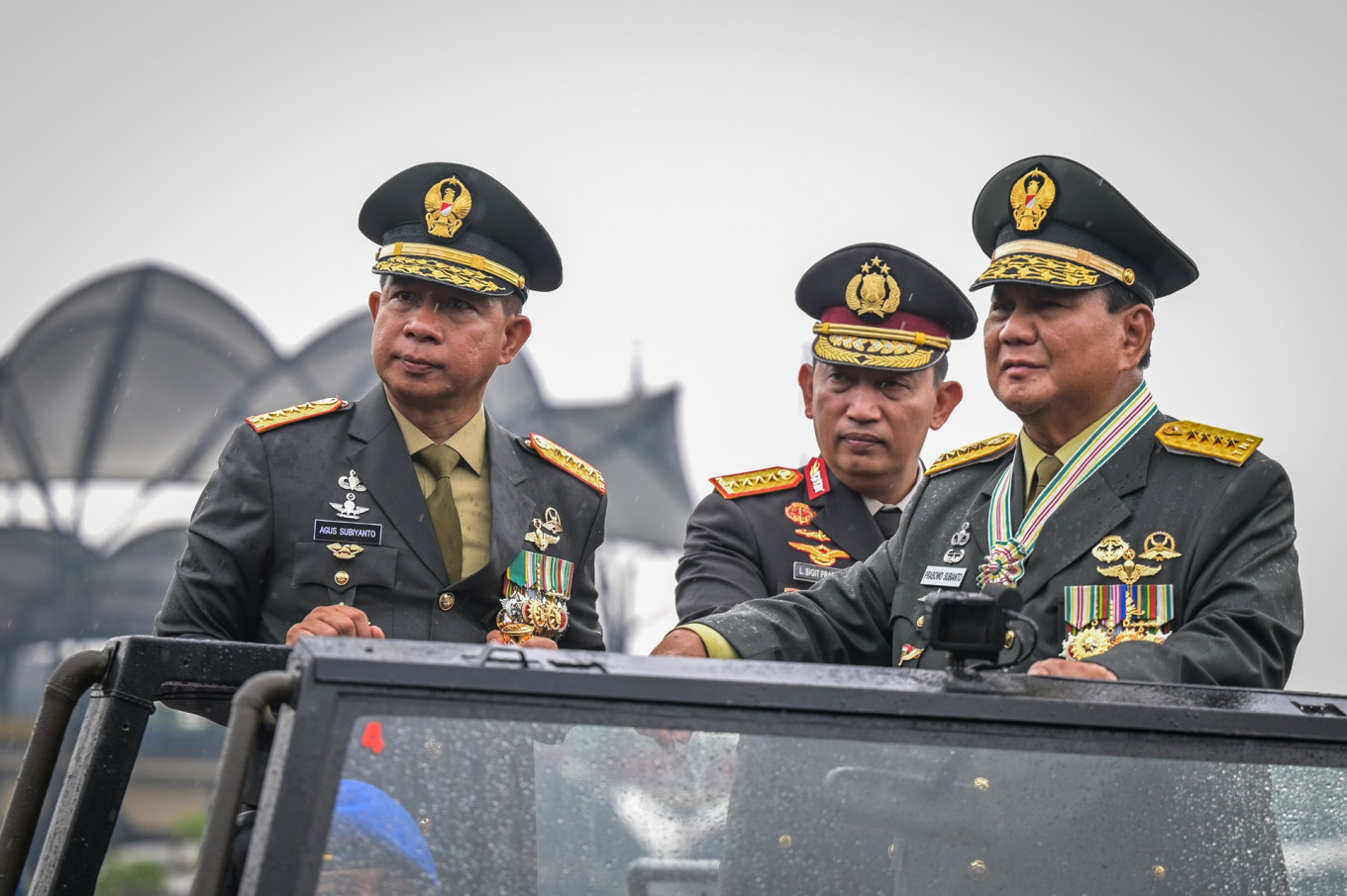
Defense Minister Prabowo Subianto (right) is accompanied by Indonesian Military (TNI) Commander Gen. Agus Subiyanto (left) and National Police Chief Gen. Listyo Sigit Prabowo on Feb. 28, 2024, while inspecting military equipment at the TNI Headquarters in Cilangkap, East Jakarta. (Antara/Bayu Pratama S)
While other key institutions have undergone reform following the dissolution of the authoritarian New Order regime in the late 1990s, the National Police have proven to be an outlier. As the Indonesian Military (TNI) submitted to civilian control in the first two decades of the reform era and scaled down their non-defense roles, the police have only grown in stature and clout.
At first, the proposal to separate the police from the TNI sounded like the most logical proposition to curb the institution’s militaristic tendencies so that it could focus on maintaining public order.