Academia
While President Prabowo’s high-profile global engagement boosts Indonesia’s visibility, relying on personal charisma over institutional diplomacy risks undermining the long-term credibility of the nation's foreign policy.
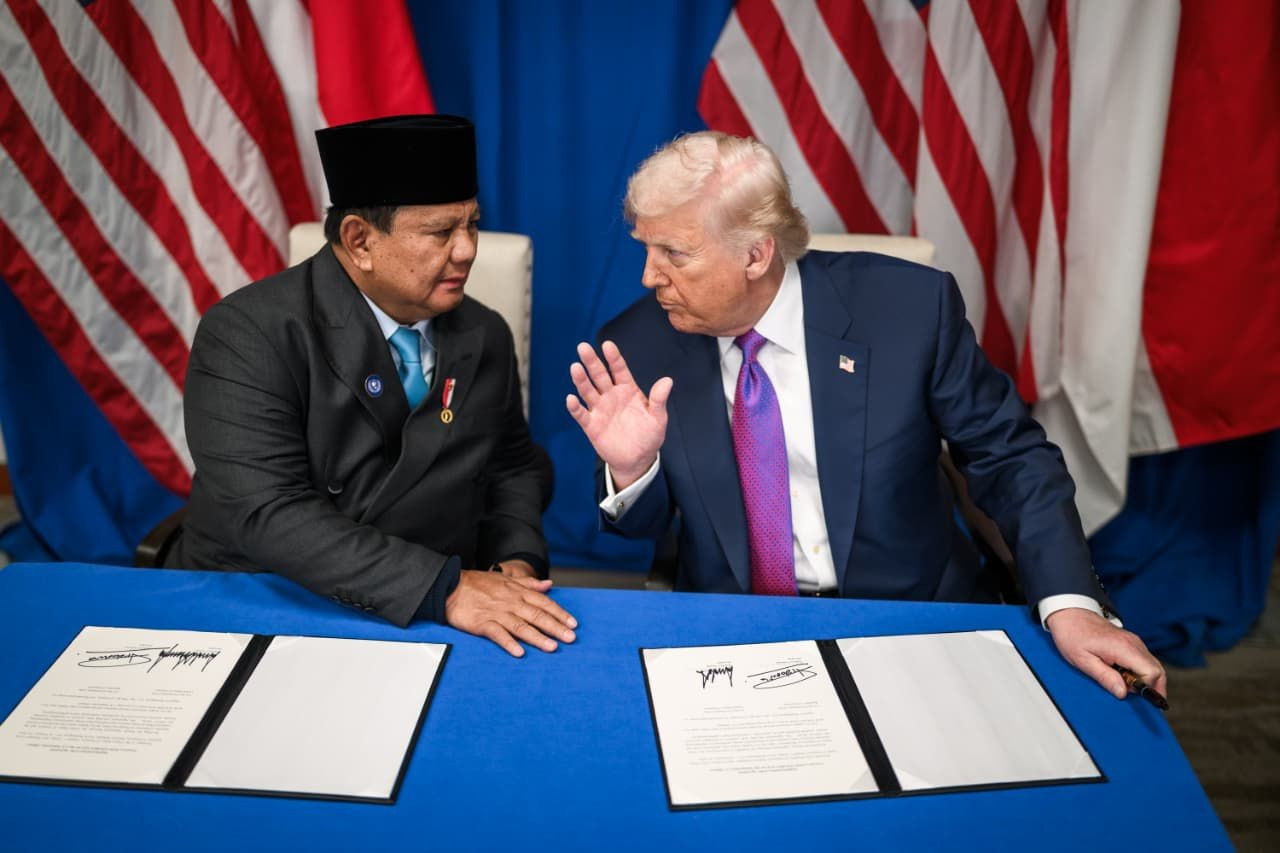
President Prabowo Subianto (left) speaks to United States President Donald Trump on Feb. 19 during the signing of the US-Indonesia Agreement on Reciprocal Tariffs (ART) in Washington, DC. (Courtesy of Presidential Secretariat/White House)
There is nothing inherently wrong with an active president. In a turbulent world, Indonesia benefits from a leader who is willing to engage global counterparts, attend international summits and place the country squarely on the diplomatic map. The problem begins when presidential activism starts replacing, rather than strengthening, the institutions tasked with conducting foreign policy.Foreign policy is one of the few domains where process matters as much as outcomes. A trade agreement, a defense partnership or a diplomatic initiative is only as durable as the institutional framework supporting it. When diplomacy becomes overly personalized, it may generate headlines today while eroding institutional capacity for tomorrow.