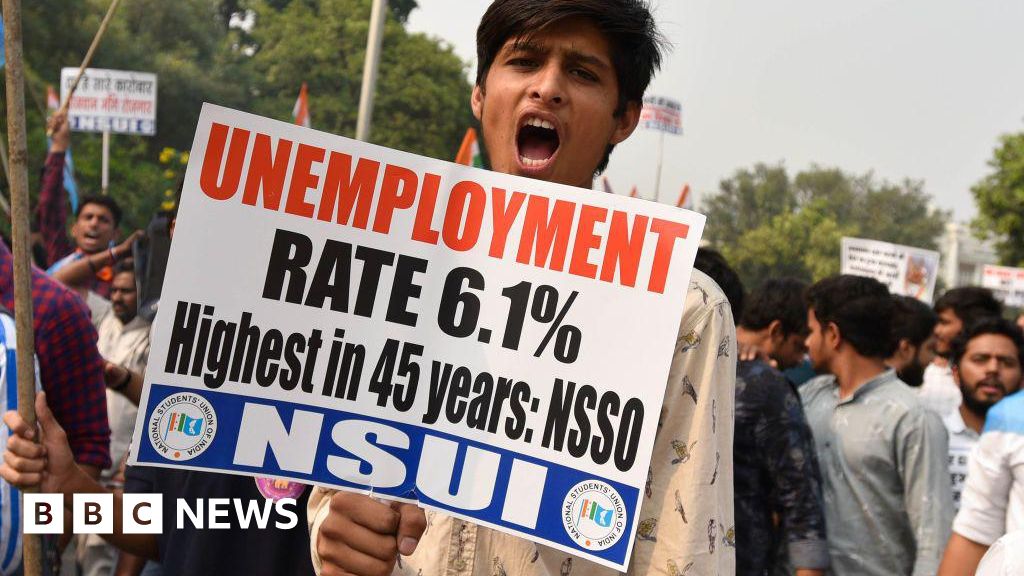
India has one of the world’s largest youth populations (371 million, according to United Nations data of 2025), often described as a demographic dividend. But this demographic dividend is only a promise and does not guarantee an automatic outcome. It pays off only when the transition occurs, enabling young people to move from classrooms into decent, productive work with higher skills. Right now, that transition is faltering, and the evidence is visible in Gen Z’s employment patterns.The term ‘Gen Z’ refers to individuals born between 1997 and 2012. They succeeded the Millennials (also known as Generation Y), who were born between 1981 and 1996. The working-age population for Gen Z broadly falls within the 15-26 age group, while Millennials are aged between the years 27 to 42. According to the 2023-24 Periodic Labour Force Survey (PLFS), India has an estimated 29.94 crore working-age Gen Z individuals (aged 15-26 years), compared with 35 crore Millennials (aged 27-42 years). Using the same datasets, we analyse their occupational patterns, labour force participation rates, unemployment levels, and access to social security systems.Gen Z work statusPLFS 2023-24 estimates show that a large share of Gen Z remains engaged in education. The data show that 41.7% of young males and 38.4% of young females are studying. While this partly explains their delayed entry into the labour market, the situation of the remaining youth is a cause for concern.When young people do enter the labour market, many are absorbed into non-salaried and casual forms of employment. Among young males, 15.8% are engaged as unpaid family workers, 12.3% are in casual work — possibly with segments of the informal economy — and only 14.8% are regular wage earners. Among female Gen Z individuals, about 35% are engaged in domestic duties (out of the labour force), 10.7% work as unpaid family workers, and only 4.7% are regular wage earners.Also Read | A view of the office through Gen Z eyesThese patterns underline the fact that women bear this burden disproportionately. Among Gen Z females, 27.1% are engaged in domestic duties only, compared with just 0.32% of males. Even where women want paid work, they face higher unemployment and weaker labour market attachment. This is not only a matter of jobs. It also reflects childcare burdens, safety concerns, mobility constraints and social norms, and the design of work itself. India cannot talk seriously about harnessing its demographic advantage while leaving such a large share of young women outside the paid economy.What happens when young people try to enter the labour market? The answer is concerning: too many of them are unable to find adequate employment opportunities.The first indicator to consider is the labour force participation rate (LFPR). Among Gen Z, 41.7% are in the labour force, against 75% of Millennials. Within Gen Z, rural participation (44.1%) exceeds urban participation (37.2%), suggesting that rural youth tend to enter the labour market earlier, whereas urban youth spend more time in education and training. A sharp gender divide is also evident. Among young males, labour force participation is 59.3% in rural India and 51.3% in urban India, compared to just 28% and 21.1% respectively for young females.The unemployment situation is even more alarming. The overall unemployment rate for Gen Z is 11.9%, compared to only 2% among Millennials. In urban India, the situation deteriorates further, with Gen Z unemployment rising to 17.1%.For urban young women, it reaches a staggering 22.6%. This is not merely a temporary labour-market friction; it is a serious warning sign that the economy is struggling to absorb young jobseekers, particularly in areas where aspirations and educational qualifications are often higher.The graduate trap, social security mirageFor most of the youth, education offers a gateway of opportunity: more education leading to better jobs and lower unemployment. Instead, our estimate shows the opposite at the top end. Among Gen Z males with graduate-level education or above, unemployment stands at 29%. Among Gen Z females, it is even higher at 36.9%. This is the heart of India’s silent jobs crisis. The country is producing educated young people faster than it is producing suitable jobs for them.A similar disparity persists among Millennials. Only 5.2% of male graduates and above are unemployed, but the corresponding figure for women is significantly higher at 13.8%.This disconnect perhaps points to a deeper mismatch between the education system and labour market requirements. While part of the problem relates to skill mismatches, it is also increasingly shaped by automation and the growing adoption of artificial intelligence, both of which are altering the nature of available jobs.That mismatch carries a deeper risk. When higher education no longer improves employment prospects quickly or reliably, frustration rises, family investment in education comes under strain, and confidence in the growth story weakens. A labour market that cannot absorb its educated youth is not just inefficient. It can become socially corrosive and destabilising. Even for those who do find work, the quality of employment remains deeply concerning. Only 20.1% of Gen Z individuals are covered by social security, and just 14.1% have a formal job contract. Among the remaining 79.9% who lack social security coverage, only 3.2% have a job contract. Overall, only 17.3% of Gen Z workers have any form of contractual employment.This implies that most are entering the workforce without either. The challenge, therefore, is not merely unemployment but the widespread prevalence of informal, insecure, and weakly protected work. Further, in recent years, there has been growing evidence of the informalisation of formal employment among the Gen Z population.The situation among Millennials is only marginally better. Merely 26% have a job contract, while only 28.6% are covered by social security.The recent large-scale violent labour protests in Noida, Uttar Pradesh, led by industrial and factory workers demanding higher wages and better working conditions, reflect the frustration that insecure and poorly protected employment can produce.A promise deferredIndia’s jobs debate is too often discussed in silos: unemployment, skilling, women’s work and labour force participation, and informality. However, these are not separate problems. They are one connected failure of labour market transition. Young people (Gen Z) are staying in education longer, but the bridge from education to work is weak. Women face structural barriers that keep them out or push them into unpaid roles. And even when work is found, it is too often outside the protections of formal employment.It is time India moves beyond merely celebrating its large demographic dividend and begins treating the issue with greater urgency. Skill programmes have value, but they cannot substitute for actual job creation. The answer lies in expanding labour-intensive sectors, building stronger school-to-work pathways, linking training more closely to employers, and making it easier for women to enter and remain in paid work. Apprenticeships, formal hiring incentives, urban employment expansion, safe transport and childcare support all need to be part of the response.The numbers tell a blunt story. India’s youth challenge is no longer about whether young people are ready for work. It is about whether the economy is ready for them. Until that changes, the demographic dividend will remain what it has so far been: a promise deferred.Santosh Kumar Dash is an Assistant Professor at IRMA, Tribhuvan Sahkari University, Anand, Gujarat. Balakrushna Padhi is an Assistant Professor at BITS Pilani (Pilani Campus), Rajasthan
The stark reality of the missing jobs for India’s Gen Z
India's youth challenge is no longer whether young people are ready for work, but whether the economy is ready to employ them
1,205 words~5 min read