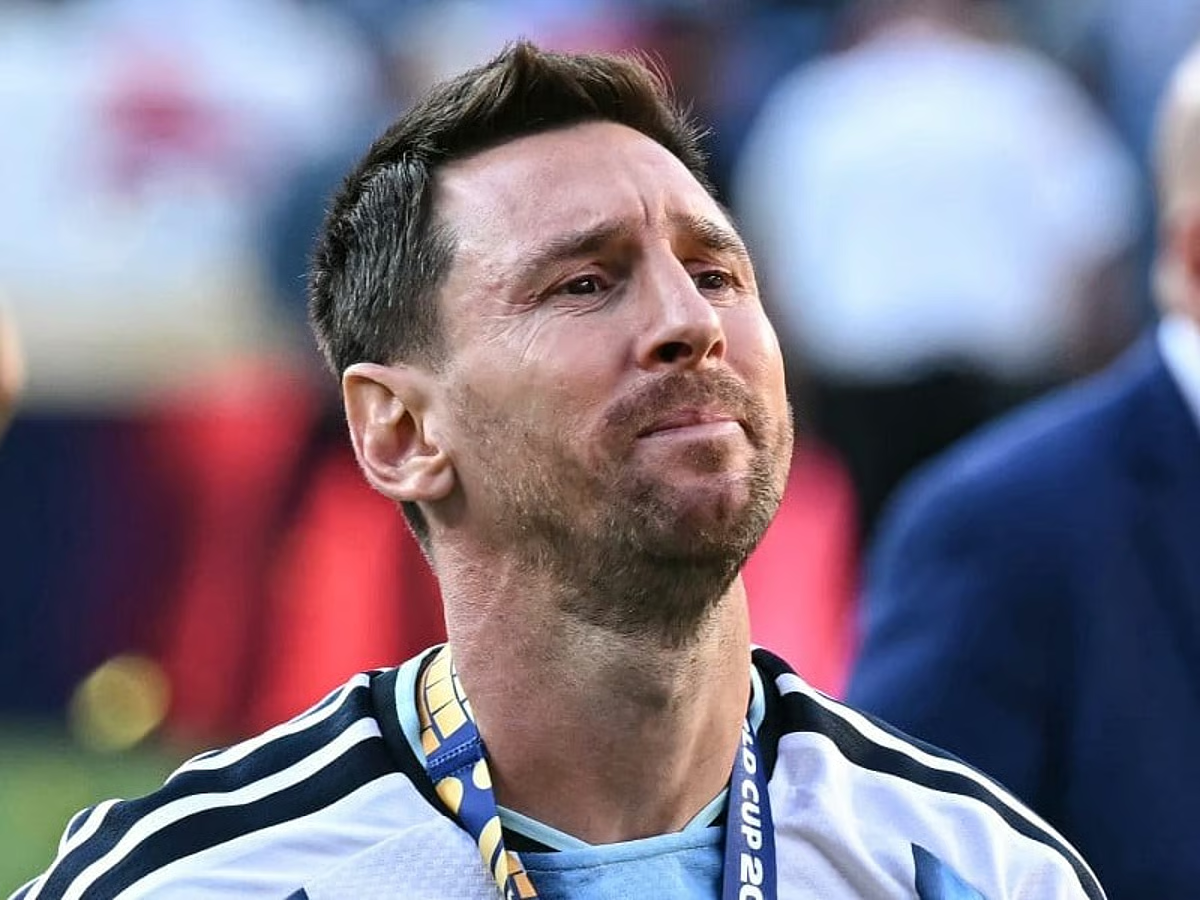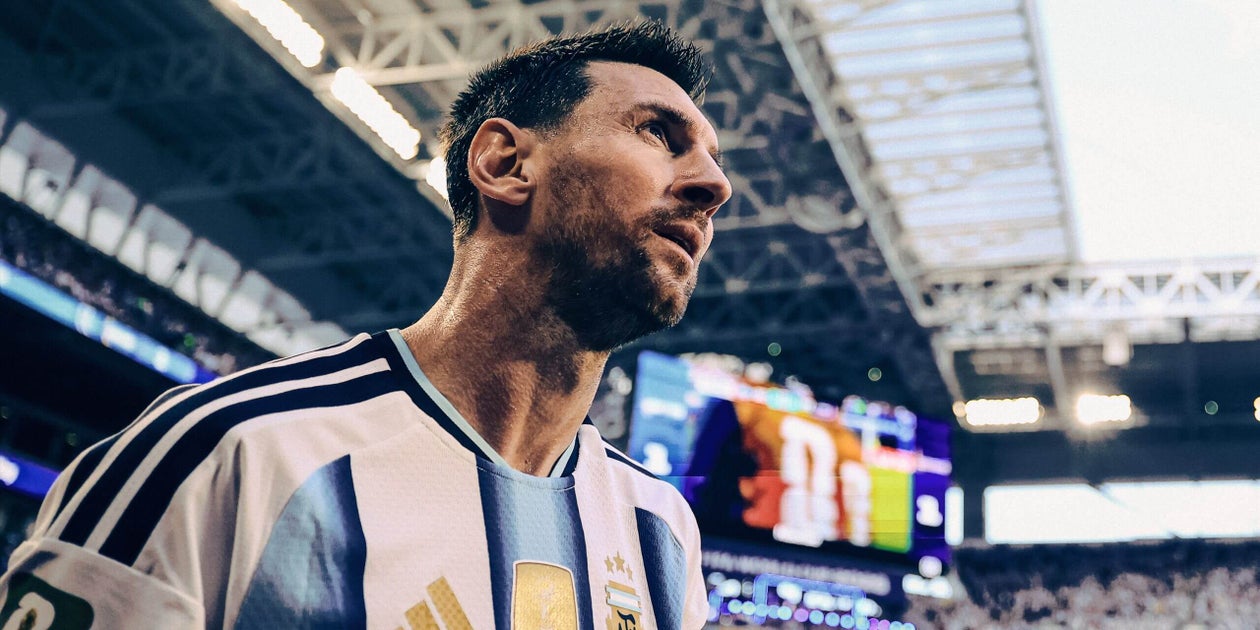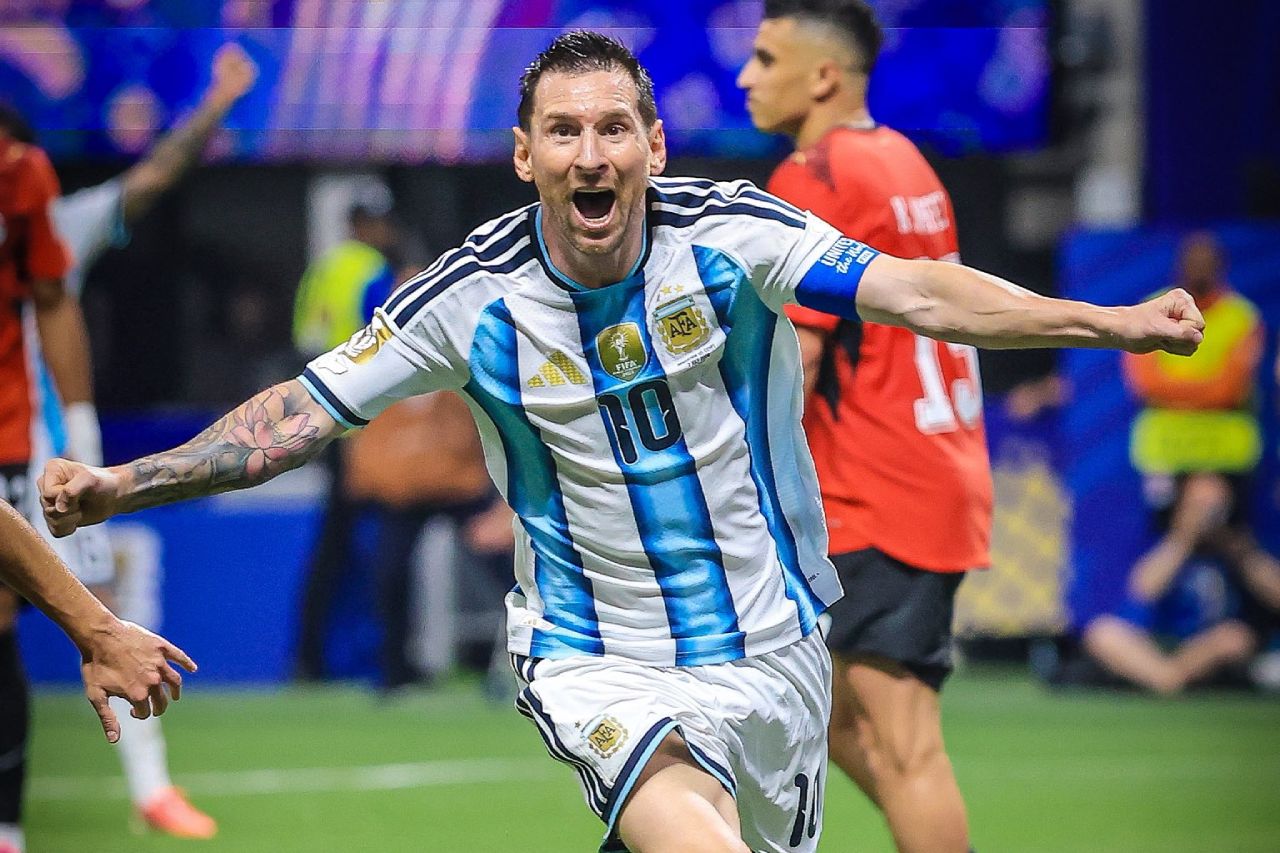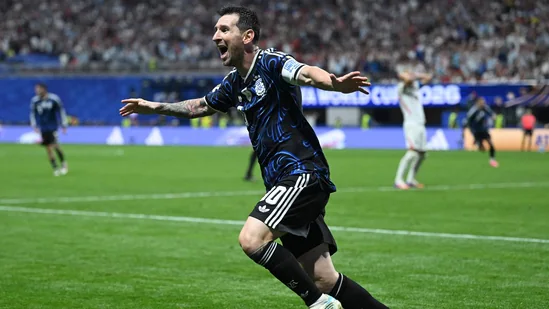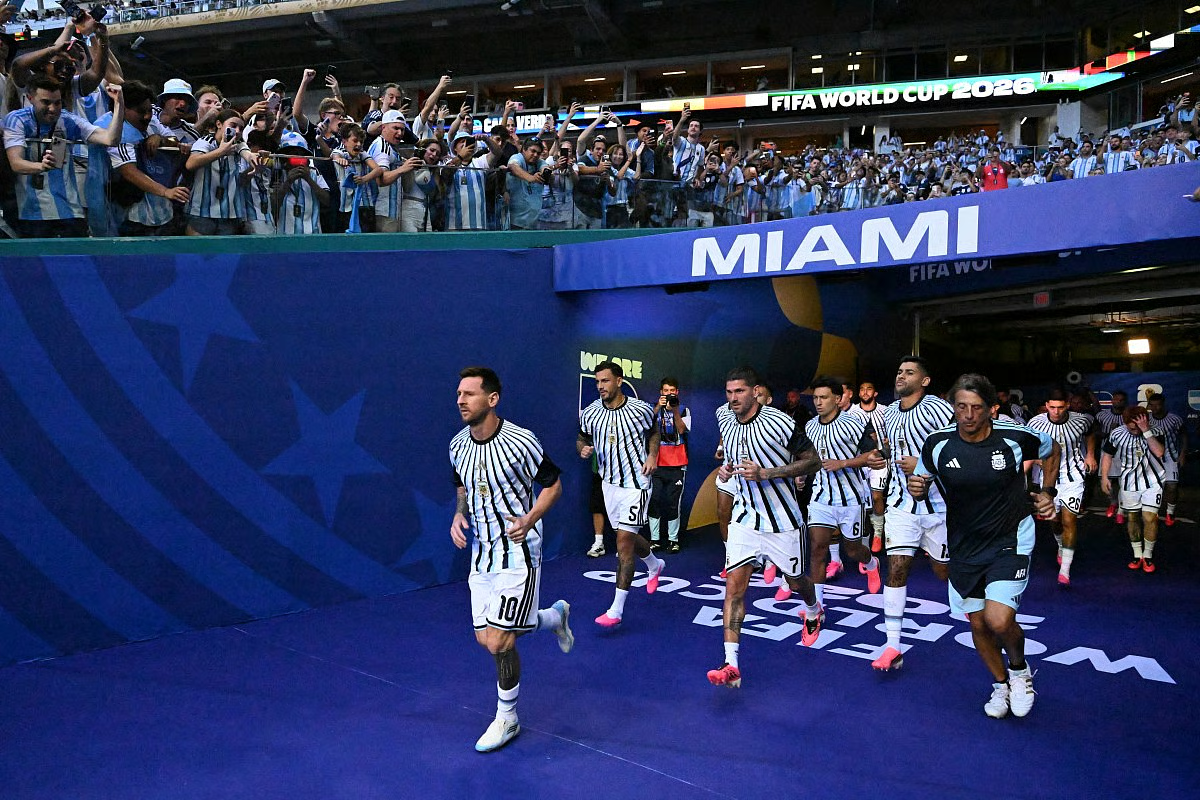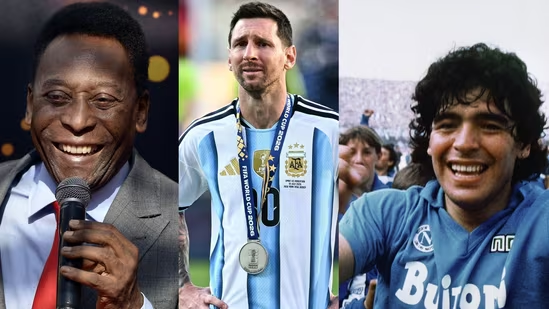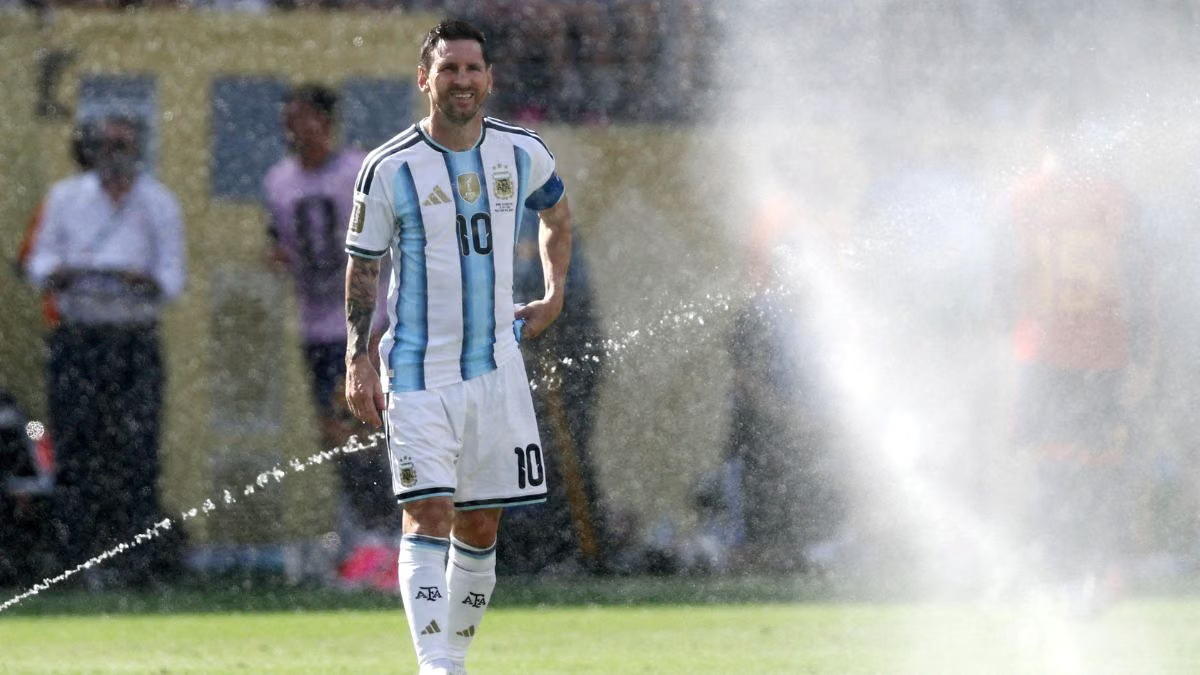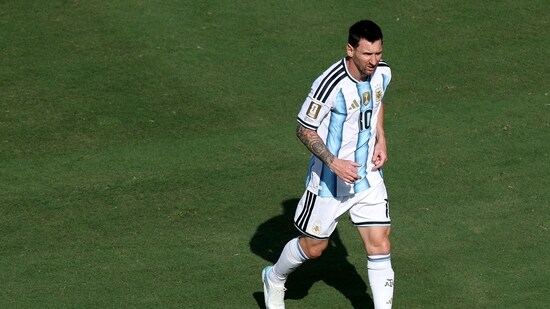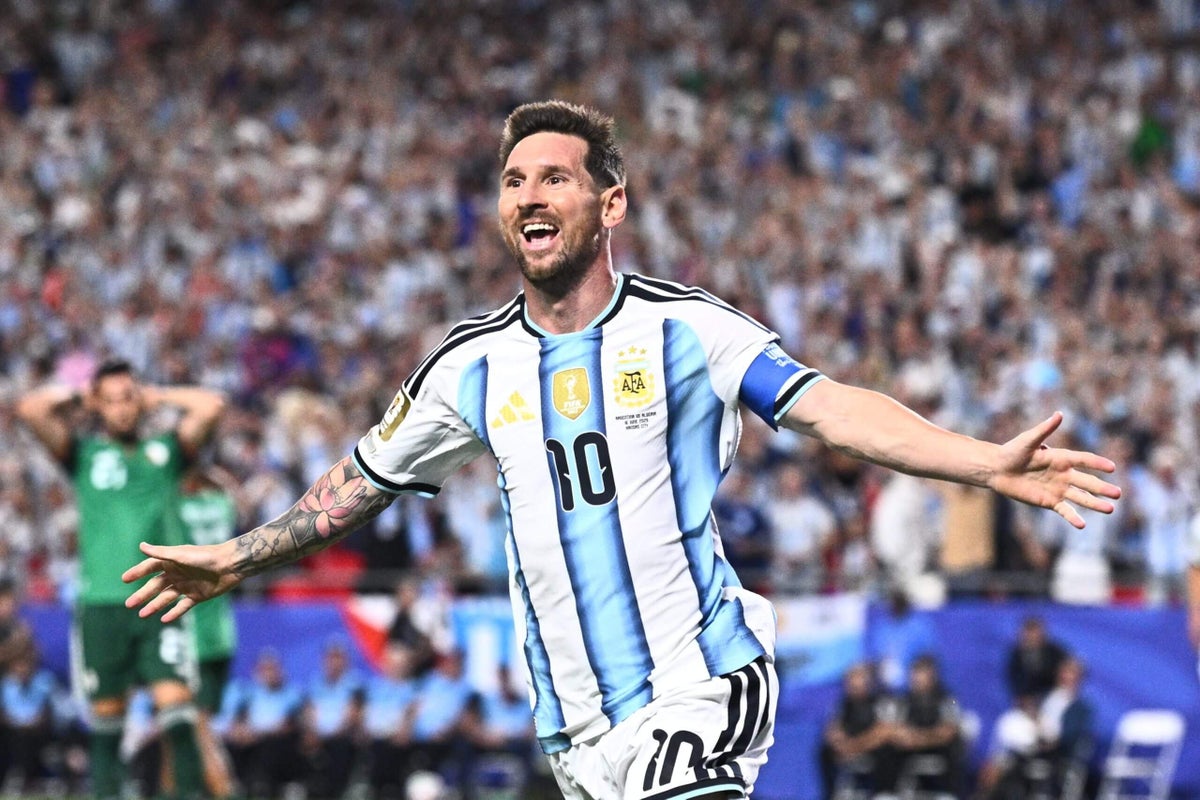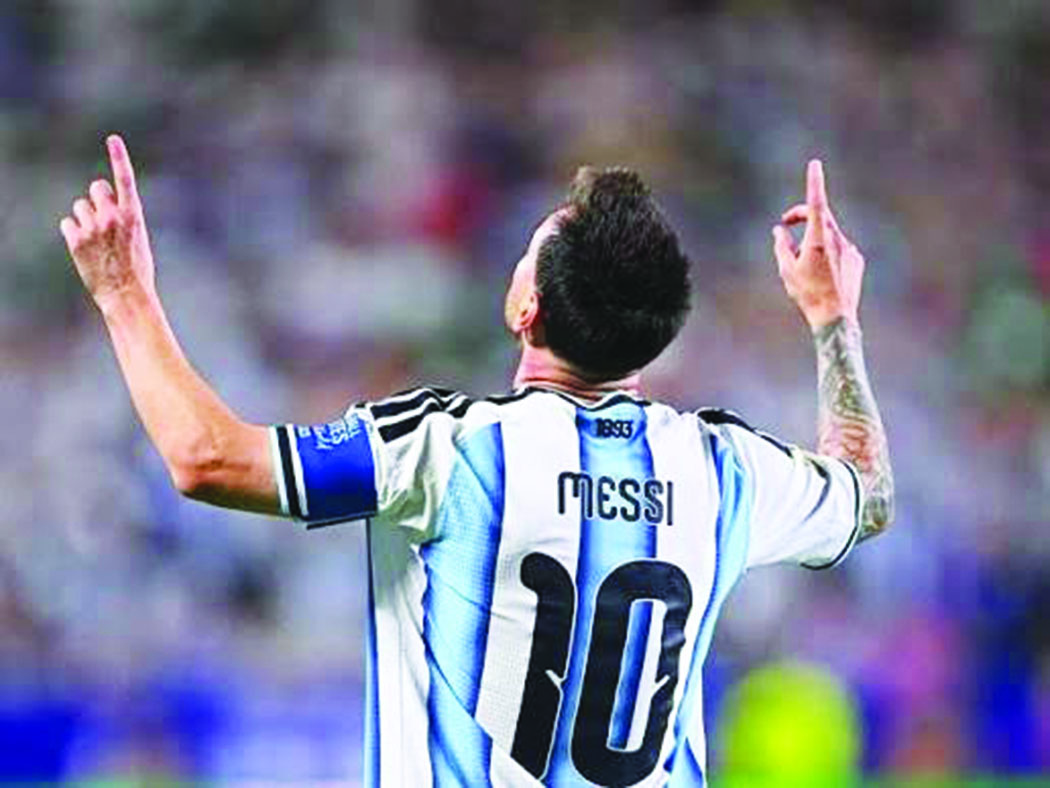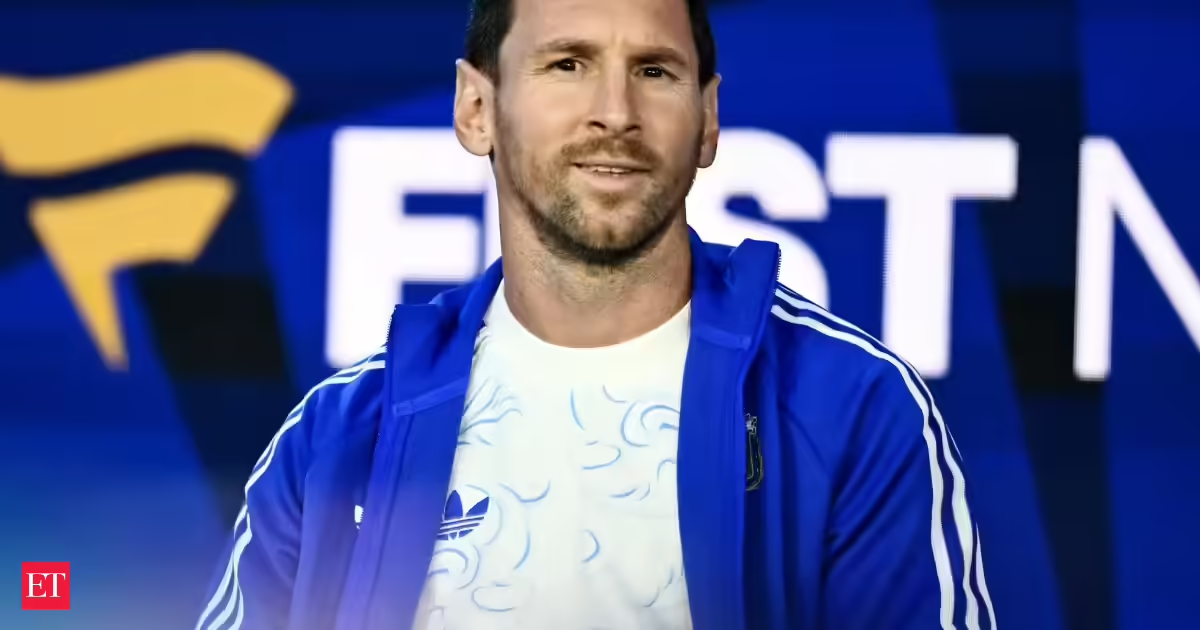
The weight of one more World CupThere are moments in sport that seem almost cinematic. A packed stadium. The roar of tens of thousands fading into an eerie silence as players line up in the tunnel. Flags flutter in the stands, cameras fixate on anxious faces, and millions across the globe wait for history to unfold.Somewhere in that tunnel, Lionel Andrés Messi waits too.It is a scene he knows better than anyone. Two decades after making his World Cup debut as an unassuming teenager, Messi prepares to lead Argentina into yet another World Cup final. The stakes are familiar, yet everything about him has changed. Gone is the shy prodigy burdened by comparisons with Diego Maradona. Gone is the captain haunted by near misses and crushing defeats. Standing there now is a world champion, an eight-time Ballon d'Or winner, the most decorated footballer in history, and a man whose legacy long ago escaped the boundaries of football itself.And yet, the World Cup has always held a different meaning for Messi. It has been the stage where he experienced the sport's greatest joys and deepest heartbreaks; where every triumph seemed incomplete without the golden trophy, and every failure became a national conversation. If Barcelona built the footballer, the World Cup built the legend.It is almost impossible to imagine now, but there was once a time when Lionel Messi's greatest battle had nothing to do with football.The little boy from RosarioBorn on June 24, 1987, in Rosario, Santa Fe, Messi grew up in a modest working-class family where football was less a pastime than a way of life. His father, Jorge, coached a neighbourhood youth side, while his mother, Celia, worked long hours to help support the family. Messi was rarely seen without a football at his feet. He played with his brothers, cousins and neighbourhood friends until darkness forced everyone indoors.His greatest believer, however, was his grandmother Celia.She took him to training sessions, watched every match and insisted that coaches give the tiny boy a chance despite his size. Years later, after becoming one of football's greatest icons, Messi would dedicate every goal to her, pointing both index fingers towards the heavens—a celebration that became as iconic as the goals themselves.At Newell's Old Boys, one of Argentina's most respected youth clubs, Messi quickly became a sensation. Coaches marvelled at the ease with which he dribbled through defenders several years older than him. His youth side, nicknamed "The Machine of '87", swept aside opponents with remarkable regularity, while Messi reportedly scored close to 500 goals before he had even reached his teenage years.But behind the goals and applause lurked a frightening reality.At the age of 10, Messi was diagnosed with a growth hormone deficiency. The treatment was expensive—far beyond what his family could comfortably afford. For months, every injection represented both hope and uncertainty. Newell's initially offered support before withdrawing it. River Plate admired his talent but could not shoulder the financial burden.One of the greatest talents football had ever seen was running out of options before his career had truly begun.The napkin that changed football foreverFootball history has been shaped by famous contracts.Few have been written on a paper napkin.When 13-year-old Messi travelled to Barcelona for a trial in 2000, the club's coaches barely needed a few training sessions to realise they were watching someone extraordinary. Sporting director Carles Rexach became convinced Barcelona could not afford to lose him.With formal paperwork unavailable, Rexach famously drafted an agreement on a paper napkin, promising Barcelona would sign the Argentine teenager. It remains one of the sport's most celebrated stories—not because of the napkin itself, but because of everything that followed.Barcelona agreed to pay for Messi's medical treatment, giving his family a chance that Argentina no longer could.Leaving Rosario was anything but easy.Messi struggled with homesickness, often crying and longing for the life he had left behind. He spoke little, preferred to keep to himself and seemed uncomfortable with the spotlight that increasingly surrounded him.But football spoke louder than words ever could.At La Masia, Barcelona's famed academy, coaches watched in disbelief as the teenager glided effortlessly past defenders. Ronaldinho, then the world's biggest footballing superstar, famously predicted that Messi would become an even greater player than himself.It sounded audacious.It would eventually prove conservative.Building the greatest player of a generationMessi's senior debut for Barcelona arrived in October 2004.The years that followed fundamentally altered modern football.Under Frank Rijkaard, he emerged as Barcelona's brightest young talent. Under Pep Guardiola, he became the centrepiece of perhaps the greatest club side ever assembled.Barcelona's mesmerising style of football—short passes, relentless movement and complete control of possession—found its perfect conductor in Messi. He wasn't merely scoring goals. He was reinventing how football could be played.He drifted between midfield and attack, escaped defenders with uncanny balance, threaded impossible passes through crowded penalty areas and finished with astonishing composure. There seemed to be no weakness in his game. Every season produced another record, another trophy, another reminder that football was witnessing something unprecedented.Ten La Liga titles.Four UEFA Champions League trophies.Seven Copa del Rey crowns.Three FIFA Club World Cups.Three UEFA Super Cups.Thirty-four major trophies with Barcelona alone.Then came the individual records.Messi became Barcelona's all-time leading scorer with 672 goals. He rewrote La Liga's scoring charts with 474 goals, a record that may stand for generations. In 2012, he produced one of the greatest individual seasons in sporting history by scoring 91 goals in a single calendar year, surpassing Gerd Müller's record that had stood untouched for four decades.The Ballons d'Or followed almost relentlessly.One became two.Two became four.Four became eight.By the time Messi left Barcelona in tears in 2021—his departure forced not by choice but by the club's financial crisis—he had become inseparable from its identity. For an entire generation, Barcelona and Messi had become virtually the same story.Yet for all the glory in Catalonia, another story remained painfully unfinished.No matter how many records he shattered in Europe, every journey home to Argentina came with the same question.When would he win the World Cup?A nation's impossible expectationsFor almost every footballer, comparisons are flattering.For Lionel Messi, they became a burden.Argentina did not simply want another great player.It wanted another Diego Maradona.Messi's first World Cup appearance came in Germany in 2006, where the teenager announced himself with a goal against Serbia and Montenegro. Four years later in South Africa, Argentina once again fell in the quarter-finals despite arriving with Maradona himself as coach.Then came Brazil in 2014—the tournament that would define an entire phase of Messi's life.He was magnificent throughout, dragging Argentina to its first World Cup final in nearly a quarter-century with four goals, countless moments of inspiration and performances that earned him the tournament's Golden Ball.But football can be brutally cruel.In extra time of the final, Mario Götze volleyed Germany to victory.The image of Messi walking past the World Cup trophy without touching it became one of the defining photographs of modern football.The individual award meant almost nothing.For Messi, only one trophy mattered.And once again, it had slipped away.When even Messi brokeIf 2014 left Messi heartbroken, the years that followed threatened to break him altogether.Argentina reached the Copa América final in 2015 only to lose to Chile on penalties. A year later, history repeated itself. Once again Chile stood in the way. Once again the final went to penalties. And once again Argentina walked away empty-handed.Messi, who had spent years carrying his country's hopes, missed his penalty in the 2016 shootout. As Chile celebrated, television cameras followed a devastated captain whose expression revealed more than words ever could. Moments later came one of the most shocking announcements in football history."For me, the national team is over."The statement sent Argentina into mourning. Critics who had questioned his commitment suddenly realised what they stood to lose. Fans gathered outside the Argentine Football Association's headquarters pleading with him to reconsider. Former teammates, coaches, politicians and even ordinary supporters urged him to return. For a nation that had waited decades for another footballing icon, the thought of losing Messi before he had fulfilled his destiny felt unbearable.He listened.Barely two months later, Messi reversed his decision. He returned because, as he later admitted, his love for Argentina had always outweighed the pain. But the burden remained enormous. Every international defeat reopened old wounds. Every missed opportunity revived comparisons with Maradona. Every tournament became another referendum on whether the greatest player of his generation could truly become Argentina's greatest ever.Russia in 2018 brought little relief. Argentina staggered through the group stage, rescued by Messi's sublime goal against Nigeria, only to be eliminated in the Round of 16 by eventual champions France. A thrilling 4-3 defeat confirmed what many already feared: time was beginning to catch up with a generation that had repeatedly fallen agonisingly short.For Messi, the dream appeared to be slipping away once again.The redemption of a lifetimeThe greatest stories in sport rarely follow a straight line.Messi's certainly didn't.By 2021, he had won virtually everything football could offer at club level. He had rewritten record books, collected Ballons d'Or almost as a habit and become the most admired player of his generation. Yet one question lingered wherever he travelled.Could he lead Argentina to a major international trophy?The answer arrived at the Maracanã Stadium in Rio de Janeiro.Against hosts Brazil, Argentina produced a performance built not on flair but resilience. Ángel Di María's delicate finish secured a 1-0 victory and ended Argentina's 28-year wait for a major international title. When the final whistle blew, Messi collapsed to the turf in tears before being engulfed by teammates who knew precisely what the victory meant.It was more than a trophy.It was liberation.Years of criticism vanished in an instant. The impossible comparisons with Maradona began to soften. The weight that had rested on Messi's shoulders for nearly two decades finally lifted.Yet fate still had one final gift waiting.The masterpiece called QatarEvery great career has one defining chapter.For Pelé, it was 1970.For Maradona, Mexico 1986.For Lionel Messi, it was Qatar 2022.From the opening match to the unforgettable final, Messi produced one of the greatest World Cup campaigns the tournament has ever witnessed. After Argentina's stunning defeat to Saudi Arabia threatened disaster, he steadied a shaken team with characteristic calm. He scored against Mexico when Argentina desperately needed inspiration. He dazzled against Australia, orchestrated victory over the Netherlands, dominated Croatia in the semi-finals and arrived at the final carrying the hopes of an entire nation.Waiting for him was France and Kylian Mbappé.What unfolded in Lusail has already entered sporting folklore.Messi scored.Mbappé responded.Messi scored again in extra time.Mbappé completed a breathtaking hat-trick.After 120 extraordinary minutes, penalties would decide one of football's greatest finals.This time, destiny belonged to Messi.When Gonzalo Montiel converted the decisive penalty, Argentina's 36-year wait ended. Messi fell to his knees before embracing teammates who had spent years dreaming alongside him. Draped in a black bisht before lifting the World Cup trophy, he produced one of the defining images in sporting history.The one trophy that had eluded him was finally his.He became the first player to win the World Cup Golden Ball twice. More importantly, he completed football itself.The debate that had raged for years suddenly felt unnecessary.Lionel Messi no longer had anything left to prove.The final walkAnd so the story returns to where it began.Another World Cup final.Another walk through the tunnel.Another chance to wear Argentina's famous sky-blue and white stripes on football's grandest stage.This time, however, Messi carries something far more valuable than expectation.He carries peace.The little boy from Rosario who once feared he might never grow tall enough to become a footballer has already climbed every mountain the sport could place before him. The teenager who crossed the Atlantic clutching a dream became Barcelona's greatest player. The captain once accused of failing his country delivered the World Cup millions believed would forever remain beyond his reach.Whatever happens when the referee blows the whistle in another World Cup final, Messi's place in football history has long been secured.Because greatness is measured by records.Legends are remembered for trophies.But immortality belongs only to those who change the way the world sees a game.Lionel Messi did exactly that.Long after the cheers fade, the medals gather dust and the stadium lights dim, future generations will still speak of the quiet boy from Rosario who made football look effortless, carried a nation's dreams for two decades and, in doing so, became something rarer than the greatest player of his era.He became football's enduring symbol of magic, perseverance and hope.For Argentina, he will forever be their No. 10.For the world, he will forever be Lionel Messi.
Lionel Messi: Twenty years of genius, heartbreak, redemption and a legacy that will outlive football
From a frail boy in Rosario fighting a growth disorder to the man who conquered football's greatest stage, Lionel Messi's story is one of genius, heartbreak, redemption and immortality. As Argentina prepares for another World Cup final, the greatest player of his generation stands one match away from adding another unforgettable chapter to a legacy that has already transcended the sport.
2,087 words~9 min read