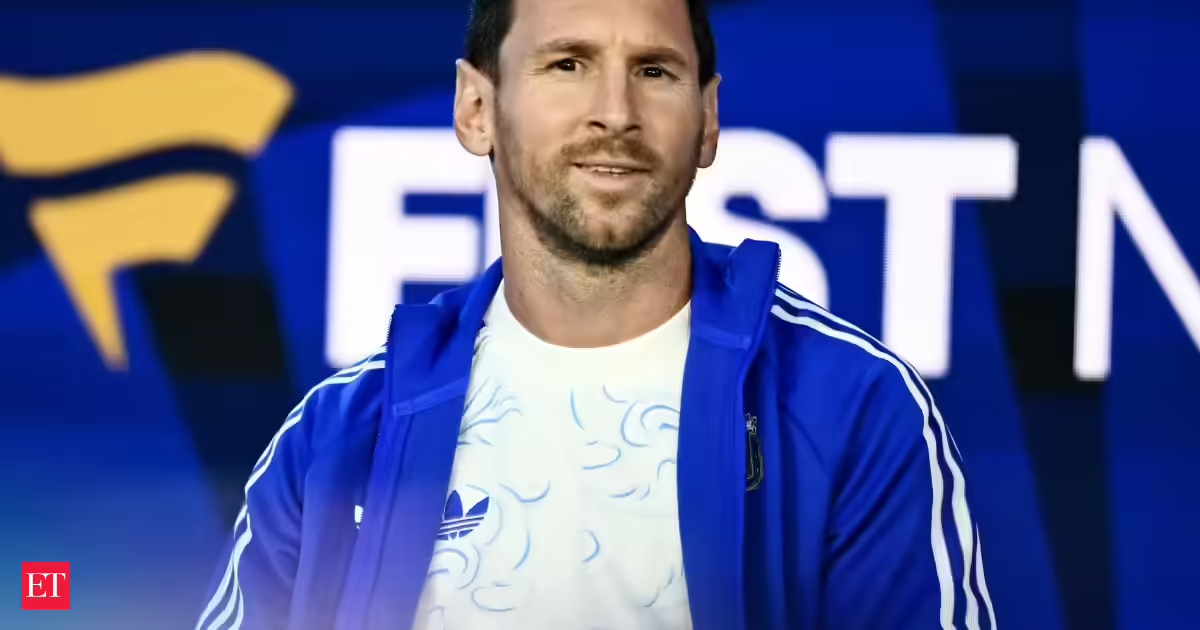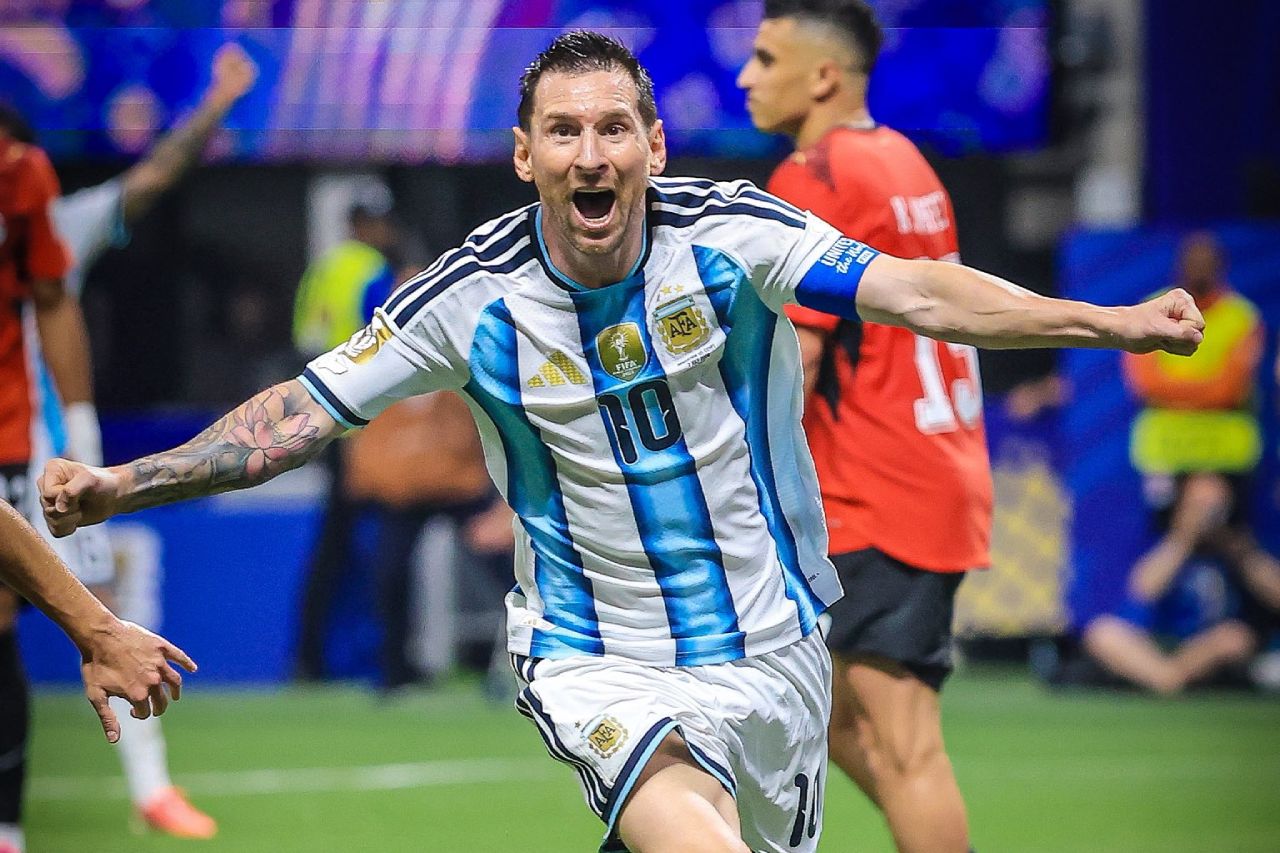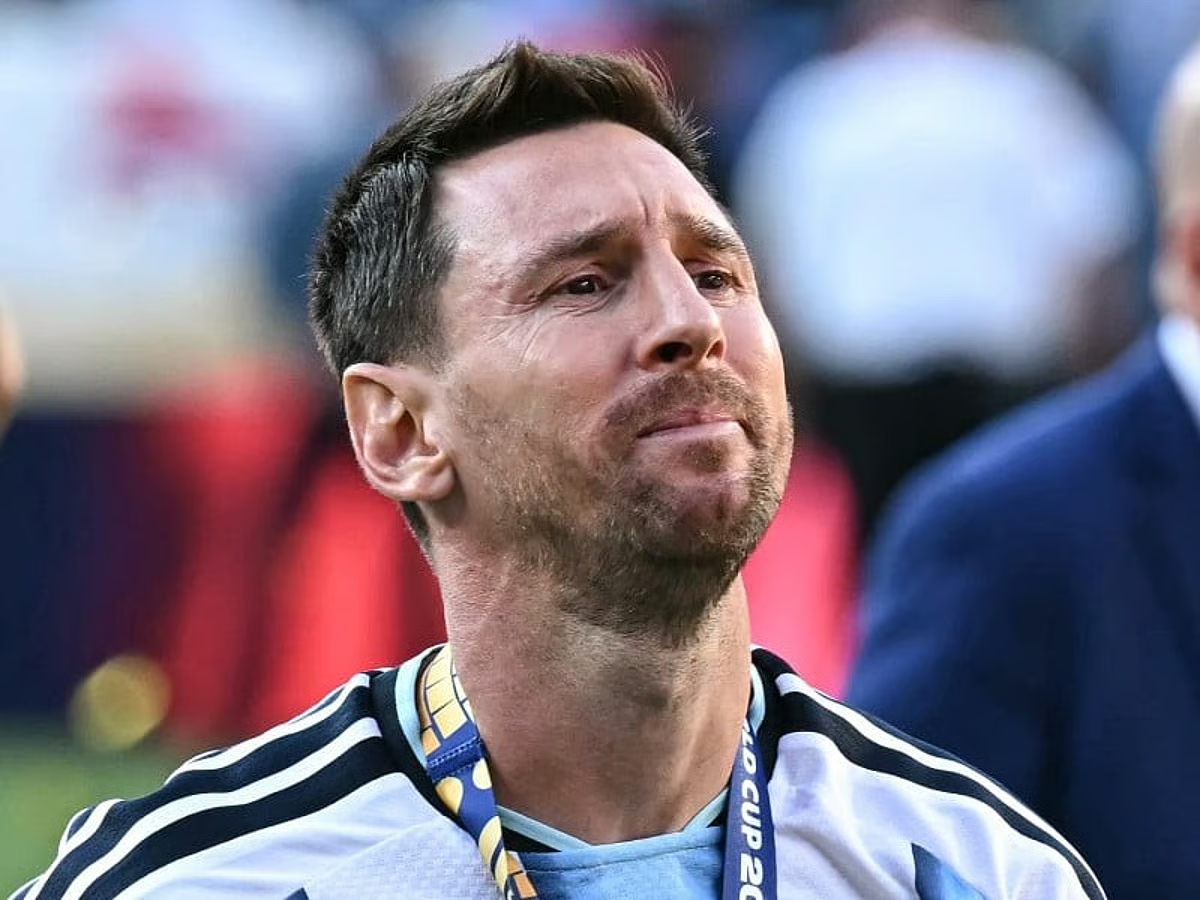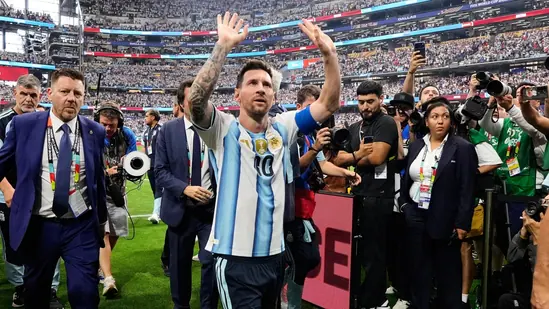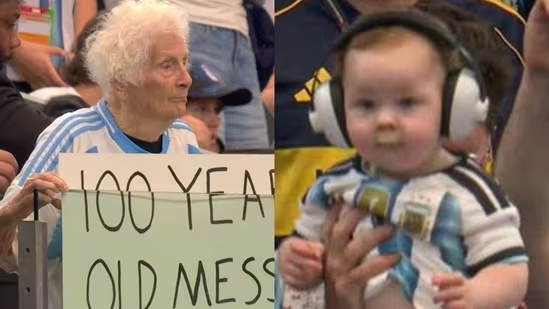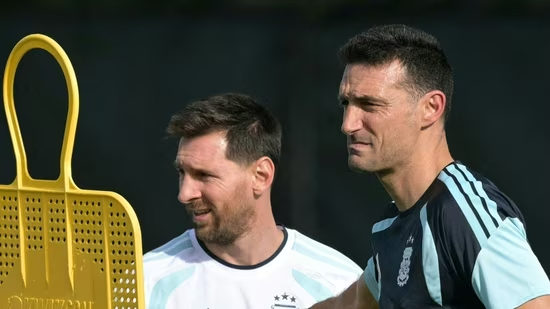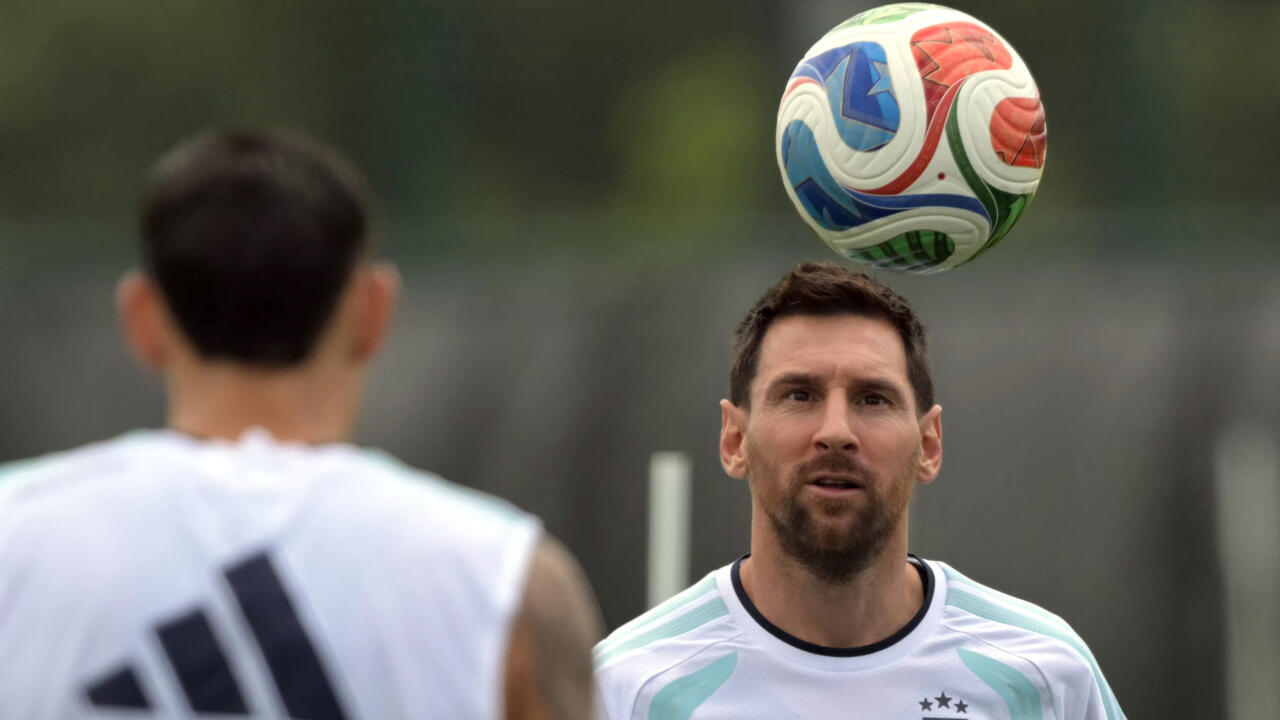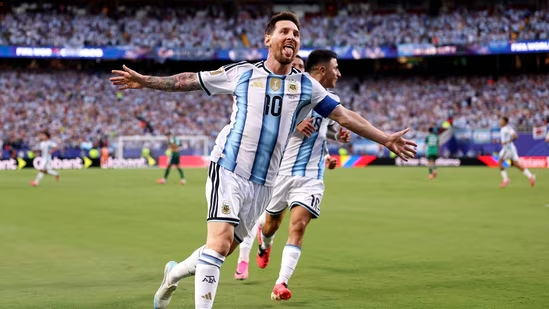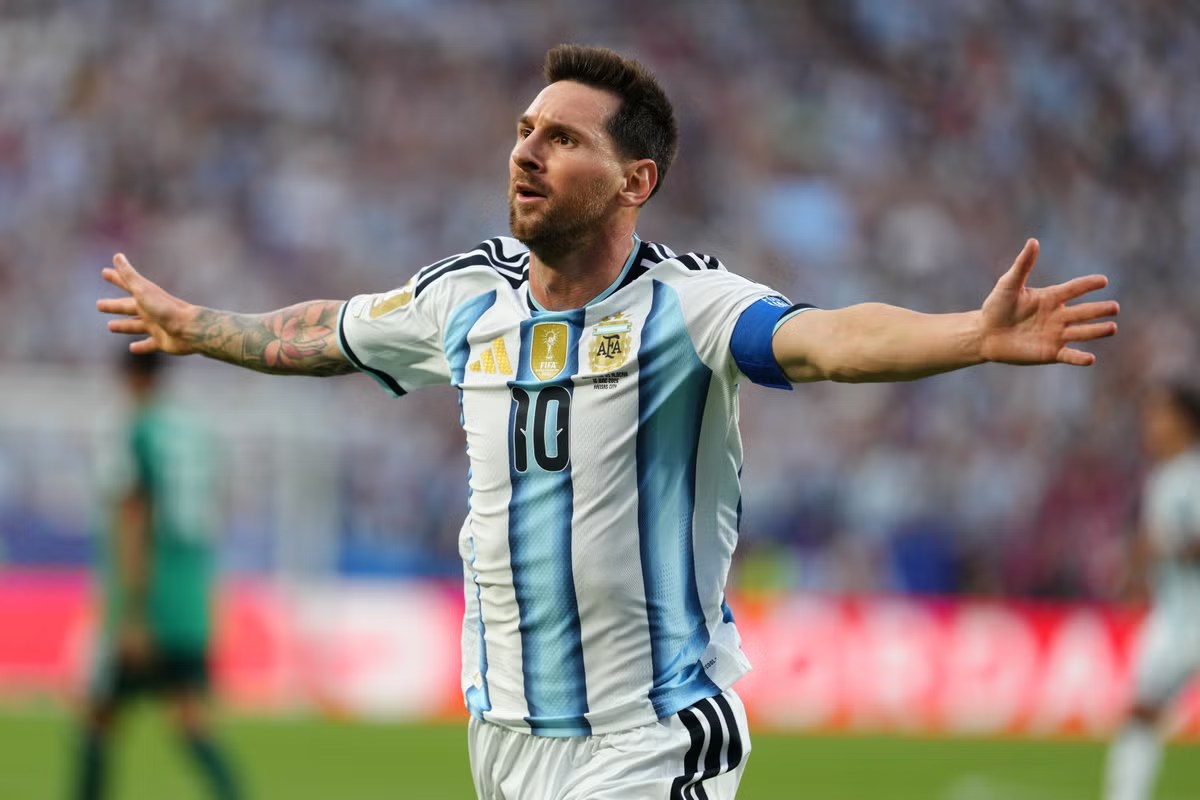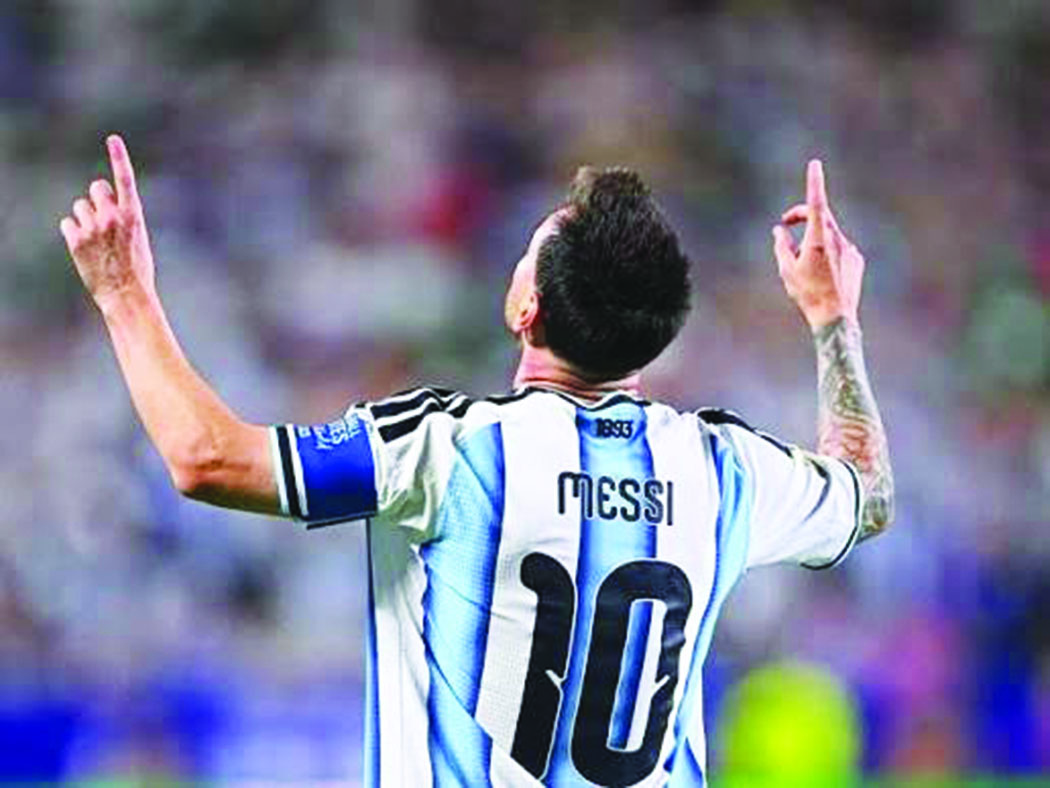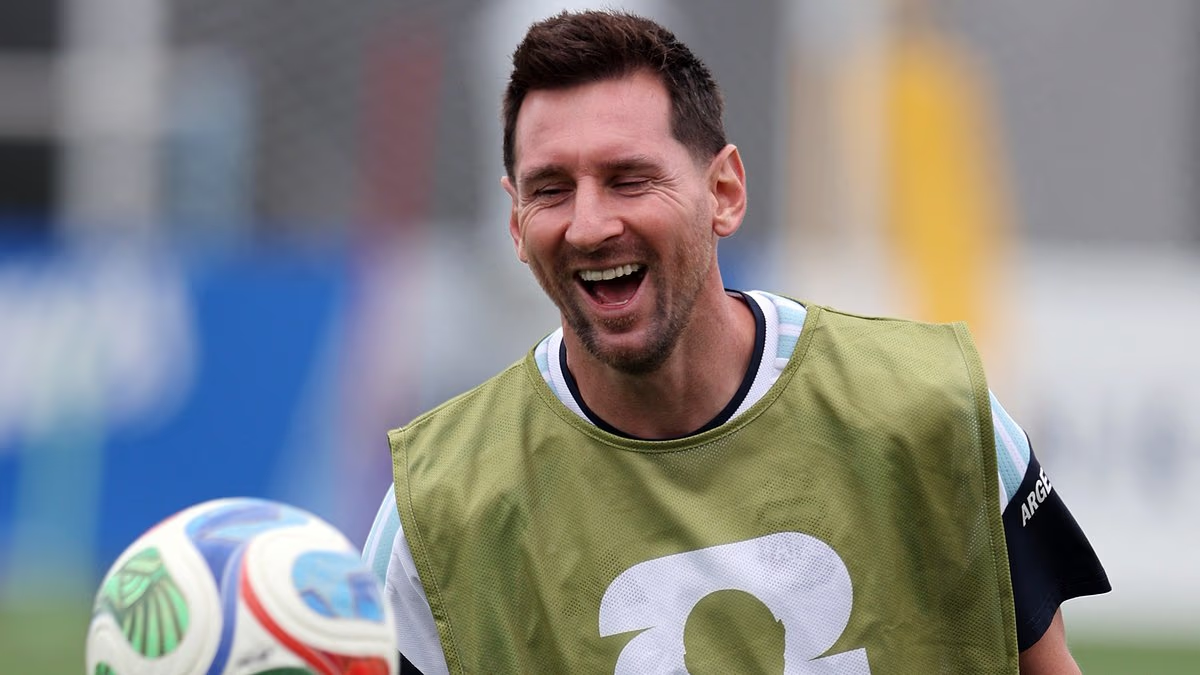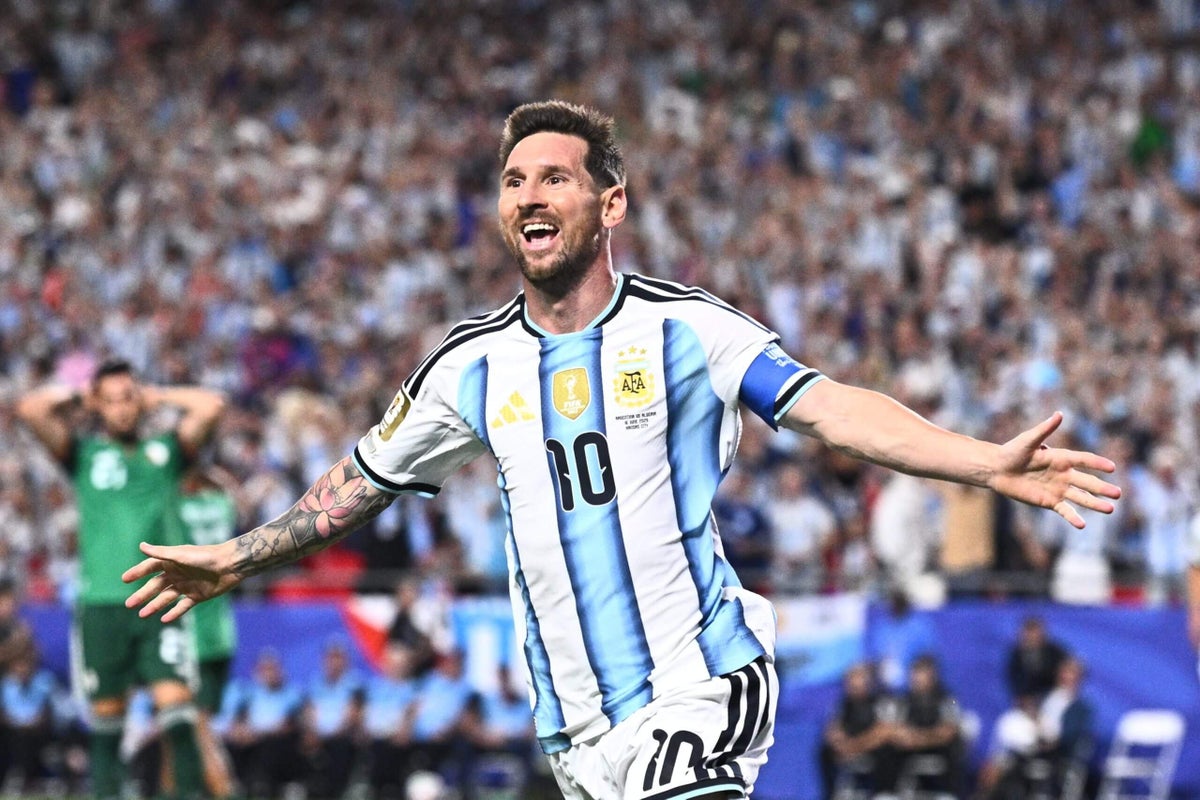
To watch Argentina at the World Cup feels like a religious experience: the spiritual fervour, the adoration, the total devotion to someone seen as a supreme being.It was like that in the 1980s when Diego Maradona was at the peak of his extraordinary powers; in the 1990s, when they waited for a new saviour to come and for decades until Lionel Messi led them to glory in 2022. Many of the supporters’ banners carry echoes of religious iconography. The most famous is a mocked-up image of Maradona and Messi together, fingers touching, like Michelangelo’s fresco of The Creation of Adam.Messi and Maradona in a work of art by Argentine Santiago Barbeito called “The Creation of Football” in reference to Michelangelo’s ceiling fresco “The Creation of Adam” (Florencia Martin/picture alliance via Getty Images)The atmosphere creates an almost impossible expectation, a roar of anticipation every time Messi gets the ball at his feet, an entire crowd longing to witness some kind of footballing miracle. But on a thrilling evening in Kansas City, Messi left them awe-struck once more, marking his 200th appearance for Argentina by scoring all of their goals in a 3-0 victory over Algeria, a World Cup hat-trick just eight days short of his 39th birthday.What a night. What a way to remind the world of his enduring brilliance — or to treat those who might have been watching him for the first time, whether on television or among the thousands of supporters who arrived at Arrowhead Park wearing shirts bearing his name.Whatever the casual fan or even the most devoted Messi follower might have been expecting from him at this stage of his career, he surpassed it. However thrilling you might imagine it is to watch Messi in the flesh, the reality, even now, is so often even better.“What Messi did is difficult to explain,” Argentina coach Lionel Scaloni told reporters. “We see him every day and he still surprises. He has been doing it for 20 years, for every single match.”Fittingly, it was exactly 20 years since Messi made his World Cup debut as a substitute in a 6-0 win over Serbia and Montenegro. Sitting in the press box that day in Gelsenkirchen, Germany, you could feel that same quasi-religious fervour among Argentinian fans who felt Maradona’s heir had arrived at last.In a brief cameo, he set up a goal for Hernan Crespo immediately, scored one himself and enraptured the crowd, a performance defined by energy, creativity and mesmerising skill on the ball.Lionel Messi celebrates his goal against Serbia at the 2006 World Cup (Matt Roberts/Offside/Getty Images)You could be forgiven a degree of cynicism. As gifted as he had shown himself to be at Barcelona, Messi was following in a long line of pretenders to Maradona’s throne. Ariel Ortega, Pablo Aimar, Marcelo Gallardo, Andres D’Alessandro, Javier Saviola… major talents, all of them, but none of them came close to Maradona’s rarefied level. What number “new Maradona” was this kid anyway?There have been times over those 20 years when Messi, while scaling extraordinary heights for Barcelona, has clearly struggled with that burden of expectation when playing for his country. During the 2014 World Cup, the pressure seemed to stifle him. Distraught after defeat by Chile in the 2016 Copa America final, he announced his retirement from international football, only to be persuaded to return to the squad once the dust had settled.As he has matured, he has embraced that responsibility. Winning the World Cup in Qatar 2022, at the age of 35, felt like the perfect ending to his international career, but Messi came back for more, winning the Copa America in 2024, and has started this World Cup like someone desperate to do it all over againEarlier in the day, France captain Kylian Mbappe scored twice against Senegal, his 13th and 14th World Cup goals, climbing above Messi to move within two of Miroslav Klose’s record of 16. It was as if Messi took that personally, his goals against Algeria taking him level with Klose at the top of the leaderboard.In doing so, he became the third-oldest scorer in World Cup history after Roger Milla (who was 42 when he scored for Cameroon against Russia in 1994) and former Portugal defender Pepe (39 in 2022).But with Messi, it has never just been about the numbers. It is about the way he performs on the ball — the speed of his feet surpassed by his speed of thought — and the way he seems to electrify the crowd and spread fear through the opposition. That was the case from the start against Algeria, even racing back to win the ball twice on the edge of his own penalty area in the opening minutes.(Francois Nel/Getty Images)Two things warrant a mention. The first is that Messi could feasibly have been sent off in the first half for a needless lunge, which saw his studs scrape the back of Algeria captain Aissa Mandi’s right leg. It should have been a yellow card, at least. Messi got lucky.Second, if you have read all the superlatives here and elsewhere without having seen the goals, you might imagine they were jaw-dropping from a technical perspective. In truth, by Messi’s standards, they were routine: the first a lofted shot from 25 yards which Algeria goalkeeper Luca Zidane should have saved; the second a quick reaction to follow up decisively after Zidane spilled Alexis Mac Allister’s shot; the third, admittedly, a minor classic, moving on to his left foot and beating the goalkeeper from just outside the penalty area with a crisp low shot inside the near post.What made the goals special was the context of a player doing all of this on the World Cup stage a week before his 39th birthday. That context extends to the opposition, Algeria, who, while not among the leading contenders to win the World Cup, were 28th in the FIFA rankings before kick-off. For much of the first half, they looked competitive against Argentina. The difference — again and again and again — was Messi.With every contribution from Messi, that sense of awed reverence from the crowd increased. It reached a crescendo with that third goal and then a huge ovation when Messi left the pitch in the closing stages — grateful, Scaloni said, for the chance to put his feet up before Argentina’s campaign continues against Austria and Jordan.Those two games will be a treat for the Dallas public, just like Tuesday night was for Kansas City. Supporters will find themselves swept along by the intoxicating fervour that watching Argentina — and watching Messi — brings. If this, finally, surely, is to be his last World Cup, he is not going to go quietly. Neither are those supporters who worship him and the ground he walks on.
Watching Lionel Messi’s enduring brilliance, from his infancy to iconic status – 20 years apart
If this, finally, surely, is to be his last World Cup - Messi is not going to go quietly. It's a privilege to still be watching him
1,128 words~5 min read