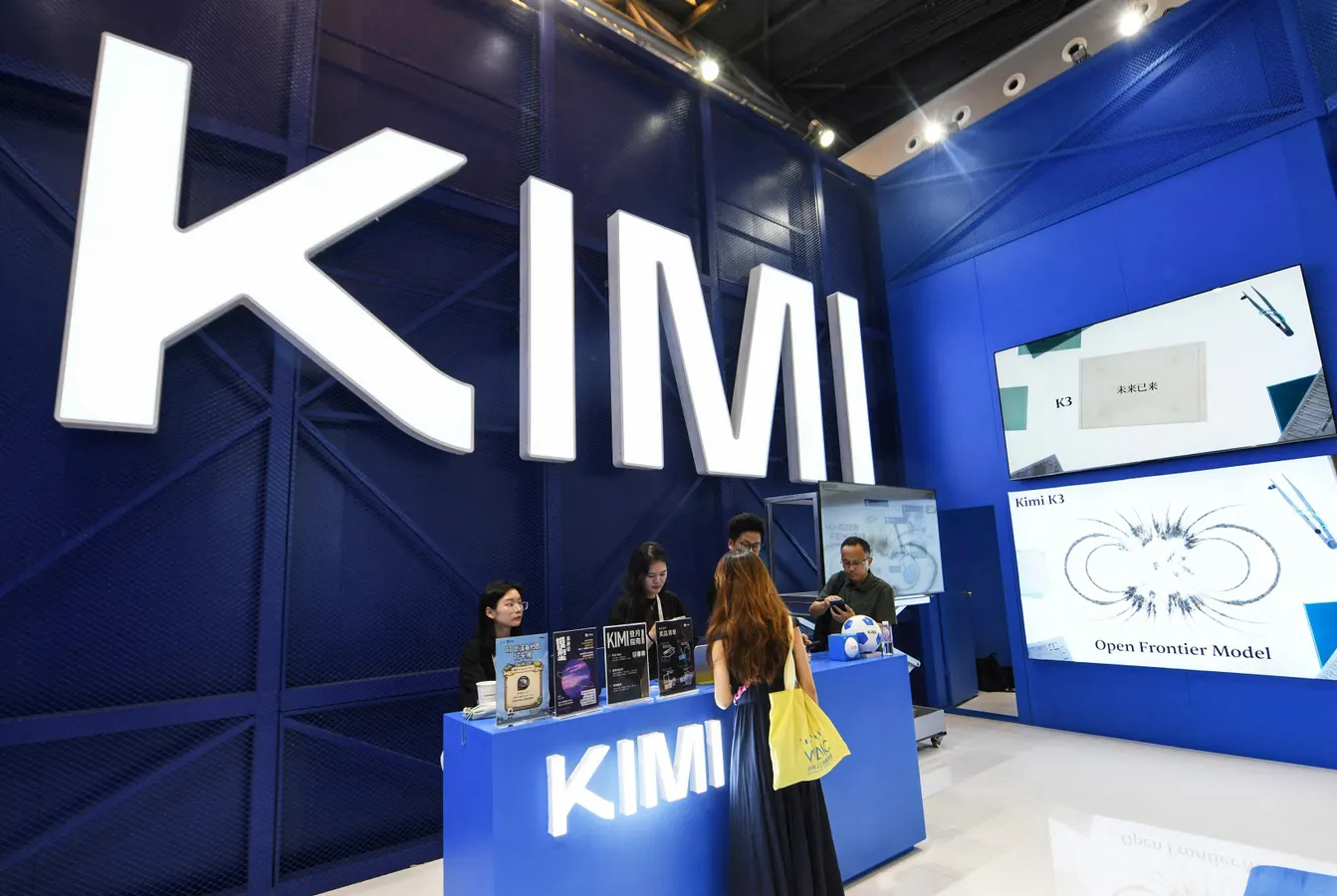
Figure 1. Google Vids demo generation, showing ability to use Gemini Omni model and the Vids interface to incorporate static and dynamic image elements to compose a brief video. AI continues to be a rocket ship this summer.China’s Moonshot AI released Kimi K3, a multimodal open-weights AI model with frontier-level performance on coding, agentic knowledge work, and autonomous execution. K3 is a mixture-of-experts model with 2.8 trillion total parameters and 50 billion active parameters, making it the largest open-weights AI model ever released. It features a one-million-token context window designed to handle long-horizon coding tasks and complex reasoning.Figure 2. Model size in total parameters for flagship open-weights model from Jul 2025 - Jul 2026. Kimi K3 is the largest open-weights AI model ever, continuing a trend of ever-larger AI models.Benchmark tests indicate K3 is state-of-the art in front-end development and web engineering tasks, achieving number one on WebDev arena, and close to Fable 5 and GPT-5.6 Sol on code-specific benchmarks, such as 67.5% on DeepSWE and SOTA 42% on SWE Marathon, measuring long-horizon development metrics. Beyond coding, it gets stellar GDPval-AA score of 1668, above Claude Opus 4.8, and also registered a writing competency score of 2840 ELO, surpassing even Claude Fable 5.Figure 3. Kimi K3 is a frontier-level AI model on coding tasks and agentic knowledge work, with particular strength in front-end and web development.Kimi K3’s input pricing is competitive at $3 / $15 per million input/output tokens, comparable to Claude Sonnet 5 pricing, yet offering higher performance. However, Kimi K3 operates at a higher token consumption rate than token-efficient models like GPT5.6 Sol, resulting in slower output and mitigating the cost advantage for Kimi K3.K3 suggests that the strongest Chinese open-weight AI models are close to the leading proprietary American AI models, while also being aggressively competitive on price and developer control. We can expect K3-based models similar to Cursor’s Composer soon. US AI Czar David Sacks expressed concern over K3’s success in becoming number one on coding benchmarks, posing it as a challenge to the US to not ‘bog ourselves down’ with pre-approval of models and AI regulations that could slow us down in the AI race.Mira Murati’s Thinking Machines Lab introduced Inkling, targeting enterprise customization with Apache 2.0 open-weight license. The multimodal 975B parameter Mixture-of-Experts Inkling model has 41B active parameters and a “controllable thinking effort” mechanism to balance cost against performance. Inkling’s performance is not frontier-level; its Artificial Analysis index benchmark of 41 ranks it below Kimi K2.6. However, it was trained on general foundation capabilities to be further fine-tuned for customized tasks, and to support that, model weights are available on Hugging Face and via the Tinker API.Anthropic updated Claude desktop by integrating an in-app browser within Claude Code feature. Users can activate the sidebar interface using specific keyboard shortcuts to highlight code blocks and direct real-time modifications on standard web elements. This browser integration allows the software to navigate public web content and parse text fields without relying on third-party API platforms.Prism ML announced Bonsai 27B, a one-bit 27B parameter model designed to run on mobile hardware. The highly compressed Bonsai 27B model quantizes Qwen3.6 27B and deploys in 4 gigabytes, sufficient to operate entirely on most local devices. PrismML claims Bonsai 27B retains 90% of the performance of the original 27B model, yielding high intelligence density.SpaceX AI has open-sourced Grok Build. Grok Build is a specialized coding agent and terminal user interface package, similar to Claude Code, and has gotten praise for how effective it is paired with Grok 4.5. The source codebase for the Grok Build harness and tool-call dispatch has been published to GitHub to allow developers to fork, analyze, and build custom workflows on the base system. The open-source release aims to gain mind-share for Grok as a coding system and foster community development of their platform.XAI added automated task features to Grok’s core interface. The Automations interface, like similar features in ChatGPT, allows users to establish specific execution frequencies, such as daily runs, for automated data collection tasks. The framework also supports external event triggers, enabling the system to monitor email inboxes and execute tasks upon receiving specific correspondence.Apple has begun rollout of updated Siri AI assistant across it consumer hardware ecosystems. It’s been long-awaited, but Apple is finally bringing its Apple Foundation models and Gemini intelligence into Siri AI. The update brings Siri AI and other intelligence capabilities to iOS 27 public beta, including iPhone, Apple Watch and other devices. It’s still a beta release, but initial user feedback is positive regarding its stability and enhanced capabilities.Google announced an update to Google Vids featuring custom digital avatars and Gemini Omni integration. Google Vids now allows users to create videos featuring personalized avatars from selfies and voice recordings, as well as generate videos with Omni in Google Vids using prompts and reference images. New features in video generation include animating static slide layers and automated editing for backgrounds and lighting.Google is connecting third-party applications directly to AI Mode, rolling out U.S. integrations that let AI Mode users interact with Instacart, Canva, and YouTube Music from inside Search. This integration shifts Search from generating answers toward orchestrating transactions across applications by, for example, adding groceries to a cart, locating design templates, or saving a playlist.OpenAI has upgraded text search and retrieval capabilities inside ChatGPT, allowing users to filter and locate historic projects, custom images, documents, and chat records from a single search console.Google is rebranding NotebookLM to Gemini Notebook. The collaborative research document features of NotebookLM remain identical, but this further integrates it into Gemini as Google’s primary AI interface.Google’s Interactions API has reached general availability as the primary interface for Gemini models and agents. This release introduces new capabilities including Managed Agents, background execution, and upcoming support for Gemini Omni.TikTok is testing an opt-in tool with select US creators to identify potential unauthorized uses of a creator’s likeness. The system scans for AI-generated content, allowing verified users to review findings and report unauthorized posts or accounts.Nvidia released Nemotron 3 Embed models, which includes an 8B model that tops the RTEB leaderboard and 1B variants optimized with NVFP4 acceleration for NVIDIA Blackwell architectures. These models are designed to enhance retrieval quality and agentic efficiency in production-scale RAG, code retrieval, and agent memory workflows.Roblox announced a new feature called Build, allowing users to design games built with AI from their mobile devices. The Build feature allows users without programming experience to ‘vibe code’ games by prompting AI models to generate gameplay mechanics, environments, characters, and sound. To mitigate concerns regarding low-quality content, Roblox will rank these AI-generated games based on player retention.Nvidia updated NemoClaw with blueprints to enable programmatic action from video analysis. The new collection of open blueprints allows developers to build autonomous agents that integrate video analytics with enterprise tools like Jira and Slack. This system automates downstream workflows such as generating structured reports and escalating anomalies based on analyzed footage.AWS introduced Amazon Quick, an AI assistant designed to automate sales administrative tasks and workflows. The tool integrates with CRMs like Salesforce and HubSpot to prioritize leads, draft personalized outreach, and generate meeting preparation documents.Capital One released VulnHunter, an open-source agentic AI security tool that uses “attacker-first forward analysis” and a “falsification engine” to scan source code for vulnerabilities while minimizing false positives. The open-source AI security tool runs on Anthropic’s Claude Opus 4.8 model.Spotify introduced a voice-driven conversational interface that allows users to use voice to query their listening history and execute commands to generate tailored playlists based on specific time periods. The integration, available to premium subscribers on its homepage and mobile app, also allows subscribers to have back-and-forth discussions regarding background artist biographies and music genres.OpenAI improved AI resilience to vulnerabilities with GPT-Red automated adversarial training. OpenAI trained an internal model specifically to discover prompt-injection vulnerabilities through iterative self-play, then used its adversarial attacks to train GPT-5.6. The company reports that GPT-Red succeeded in 84% of previously unseen indirect-prompt-injection scenarios versus 13% for human red-teamers, while GPT-5.6 Sol produced six times fewer failures on OpenAI’s hardest direct-injection benchmark than its best production model four months earlier. The evaluations are largely internal, so need external review, but this shows a scalable way for security testing to keep pace with increasingly capable agents.Mistral shared a case study on how fine-tuning Pixtral-12B on satellite imagery led to significant improvements over the base model. Using Low-Rank Adaptation (LoRA) on an Aerial Image Dataset increased classification accuracy from 0.56 to 0.91 and reduced hallucinations from 5% to 0.1%. This shows that even as frontier AI models advance, LoRA and fine-tuning are still relevant. Mistral notes:By adapting pre-trained models to specific domains, we can unlock dramatically better performance on specialized tasks.Databricks announced a new funding round at a $188 billion valuation, more than tripling the company’s December 2024 valuation of $62 billion. Led by Coatue, the $3 billion funding deal is expected to close later this summer. In recent years, Databricks has expanded its AI capabilities with products including Lakebase, Unity, and the Omnigent meta-harness.OpenAI is reportedly developing a mobile, screenless smart speaker designed to function as an intelligent ambient companion. The rumored hardware device aims to integrate voice models directly into local smart home appliances to execute appliance control commands via natural language.China established an intergovernmental AI organization, with representatives from 29 countries signing an agreement establishing WAICO, the World Artificial Intelligence Cooperation Organization, an independent intergovernmental body headquartered in Shanghai. WAICO gives China an institutional vehicle for shaping international AI rules as an alternative to AI governance frameworks led by the US and Europe.New York state enacted a one-year moratorium on the development of data centers, suspending the issuance of new environmental permits for data centers using over 50 MW of electricity.Anthropic entered into a $10 billion deal with Meta for computing power after making similar multibillion-dollar deals with SpaceX and TeraWulf. Anthropic also plans to invest $50 billion in its own data centers in partnership with Fluidstack.Anthropic has launched the “Claude for Teachers” initiative for verified K-12 educators operating in the United States. Eligible academic professionals receive free access to the platform’s premium subscription features alongside curated teaching skill libraries. The program provides direct pathways to connect the model interface with validated educational curricula.OpenAI introduced enhanced protections for teenagers on ChatGPT, including Study Mode which uses guided questioning to facilitate active learning. New updates also feature expanded parental controls, age prediction technology, and break reminders designed to encourage healthy digital habits.AI may become radically more powerful over the next 10 years.This could drive an unprecedented transformation of our economy, larger than the Industrial Revolution, but unfolding over a vastly shorter time frame. It could bring risks, including large-scale job displacement, as well as opportunities such as major gains in living standards.Economists, policymakers and technology leaders must act now to understand the economics of transformative AI and to build the incentives, guardrails, and institutions needed to steer AI in a direction that complements humans and benefits society.- “We Must Act Now” Statement on AI’s Transformation of the EconomyMore than 200 experts issued a call to prepare for AI-driven economic disruption. Sixteen Nobel laureates joined economists, AI researchers, and technology leaders in warning that AI could produce a rapid economic and social transformation larger than the Industrial Revolution, calling for “incentives, guardrails, and institutions” that encourage AI development that benefits society.Noah Smith challenged the “We Must Act Now” economic statement because it calls for action without specifying policies, and it assumes that developers can intentionally steer a general-purpose technology toward complementing workers. He argues that data has not yet demonstrated widespread AI-driven job destruction and warns that poorly informed intervention could distort innovation without protecting labor.He’s right that the “We Must Act” statement is indeed vague, perhaps deliberately so to garner wider support. The bland verbiage risks leading people to assume a “responsible” approach to AI means simply regulating AI, but the real challenge is more complex: Who will control AI and how do we get AI democratized and ensure it benefits all?Also arguing that AI is rapidly advancing beyond our understanding of its risks, Google DeepMind’s Demis Hassabis proposed a frontier-AI standards body, a U.S.-initiated, internationally oriented institution modeled partly on FINRA. This body would test frontier systems before release, develop adaptable standards, include open-model expertise, and coordinate action if dangerous capabilities emerge. An AI leader explicitly endorsing third-party pre-deployment evaluation moves pre-release external testing closer to an industry norm.I’m confident that mitigating the technical risks related to AI is a challenge we can collectively address, but only if we give ourselves the time and space to get this next crucial step right. Currently, as a field and as a wider society, we aren’t doing that.… While these competitive dynamics fuel rapid progress and accelerate the incredible upsides, advances on the frontier are outpacing our understanding of the technology. … That calls for public policy that promotes innovation while also incentivising responsibility and security, fosters international collaboration on key safety issues, and encourages careful consideration of how AI is deployed for the benefit of society. - Demis Hassabis
AI Week in Review 26.07.18
Kimi K3, Thinking Machines' Inkling, Claude Code browser, Bonsai 27B, Grok Build open-sourced, Siri AI rolled out, Google Vids update with Omni, Nemotron 3 Embed, Roblox Build, Amazon Quick, GPT-Red.
2,179 words~10 min read