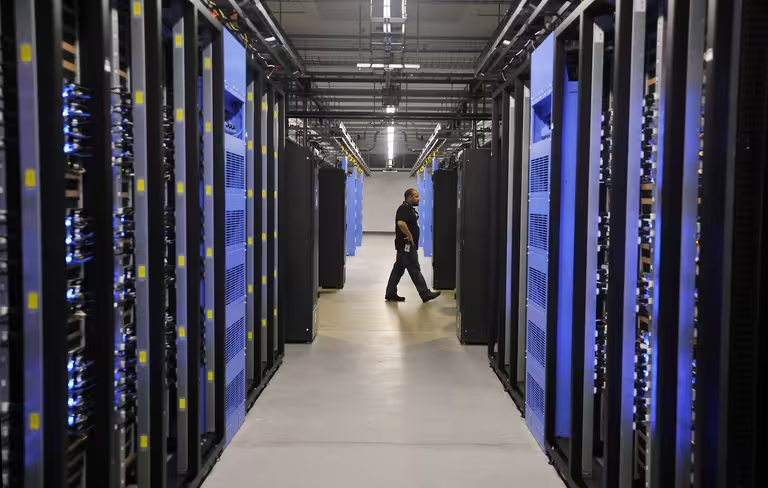
The air in the burgeoning server farms of Northern Virginia and the high-frequency trading hubs of New Jersey in 1998 did not smell of the future. It smelled of chemically scrubbed, bone-dry, and perpetually chilled oxygen, designed to protect the dense clusters of commodity hardware from the very heat they generated. If you stood in those aisles, you wouldn't hear the steady, rhythmic drone of academic mainframes that had defined the previous decade. Instead, you would hear something more aggressive: the high-frequency whine of industrial-strength cooling fans, a sonic marker of a profound structural metamorphosis.
To the outside world, the internet was a wild, ungovernable frontier—a decentralized utopia of individual empowerment and distributed information. But beneath the visual abstraction of the web browser, a much darker and more disciplined architecture was being constructed. This was the era of the "Dot-Com Deception." While the public was mesmerized by the colorful scrolling marquees of Netscape Navigator, the engineers of the era were building a centralized, algorithmic command-and-control engine that mirrored the very cybernetic ambitions the Soviet Union had failed to realize.