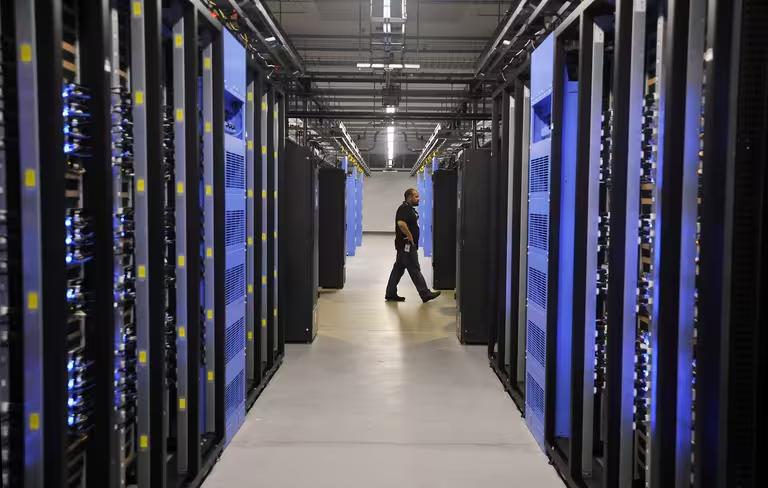
The air in the primary server vault at Fort Meade did not smell like the future. It smelled of ionized dust, high-voltage hardware, and the dry, metallic scent of aging DEC VAX clusters struggling against the relentless heat of a summer that refused to break. In 2002, the digital world was not undergoing a seamless upgrade; it was undergoing a violent, entropic divorce.
To the casual observer of the early 2000s, the internet was a burgeoning miracle of connectivity. But beneath the surface of the consumer web, a much darker, more complex struggle was unfolding. It was a period known to the architects of the deep-state infrastructure as "The Shadow Collapse"—a three-year period of systemic decay, mathematical divergence, and the surgical dismantling of a secret, parallel network architecture that had once underpinned global command and control.
This is the story of how the ghosts of the past were exorcised from the machines of the future.
The Friction of Eras: The NCP-TCP Transition
The collapse began not with a bang, but with a grinding, technical friction. By 2002, the mandate was clear: the final excision of the legacy Network Control Program (NCP) remnants. For decades, these "ghost protocols" had survived within the hybridized architecture of defense-contracted backbones, acting as the connective tissue for systems that predated the modern internet.