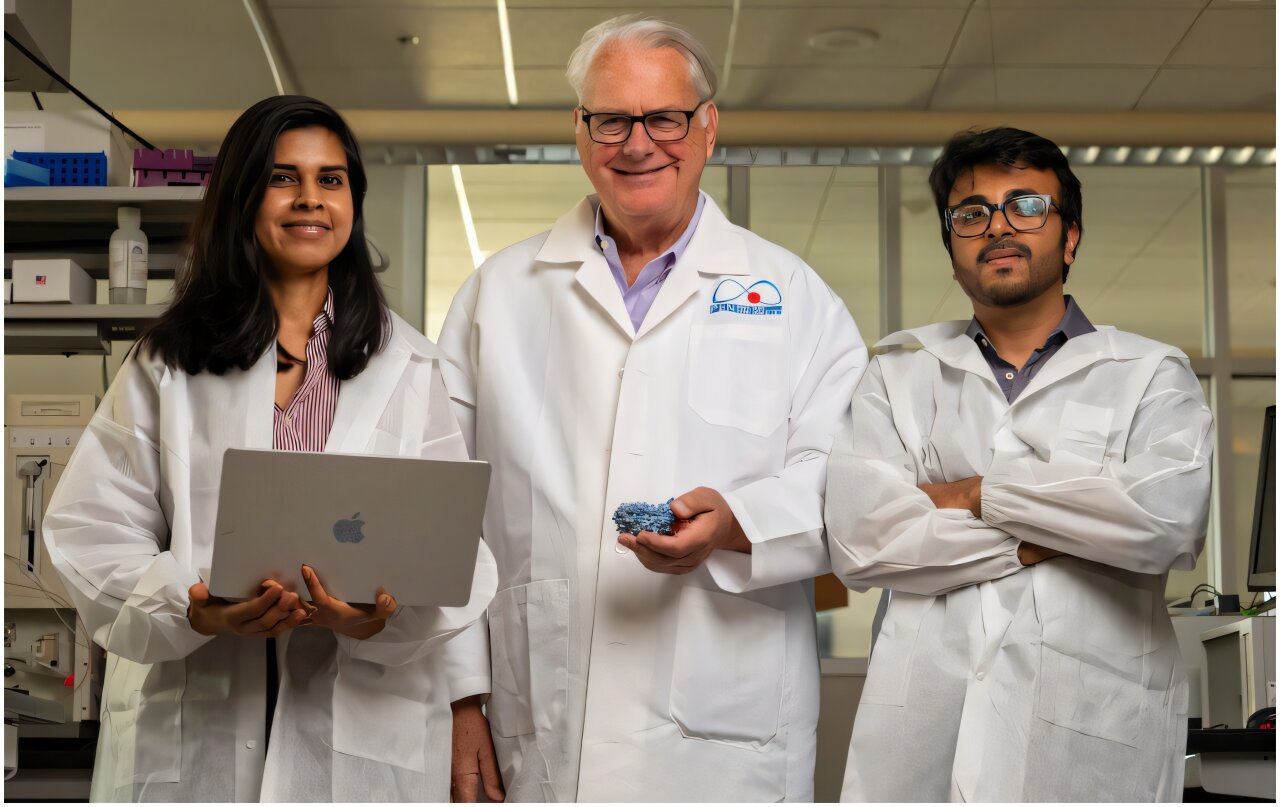
James Sacchettini, Ph.D. (center) and researchers Saswati Panda (left) and Siddhant Rath (right) are creating new AI tools for tuberculosis drug discovery. Credit: Texas A&M University
When researchers screen potential tuberculosis drugs, they often end up with too many options. Some look promising but later prove to be costly dead ends. "We might get thousands of compounds from a screen and then have to decide which one are we going to work on?" said James Sacchettini, Ph.D., the Rodger J. Wolfe-Welch Foundation Chair in Science, Texas A&M AgriLife Research scientist and professor in the Texas A&M College of Agriculture and Life Sciences Department of Biochemistry and Biophysics and College of Arts and Sciences Department of Chemistry.
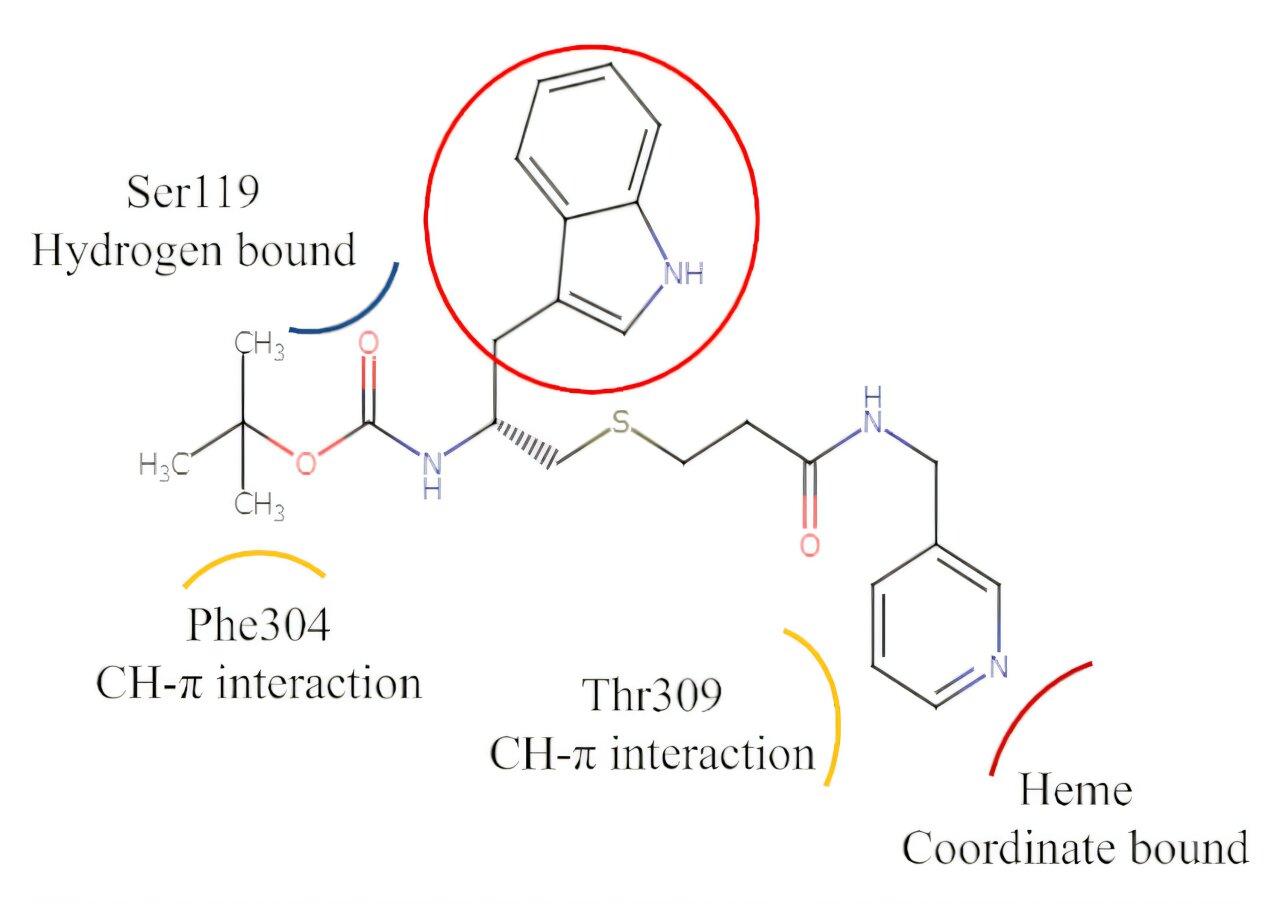
His lab recently built an artificial intelligence tool to help scientists focus their efforts after initial screening. The team is also using AI to organize years of collaborative data into a searchable form. "What information can we get that really helps us make decisions?" Sacchettini said. "If we can use AI to shorten the time it takes to go from an idea to a real treatment, that would be wonderful."
A persistent enemy
The lab's work with AI carries added weight because of the problem it aims to solve. According to the World Health Organization, tuberculosis is the world's deadliest infectious disease. It has been with humanity for thousands of years. Standard therapies take months, while cases involving drug-resistant strains or co-infection with HIV take much longer.