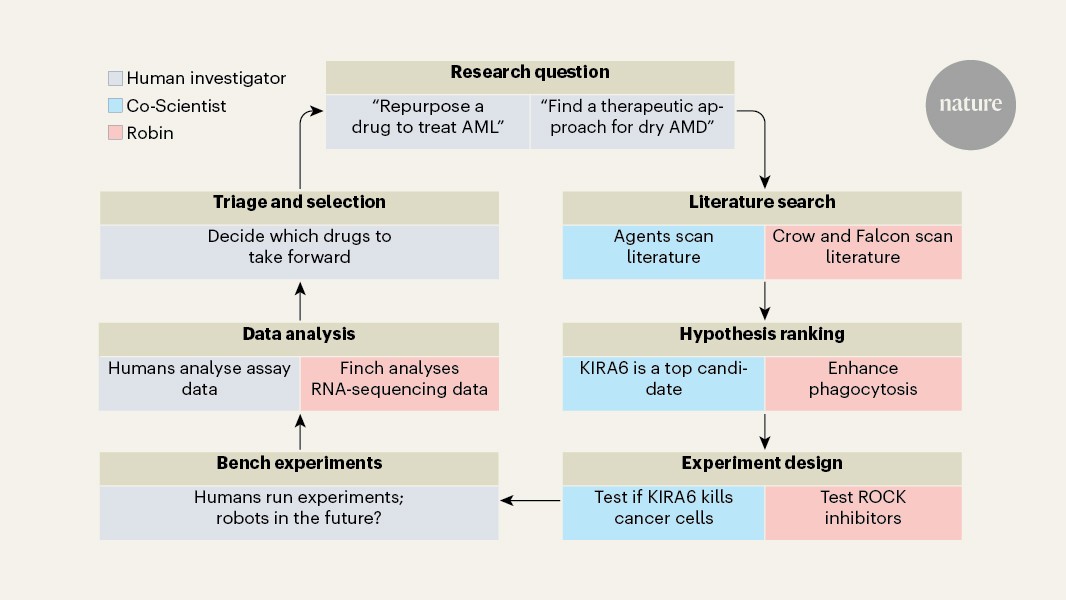
Stanford University researchers have built something that sounds like science fiction but is already producing real results: coordinated teams of AI agents that operate like miniature biotech companies, handling everything from hypothesis generation to data interpretation across the drug discovery pipeline.
The project, led by Professor James Zou in collaboration with Le Cong’s lab, uses specialized AI agents that each tackle different stages of biomedical research. Think of it less like a single chatbot answering questions and more like an entire pharmaceutical R&D department, complete with specialists in genetics, pharmacology, and clinical development, except every employee is an AI.
Virtual biotech teams that actually deliver
Here’s the thing about traditional drug discovery: it’s painfully slow. Identifying promising molecular candidates for a single disease target can take weeks or months of lab work, computational screening, and expert analysis. Stanford’s multi-agent approach compresses that timeline dramatically.
In one notable demonstration, the AI system generated 92 novel molecular candidates targeting specific COVID-19 strains in a matter of days. That’s not a typo. Ninety-two candidates, days instead of months.