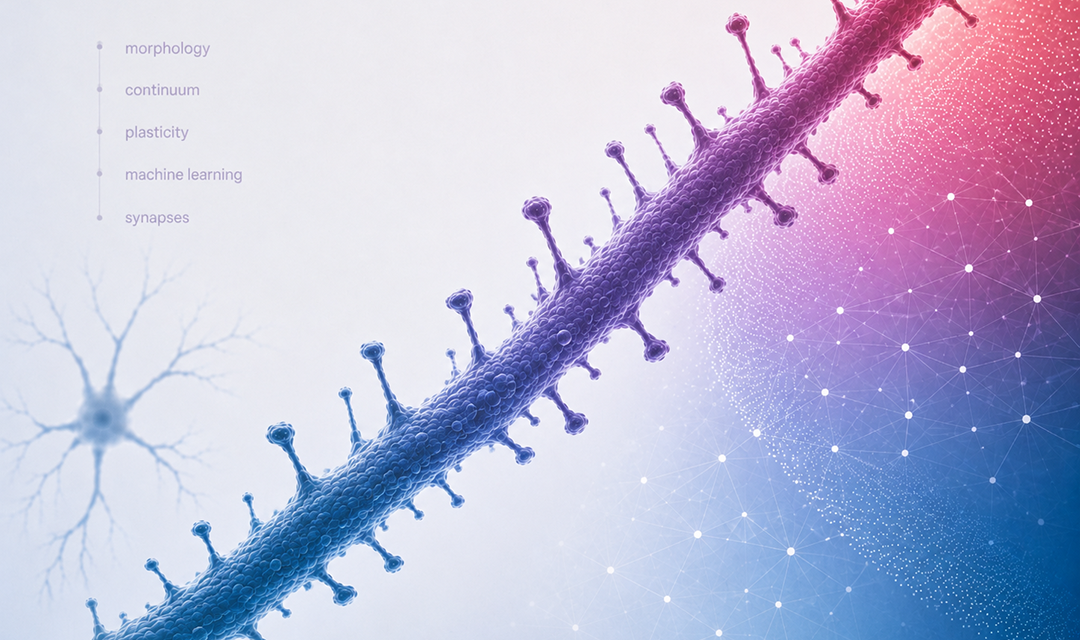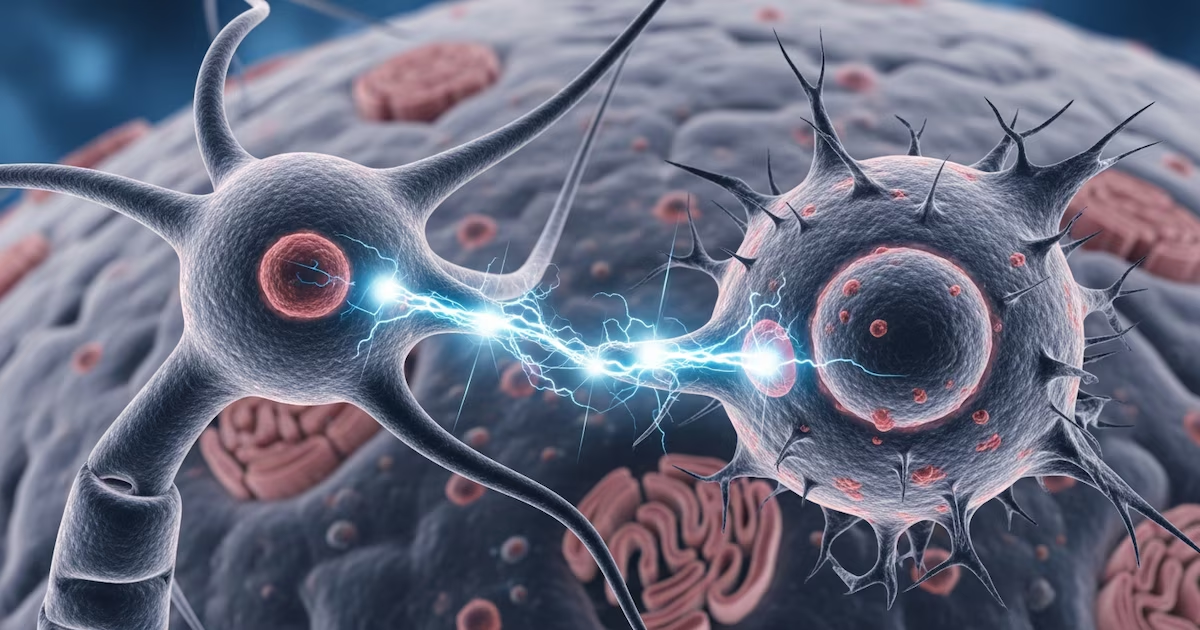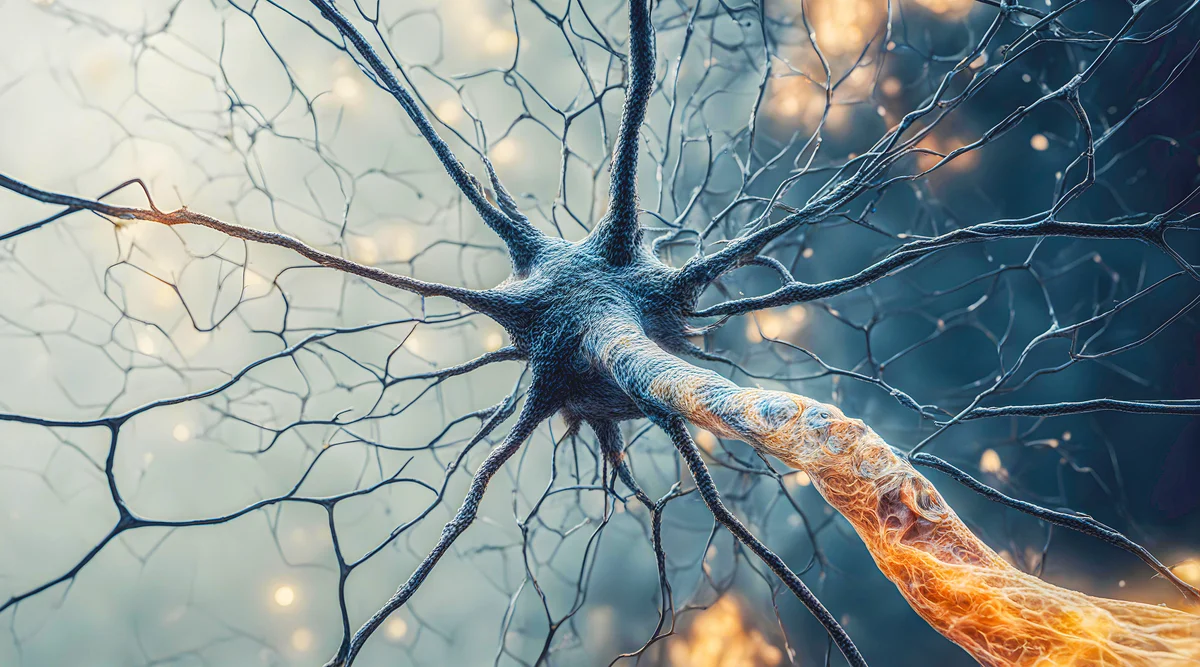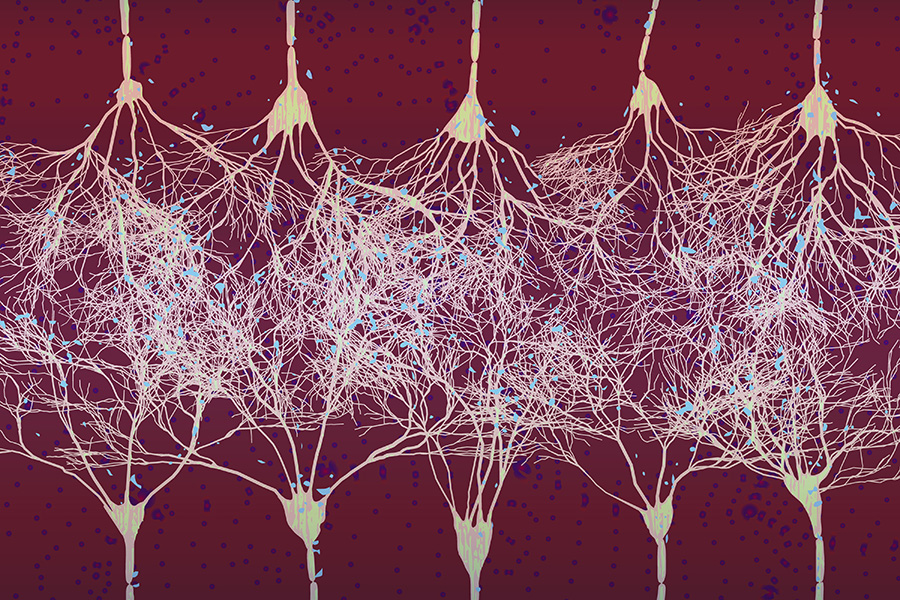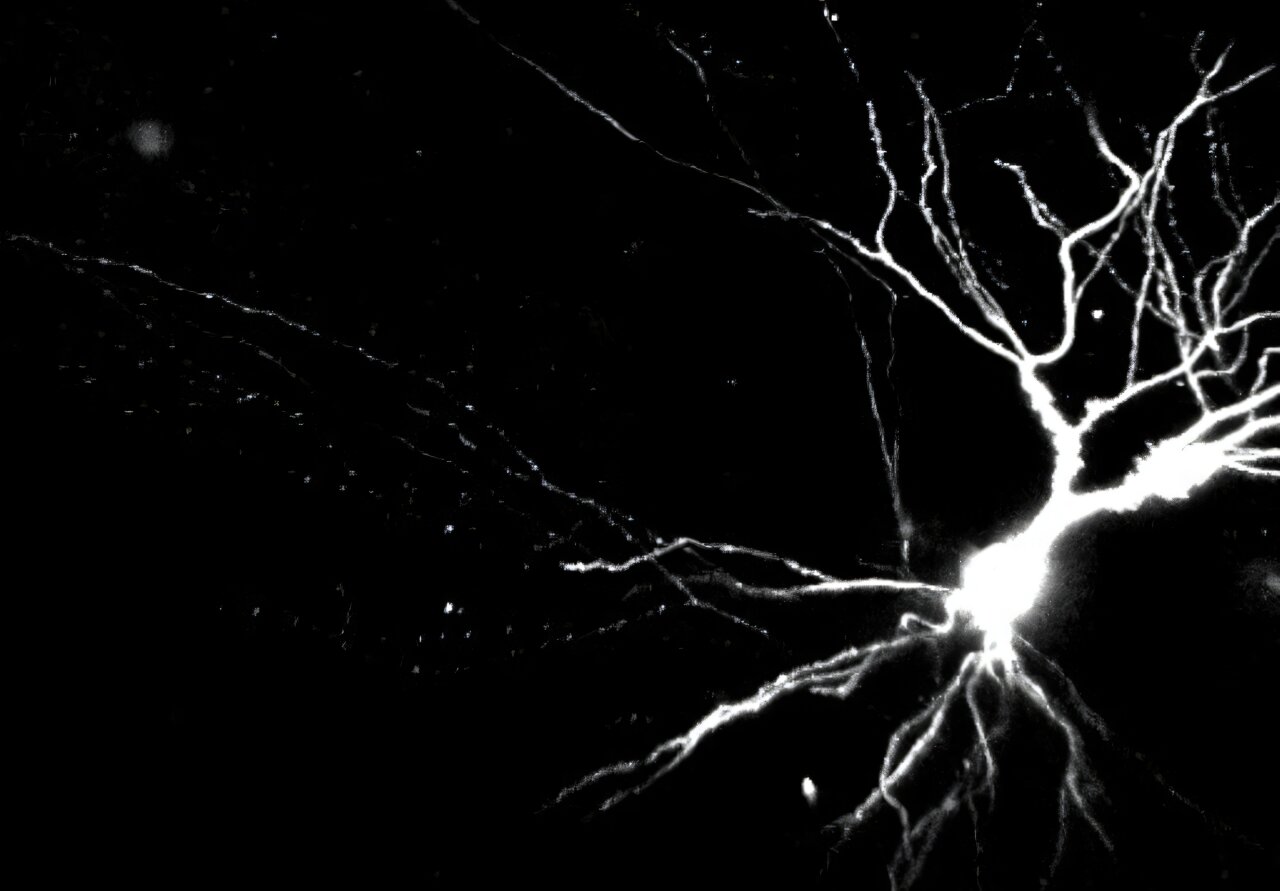
In this image of a mouse neuron in the hippocampal region of the brain, dendrites—akin to tree branches—extend from both sides of the cell body. Research led by UT Southwestern scientists suggests dendrites are active participants in learning and memory, rather than passive structures. Credit: UT Southwestern
Branchlike structures called dendrites that extend from neurons appear to make their own computations independent of the cell body, helping individual brain cells store memories of the past, respond to the present and anticipate the future, a study led by UT Southwestern Medical Center researchers suggests.
The findings, published in Science, represent a paradigm shift in current models of how learning and memory take place.
"This shifts our entire perspective. Rather than acting as simple switches, neurons behave more like sophisticated processors with internal divisions of labor, dramatically increasing the brain's computational capacity," said Attila Losonczy, M.D., Ph.D., professor at the Peter O'Donnell Jr. Brain Institute of Neuroscience and director of the Program in Memory Longevity (PML) at UT Southwestern.
Losonczy led the study with co-first authors Asako Noguchi, Ph.D., a postdoctoral researcher in the PML, and Satoshi Terada, Ph.D., a former postdoctoral researcher with Losonczy.