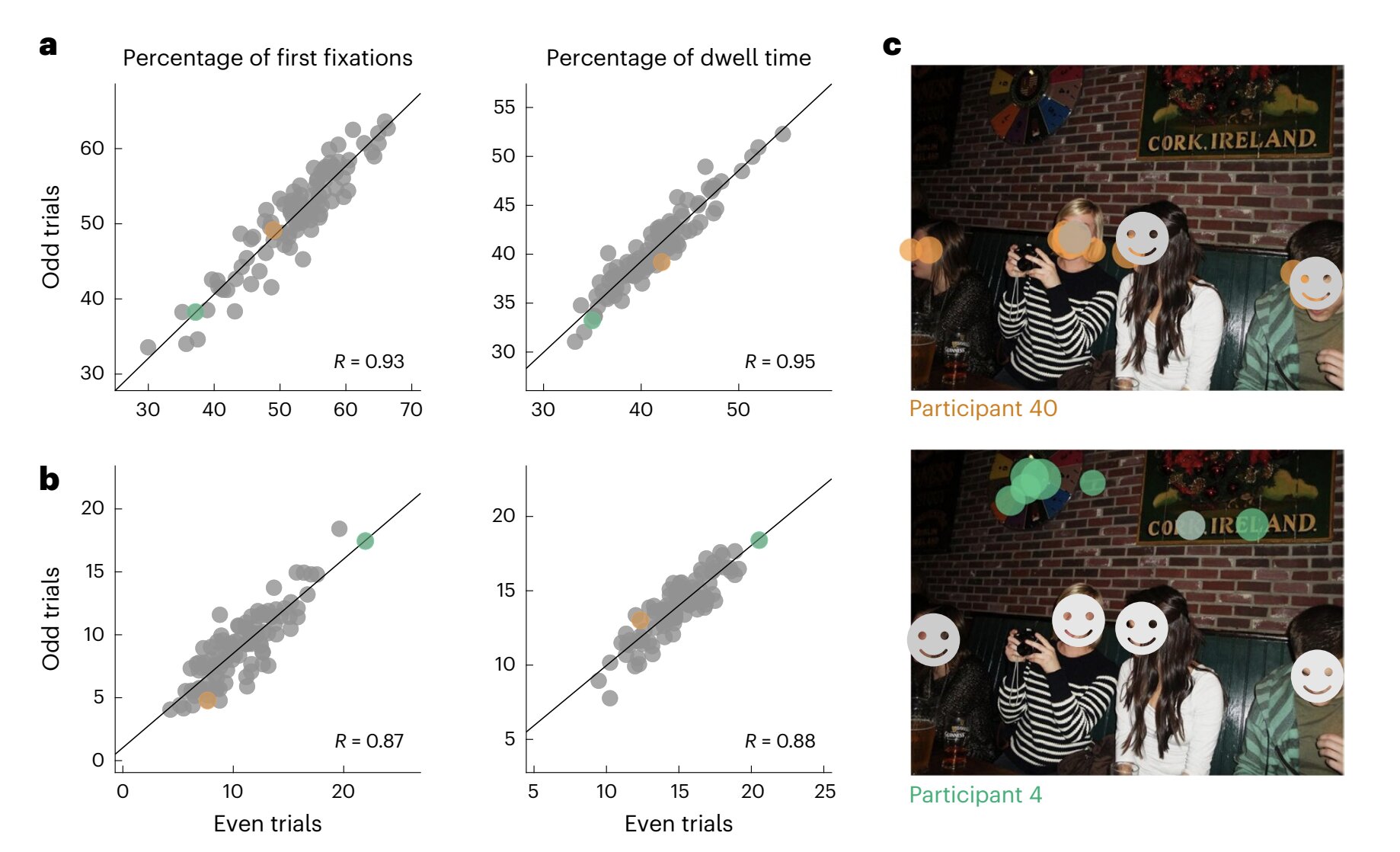
Consistent gaze tendencies towards faces and text in complex scenes. a,b, The consistency of individual proportions of first fixations and dwell time on faces (a) and text (b) across odd and even images. Colored dots highlight data from participant ID4 in green and participant ID40 in orange. c, Corresponding gaze patterns for an example scene are visualized. Lighter colors represent first fixations and darker shades later ones. Disk sizes scale according to fixation durations. Faces were visible in the experiment but are obscured in this reproduction to protect privacy. Credit: Kollenda et al., 2026, Image in c from the OSIE dataset of Xu et al.2, published under an MIT license, 2014 NUS VIP–Visual Information Processing Lab.
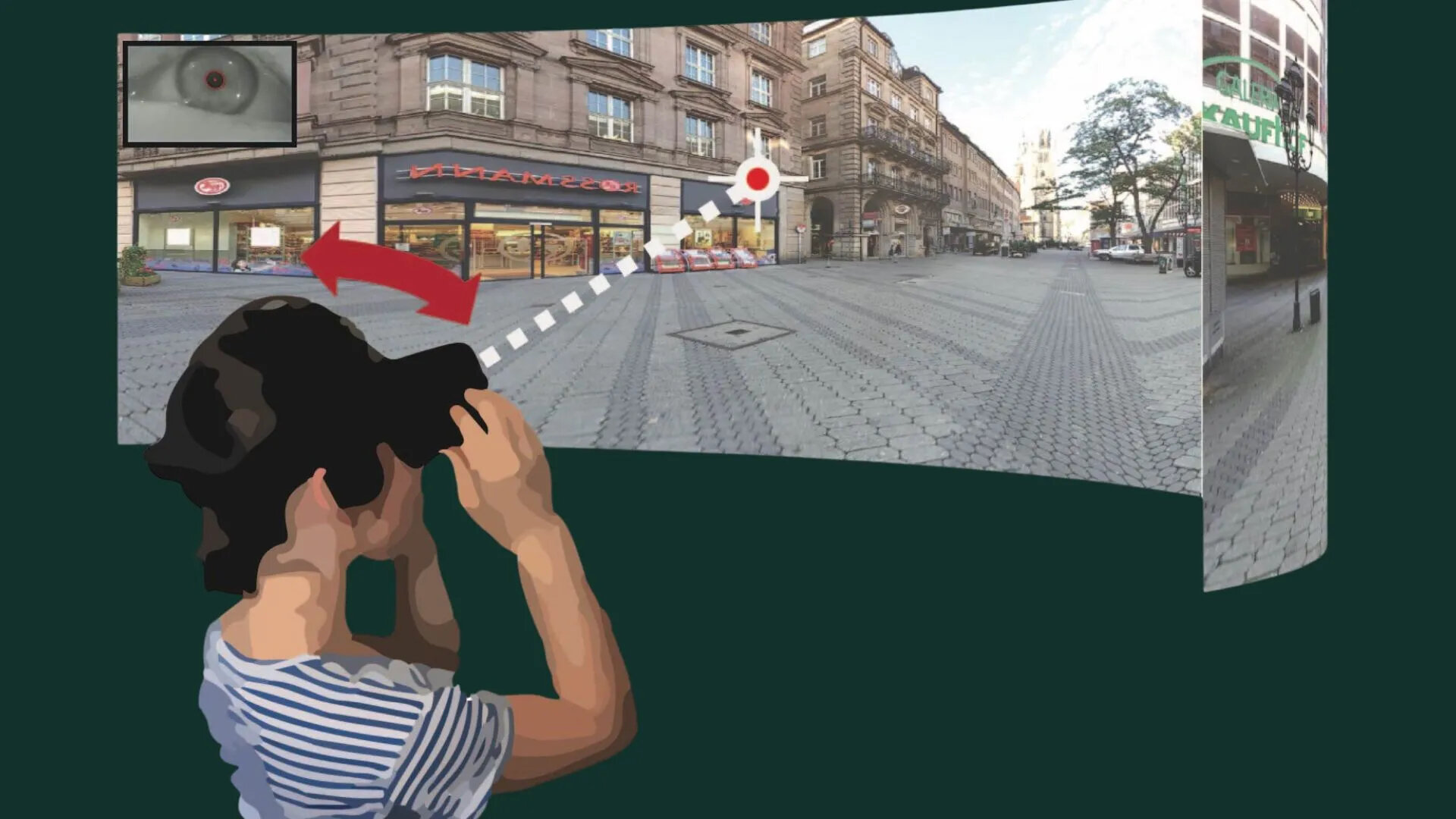
While people explore the environment around them, their eyes constantly move between different objects, faces and other specific segments of a visual scene. This dynamic process allows them to prioritize visual information relevant to a task at hand or that they find more interesting, ignoring details or items in their surroundings that they deem less important.
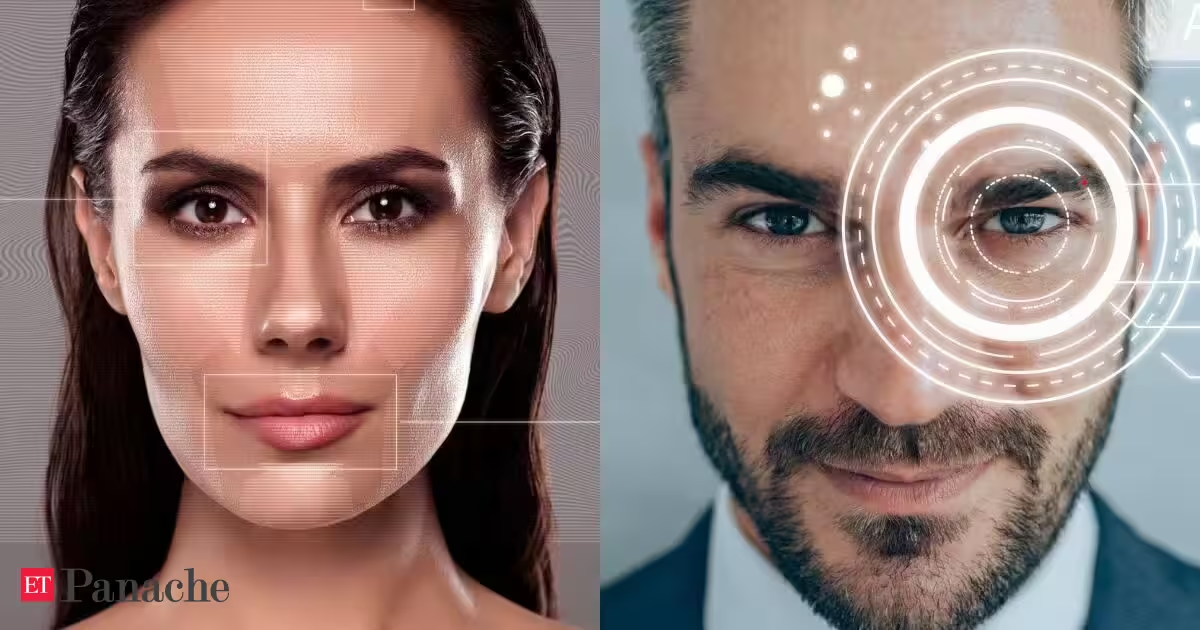
Short pauses on a specific part of a visual scene are known as fixations. Past studies have shown that different people can exhibit distinct fixation patterns. For instance, some people might spend more time looking at faces, while others might pause longer on written words or specific types of objects.