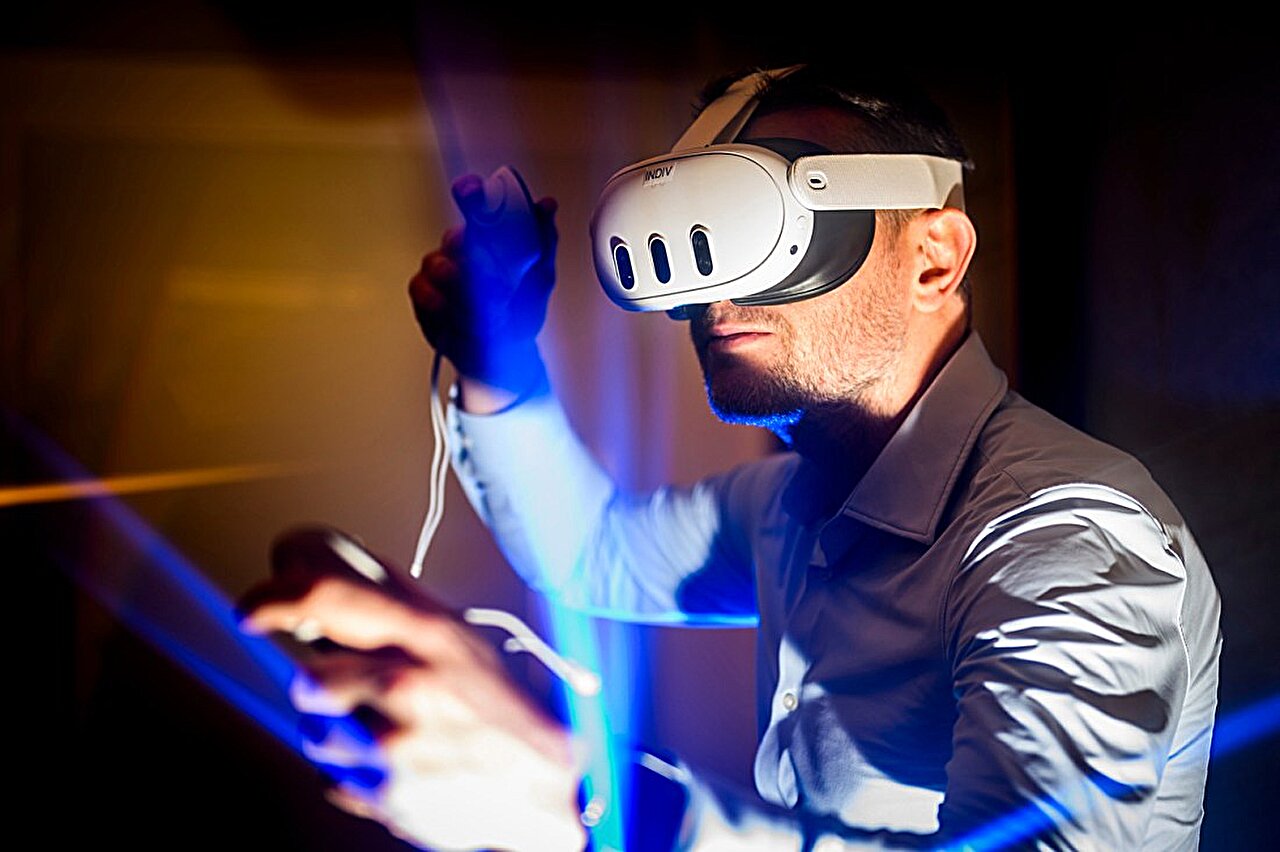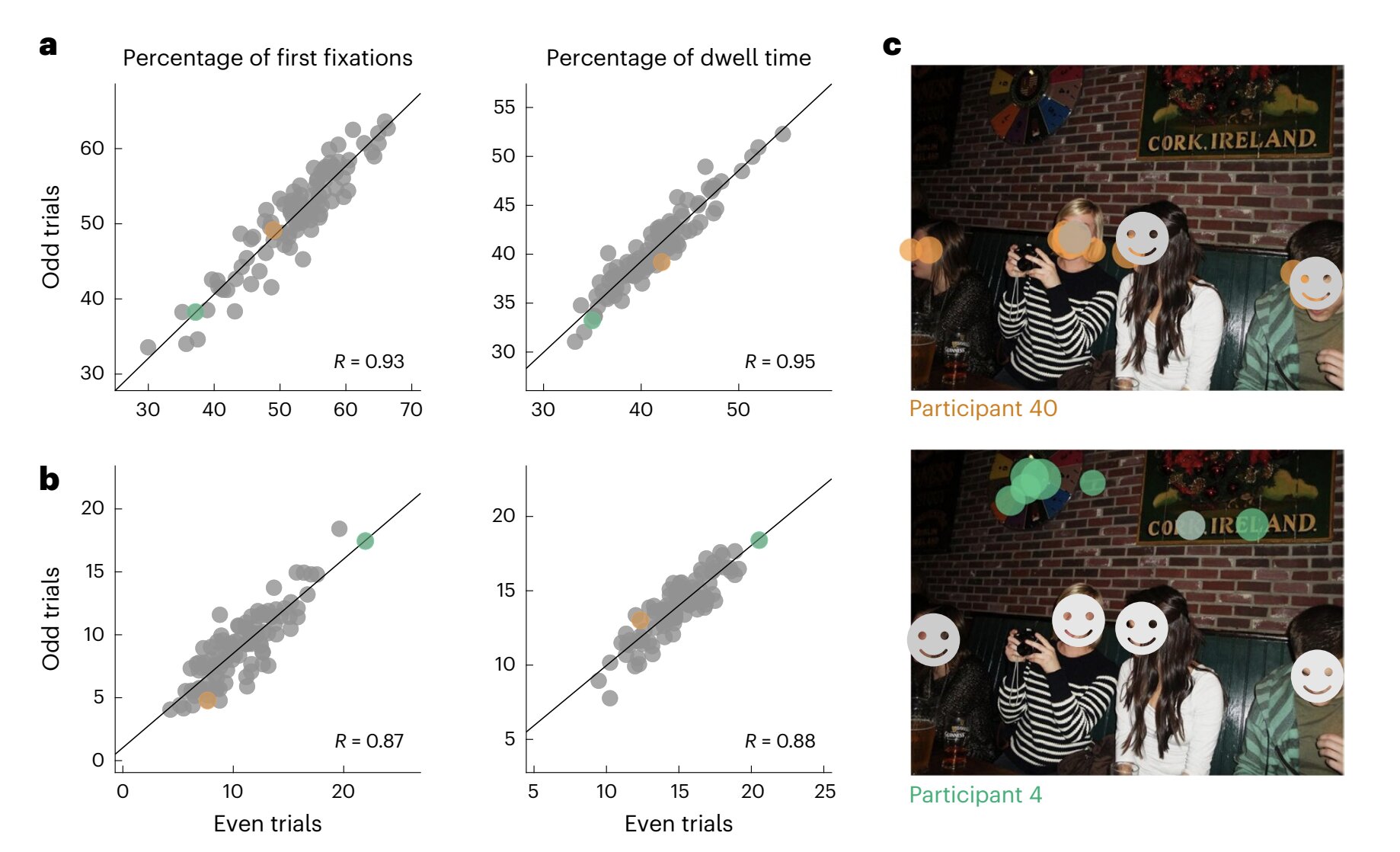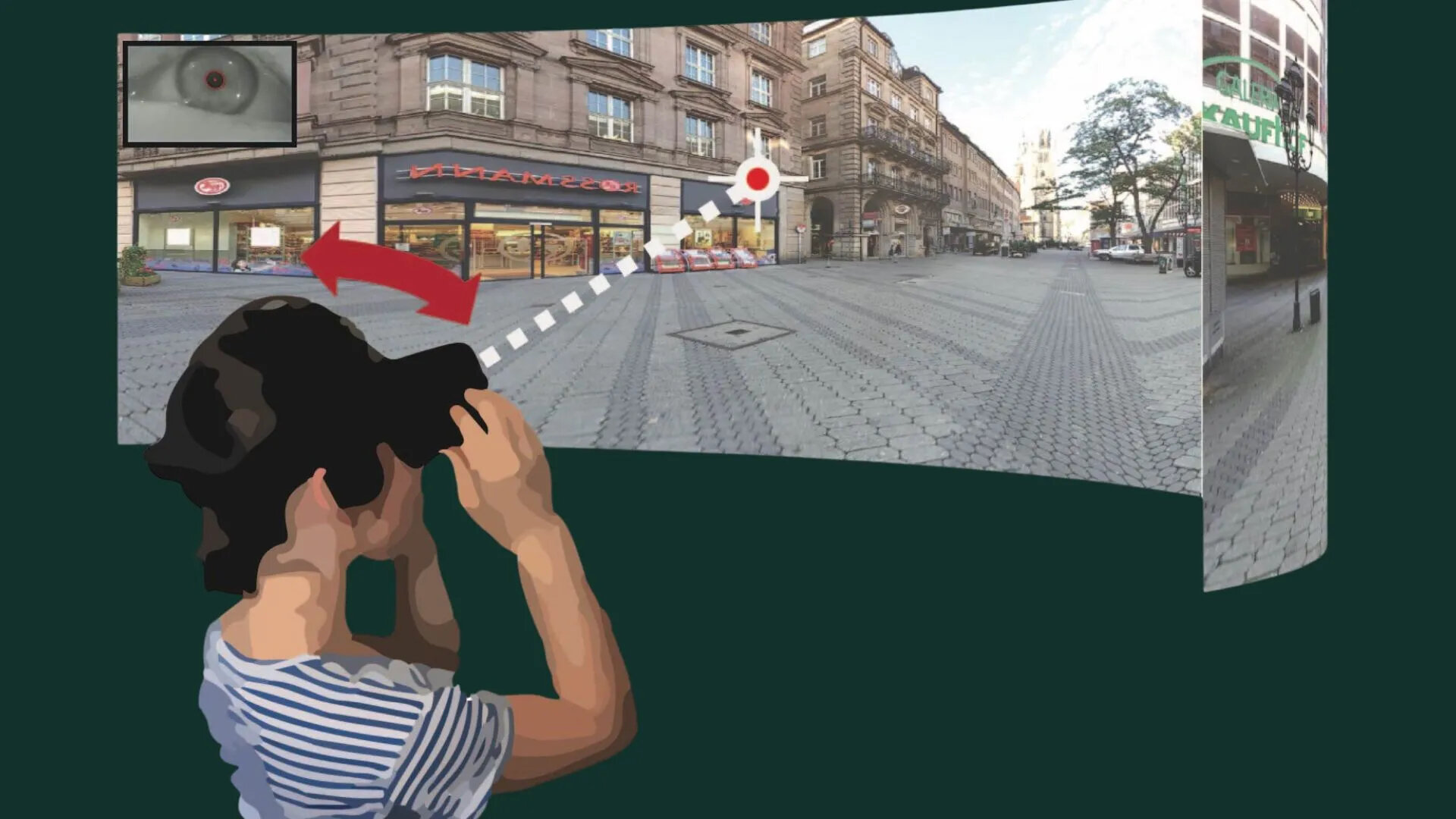
Participants in a Dartmouth study explored real-world scenes in virtual reality while the headset tracked their gaze. Where each person looked, and for how long, was distinctive enough that an AI model could tell participants apart by connecting the objects they focused on thematically and determining the personal meaning they held. In follow-up tests, the AI model correctly predicted what would grab participants' attention in new settings. Credit: Caroline Robertson / Dartmouth
Walk into a crowded coffee shop, and what catches your eye as you take in the scene could say as much about you as the spirals on your fingertips or the mutations in your DNA. Eye movements are so unique, in fact, that they could be used to identify you through objects that have personal meaning, according to a new study by Dartmouth researchers in the Proceedings of the National Academy of Sciences.
The findings reveal the depth to which we subjectively evaluate what's around us, while also suggesting that in a world of constant surveillance, we may be giving away more personal information than we realize.
Psychologists have long studied where people consciously or unconsciously focus their attention as they scan a new environment. While we usually come away with a similar understanding of the place itself, each person has a distinct perception of how they got there, where they look and for how long.