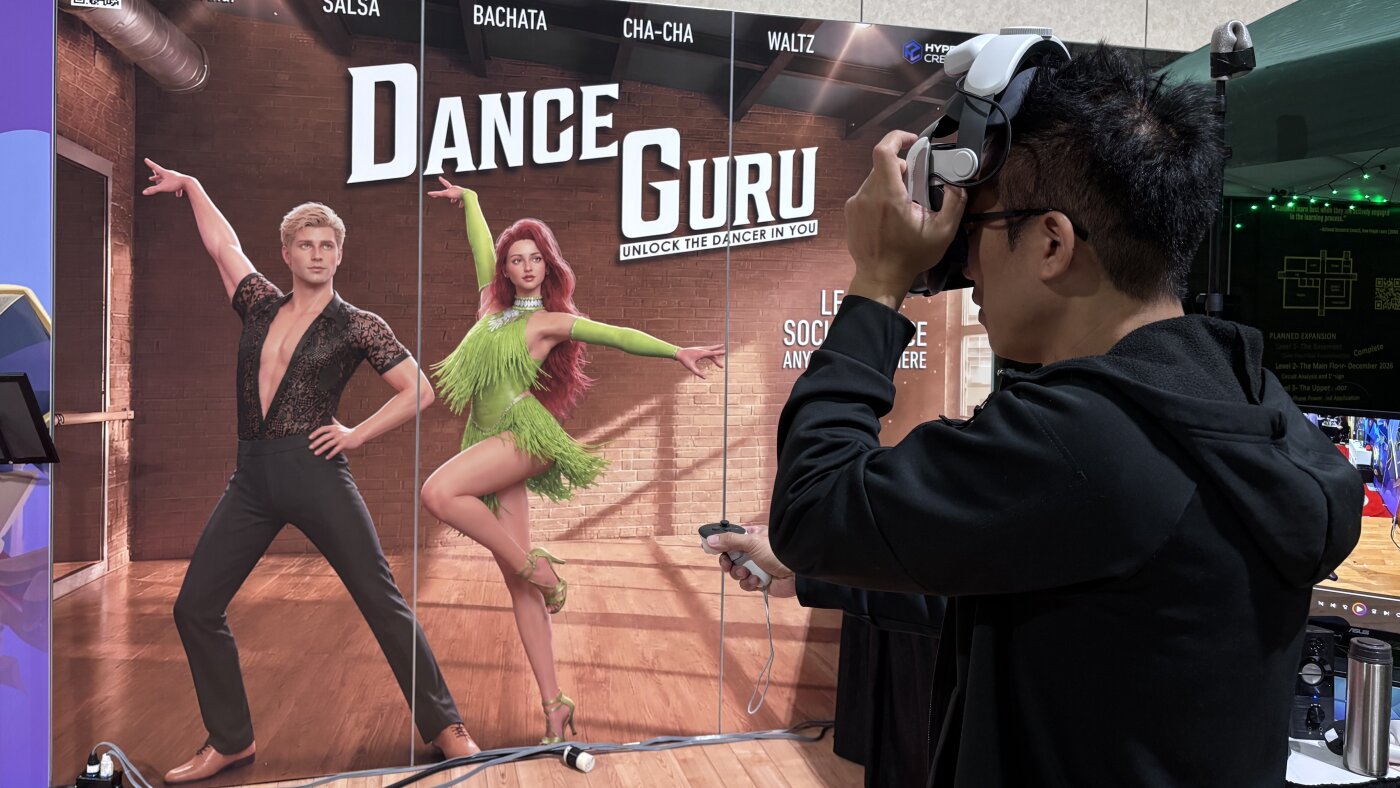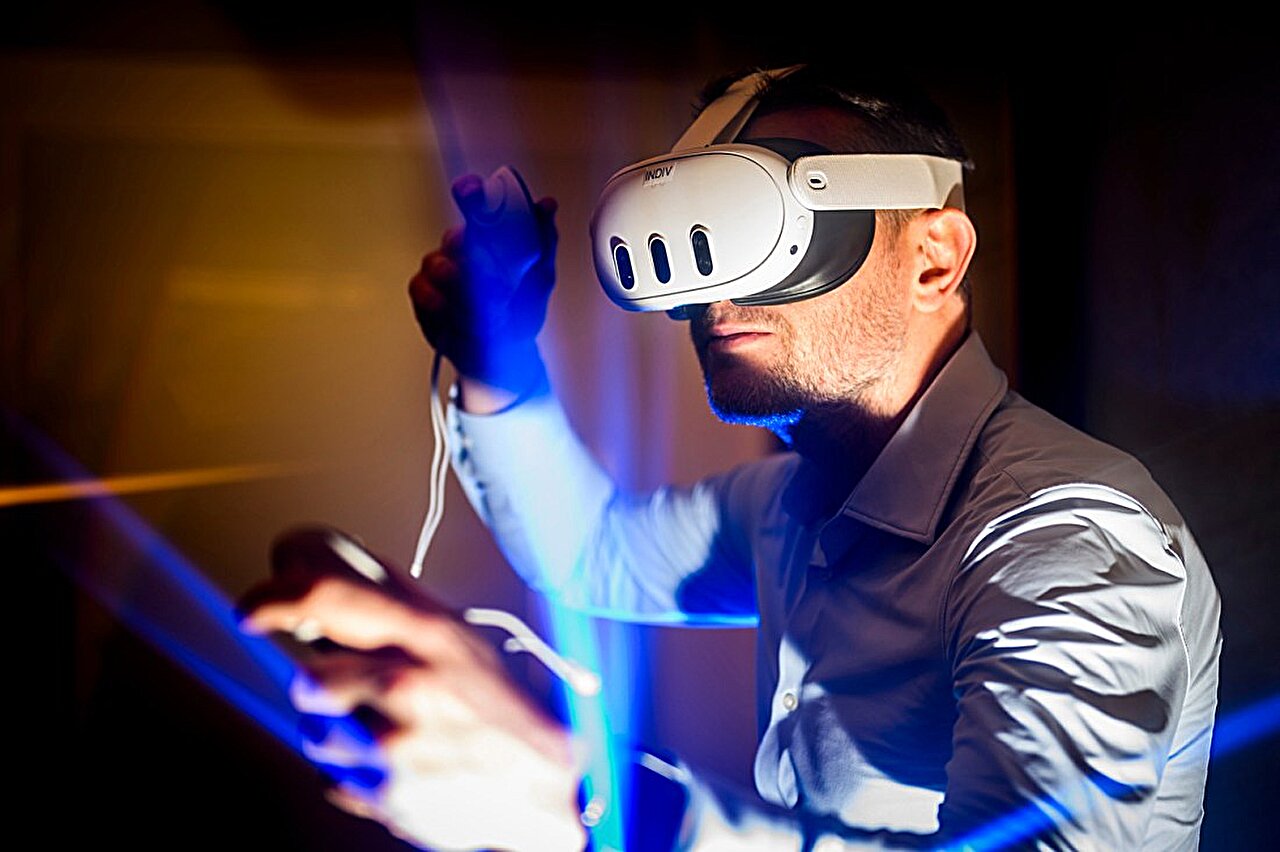
Professor of game design Casper Harteveld says immersive first person virtual reality games have the power to increase empathy. Credit: Matthew Modoono/Northeastern University
You're in a dance club bathed in a neon-purple glow, surrounded by ghostly silhouettes that sway to the music. A stranger at the bar greets you with a flirty wave: "Hey, you look so cute!" Sparks fly. It's all part of a virtual reality game called Rekindle, but the narrative seems real enough that you feel giddy. You break into what's known as a genuine Duchenne smile—the kind where your mouth corners lift and your eyes squint a little. The biometric software in the headset you're wearing scans your face and checks your muscle movements against the 70 that are involved in typical expressions. You're happy, and your gaming PC knows it. You sink deeper into the story.
Tapping into the emotional landscape and biometrics in gaming are both well-worn paths in the virtual reality, or VR, space, but Rekindle, a new first-person Interactive Digital Narrative (IDN) that is the brainchild of Interdisciplinary Design & Media Ph.D. student Hector Fan and Northeastern professors Mark Sivak and Casper Harteveld, gives them a fresh spin.