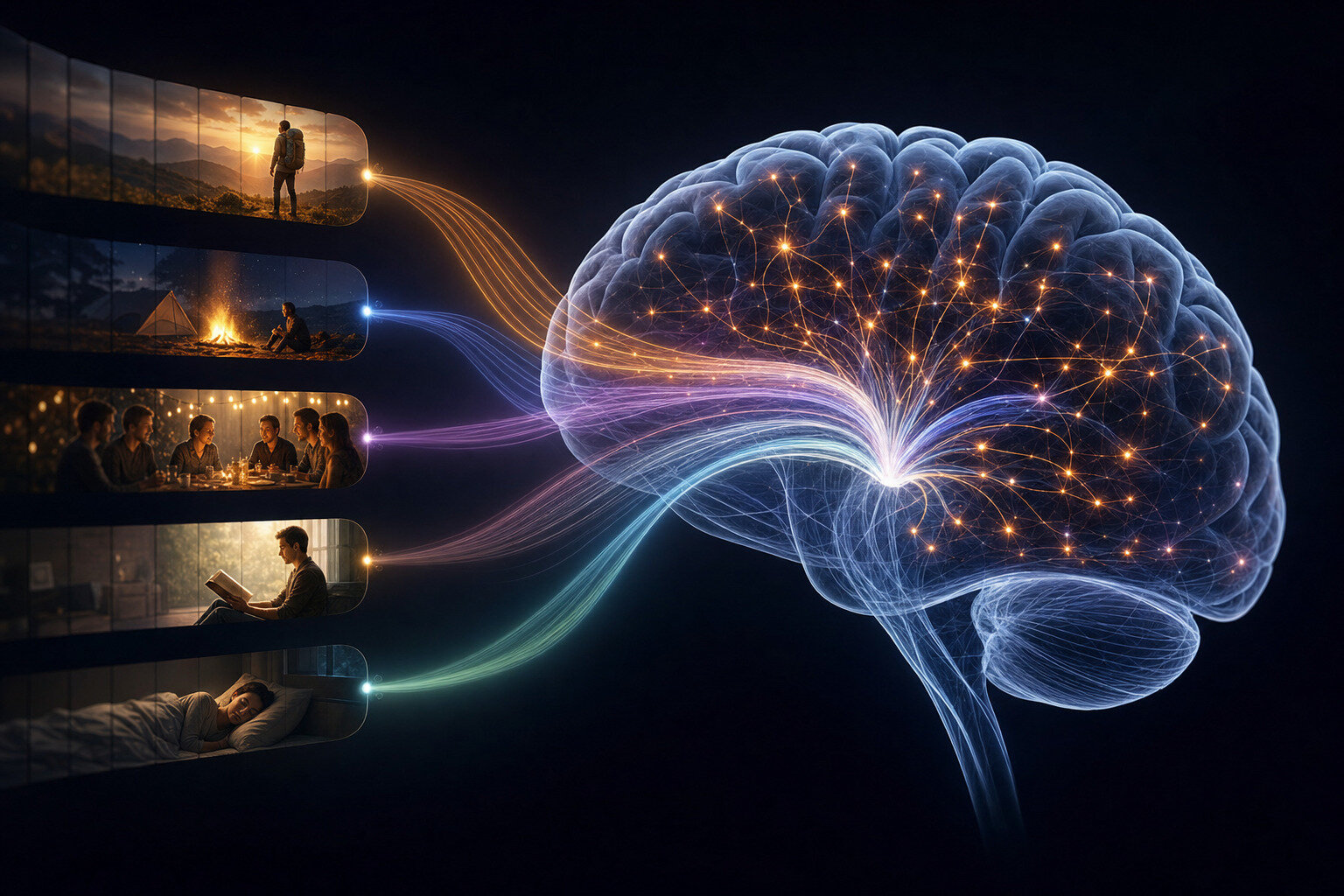
Seeing feels immediate; we open our eyes and the world seems to appear as a continuous stream. But some visual illusions show that events occurring later can change how we perceive what happened earlier, suggesting that the brain may collect and combine information for a short time before producing the experience that reaches awareness.
This effect is known as "postdiction." Here's an example: Two colored dots appear briefly in different places, but people see only a single moving dot that changes color along the way. This means that the second dot must influence how the first is perceived, a typical example of postdiction.
Tracking perception in the brain
Three neuroscientists from the Laboratory of Psychophysics at EPFL, Maëlan Menétrey, Michael Herzog and David Pascucci, have now examined the brain activity behind this process. Their results show that it involves two successive stages: an early one that encodes individual visual events outside conscious access, followed by a later stage where integration happens.
The work is published in PLOS Biology.