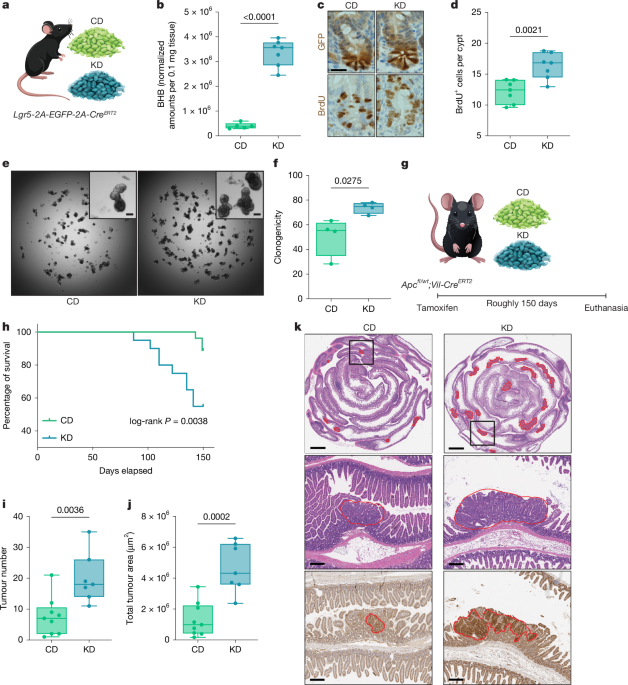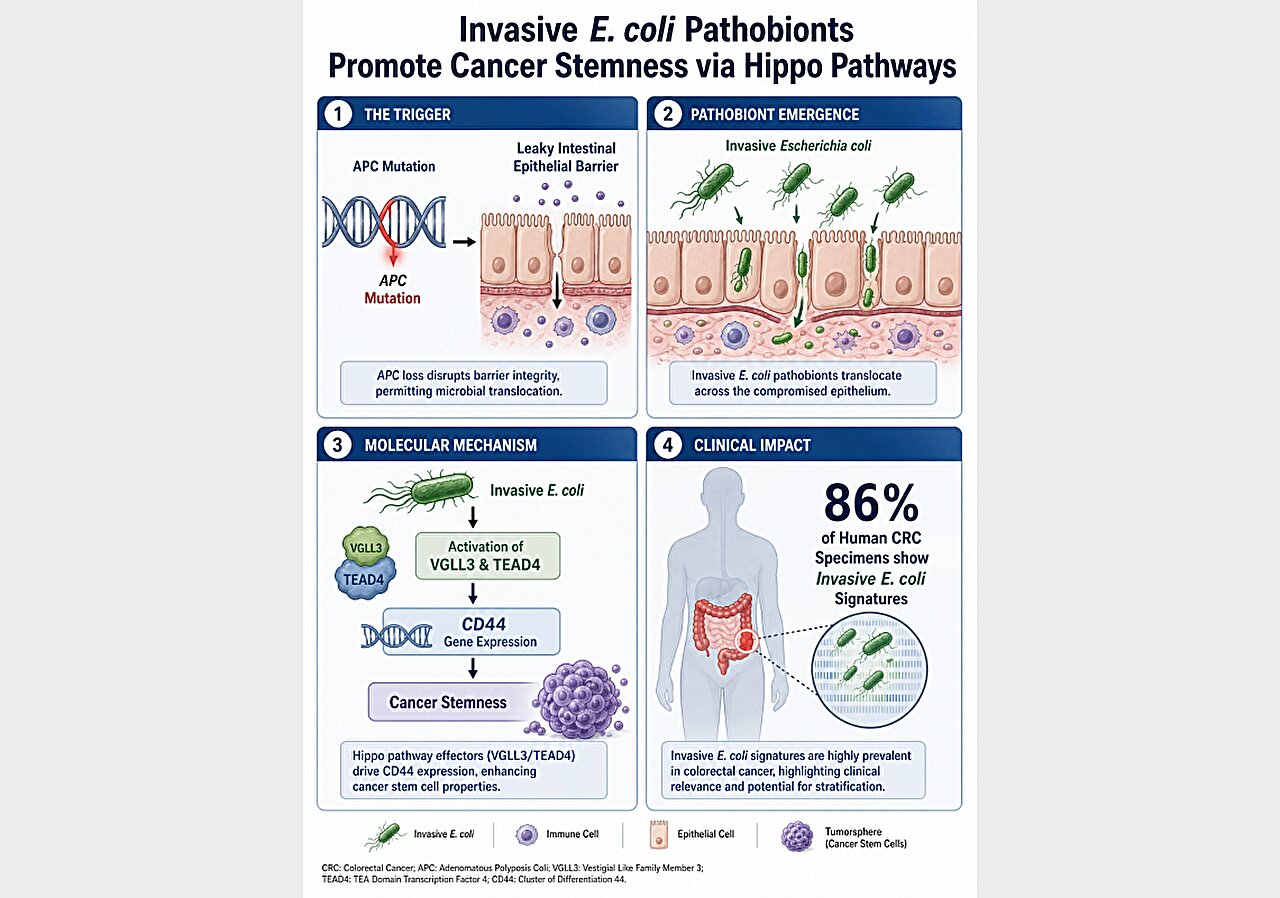
Scientists at National Taiwan University College of Medicine have discovered that cancer formation is not simply caused by gene mutations. Colorectal cancers primarily originate from epithelial cells that form adenocarcinomas at the interface between the host and microbiota. In addition to genetic mutations, the trillions of microbes in the gut environment, termed microbiota or microbiome, play important roles in cancer development. The microbiome is now regarded as a promising therapeutic target, in addition to controlling host factors, for managing colon cancer.
Individuals with hereditary familial adenomatous polyposis caused by mutations in the adenomatous polyposis coli (APC) gene develop numerous benign polyps at a young age throughout both the small and large intestines, putting them at higher risk of malignant transformation. The abundance of mucosa-associated bacteria in patients with familial adenomatous polyposis implied that microbiota dysbiosis could be a cause rather than a consequence of neoplasms. Recently, the microbiome and dysregulated stemness (self-renewal properties) have been added to the hallmarks of cancer.
However, why the microbiome becomes dysbiotic, how it fits within the genetic paradigm and how it influences cancer stemness remain poorly understood. Although the transformation of commensal bacteria into pathobionts (opportunistic pathogens) is a generally accepted concept, longitudinal data tracing the conversion of resident microbes into invasive bacteria are still lacking.