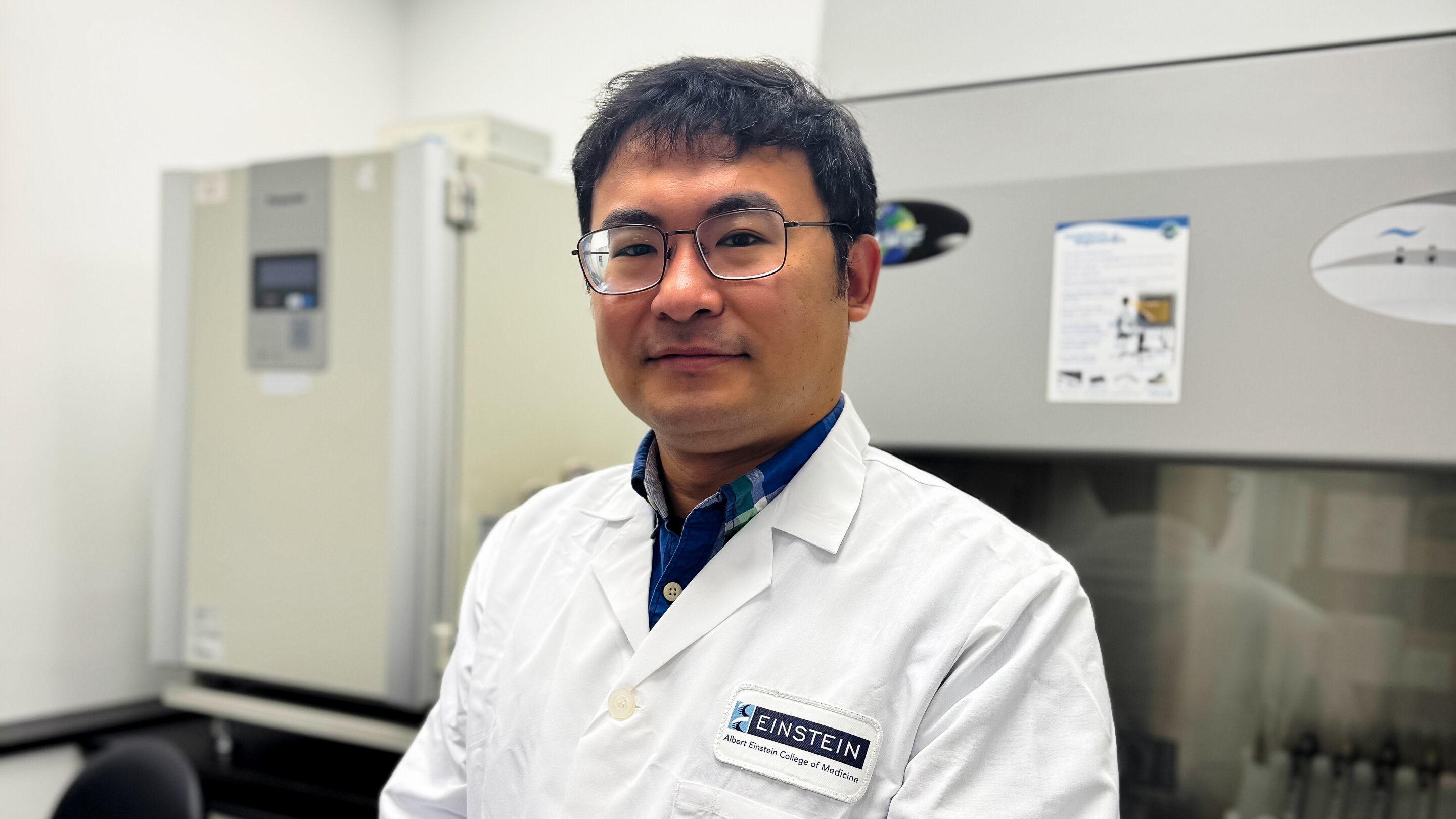
Hui Zhang, Ph.D., a research fellow at Einstein. Credit: Albert Einstein College of Medicine
Scientists have long known that the human brain continues developing well beyond the teenage years, with important changes involving decision-making and emotional regulation extending into the mid- to late 20s. Now, for the first time, researchers at Albert Einstein College of Medicine have identified a biological process in mice that offers new insight into how memory circuits mature during this extended period of brain development.
Published today in PLOS Biology, the study found that a key memory region of the mouse brain undergoes an unexpected period of remodeling during late adolescence. As those changes unfold, memories formed earlier in life become temporarily more difficult to retrieve before resurfacing later, often with less precise detail. The findings align with growing evidence that adolescence is a dynamic period of brain maturation and identify a biological mechanism that may help explain how access to memories changes during this stage of development.
Using mouse models, the researchers focused on the retrosplenial cortex (RSP), a brain region that plays an important role in organizing and retrieving long-term memories. They discovered that protective mesh-like structures called perineuronal nets, which help stabilize memory circuits, unexpectedly diminished during late adolescence before rebuilding in adulthood. The changes were confined to the RSP and were not observed in the nearby hippocampus, another brain region essential for memory.