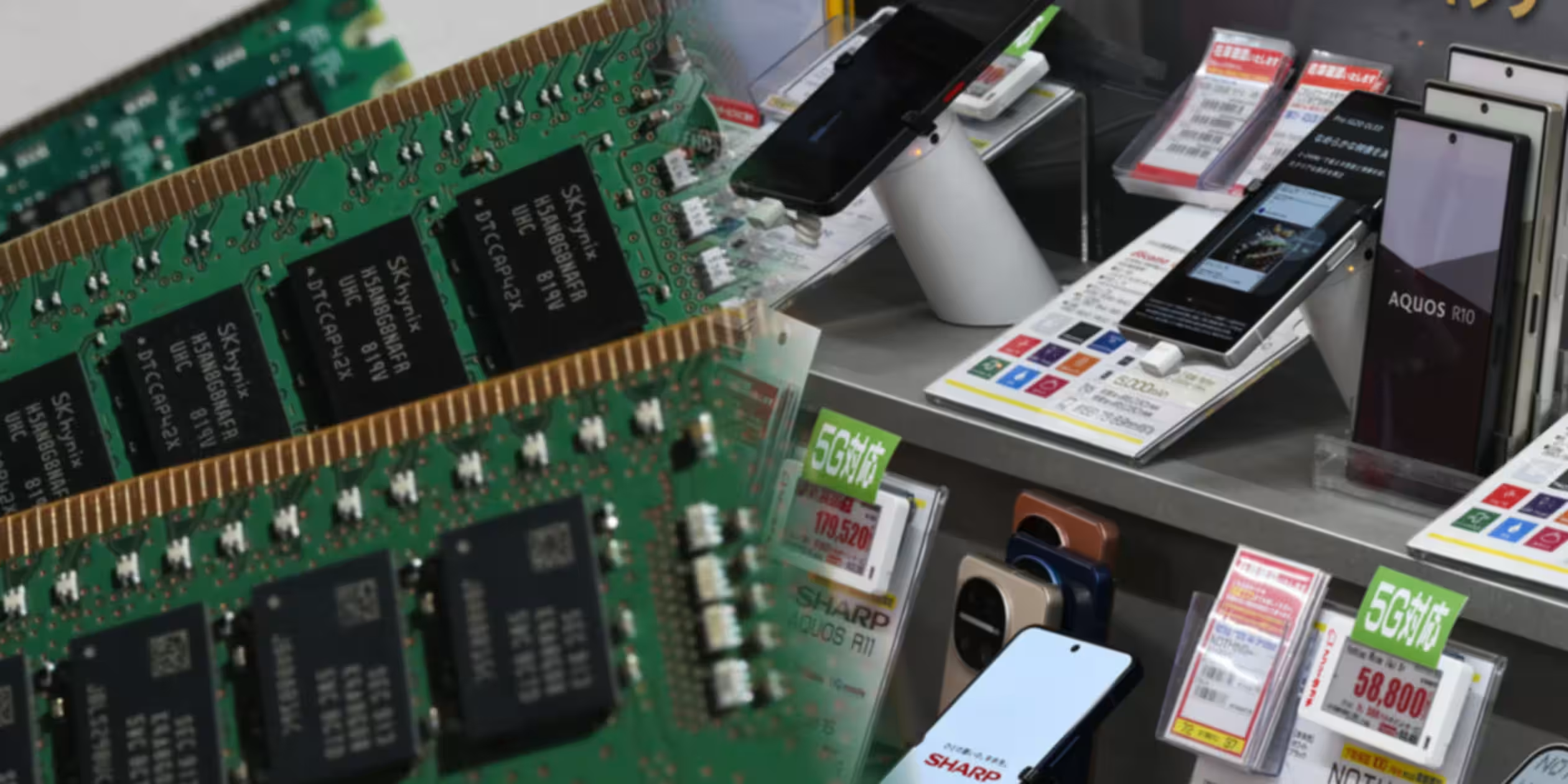
MUMBAI: Prices of smartphones and laptops have gone up. This may sound counterintuitive because our devices were supposed to get smarter with AI coming in. But we hadn’t imagined it would get costlier. Turns out, the culprit isn’t the software that powers these devices. It’s the enormous amount of memory needed by the AI servers powering these services such as ChatGPT, Gemini and Claude. It is consuming memory chips at such a pace that manufacturers are finding them harder—and more expensive—to source.Why smartphones and laptops are getting costlySo, they are being forced into uncomfortable choices. Either absorb higher costs and make less money; or pass those costs on to consumers. Other ways to do this include trimming specifications, delaying launches or reducing the number of models they sell. Or they can do a little of all four. Most people won’t necessarily notice a memory shortage. But they will notice its consequences.That phone which cost ₹25,000, now costs ₹28,000. The model everyone is waiting for may never arrives. Scarcity rarely announces itself. It simply leaves consumers paying more for slightly less. The latest figures from IDC suggest this shift is already underway. Apple and Samsung widened their lead in the global smartphone market during the second quarter of 2026.Gaining advantageThis raises an obvious question: If everyone is buying memory from the same suppliers, why are Apple and Samsung pulling further ahead? Navkendar Singh, associate vice president at IDC, says this is precisely what happens whenever critical technology components become difficult to source. Companies with the deepest supply chains and strongest supplier relationships inevitably gain an advantage.Apple’s strength comes from its sheer scale and negotiating power with suppliers, along with its ability to control much of its supply chain. Samsung enjoys a different advantage. It makes many of the components it needs, including memory, giving it a level of insulation that few competitors can match.This shortage, Singh believes, is unlike anything the industry has experienced before. Previous disruptions—from DRAM shortages to the semiconductor crunch during the pandemic—were largely driven by fluctuations in demand. Consumers stopped buying, production slowed and the industry eventually found its balance again. “This, however, is a supply-led issue,” Singh says. “There’s actually no precedent for this.”Changing ways of the worldThen there is what’s happening to the markets. The head of research at a multinational bank offers a framework to understand that. “From an investment perspective,” he says, “there are innovation companies and there are scarcity premium companies.” It’s an important distinction.Innovation companies create products or technologies that fundamentally change the way the world works. Scarcity premium companies benefit because demand for something they already make suddenly exceeds supply. Their profits rise dramatically—not necessarily because they have invented something revolutionary, but because everyone wants more of what they already produce.That doesn’t diminish what Apple or Samsung have achieved. Building resilient supply chains is itself a competitive advantage. But periods of shortage magnify that advantage. Companies that can secure components continue launching products while others are forced to compromise.History, however, suggests shortages have a habit of attracting capital. High prices produce extraordinary profits. Extraordinary profits encourage investment. New factories are built. Capacity expands. Eventually, supply catches up.He points to the optical fibre boom as a reminder. During the internet build-out, companies connected to optical fibre suddenly became market darlings. Prices surged. Profits exploded. Eventually, new capacity came online and the shortage faded. “We’ve seen this before,” he says. The difference this time is that no one knows how long the cycle will last.“If memory chips are selling today at three times their normal price, investors assume they’ll continue selling at those prices five years from now. But that’s not how these cycles work.” To make his point, he suggests the prices of semiconductor stocks such as SK Hynix and Samsung are correcting despite the broader optimism surrounding artificial intelligence.So what is the bottom line for us? It means the next smartphone you buy may cost more than you expected. It may come with fewer choices than you’re used to seeing. Some brands may quietly retreat from parts of the market where margins have disappeared. Others may postpone launches until component prices stabilise.Whether this proves to be another temporary shortage or the beginning of a more structural shift remains an open question. Singh believes pressure on smartphones and PCs is unlikely to ease before late 2027 or even 2028. On this part, the banker believes markets eventually solve shortages by investing in new capacity. Both may be right.One is describing the next couple of years. The other is describing what usually happens over the longer arc of technological change. In any which case, they agree our devices will get a lot more expensive.
Why smartphones and laptops are getting costly
It’s the enormous amount of memory needed by the AI servers powering these services such as ChatGPT, Gemini and Claude. It is consuming memory chips at such a pace that manufacturers are finding them harder—and more expensive—to source | Mumbai news
782 words~4 min read