Story audio is generated using AI
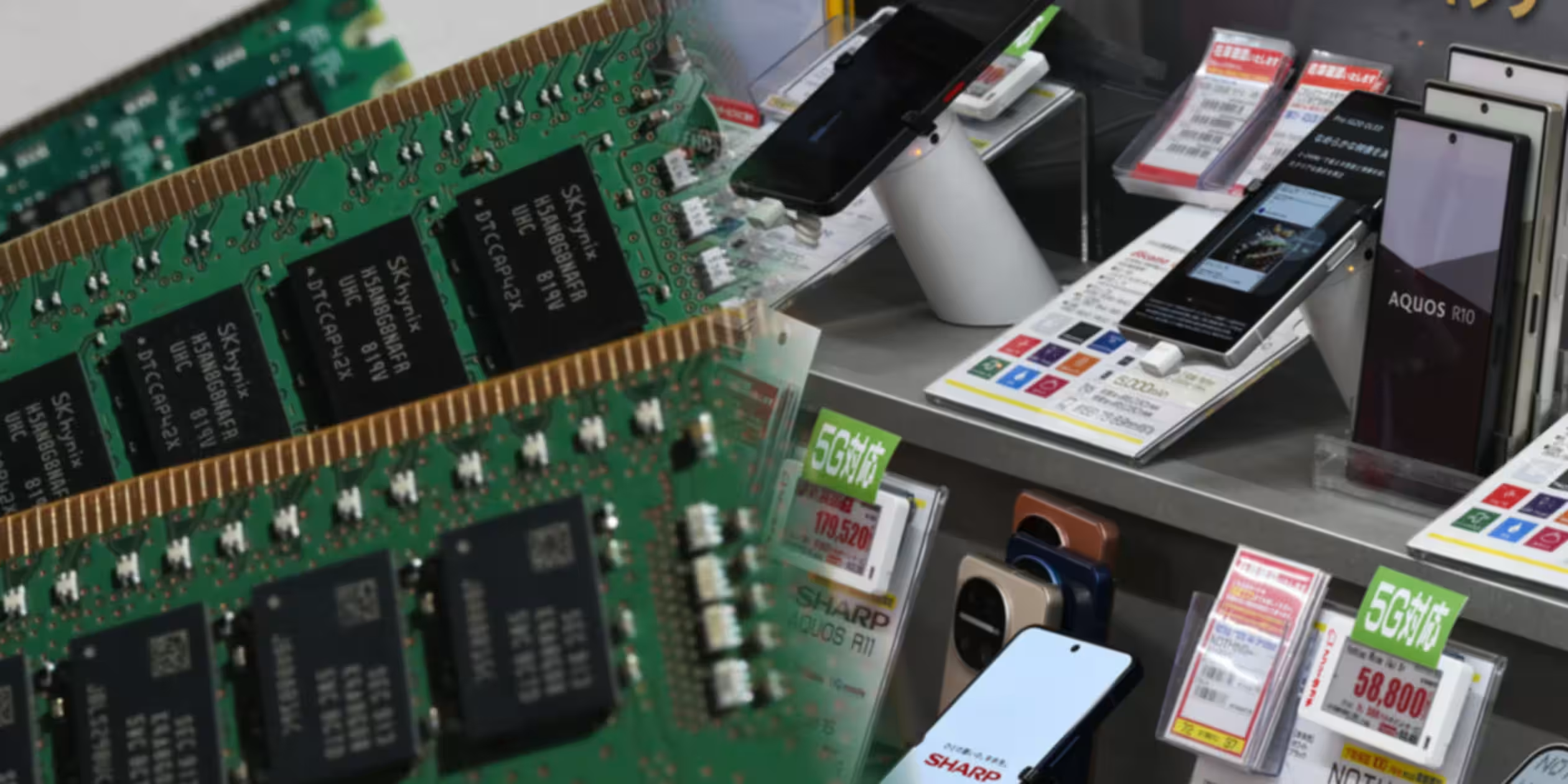
Prices of consumer electronics are set for hefty increases in the coming months as a global scramble for memory chips, driven by the artificial intelligence (AI) boom, pushes up manufacturing costs and demand tightens supply.AI data centres, which require enormous amounts of computer memory and high-bandwidth memory, have created a demand shock in the market.Industry analysts say the increases are unlikely to be temporary, with rising memory prices expected to affect almost every category of consumer electronics.Apple has already implemented hefty price increases. The company’s 13-inch M5 MacBook Air has seen prices leap to about R26,499 this week from R19,999 at the end of last week.The MacBook Neo — Apple’s newest budget laptop, launched just three months ago at an attractive price of just under R12,000 — will now cost almost R14,000, with other categories also set for significant hikes.The surge in demand and supply problems have been fuelled by the rapid expansion of AI data centres, where companies are investing billions of dollars to train and run increasingly sophisticated AI models. As chipmakers prioritise production of higher-margin memory products for AI applications, supplies for consumer devices have tightened, driving prices sharply higher.According to Reuters, the shortage spans a wide range of memory products, including NAND flash chips used in smartphones, USB drives and solid-state drives (SSDs), as well as dynamic random-access memory (DRAM) and high-bandwidth memory (HBM), which powers AI servers.Arthur Goldstuck, MD of World Wide Worx, said AI has fundamentally reshaped the global memory market.“Data centres training and running large AI models consume vast quantities of advanced memory and enterprise-grade storage, creating demand that manufacturers have struggled to match,” he said.“AI isn’t the only reason prices are rising, but it has become the dominant driver of today’s supply constraints. We are also seeing speculation as those with the means hoard chips in the hope of further price rises, which constrains supply and drives prices up once more.”Goldstuck said laptop prices are already under upward pressure globally and in South Africa.“In some cases, we’ve seen increases of around 15% to 20% over the last few months,” he said.However, he noted that increases would not be uniform across all brands and retailers because existing inventories were purchased at different prices.“Prices won’t move in lockstep. Retailers hold different levels of inventory, but consumers should expect higher prices as new stock reaches South Africa.”The impact extends beyond laptops. Smartphones and tablets also rely heavily on DRAM and NAND flash memory, making them vulnerable to rising component costs.“Laptops tend to show the increases first because they typically contain more memory and storage,” Goldstuck said.“But higher component costs are filtering through to premium tablets and smartphones as well. We can expect to see the new iPhone, for example, coming in at far higher prices than before, and new models of all brands in future starting at higher base prices than before.”The Core Group, Apple’s authorised premium reseller in South Africa, declined to comment on pricing.“As an Apple premium partner, iStore cannot comment on Apple’s pricing strategy, commercial decisions or supplier relationships,” the company said.“Our focus remains on delivering the best customer experience for all Apple customers and ensuring South Africans continue to have access to the largest range of Apple products, backed by expert advice, technical support and a range of affordability options, including trade-in and monthly financing solutions.”Glenn du Toit, country manager for Acer South Africa, said the company “is adopting flexible pricing and promotional strategies to support demand and stabilise product availability as component costs increase. With any given model, as existing inventory sells out and new products are manufactured, there may be increases beyond Acer’s original pricing guidance. This pricing will change based on demand and supply, as well as component costs at the time of manufacture.”He said rising component costs are reshaping consumer behaviour, with some buyers maintaining fixed replacement plans, some shifting to lower-spec devices and others delaying purchases. “Acer’s inventory has reached a record, largely consisting of key components such as memory, and the company is managing pricing and sales strategies to balance inventory reduction and profitability,” he said.Rather than simply passing higher costs on to consumers, Acer said it focuses on newer technologies designed to deliver better performance and value.Du Toit pointed to Intel’s latest mainstream Core Series 3 processors, codenamed Wildcat Lake, which bring AI capabilities to more affordable devices while improving battery life and performance.“While global cost pressures affect the entire technology sector, Acer South Africa continues to work hand-in-hand with our local distribution and retail partners through targeted commercial cushions and promotional support to preserve market stability and protect consumer access to digital technology,” he said.Business Times contacted Samsung and Lenovo for comment, but their representatives were unavailable.Ironically, the more valuable the computer becomes as an AI tool, the harder it becomes for many people to afford one— Arthur Goldstuck, MD of World Wide WorxMemory has become one of the fastest-rising costs in laptop manufacturing, although it remains only one component of the overall bill for materials.According to Goldstuck, the effect on retail prices is amplified by shipping costs, distributor margins, exchange rates and VAT.“On an entry-level laptop, higher RAM and SSD prices can easily add between R1,000 and R2,000 to the retail price once distributor margins, shipping, exchange rates and VAT are factored in. That’s before any manufacturer or retailer adjusts pricing to protect margins.”While premium laptops with larger memory configurations are expected to see the steepest increases, entry-level devices are unlikely to escape the trend.“Entry-level machines are vulnerable because manufacturers have very little margin to absorb higher costs,” Goldstuck said.“Premium laptops with 16GB or 32GB of RAM and larger SSDs are likely to experience the biggest increases because they contain substantially more of the components that are becoming scarce.”The higher prices could alter replacement cycles for both consumers and businesses.“Consumers and businesses are already becoming more cautious about replacing perfectly serviceable machines,” Goldstuck said.“If prices remain elevated, the traditional four-to-five-year replacement cycle is likely to stretch to five or even six years, particularly among households, schools and small businesses.”That trend could increase demand for refurbished computers and previous-generation devices as buyers seek more affordable alternatives.He warned that if forecasts that memory prices will remain elevated through 2027 prove accurate, the consequences could reach beyond more expensive gadgets.“Personal computing becomes more expensive just as more powerful hardware is needed for AI-enabled software. That creates a widening affordability gap. People delay upgrades, businesses extend replacement cycles and students enter the market with older or less capable devices.”“Ironically, the more valuable the computer becomes as an AI tool, the harder it becomes for many people to afford one. This is one of the ways in which AI will widen the digital divide.”Business Times