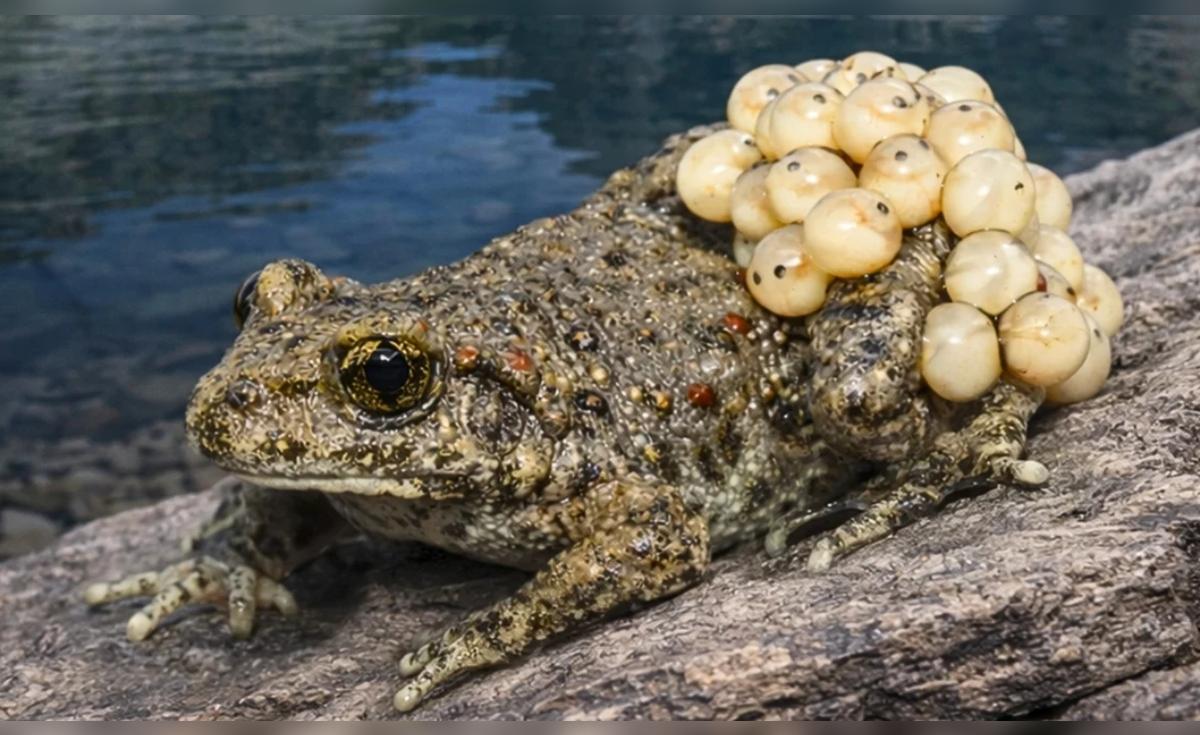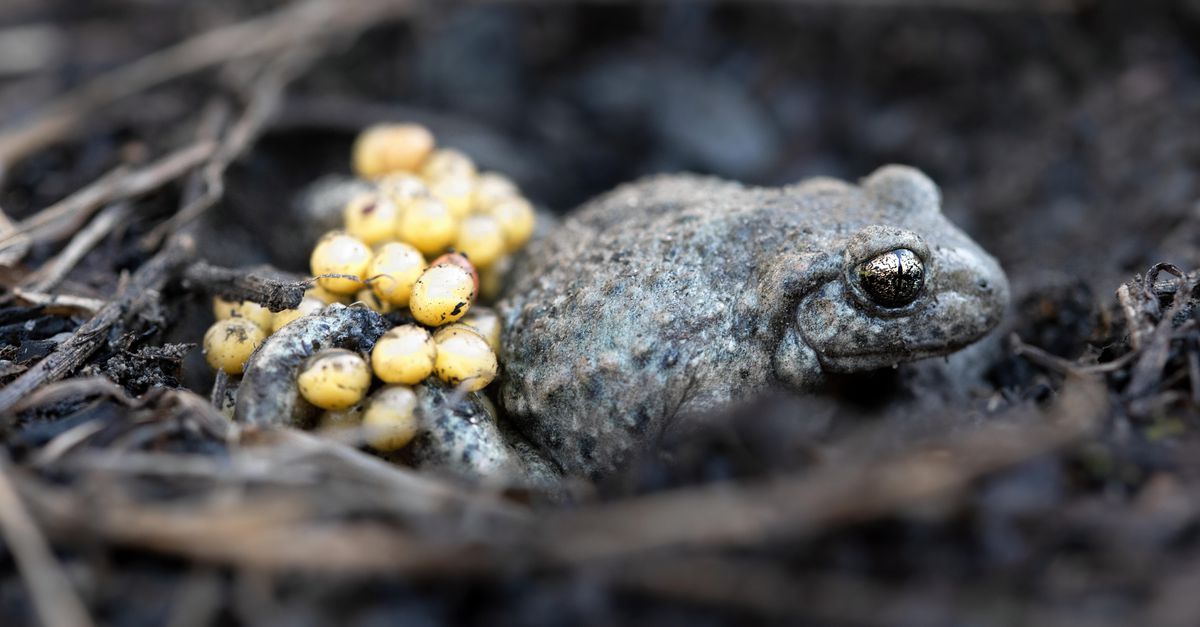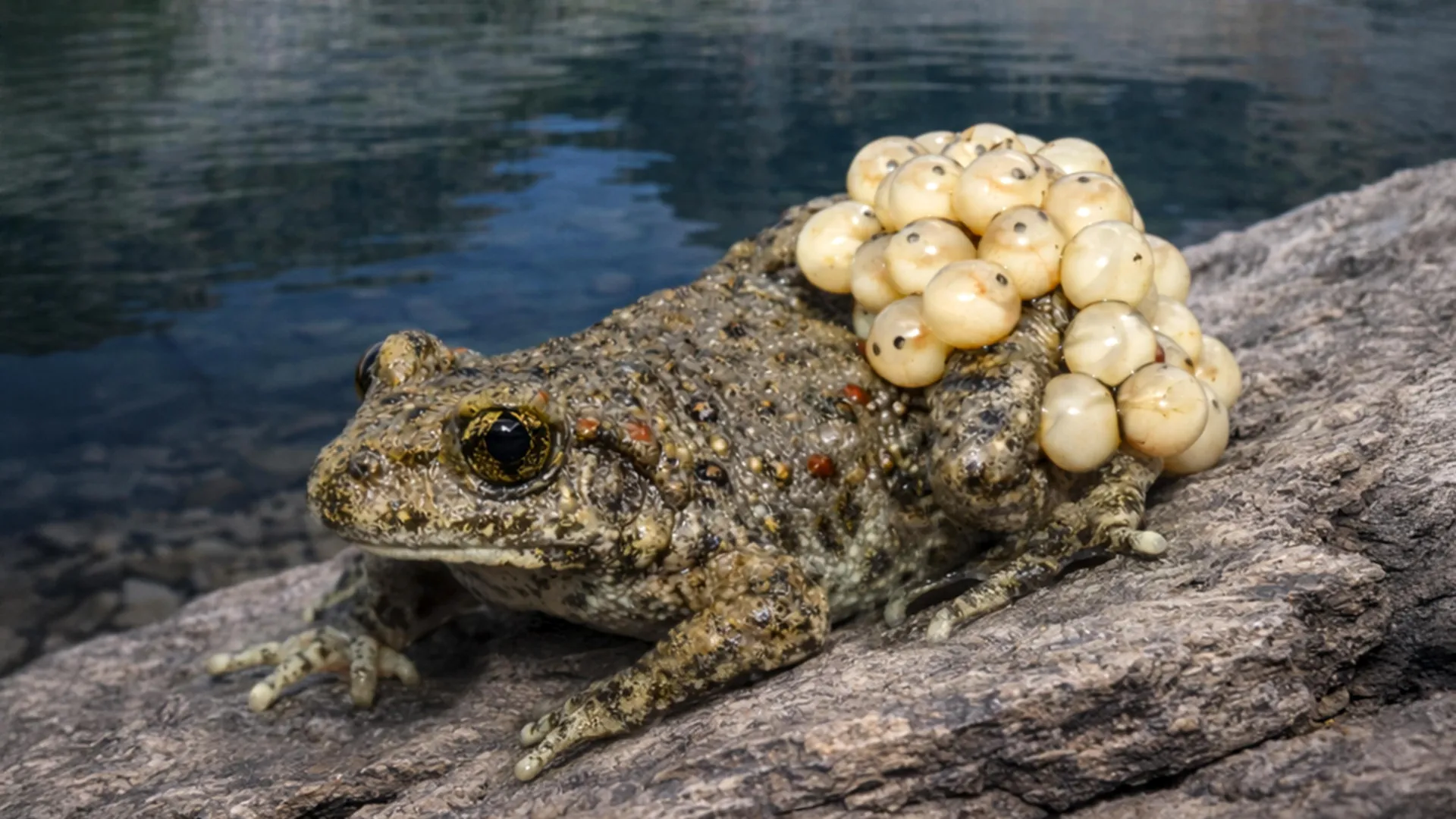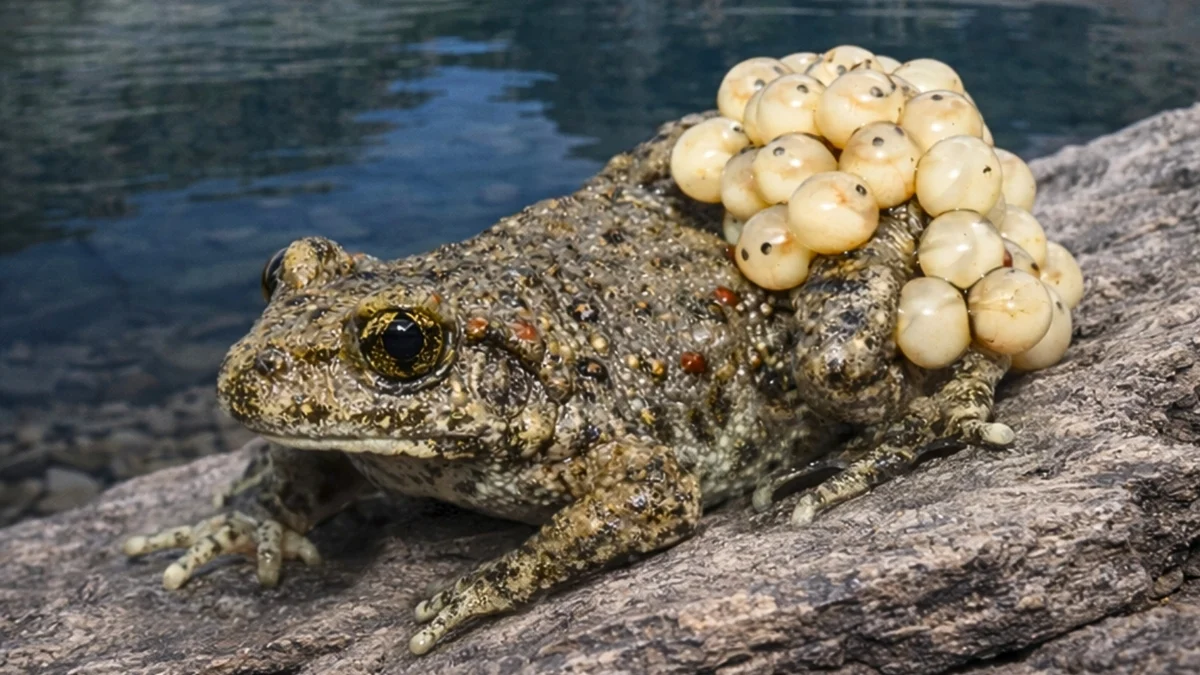
A common midwife toad in the Pyrenees, carrying his developing offspring. (Phillip Jervis)
Across the world, entire species of frogs and toads are being wiped out by a relentless fungal infection, commonly known as the chytrid fungus.For most amphibians, the fungus Batrachochytrium dendrobatidis is a death sentence. It's caused more global species extinction events than any other infectious disease.And yet somehow, high in the Pyrenees, a few populations of common midwife toads have managed to survive an outbreak that has almost entirely wiped out their neighbors.
Now, a team led by researchers from University College London (UCL), the Zoological Society London (ZSL), and Imperial College London has discovered how these toads are defying death.The key, it turns out, is secreting unique peptides earlier than other toads, stopping the fungus from taking hold.The midwife toad is already a bit of a weirdo.There are a few species, but it's Alytes obstetricans we're talking about here.The male toads carry fertilized eggs around on their back and thighs to protect them from getting eaten, hence the name 'midwife'.The common midwife toad has been badly affected by chytrid fungus infections in the Pyrenees, as a result of climate change. But a small handful of populations have managed to thrive in spite of it all. (Phillip Jervis)Then, when the eggs are about ready to pop, the toad takes them down to the nearest water, where the tadpoles leap from their daddy's posterior into the great unknown.In the case of the Pyrenees midwife toads, that 'unknown' is the stunning clear waters of high-altitude mountain lakes: Lac d'Arlet, Puits d'Arious, Lac de Lhurs, and Ibón de Acherito. Ibón de Acherito, a Pyrenees lake that is home to one of the recovering toad populations. (Phillip Jervis)Midwife toads across the Western Pyrenees have been nearly wiped out by chytrid infections, ever since the fungus reached the region 19 years ago.Previously, these mountains were a safe refuge from the fungus. The lakes stay frozen for half the year, and the cold temperatures have kept the fungus at bay.But as humans continue to burn fossil fuels, climate change has been warming up the mountains. And there's nothing a fungus loves more than a warm, damp climate.Somehow, though, a few toad populations have managed to survive, in spite of their B. dendrobatidis infections: toads at Ibón de Acherito, Puits d'Arious, and Lac de Lhurs. The researchers compared recently metamorphosed toads from these lakes with those from a population that has been doing much worse: the toads at Lac d'Arlet.When the toads' immune defenses matured early, they had better chances of surviving fungal infection. (Jervis et al., Nat. Chem. Biol., 2026)In the toad populations that had recovered from fungal outbreaks, they found a particular kind of immune defense matured much earlier, with the toads beginning to secrete antimicrobial peptides from their skin while they were still in the tadpole stage.That difference is crucial. The fungus can only survive on skin that contains keratin, which is present in mature toads, but not tadpoles or larvae. That's why chytrid fungus is so lethal to these creatures: frogs and toads absorb most of the oxygen and water they need to survive through their skin. If that porous membrane becomes blocked up by the fungus, it leads to a fatal chain reaction.