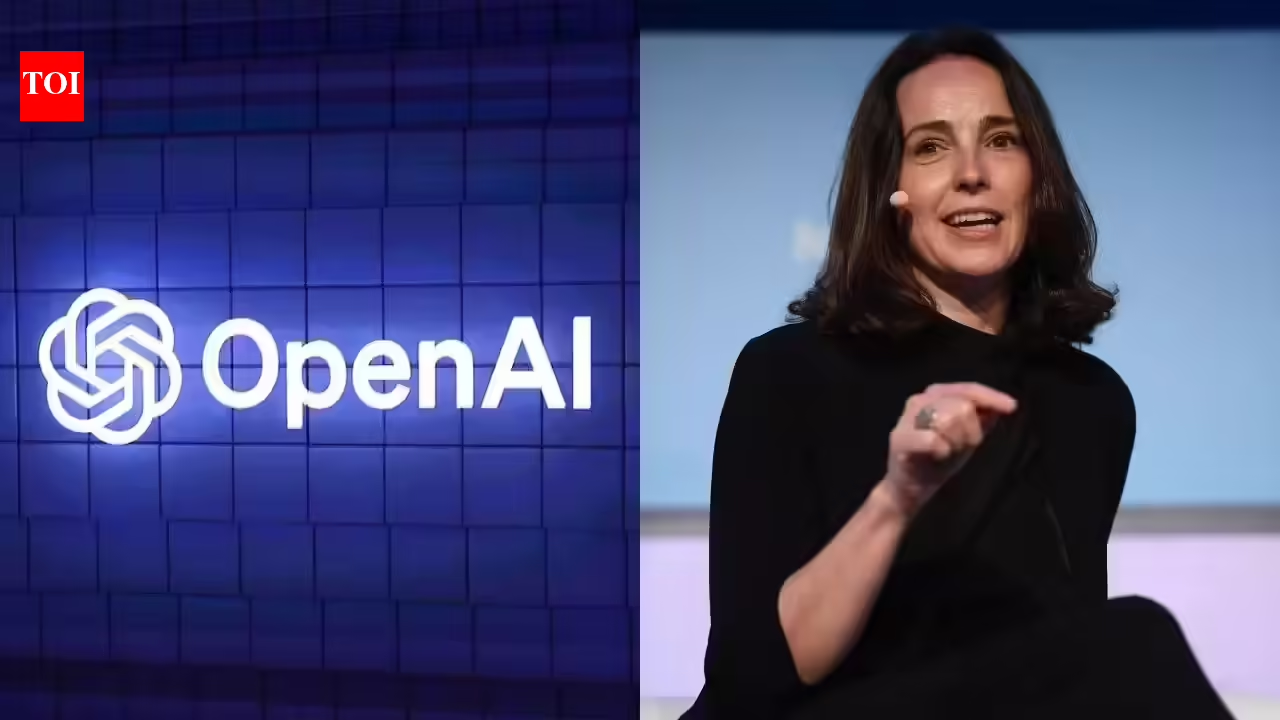
OpenAI’s CFO Sarah Friar just told every enterprise spending on AI to rethink how they measure whether that money is actually doing anything. Her new scorecard, published on July 17, introduces a metric she calls “useful intelligence per dollar,” which quantifies the economic value AI tasks generate relative to total costs, including the messy stuff like retries and human babysitting.
For years, the tech industry measured software success by headcount: seats purchased, active users logged, renewals signed. Friar’s argument is that AI doesn’t work that way. A thousand employees with access to an AI tool means nothing if the tool isn’t actually completing meaningful work.
The scorecard breakdown
Friar’s framework asks enterprises to evaluate AI investments across four dimensions: task completion effectiveness, cost per task, accuracy, and value scalability. In English: does the AI finish the job, how much does it cost each time, does it get things right, and can you scale that value without costs spiraling out of control.
Many enterprises have discovered the hard way that AI costs don’t behave like traditional software licensing. Reports of accidental massive AI bills have become common enough to make CFOs visibly nervous, and skepticism about premium AI model pricing is driving demand for more accountable financial management.