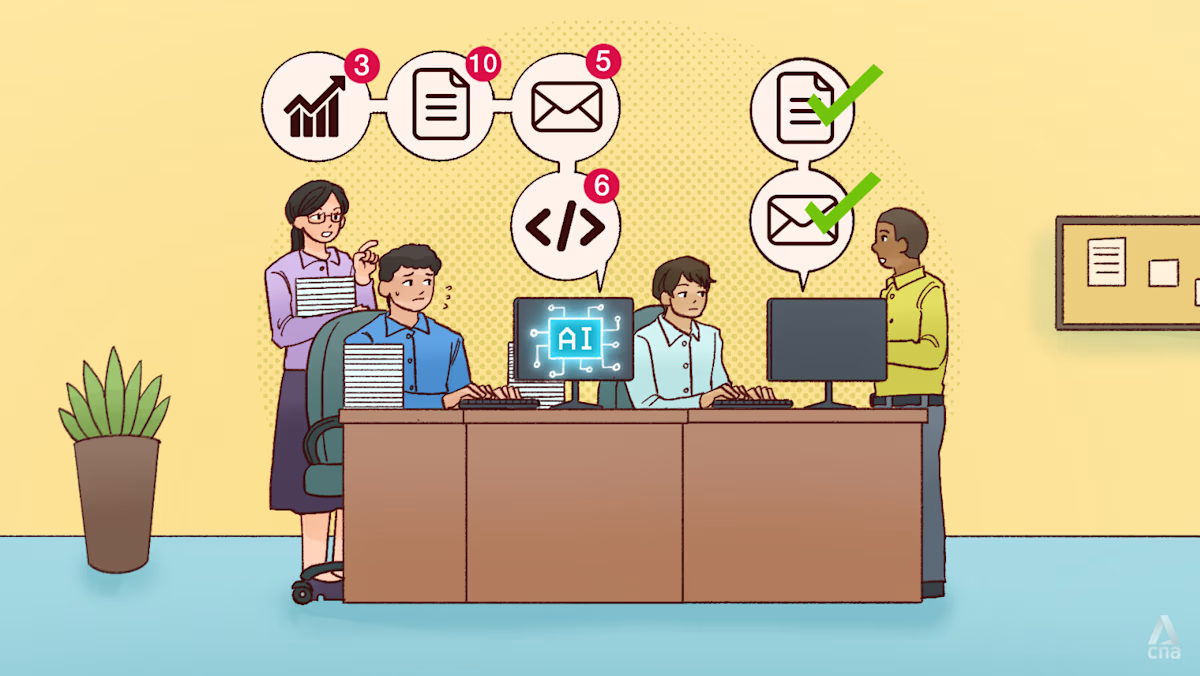
Ever since artificial intelligence (AI) came into her life, Ms Ayushi Raghuwanshi, who works in digital marketing in Gurugram, India, has found that finishing work faster is not a problem. Justifying the extra free time is.The 26-year-old said AI has reduced the time required to complete routine tasks, as it can help her analyse campaign data, prepare advertising materials, and build presentation slides in far less time.But the time saved has not made her workload lighter."For example, previously, I was handling three to five things a day. Now, to justify my working hours and my job, I take on up to eight tasks in the same amount of time," she told CNA TODAY, adding that she continues to spend eight hours a day in the office.
"When a task that used to take hours now takes minutes, more is expected of me. For the rest of my hours, I feel pressure to show what else I'm doing, since that work no longer takes as much effort or time."Consultants and workforce experts said this trend of higher expectations, which is not unique to Asia, is likely to become more common as AI becomes embedded in everyday work, redefining what is considered normal performance. Mr John Hazan, partner and global head of Bain and Company's talent solution practice, said that AI "tends to intensify work rather than reduce it", as employees become able to work faster and take on a broader scope of work. "Higher capability leads to higher output. That leads to higher expectations, which drive further expansion. Employees focus on what we call 'value-added activities', with limited time for breaks and limited ability to step back from their work."In Shanghai, China, a 24-year-old recruitment consultant who wanted to be known only as Shi said she has seen the same pattern play out at her company.Her firm is rebranding itself as an AI-powered recruitment company, promising clients candidate shortlists within 22 to 72 hours – down from one week.