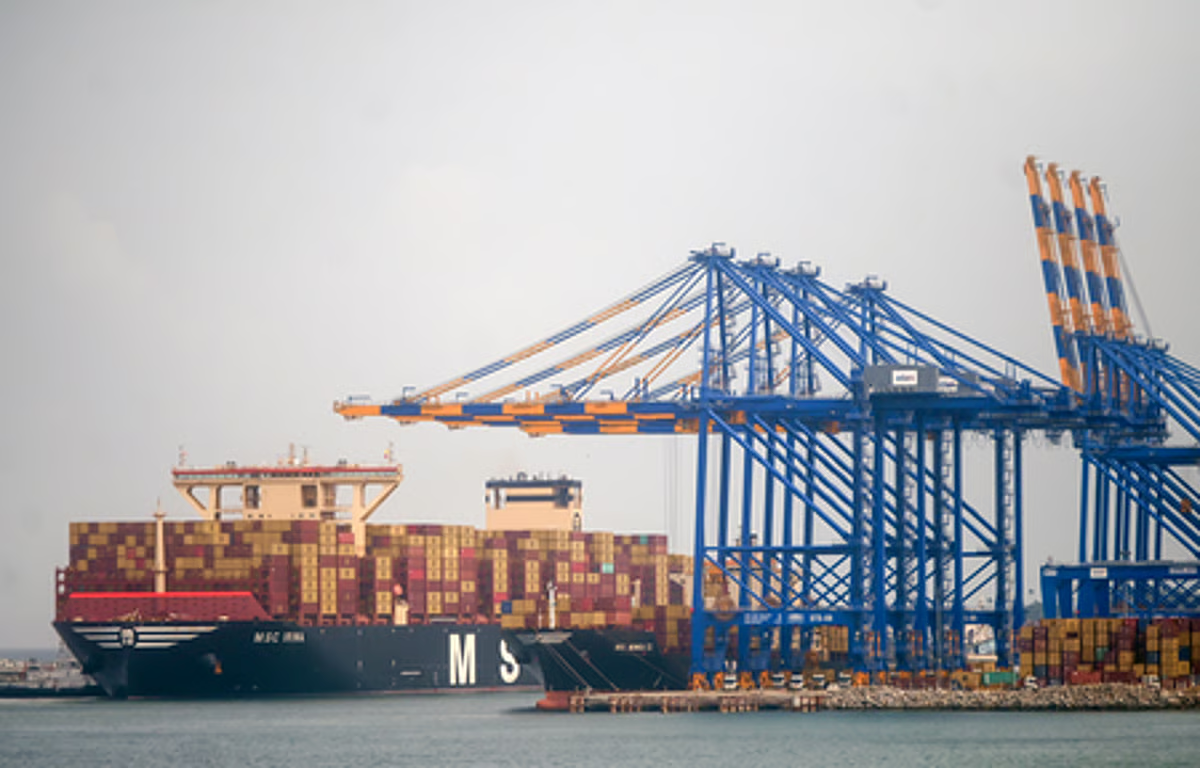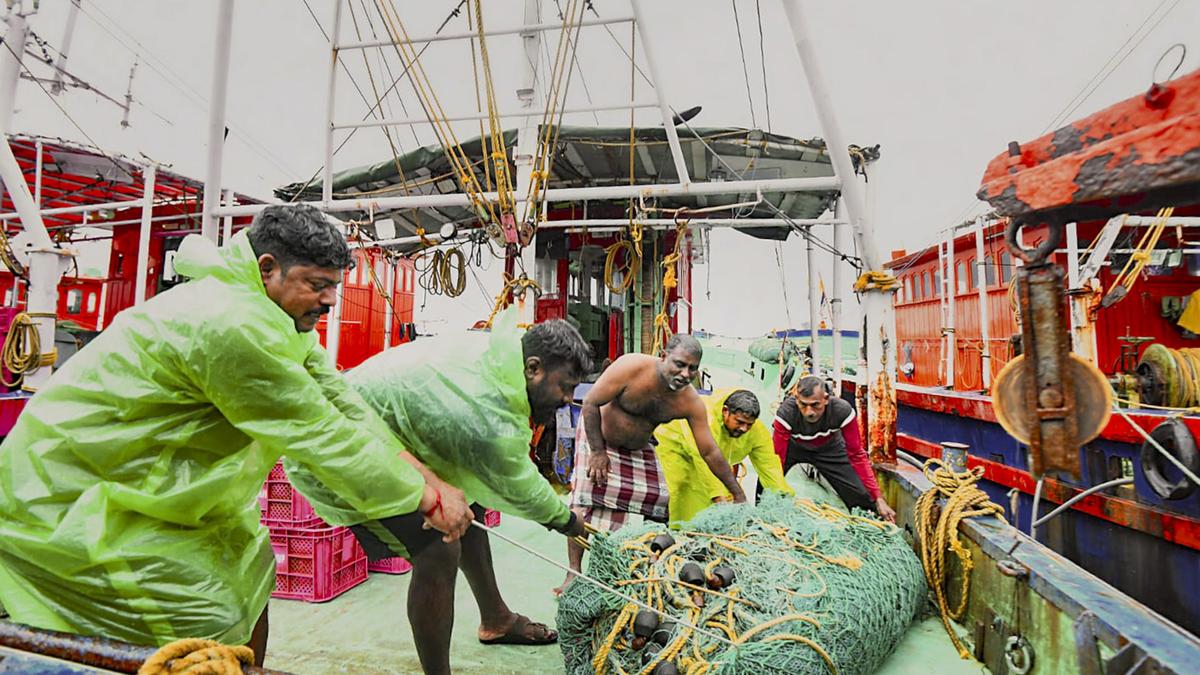
Moving larger commercial vessels into international waters will give the fragile coastal marine ecosystem a vital, much-needed window to naturally recover.
| Photo Credit: PTI/FILE
With the Union government issuing official Letters of Authorisation (LoA), Indian fishing vessels can now venture into high seas and harvest untapped marine resources. While the initiative addresses a long-standing imbalance in the domestic fisheries sector, where the country’s massive annual marine potential remains largely unexploited in deeper zones, it also shifts ocean harvesting into a strictly regulated system. By setting up an online application process for vessels meeting specific technical criteria, the guidelines mandate strict adherence to international maritime rules, catch limits, bycatch mitigation strategies, and measures against illegal and unregulated fishing.Despite possessing an extensive coastline of approximately 11,099 km and a total marine potential estimated at 58.6 lakh metric tonnes, the vast majority of Indian fishing activities have remained concentrated within just 40 to 50 nautical miles of the shore. “For years, foreign fleets have had free rein over the high seas. Now, with the Centre issuing LoAs, Indian deep-sea fishers can finally compete on equal footing and venture into international waters without fear. The abundance of premium tuna and deep-sea squid in these waters holds immense potential to transform our export market, says Peter Mathias, a boat owner from Kollam who received the State’s first LoAAccording to officials, moving larger commercial vessels into international waters will give the fragile coastal marine ecosystem a vital, much-needed window to naturally recover. However, traditional fishers and industry experts point out that transitioning to high-seas operations presents steep structural and financial hurdles. The capital required to build or acquire deep-sea vessels places the venture out of reach for most ordinary fishermen. Furthermore, boat owners highlight a critical infrastructure gap, noting that their boats lack the sophisticated, state-of-the-art onboard preservation systems utilised by foreign competitors. “Standard frozen tuna is sold cheaply for canning or bulk processing. Sushi-grade tuna, by contrast, targets premium global markets and high-end restaurants, fetching up to five to ten times the price per kilogram for the exact same fish. We need modern freezing technologies and other preservation methods capable of converting catches into premium seafood for global markets. Most boats will need subsidies to modernise their vessels,” says Mr. Mathias.Lack of skilled labourersCompounding the technical gaps is a pressing deficit in specialised manpower and training within the State. Fisheries department officials reveal that the majority of crew members currently working aboard deep-sea vessels operating from local harbours are skilled labourers from neighbouring Tamil Nadu.“Most of our traditional fishers lack training in advanced deep-sea techniques such as industrialised gillnetting and longlining. Comprehensive training and capacity-building programmes must be rolled out immediately to address these labour and infrastructure challenges. Kerala’s traditional fishing communities can fully reap the economic rewards of this development only after that,” says an official. Published - July 17, 2026 06:47 pm IST