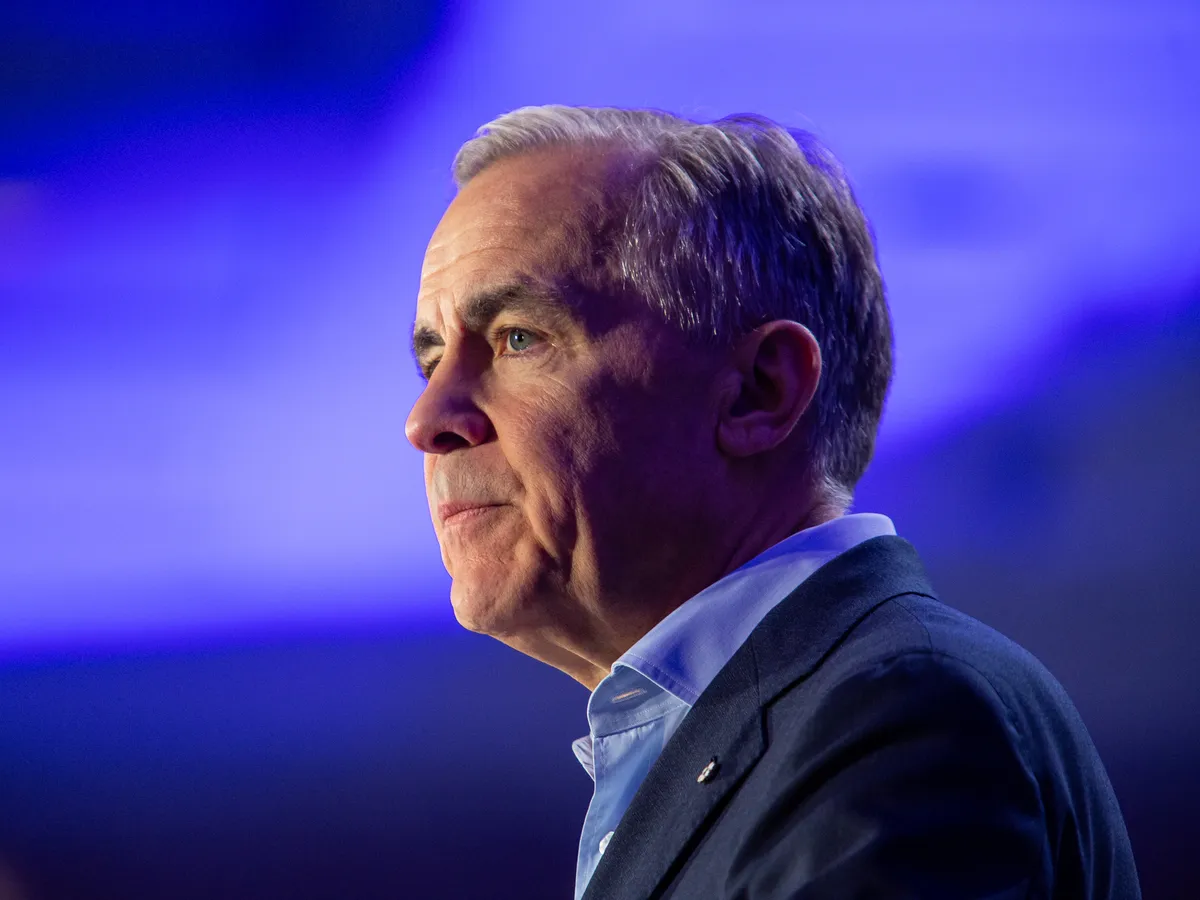
Skip to Content News Archives Economy Energy Oil & Gas Renewables Electric Vehicles Mining Commodities Agriculture Real Estate Mortgages Mortgage Rates Finance Banking Insurance Fintech Cryptocurrency Work Wealth Smart Money Wealth Management Investor Personal Finance Family Finance Retirement Taxes High Net Worth FP Comment Executive Women Puzzmo Newsletters Financial Times Business Essentials More Innovation Information Technology FP500 Podcasts Small Business Lives Told Tails Told Shopping Financial Post Store Obituaries Place a Notice Advertising Advertising With Us Advertising Solutions Postmedia Ad Manager Sponsorship Requests Classifieds Place a Classifieds ad Working Profile Settings My Subscriptions Saved Articles My Offers Newsletters Customer Service FAQ News Economy Energy Mining Real Estate Finance Work Wealth Investor FP Comment Executive Women Puzzmo Newsletters Financial Times Business Essentials HomeFP CommentTerence Corcoran: Despite the heat, fossil fuel use keeps on growingWe learn to live with smoke and heat as economic reality overcomes alarming climate science claimsLast updated 1 hour ago You can save this article by registering for free here. Or sign-in if you have an account.The evolving energy policies of the prime minister fully demonstrate the global economic reality gripping the energy economy today. Canada needs fossil fuels. Photo by Ronnie Chua/Getty ImagesAs heat waves, forest fires and other weather-related extremes sweep across the planet — allegedly caused by carbon-emitting fossil fuels — the global consumption of oil and gas continues to rise. Temperatures may hit 40 C in Europe and North America, but there is a conspicuous lack of action to aggressively reduce fossil fuel consumption.Subscribe now to read the latest news in your city and across Canada.Exclusive articles from Barbara Shecter, Joe O'Connor, Gabriel Friedman, and others.Daily content from Financial Times, the world's leading global business publication.Unlimited online access to read articles from Financial Post, National Post and 15 news sites across Canada with one account.National Post ePaper, an electronic replica of the print edition to view on any device, share and comment on.Daily puzzles, including the New York Times Crossword.Subscribe now to read the latest news in your city and across Canada.Exclusive articles from Barbara Shecter, Joe O'Connor, Gabriel Friedman and others.Daily content from Financial Times, the world's leading global business publication.Unlimited online access to read articles from Financial Post, National Post and 15 news sites across Canada with one account.National Post ePaper, an electronic replica of the print edition to view on any device, share and comment on.Daily puzzles, including the New York Times Crossword.Create an account or sign in to continue with your reading experience.Access articles from across Canada with one account.Share your thoughts and join the conversation in the comments.Enjoy additional articles per month.Get email updates from your favourite authors.Create an account or sign in to continue with your reading experience.Access articles from across Canada with one accountShare your thoughts and join the conversation in the commentsEnjoy additional articles per monthGet email updates from your favourite authorsSign In or Create an AccountorWhile media and climate alarmists routinely insist that an overheating environment is a product of burning coal, gas and oil, the current wave of weather disturbances has failed to generate corresponding high-profile political action to accelerate shutting down the fossil fuel industry.Global agencies annually release data showing that even after three decades of climate alarmism since the signing of the Kyoto Protocol in 1997, emissions keep rising — including an expected gain of 1.1 per cent in 2025 to 38.1-billion tonnes. Due to the Iran crisis, 2026 emissions are uncertain.Get the latest headlines, breaking news and columns.By signing up you consent to receive the above newsletter from Postmedia Network Inc.A welcome email is on its way. If you don't see it, please check your junk folder.The next issue of Top Stories will soon be in your inbox.We encountered an issue signing you up. Please try againWhat is certain, however, is that the growth in fossil fuel use has taken place despite continuous and extreme warnings from governments and science groups. In 1992, the Union of Concerned Scientists warned that the Earth’s “ability to absorb wastes and destructive effluent is finite. Its ability to provide food and energy is finite. Its ability to provide for growing numbers of people is finite.” Population growth, said the scientists, must be contained through “effective, voluntary family planning.” Since then, the global population has increased more than 50 per cent to 8.3 billion.Emissions rose proportionately. A straight calculation shows carbon emissions per capita has barely changed over the last 30 years. The continued and growing presence of carbon emissions demonstrates the intense importance of fossil fuels to the economy and to human existence.It is claimed by activists such as Bill McKibben, author of “Here Comes the Sun: A Last Chance for the Climate and a Fresh Chance for Civilization,” that wind and solar can easily overthrow fossil fuels as man’s primary source of energy. In an occasionally confrontational interview last week with Ezra Klein at the New York Times, McKibben argued that solar and wind power can replace fossil fuels on sheer economic grounds.“Sun is not the only thing we have going for us. Wind power is now essentially as cheap as solar power, and wind power is beautiful in that it complements the sun perfectly,” he said.McKibben argues absurdly that solar and wind can essentially provide “free” power. Unlike fossil fuels, all the costs of solar and wind come up front. “With a solar panel, once you’ve got it up, the electricity is free,” he claimed. The free energy, however, must also be linked to batteries, but that’s another story.It is possible that technology will evolve to the point that wind and solar can replace fossil fuels. Today, however, renewable energy requires massive amounts of government subsidies and tax relief. Can a green revolution be achieved economically over time in a way that will fulfill the increasing global demand for energy?Major government attempts to force green energy on the economy have proven largely unworkable. The European Union’s highly touted European Green Deal has emerged as another demonstration of the failures of massive government intervention.“A Green Entrepreneurial State?: Exploring the Pitfalls of Green Deals” — a collection of 17 essays written by economists — comprehensively critiques government attempts around the world to use state policy to shape energy economics. As usual, when governments attempt to fight economic realities, failure is the typical outcome.Economic reality creeps in daily. The Financial Times recently reported that the global shipping industry is moving away from attempts to adopt clean fuel and is reverting to fossil fuels. “Everybody wants to be green. Nobody wants to pay for it,” said one executive. Shippers’ plans to hit net-zero by 2050 have been abandoned.Green energy’s reliance on subsidies highlights the uneconomic fundamentals of green policies. U.S. tax credits for wind and solar formally ended July 4, raising the prospect of steep increases between 40 and 120 per cent in U.S. green energy prices. In Canada, federal and provincial solar tax benefits drive green energy. Would solar exist without subsidies? If yes, then end the uneconomic subsidies.The evolving energy policies of Prime Minister Mark Carney fully demonstrate the global economic reality gripping the energy economy today. Canada needs fossil fuels going forward — to fuel industry, maintain government revenues, provide energy security, fill global demand through pipelines and generate electricity.What that means, said Carney the other day, is that Canada will continue to increase carbon emissions. The alternative, he said, is “too expensive,” a perspective that may prove to be economically true for some time. That’s a big message from Carney, one of the world’s leading advocates of carbon control.The underlying message: we can live with and adapt to climate change. Join the Conversation This website uses cookies to personalize your content (including ads), and allows us to analyze our traffic. Read more about cookies here. By continuing to use our site, you agree to our Terms of Use and Privacy Policy.
Terence Corcoran: Despite the heat, fossil fuel use keeps on growing
We learn to live with smoke and heat as economic reality overcomes alarming climate science claims. Find out more here
1,308 words~6 min read