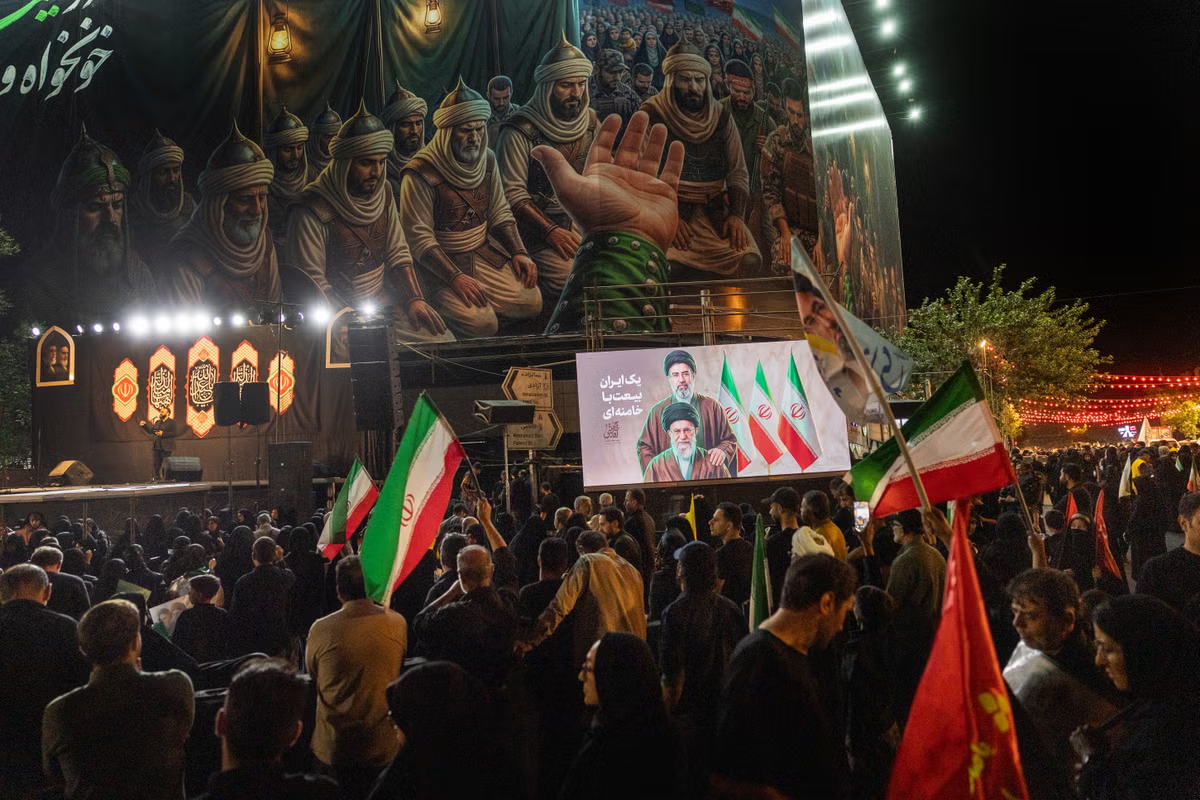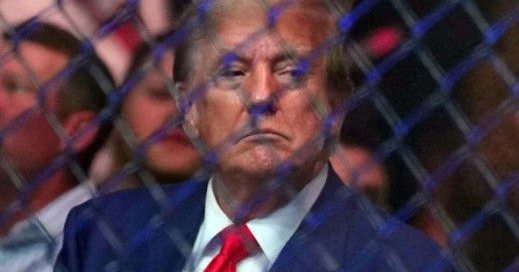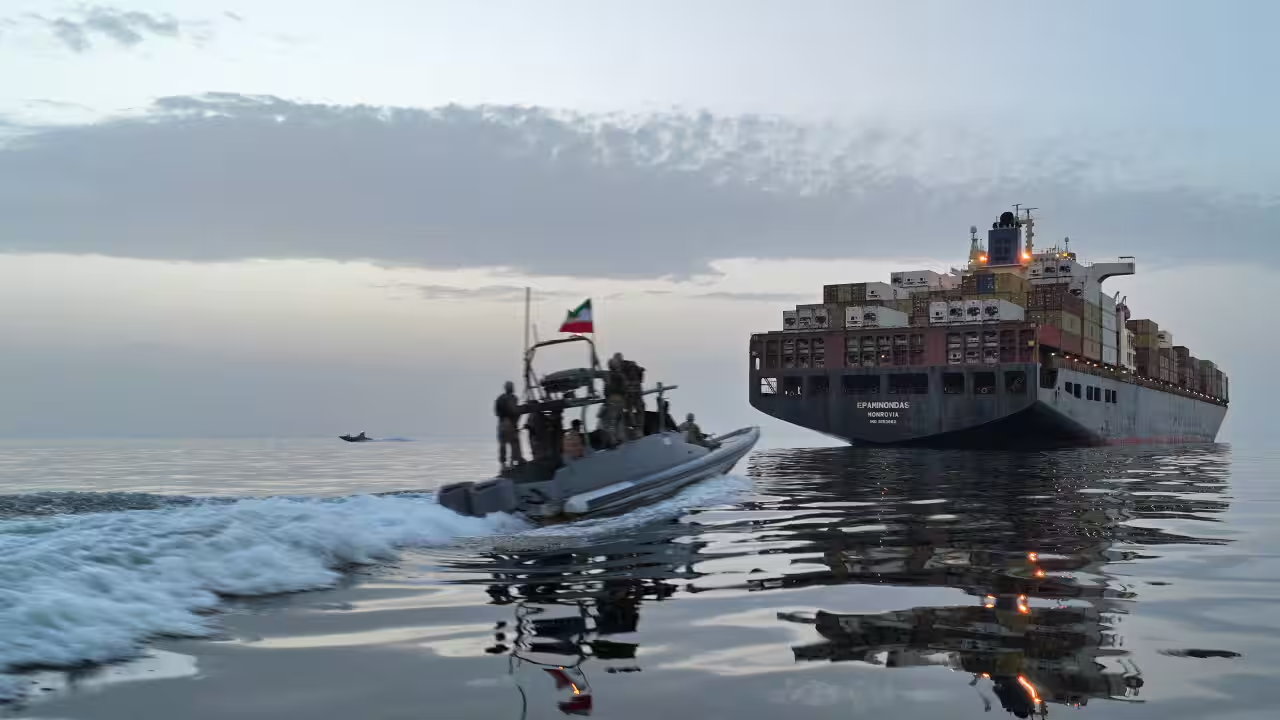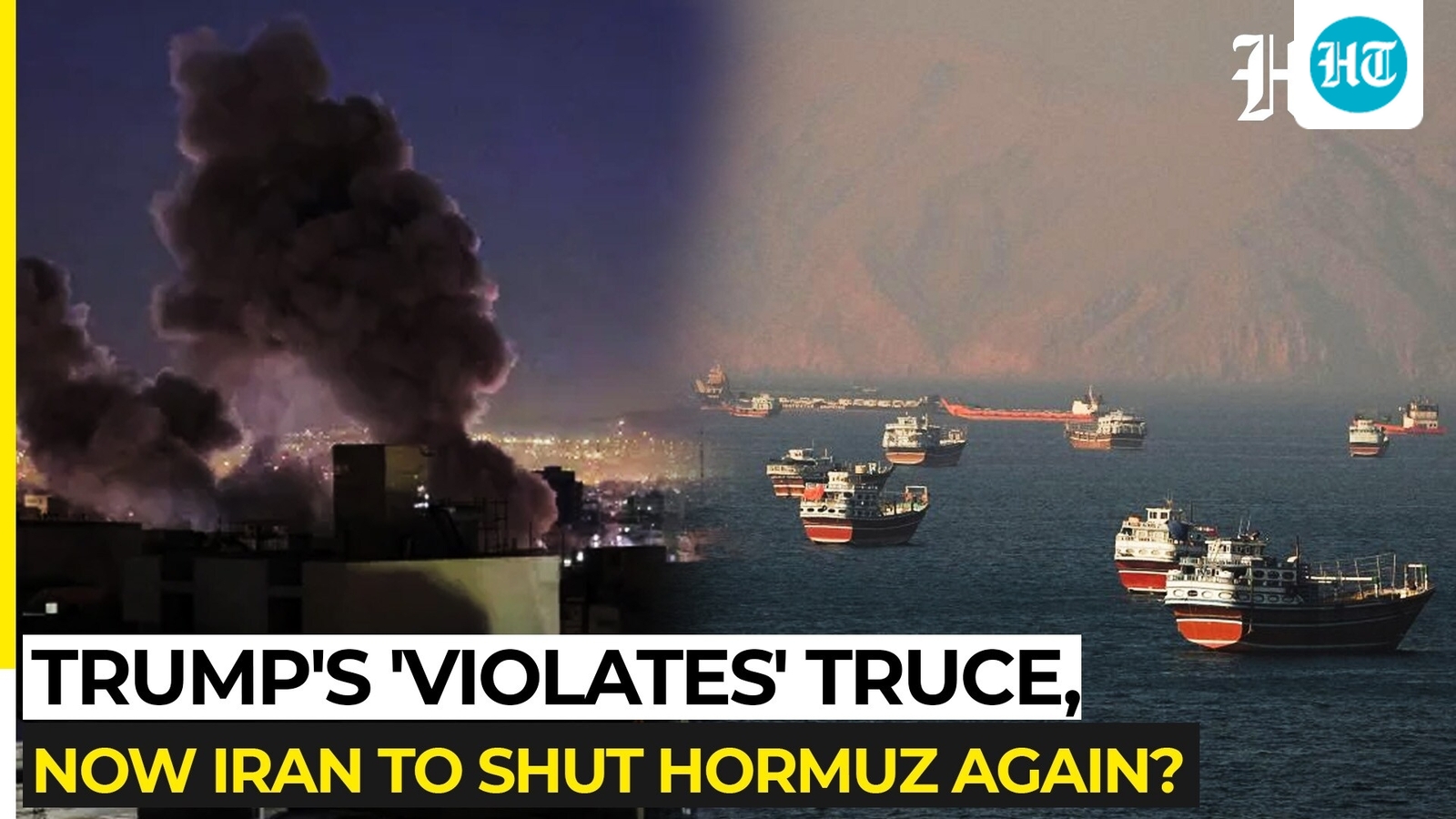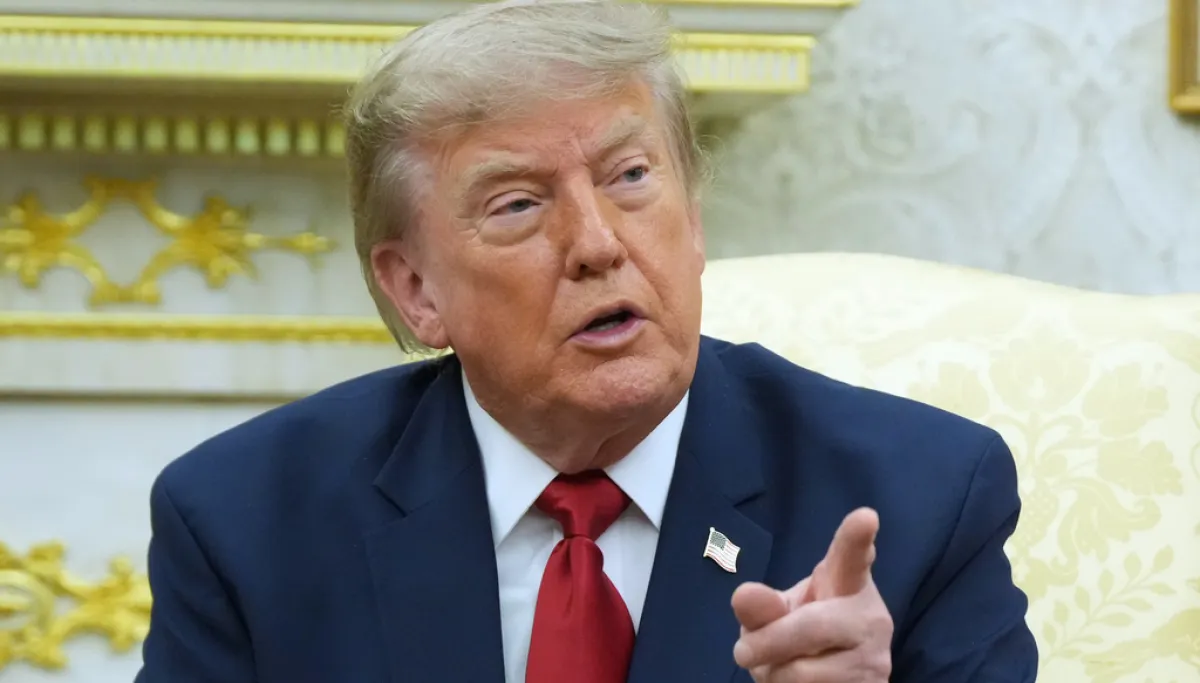
Over the course of the last few days, the world’s eyes have been fixed on the Strait of Hormuz. The United States has declared it open for business, while recent reports indicate Iran has instructed its Houthi allies to intervene if U.S. strikes hit Iran’s infrastructure. Iran’s concerns that it may be further weakened by U.S. strikes aren’t unfounded. For the last week since the collapse of the ceasefire, the United States has continued its military strikes on Iran. President Donald Trump declared, “The Islamic Republic of Iran has asked us to continue ‘talks.’We have agreed to do so, but the United States has stated to them, in no uncertain terms, that the Cease Fire is OVER!” Last Friday, he notified Congress of the resumption of U.S. military operations against Iran. As the ceasefire has crumbled, the world was reminded of a simple truth: the Islamic Republic of Iran does not negotiate; it manipulates. The tragedy of this moment is not that Tehran’s strategy is sophisticated; it is that the world continues to fall for it.
The pattern is always the same: promise engagement, extract concessions, buy time, then strike. The 60-day memorandum of understanding signed by the U.S. and Iran was never a pathway to peace. It was a tool of manipulation, and the evidence is undeniable.Predictably, the regime showed its hand almost immediately. Just 18 days into the memorandum of understanding, the Islamic Republic launched missiles and drones at American bases in Kuwait and Bahrain. The Revolutionary Guard’s navy promised U.S. bases would “experience hell.” This was not a breakdown in diplomacy. This was a preordained conclusion to the agreement.The Islamic Revolutionary Guard Corps does not need to rearm to grow stronger. Every day that Tehran manipulates the world’s superpower under the guise of negotiations, it grows more powerful in the eyes of its proxies. Hezbollah, the Houthis, Hamas, and Shia militias are watching and taking note of a regime that can string along the U.S. while attacking its troops, its allies, and the arteries of global commerce.Since the memorandum was signed, Iran has targeted five commercial vessels in the Strait of Hormuz. Less than a day after the ceasefire, Hezbollah struck northern Israel. From Nahariya to Kiryat Shmona in northern Israel, Israelis live under constant evacuation notices, victims of the same regime sitting across the table from American diplomats.Negotiations require good faith, but the Iranian regime has none. Its leaders have chanted “Death to America” since the revolution. At Ayatollah Ali Khamenei’s funeral, mourners burned the American flag and put a target on the president’s face. Sixty-three members of the Assembly of Experts declared killing the American president a religious duty. These are not the actions of a negotiating partner. These are the actions of an enemy.Iran has long employed denial, deception, and delay as a strategy. This method produced the 2015 Joint Comprehensive Plan of Action and the release of billions in unfrozen sanctions, bringing the ayatollahs closer to a nuclear weapon than ever before. But the crudeness of their manipulation has now collided with American resolve. Today, the Iranian navy sits at the bottom of the ocean. Natanz and Fordow were struck by B-2 bombers. CENTCOM has severely degraded Iran’s air defenses and missile-production capabilities. Tehran is weaker today because Trump was willing to impose costs.I was forced to flee Egypt, my home, after condemning Hamas’s barbarity on Oct. 7, 2023. I dared to speak the truth about Islamist movements and the danger they pose to America and the world. Iran is the head of that hydra. Its proxies (Hezbollah, Hamas, the Houthis, Shia militias in Iraq) are limbs of a single beast animated by a shared ideology of destruction. Every concession extracted through manipulation feeds that animal.OPINION: IRAN JUST ADMITTED THE QUIET PART OUT LOUD. IS TRUMP LISTENING?America owes a debt measured in blood: 241 service members in Beirut in 1983, at least 603 troops killed by Iran-backed militias in Iraq, and continued attacks on American forces since 2023. The United States now faces a choice it can no longer defer: continue the fiction that the Islamic Republic is a negotiating partner, or recognize what every Arab reformer, every Israeli, and every exile like me already knows. Iran does not negotiate. It manipulates. And the only language it understands is consequences.Dalia Ziada is an award-winning Egyptian writer and political analyst specializing in governance, geopolitics, and regional security in the Middle East and Eastern Mediterranean. She serves as the Middle East scholar, research fellow, and Washington, D.C., coordinator at the Institute for the Study of Global Antisemitism and Policy.