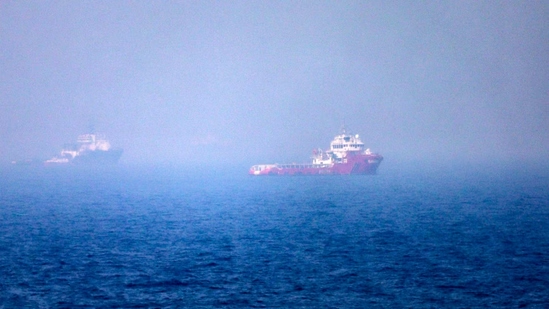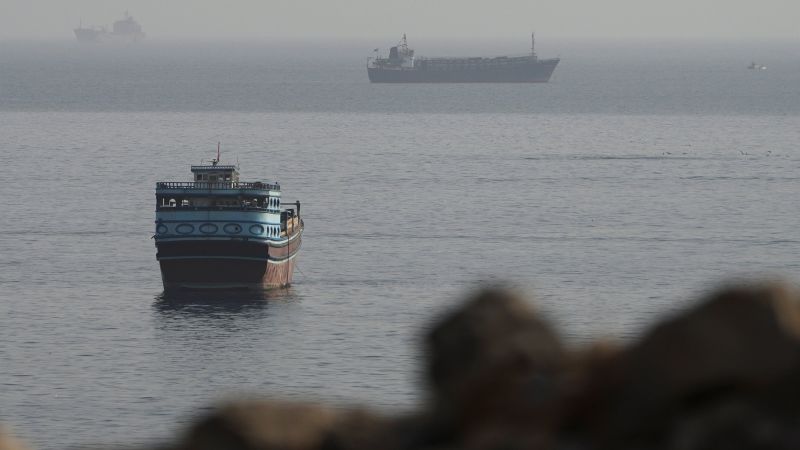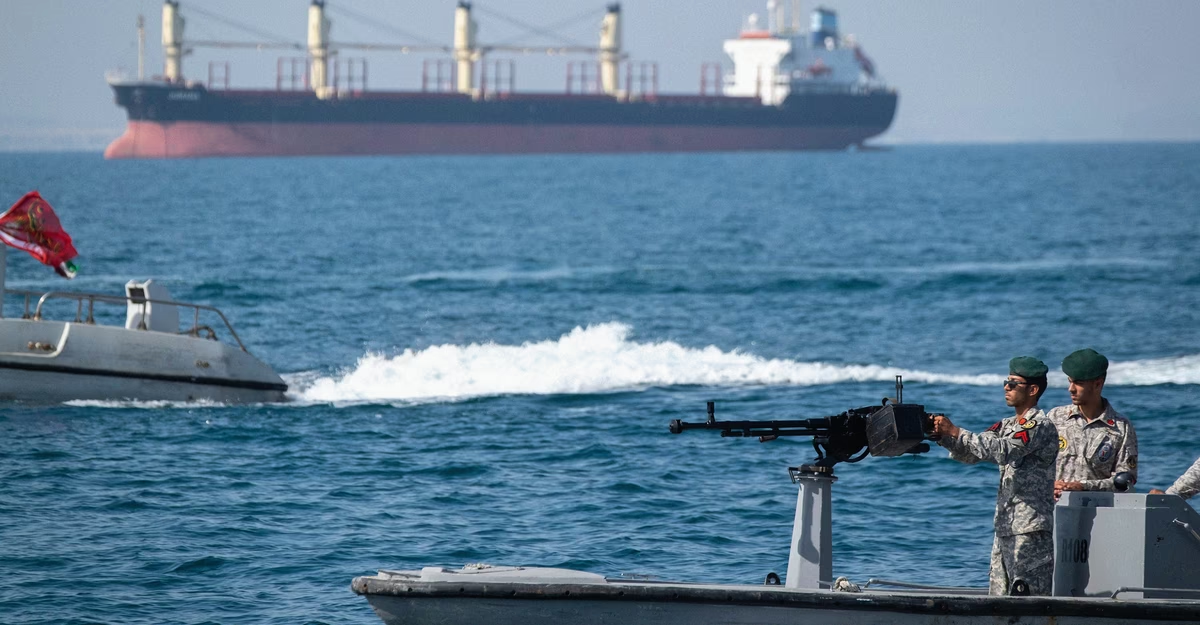
Some involve accepting Iranian control of the Strait of Hormuz. The rest call for escalation.Morteza Nikoubazl / NurPhoto / APJuly 17, 2026, 7 AM ET Here we are again: Iran is shooting at traffic in the Strait of Hormuz, Donald Trump is ordering retaliatory strikes, and both sides have declared the latest cease-fire agreement “over” or “dead.” That Iran reportedly plotted to kill Trump—possibly in the new 747 given to him by the Qatari royal family—surely did not help. Now Trump is reimposing the American naval blockade. He also threatened to institute a 20 percent toll on all goods transiting the strait, to defray “any and all costs necessary to do the job of providing safety and security to this very volatile section of the World”—then promptly backed off of that.Unfortunately, the United States has precious few options left for breaking the deadlock over the strait. And those it does have are neither appealing nor likely to succeed.The June memorandum of understanding that paused the fighting between Iran and the U.S. was ambiguously worded. Each side chose the interpretation that would best support its claim to control the Strait of Hormuz. Iranian leadership reportedly considers command of the strait a strategic necessity; one official described it as “more important than dozens of atomic bombs.” The U.S. has made clear that it cannot accept a scenario wherein Iran retains long-term control. Hence, the two countries are at an impasse.The Iranians likely believe that their best option is to stay the course and stick to their maximalist demands. They don’t need to damage many ships to effectively shut down the strait; the threat of attack is enough to persuade most ship owners not to attempt to transit, even if insurance is available. This means that Iran needs very few missiles, drones, or mines to close the strait down. And it can withstand the U.S. blockade: Its economy appears reasonably stable, as it has continued exporting oil sufficient to meet its needs throughout the war. It also has a captive population that has grown used to sanctions and economic pain.Read: The forever negotiationThe U.S. is effectively left with four options. Each of them is terrible in its own way. It can stay the current course. It can make life in Iran impossible. It can declare victory and go home. Or it can launch a ground invasion. Staying the course means continuing to rely on air strikes against Iran’s military, leadership, and infrastructure as a punitive tool to obtain concessions at the bargaining table. The administration has pursued this strategy for a few months now, and Iranian demands have not budged. A similar approach led to the incremental escalation of the American bombing campaign in Vietnam, which likewise failed to achieve its objective.It may also mean continuing to expend munitions in the hope of completely eliminating Iran’s capacity to strike shipping targets. This is a Sisyphean task. Worse, it is draining U.S. stockpiles and leaving America ill-prepared for another conflict. The Center for Strategic and International Studies has concluded that replacing some of the most crucial weapons expended in this war will take at least three years of production.The second option is to ramp up the bombing campaign to such an extent that life in Iran becomes unlivable. The U.S. took this approach to Japan at the end of World War II, through both bombing and a naval blockade. Millions of Japanese people would have died of starvation if the war continued into 1946. Concerted strikes on Iranian electrical and water infrastructure, such as dams and desalination plants, could create a similar humanitarian catastrophe.Trump has previously threatened to bomb Iranian electrical and bridge infrastructure if Tehran did not agree to terms. This sort of ultimatum places Washington in an escalation trap. If attacks on roads and electrical infrastructure don’t bring Iran to its knees, water and oil likely will be the next targets.Iran’s leaders understand that water is one of their country’s greatest vulnerabilities. They have made clear that if the U.S. strikes the infrastructure needed to keep their people alive, they will retaliate in kind against the Gulf States. The U.S. would struggle to defend them against that sort of attack.Of the four options available to the U.S., targeting electrical and water infrastructure is the one that cuts most cleanly through the Gordian knot of the Iranian conflict, potentially providing a decisive win at the lowest cost to the U.S. Given that Trump seems to believe that Iran’s leadership tried to have him killed, and that he has threatened to “decimate and destroy” Iran if it tries again, this possibility may be on the table.But such actions would lead to mass death and a flood of refugees, and they would turn the world against the United States. Under previous administrations, U.S. military leadership and legal experts could be trusted to balk at such a monstrous option. However, the Trump administration has purged military leadership of those it considers “woke,” including many of the senior lawyers who might previously have prohibited such war crimes.Read: Who really controls the Strait of Hormuz?Another option is for Trump to simply give in to Iran’s demands, declare that he has solved the problem and gotten the best deal imaginable, and walk away. The memorandum of understanding appeared to enact this option. But Iran cleaved to a maximalist interpretation of that agreement, continued to strike shipping, and allegedly plotted to assassinate Trump. A way back to another memorandum of understanding is hard to see at this point, but the administration could decide that this is the least damaging option and hope to sell it as a win.Finally, the U.S. could choose to put troops on the ground. However, it lacks the manpower and logistical support to mount a land campaign into Iran. Even seizing tiny Kharg Island would be an exceptionally risky move that might not have the intended effect if it succeeded. As the defending nation, Iran has the “home court” advantage.The U.S. has so far avoided putting boots on the ground except to rescue downed pilots. But at the outset of the war, Trump told the New York Post, “I don’t have the yips with respect to boots on the ground—like every president says, ‘There will be no boots on the ground.’ I don’t say it.” He added, “I say ‘probably don’t need them,’ [or] ‘if they were necessary.’” The option, however unlikely, can’t be categorically ruled out.The U.S. and Iran are locked in a stalemate where neither can neutralize the other’s advantages, nor forcibly compel the other to accept unfavorable peace terms. We have seen a similar dynamic playing out in Ukraine. The U.S. does not have the munitions to continue the current bombing campaign indefinitely. The Trump administration appears to face an unpalatable choice between accepting Iranian hegemony over the strait—or initiating cycles of escalation that cannot end well.
Trump Has Only Terrible Choices With Iran
Some involve accepting Iranian control of the Strait of Hormuz. The rest call for escalation.
1,144 words~5 min read