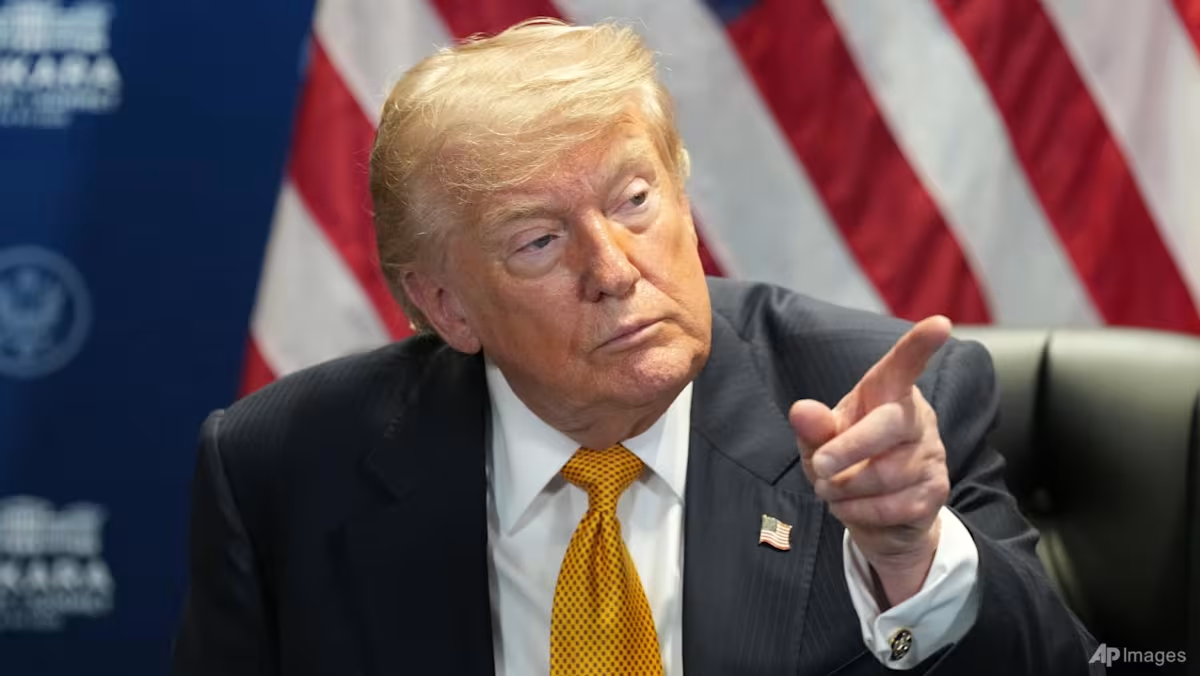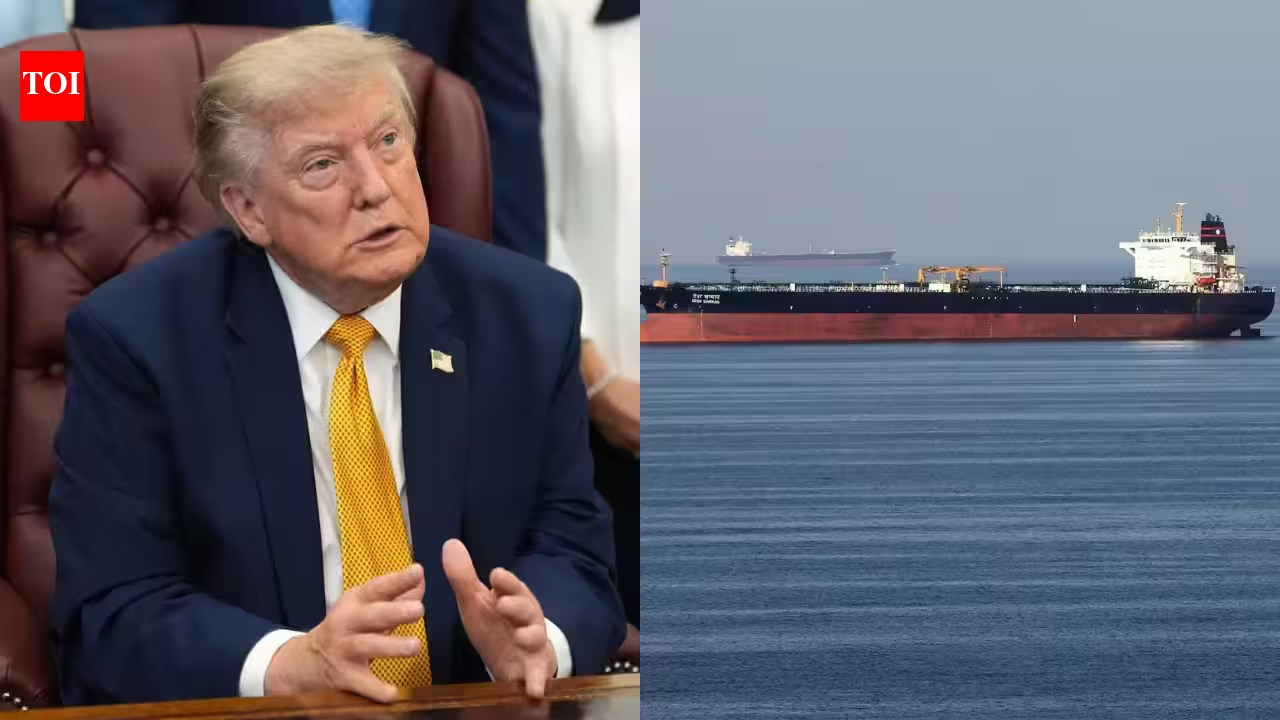
The resumption of US military action against Iran, and President Donald Trump's warning that more strikes might be coming, highlight how control of the Strait of Hormuz has become the fundamental sticking point in ending the conflict.Experts say the latest escalations reflect divergent interpretations of the interim deal reached last month that set a 60-day timeframe to negotiate a lasting settlement. Negotiations currently appear to be at a standstill over the strait and whether commercial vessels should be free to transit it without Iranian approval.“For Tehran, this is not a technical disagreement but a strategic one,” said Trita Parsi, a political analyst in Washington. “Iranian officials fear the United States is using the agreement to erode Iran’s control over the strait by rejecting any co-ordination requirement and, in effect, creating an alternative corridor that could remain open even if war resumes.”Vessels identified by US Central Command as IRGC boats before they were struck in a new wave of US military strikes. ReutersInfoMr Trump on Wednesday warned that the US was preparing for another round of strikes on Iran, declaring the ceasefire “over” and reigniting fears of a return to full-scale war.Speaking on the sidelines of the Nato summit in Ankara, Turkey, he threatened to attack Iranian civilian infrastructure, including power stations and desalination plants, and to seize Kharg Island.“We hit them very hard last night,” Mr Trump said. “We’ll probably hit them hard again tonight.”He said the strikes were retaliation for Iranian attacks on commercial shipping in the Strait of Hormuz. “They are behaving very badly,” he said.Still, Mr Trump said negotiations would continue, adding further uncertainty to the fragile ceasefire reached a month ago.Trying to end the war he startedThe US resumed strikes on Iran on Tuesday after three oil tankers were hit, attacking more than 80 sites. Iran responded by attacking US military facilities in the Gulf, throwing the region into turmoil once again.Mr Trump wants the war he launched alongside Israel on February 28 to end, but he has struggled to dictate how it concludes. While the US was able to demonstrate military superiority and destroy much of Iran's military hardware, Tehran's ability to close the Strait of Hormuz ensures it has huge leverage over Washington. Iran agreed to keep the strait open but insists that commercial vessels co-ordinate with Tehran while negotiations continue. Washington argues that ships should be free to use either the Iranian or Omani shipping lanes without seeking authorisation from any party.Vessels in the Strait of Hormuz, as seen from Musandam, Oman, July 8, 2026. ReutersInfoOn Tuesday, the US announced it would revoke a general licence that had authorised sales of Iranian oil under the interim peace deal, further destabilising the already shaky agreement. Oil prices surged more than 7 per cent on Wednesday in response.About a fifth of the world’s traded oil and natural gas passes through the Strait of Hormuz.The latest escalation threatens Mr Trump’s goal of ending the war while keeping prices low before November’s critical midterm elections. The months-long conflict has rattled markets and pushed up the cost of fuel, food and goods, undermining his central argument that his domestic and foreign policies would deliver an economic boom for ordinary Americans.The war and Mr Trump's handling of it have also proven to be deeply unpopular among Americans, polls show. Rosemary Kelanic, director of the Middle East programme at Defence Priorities, a conservative think tank advocating for fewer US military entanglements, said Mr Trump’s handling of the war has been politically and financially costly and has strengthened Iran by underscoring its leverage over the Strait of Hormuz.“The war with Iran does not and never has served US interests,” Ms Kelanic said. “Ending the ceasefire with Iran over skirmishes in Hormuz would be missing the forest for the trees – and Trump must not make that mistake.”Trump critics also say the interim agreement falls short of accomplishing his initial aims of ending Iran's nuclear programme, destroying its missile production and unseating the regime. “The 'deal' with Iran turns out to have been a memorandum of misunderstanding,” Michael McFaul, professor of political science at Stanford University, wrote on X. “American national security, the security of our partners in the Middle East, the global economy and US inflation are now all worse off than before Trump launched his war.” Throughout the conflict, Mr Trump oscillated between saying a deal was imminent and making new threats. He has praised the Iranian leadership only to denigrate them shortly after. Observers point to his frequent boasting that Iran's navy is “gone” because of the power of the US military. And yet he has not addressed why he has not been able to translate battlefield gains into a durable political settlement.During a press conference on the sidelines of the Nato summit, Mr Trump fielded a question from a journalist who said that the Iran war seems to be a “strategic dead end”, and that he is apparently unable to end it. “The Iran war has been tremendous military success. They want to make a deal, but they don't know how to make a deal,” Mr Trump responded. “I think they're a little loco.”
Trump's Iran endgame slips further out of reach | The National
Renewed fighting over Strait of Hormuz exposes gap between military victories and lasting settlement
856 words~4 min read