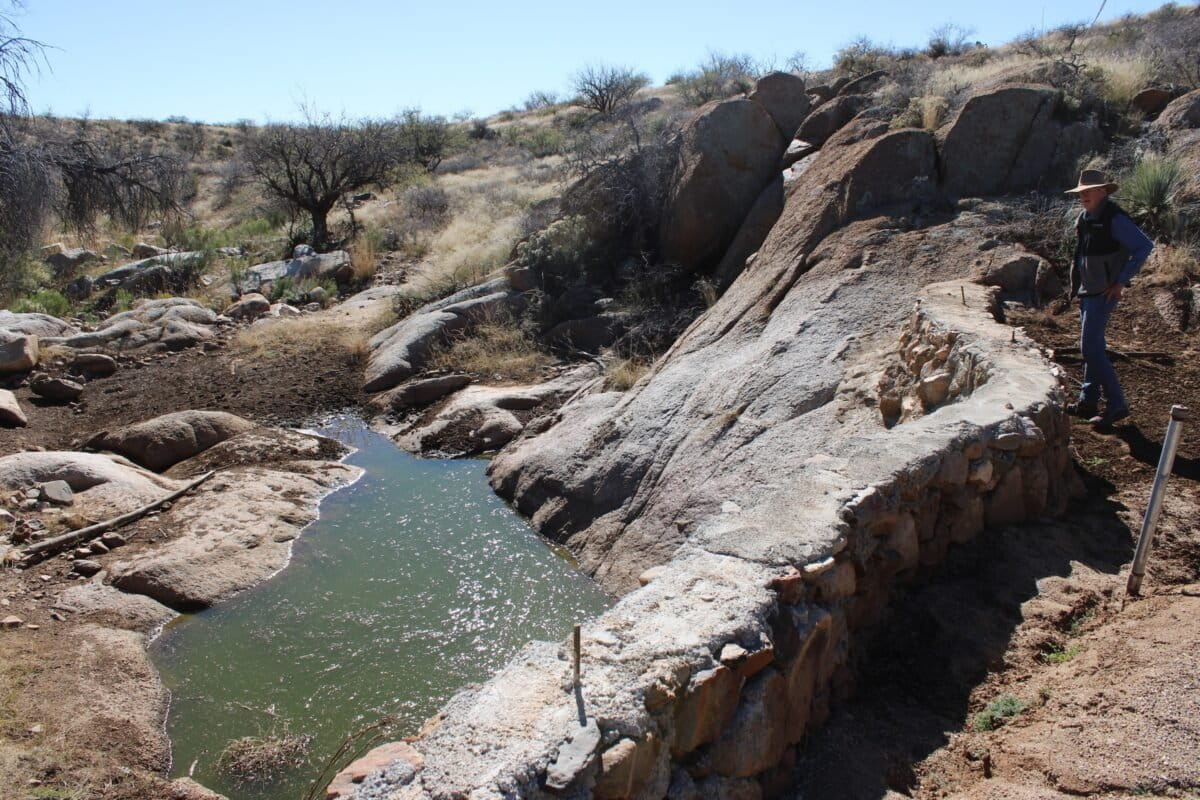
On the border between the United States and Mexico, ranchers are struggling under shifting climatic conditions, including extreme drought and intense flooding.Small rock structures known as trincheras are an ancient method of slowing water flow, reducing erosion and improving subsoil quality, allowing life to rebound in degraded rangelands.A growing body of research indicates that rock detention structures like trincheras help improve drought resilience, increase biodiversity and water yields.In Sonora, a state dominated by private rangelands, momentum is growing to build these structures and adopt a wider range of “regenerative ranching” practices, as conservationists and ranchers work together.
CANANEA, Sonora — The day was windless. Long brown grasses speckled the landscape, and a stray tree erupted from the earth. The river channel was rusty, bone-dry. A pond that swells with summer rain glimmered on the horizon, but local rancher Eduardo Ríos Colores pointed toward the mountains, his finger tracing the route of a bone-dry streambed cutting through the landscape.
“There was a time when this stream didn’t exist,” he said. “There used to be a lot of trees, and all the trees prevented erosion from the water. But … the trees have been drying up.”