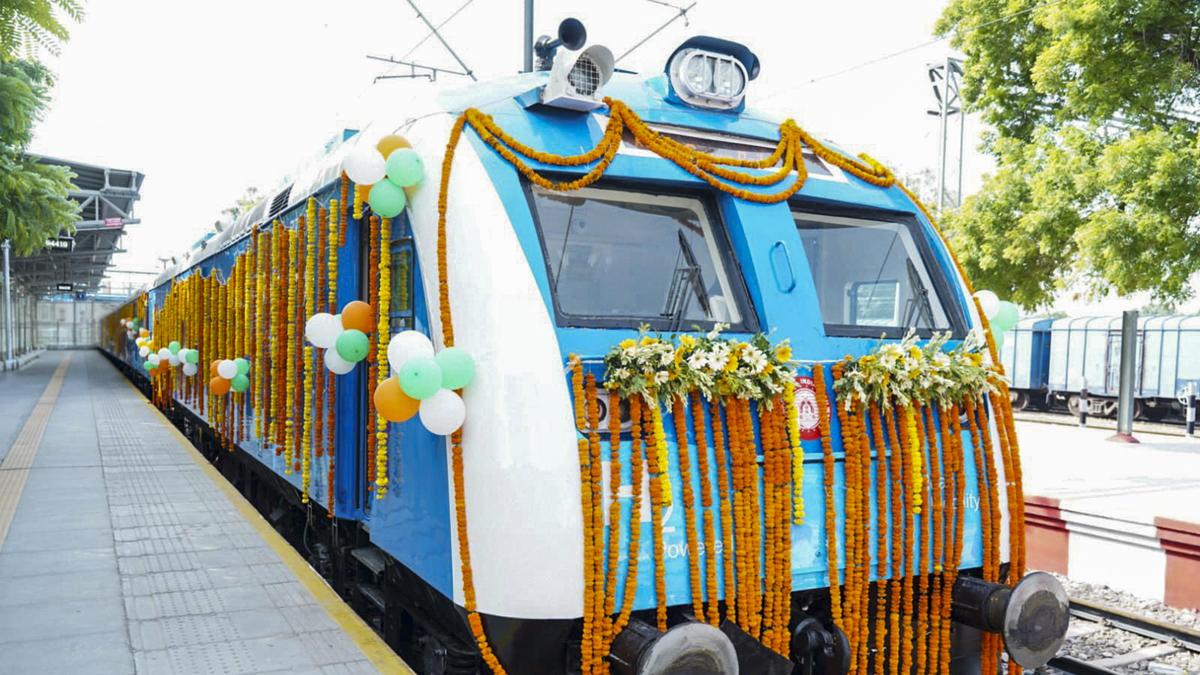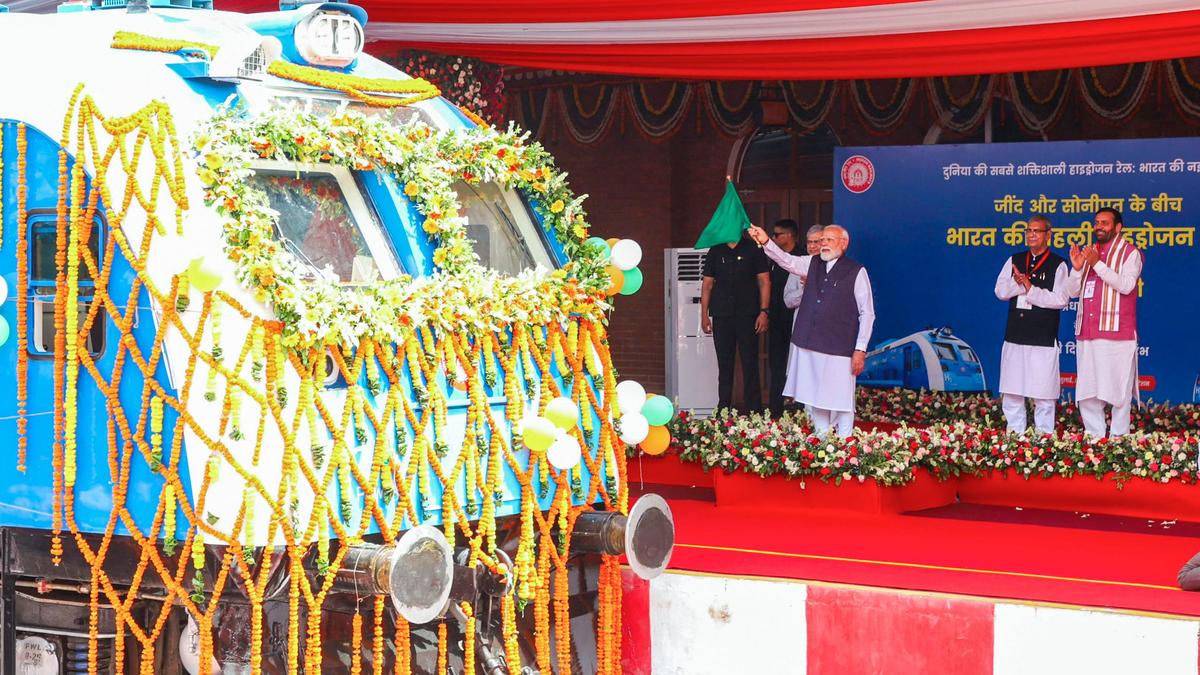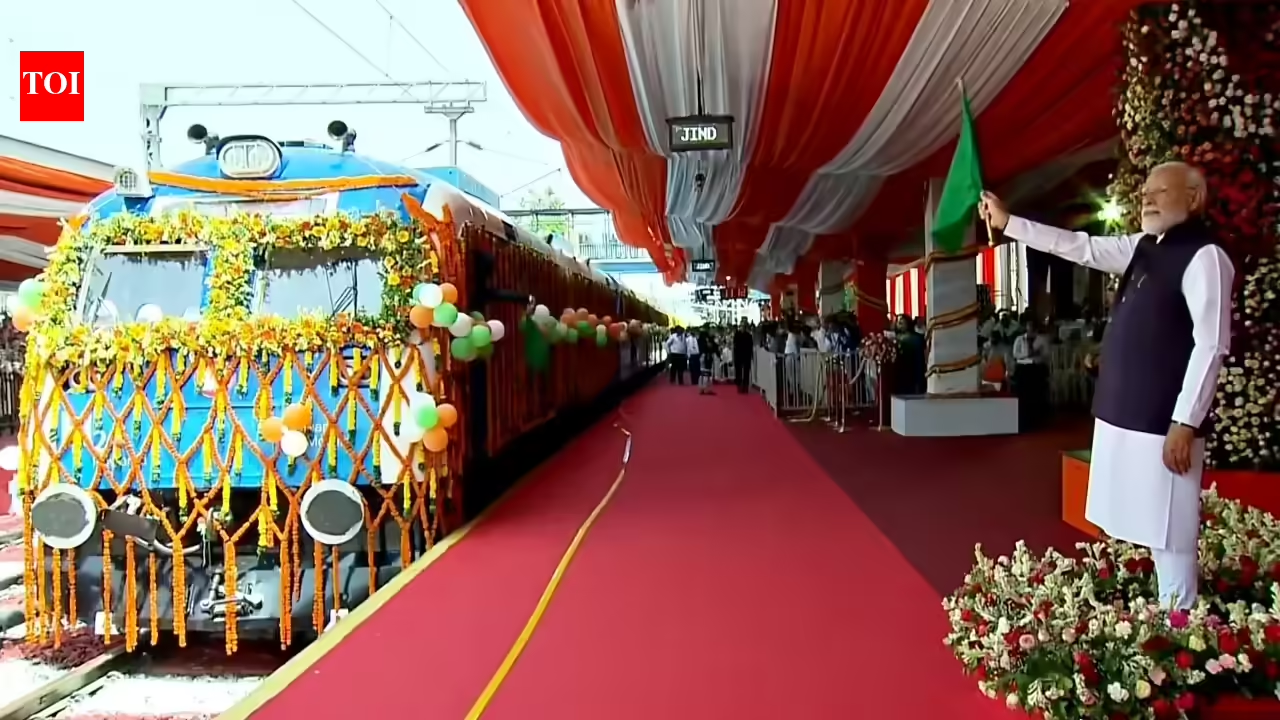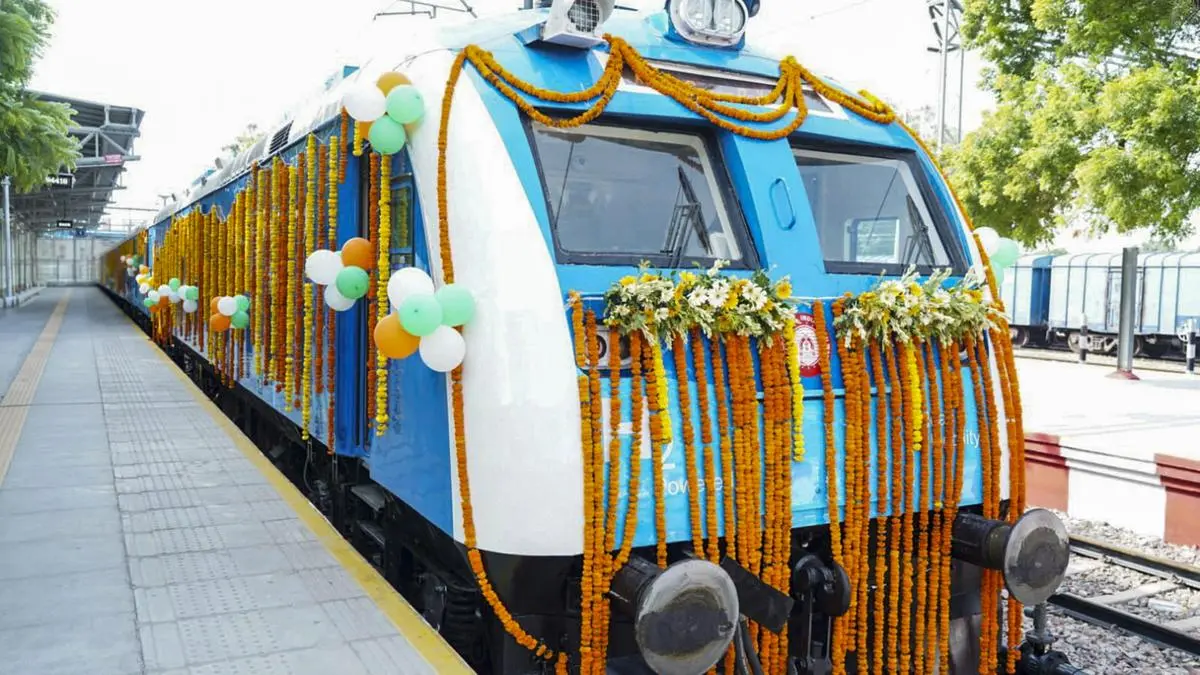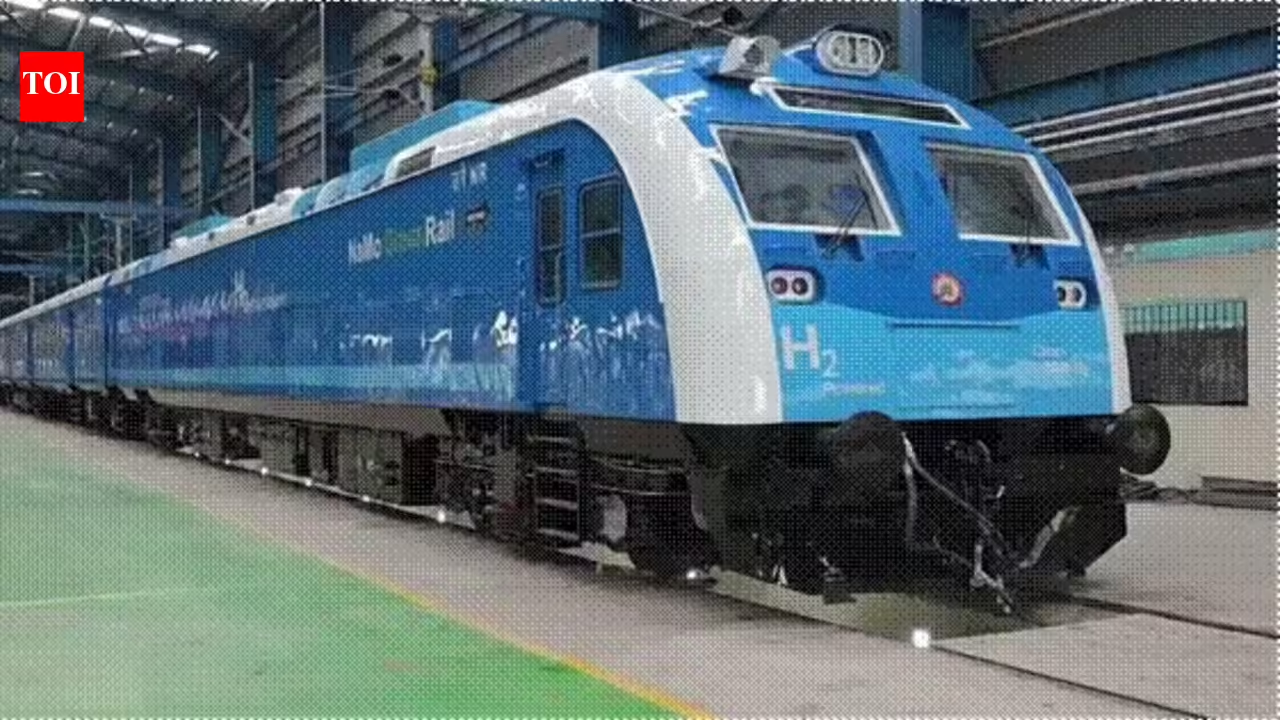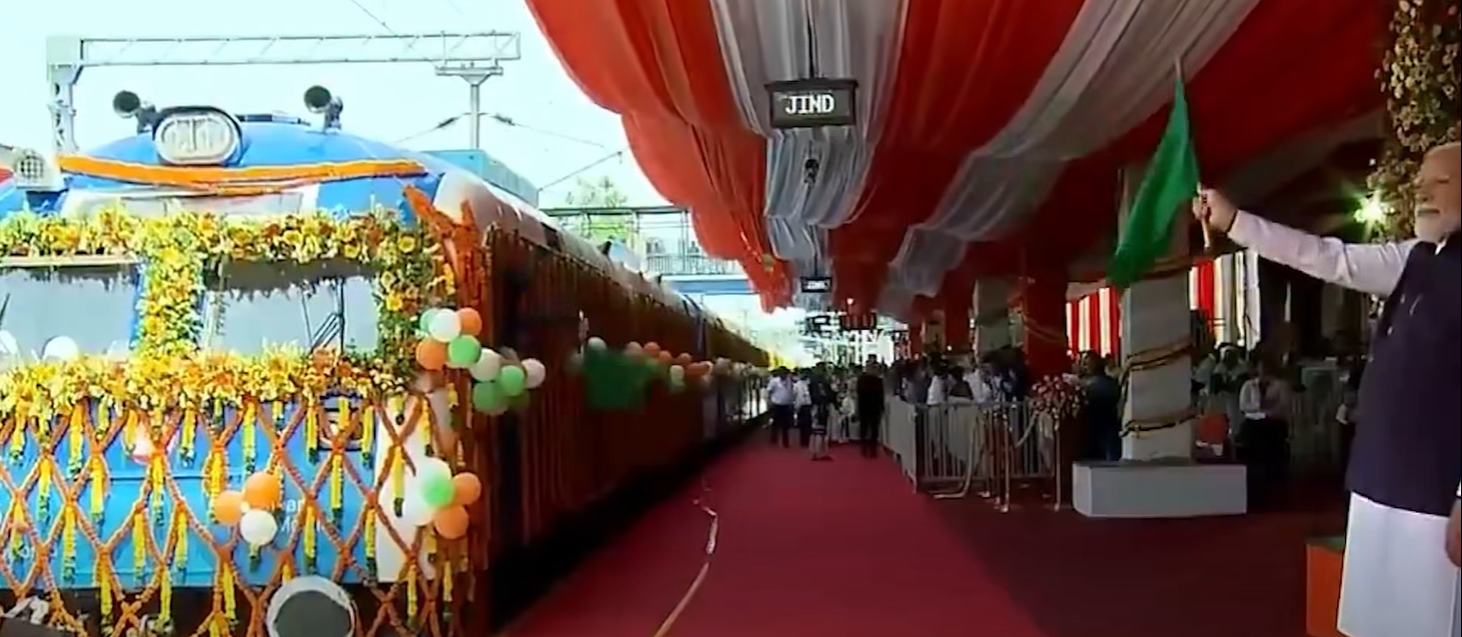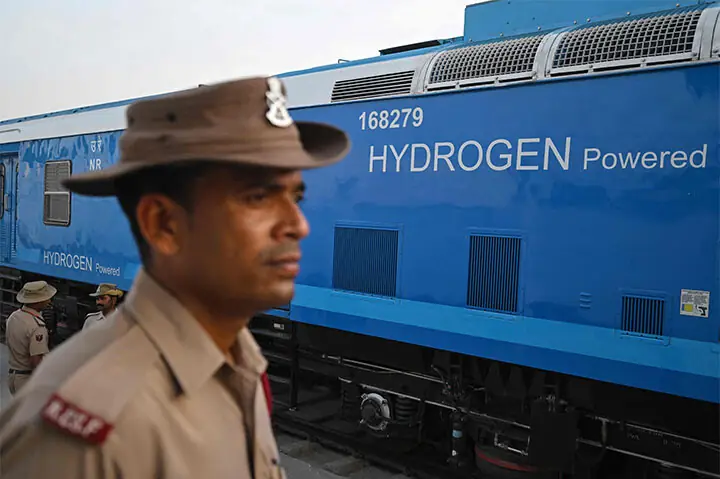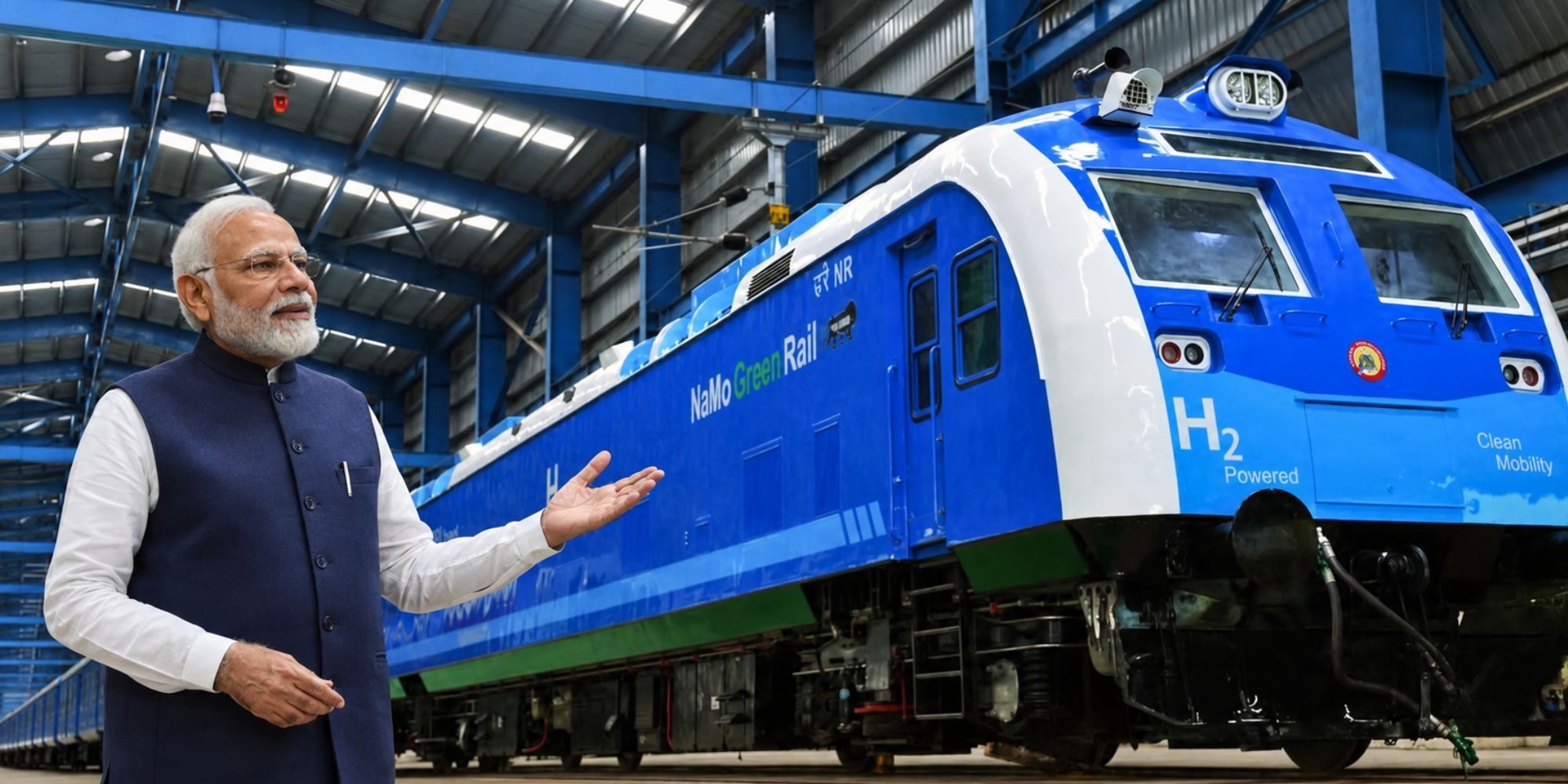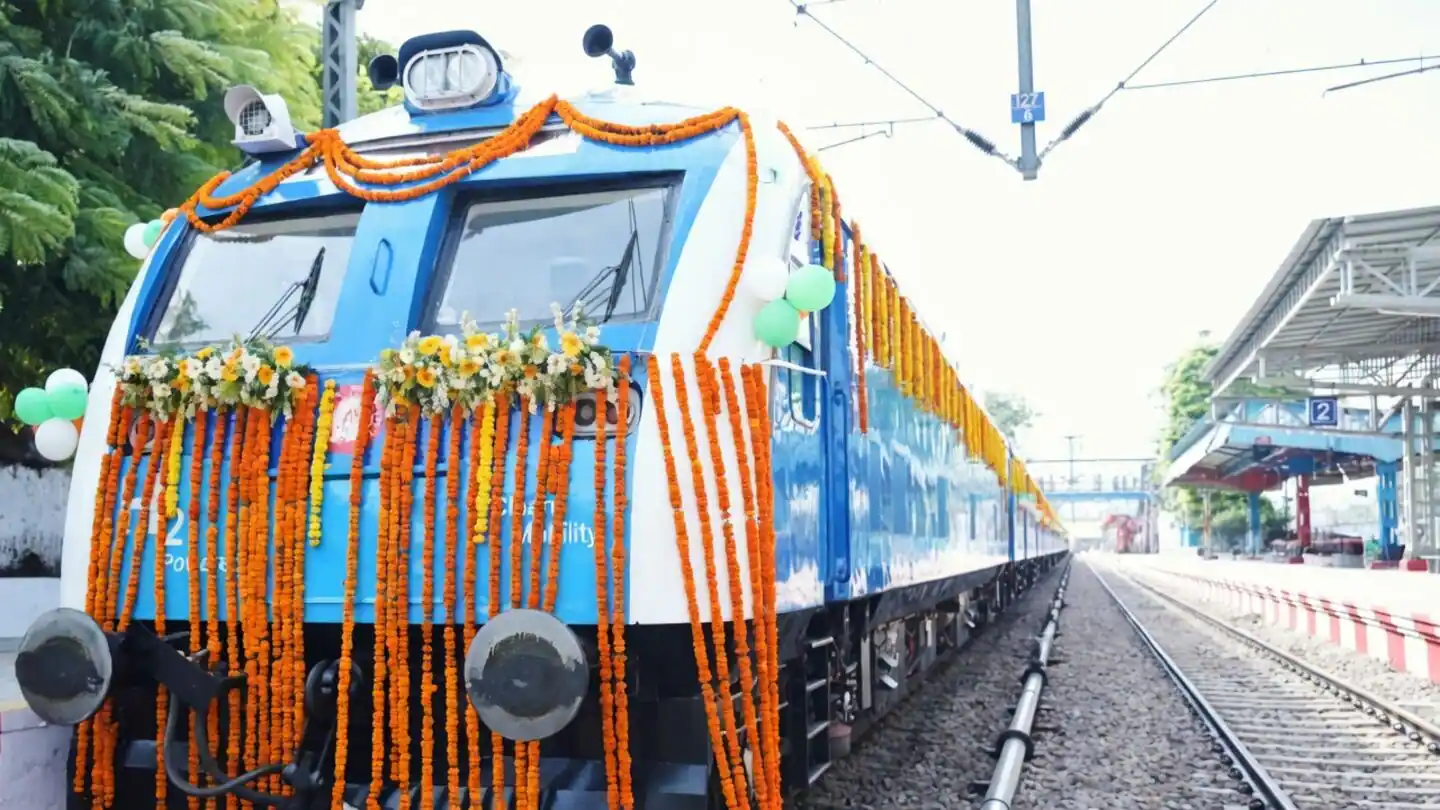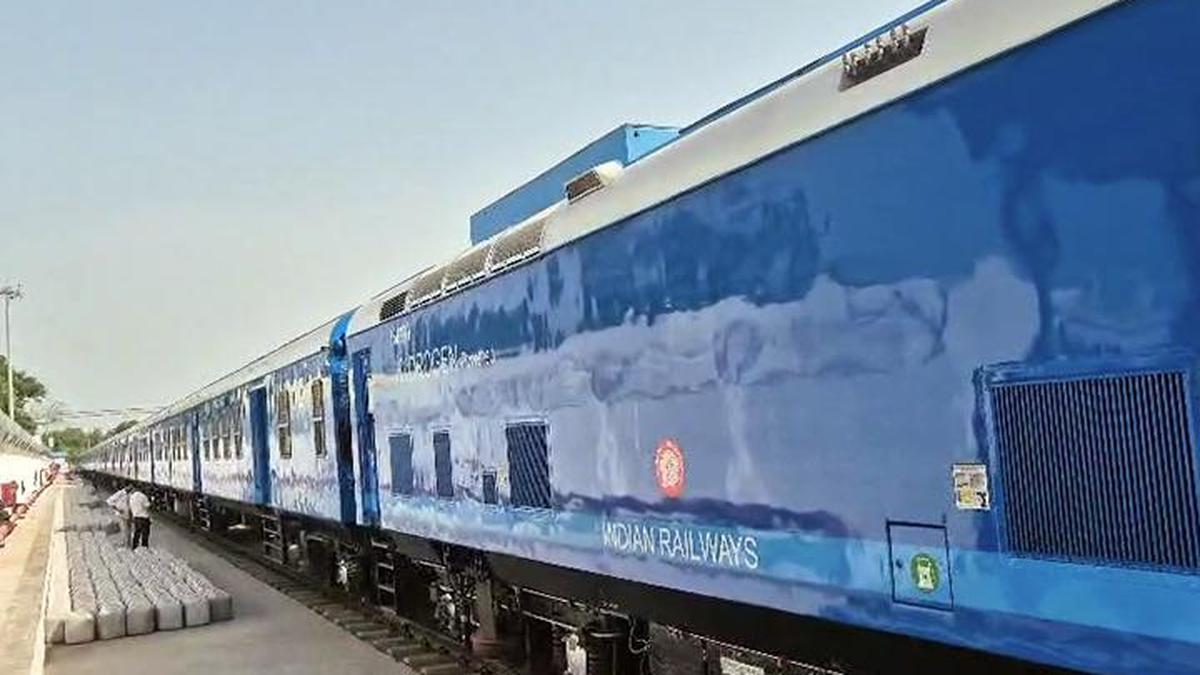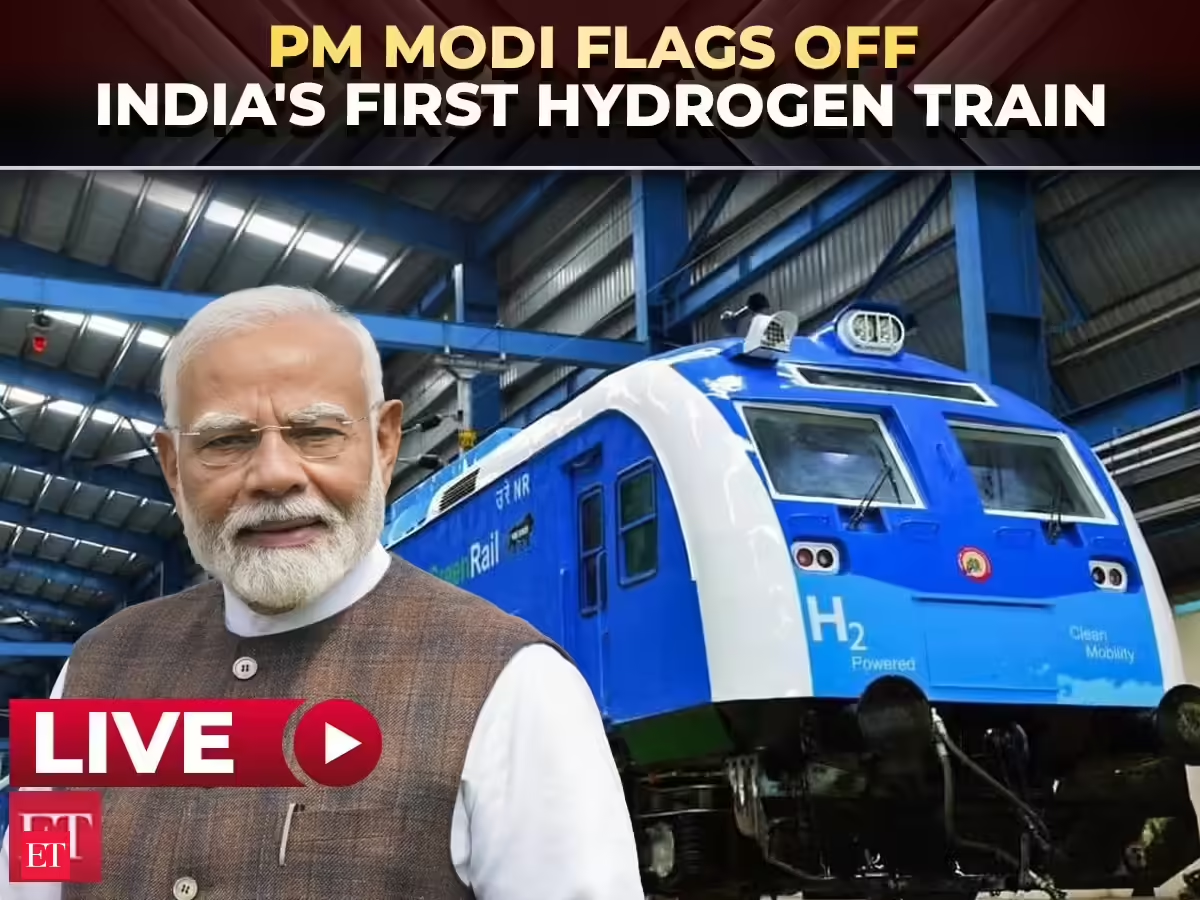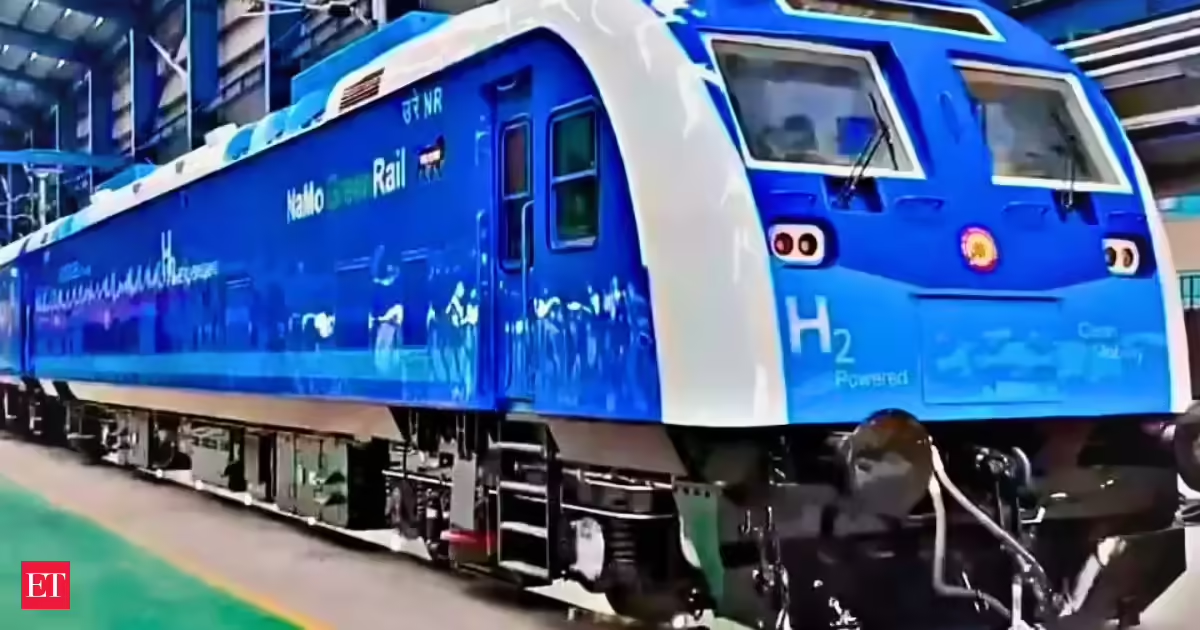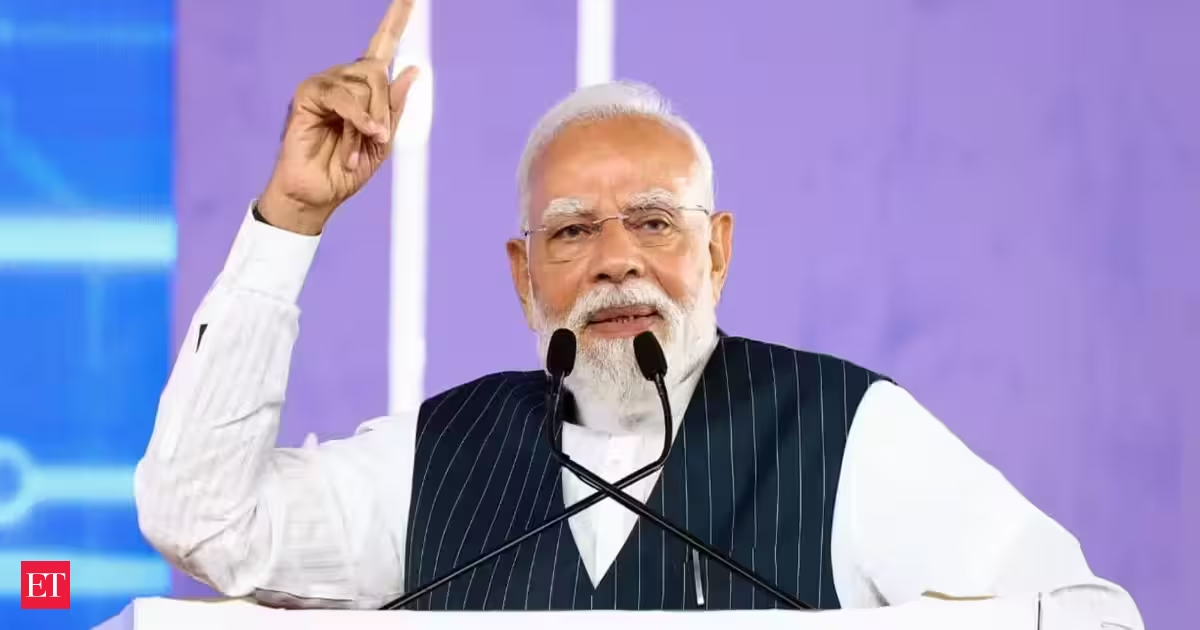
Jind: India’s first hydrogen-powered train connecting Jind to Sonipat in Haryana was flagged off by Prime Minister Narendra Modi on Friday, hailing it as a success of the 'Make in India' campaign.This marks an important step towards the adoption of clean and sustainable mobility in the railway sector with the adoption of hydrogen-powered trains and has joined a select group of countries with the technology in operation.The train covers the 89-km distance between Jind and Sonipat in two hours, halting at 12 intermediate stations.Read more: India got its first hydrogen train but bigger story lies elsewhereThe Prime Minister also dedicated to the nation and laid the foundation stone of various development projects worth Rs 14,700 croreModi, in an address to a public gathering after the event, stated that the hydrogen-powered train is a successful example of the 'Make In India' campaign.“Today, Indian Railways has taken a major step and this hydrogen train from Jind to Sonipat is the world's most powerful hydrogen train,” asserts Modi.The Prime Minister said that India brings in huge quantities of petrol, diesel, LPG gas, and fertilisers through the Strait of Hormuz, however, he referred to the war in the region as a source of new obstacles.“However, for the last three to four months, this path has continuously become a battlefield,” says Modi.He posited that India’s railways and the country's development vehicle has not stalled despite the war and the concomitant oil crisis."If this situation had arisen before 2014, the work of India's railways would have come to a complete standstill," asserts the Prime Minister.He also expressed about his visit to Jind, which according to him has opened a window to old memories and states, "I cannot forget the love I have got," says Modi.He claimed that Jind is becoming a model of BJP's good governance. Adding that Jind's 'ghee' and 'ghevar' have not changed in years but its 'tevar' (attitude) has.The Prime Minister said that the names of Jind, Sonipat and Haryana will come up whenever there is mention of hydrogen train, “I congratulate the entire country,” he adds.Union Minister of Railways, Ashwini Vaishnaw, addressing the gathering, said the day was historic and added that India has achieved a major technological milestone that was made possible because the country's leadership took a bold decision to develop such technology within the country, he added."Today, marks the realisation of that vision,” exclaimed VaishnawA major technological milestone has been achieved by India because the country's leadership decided to make a bold decision to develop such technology indigenously, he said, adding, "Today, marks the realisation of that vision".“Testing is underway in the Sonipat-Delhi section and this train will then go from Jind to Delhi,” says the Union Minister.The train’s colour scheme is styled in a striking sky-blue and white and is powered by hydrogen fuel cell technology, which converts hydrogen into electricity to propel the train. The byproduct of the process is only water vapour, which results zero carbon emissions during operation.Read more: PM Modi flags off India's first hydrogen-powered train in Haryana, joins select global club of nationsUnlike diesel trains, tailpipe emissions are eliminated and lowers dependence on fossil fuels and fossil fuel imports, with a concomitant reduction in noise. Hydrogen trains also do not require continuous overhead electrification infrastructure akin to its electric counterparts, as electricity is generated onboard through hydrogen fuel cells.Dependence on fossil fuel-based thermal power plants reduces with the use of green hydrogen which supports India's transition to sustainable transport. The Hydrogen train features a 10-coach configuration and is powered by a 3,200 HP propulsion system, making it one of the most powerful hydrogen-powered trainsets in operation. The train is powered by a 1,200-kilowatt Hydrogen-fuel-cell-propulsion system with a capacity of approximately 2,600 passengers.
India launches first hydrogen train connecting Jind to Sonipat, a 'Make in India' success
India launched its first hydrogen-powered train connecting Jind to Sonipat. This initiative marks a step towards clean and sustainable mobility in railways,. The train utilises hydrogen fuel cell technology, producing only water vapor as a byproduct. Prime Minister Narendra Modi hailed the launch as a success of the 'Make in India' campaign. This development positions India among countries operating such advanced train technology.
619 words~3 min read