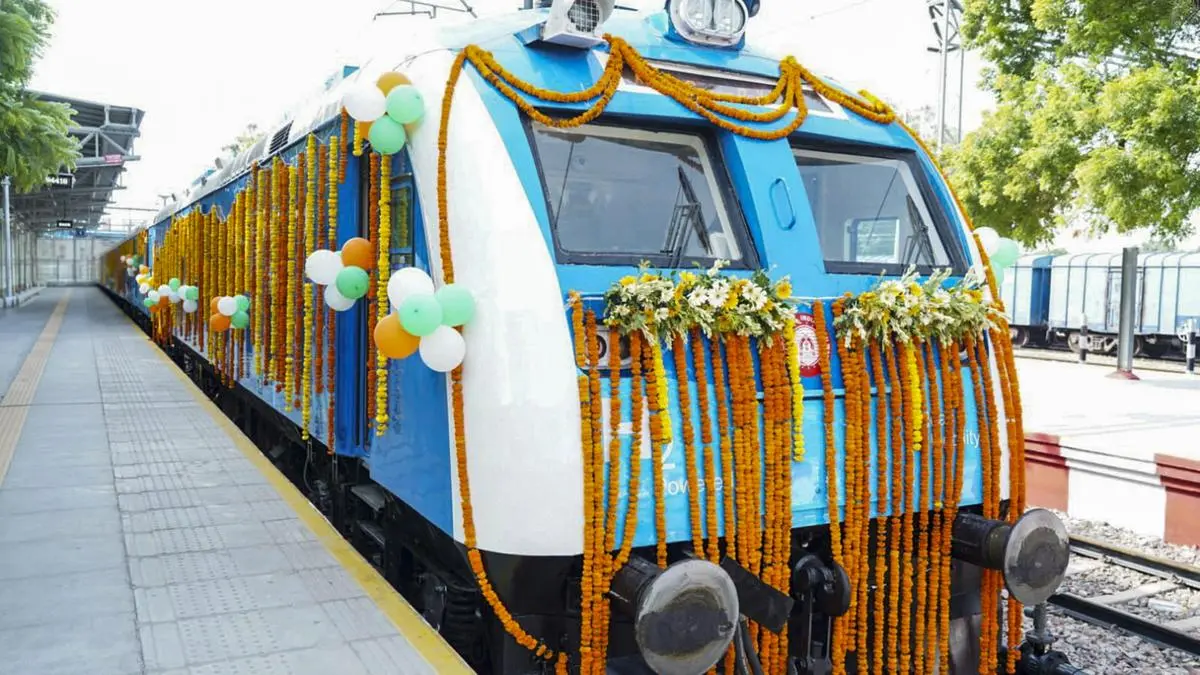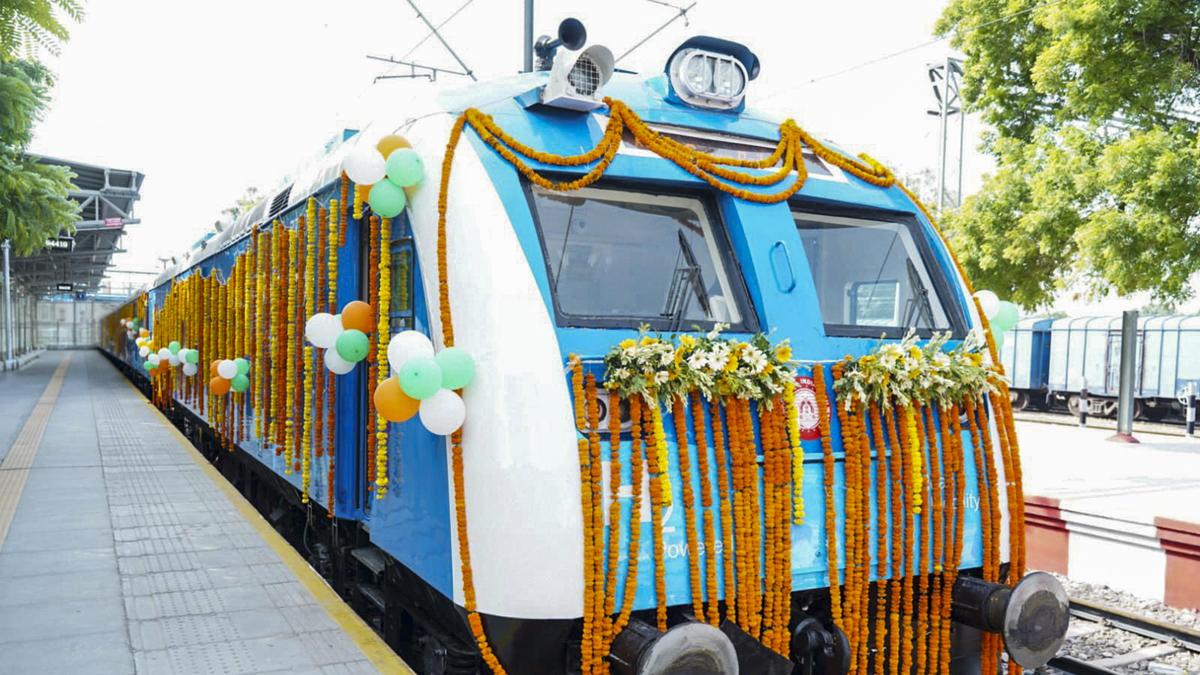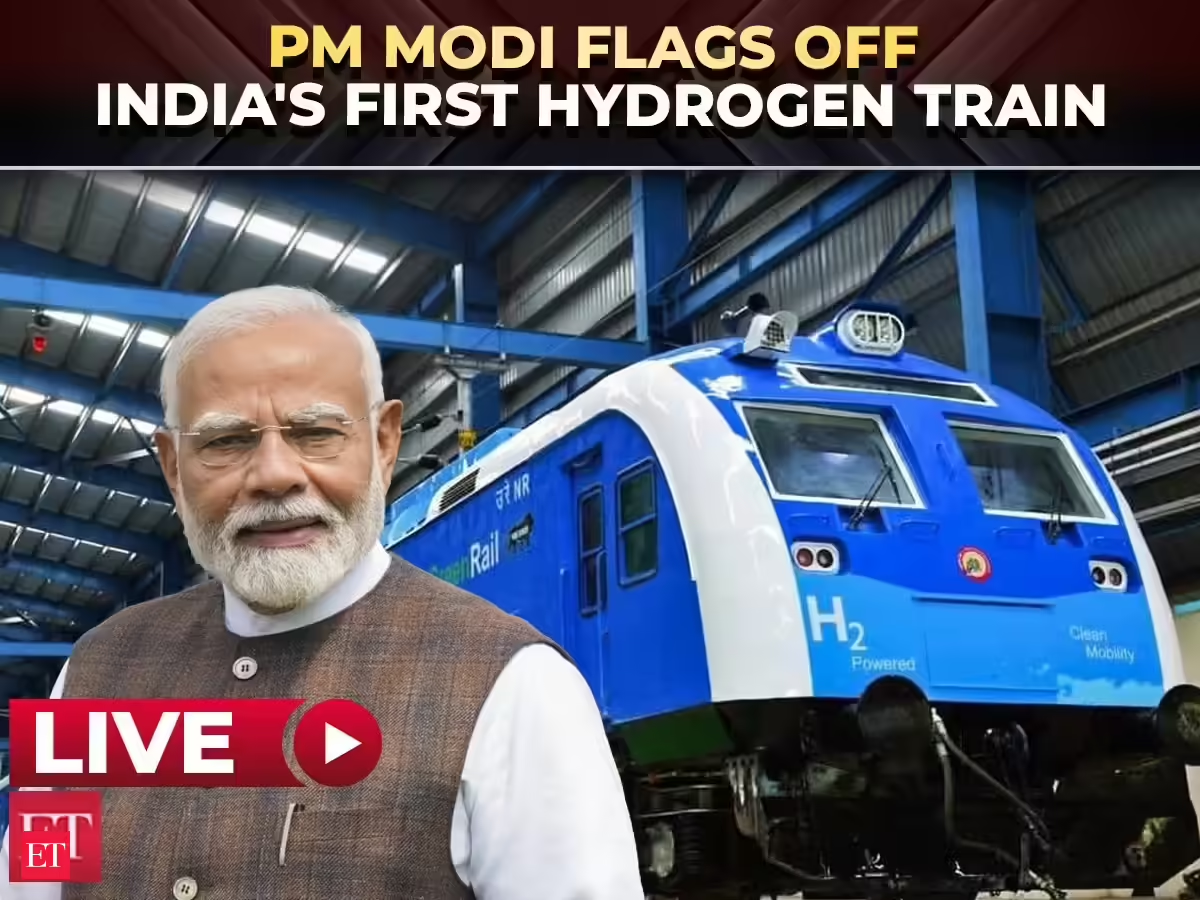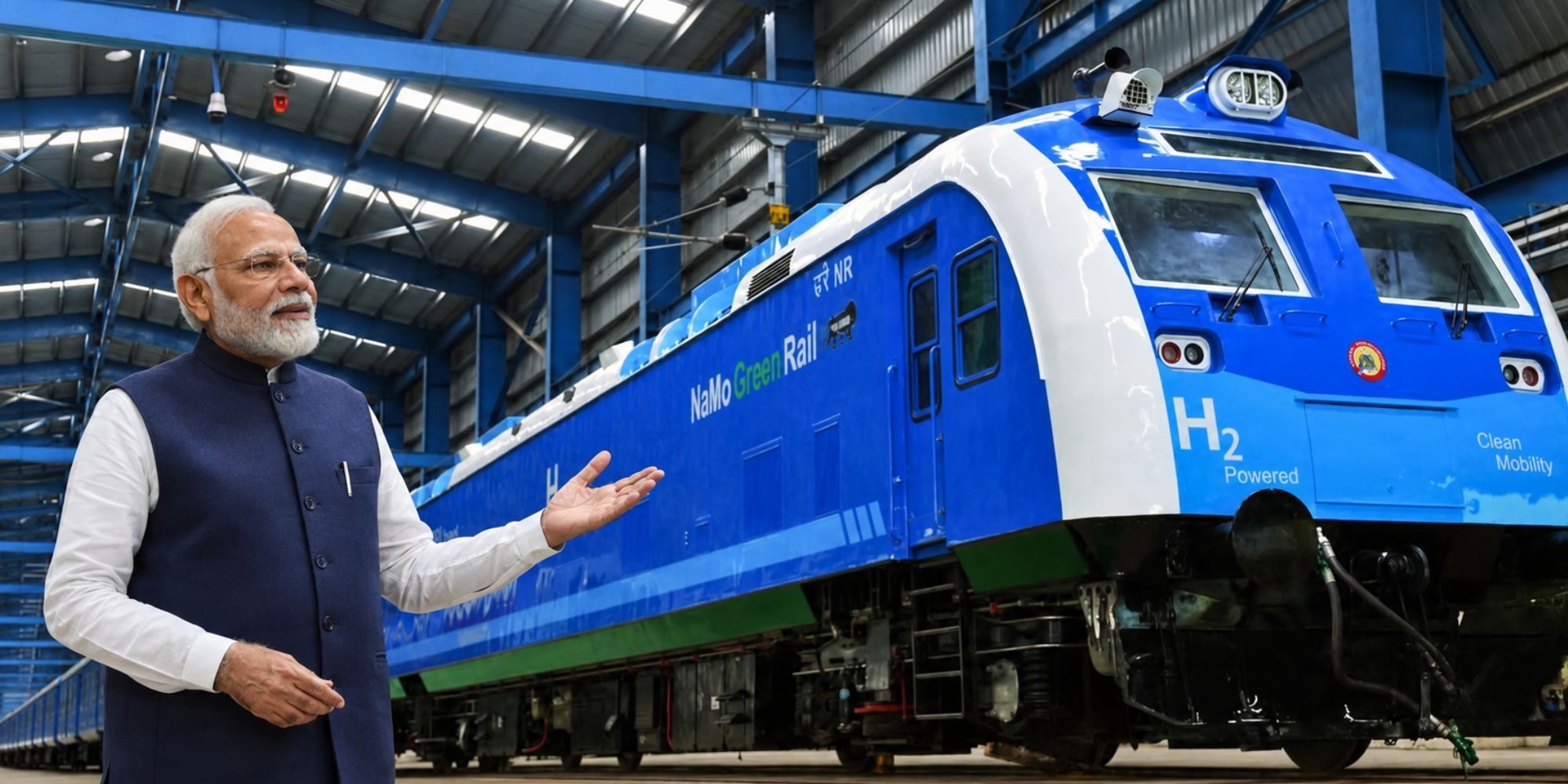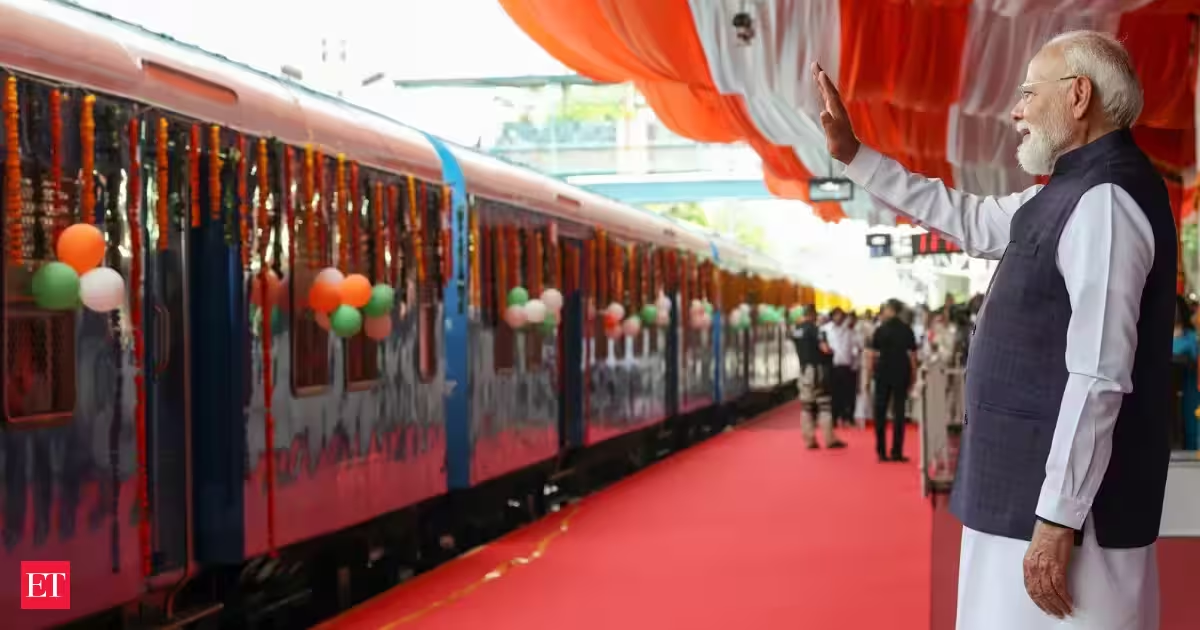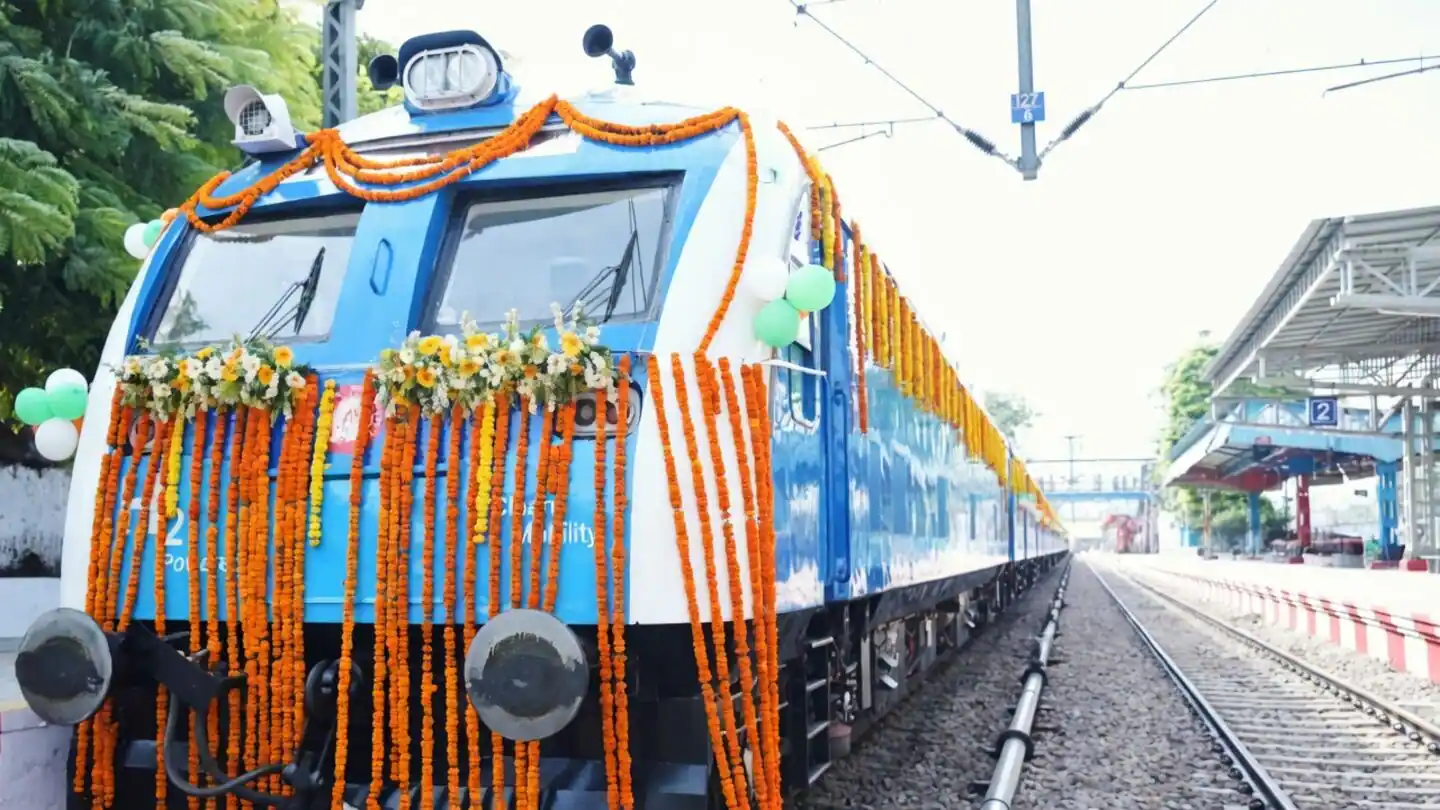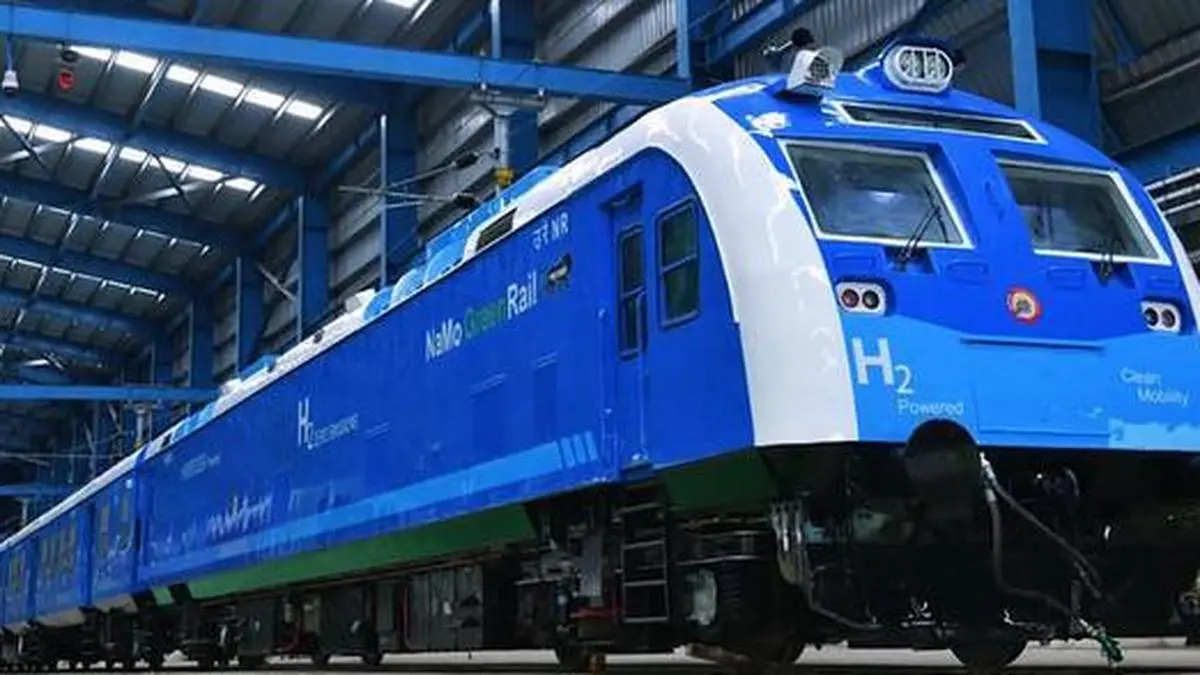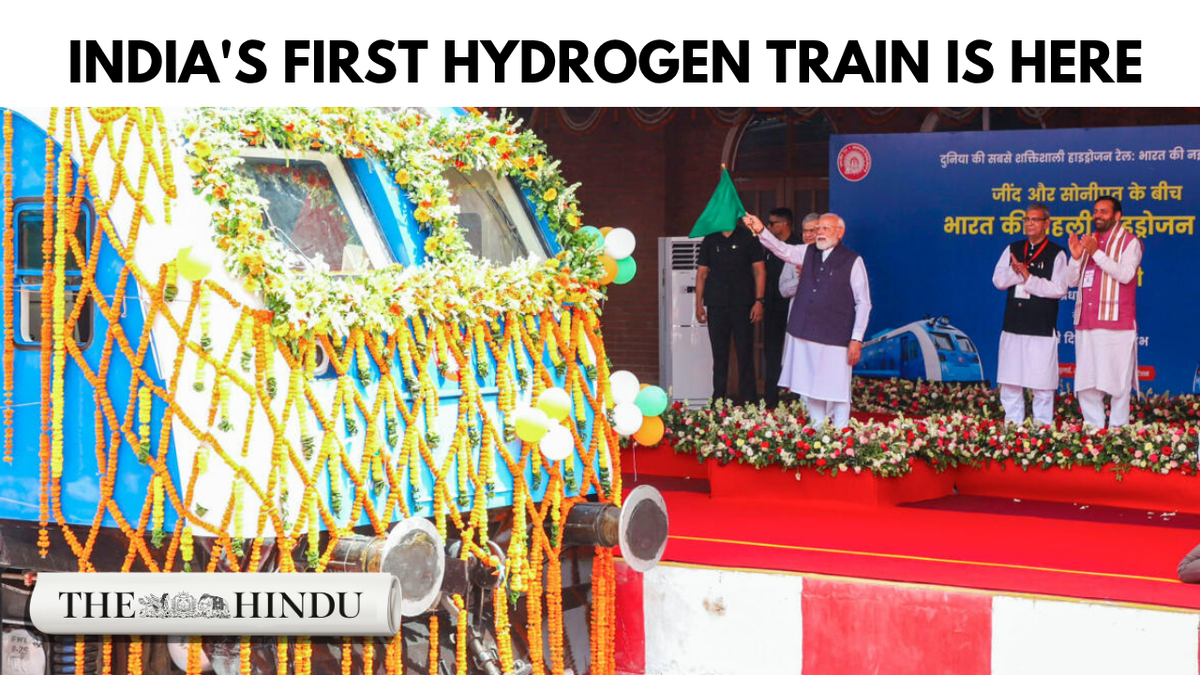
Jind: Prime Minister Narendra Modi flagged off India’s first hydrogen-powered train at Jind railway station on Friday, marking a major milestone in the country’s clean mobility journey.Prime Minister Narendra Modi flagging off India’s first hydrogen-powered train, between Jind and Sonepat, at Jind railway station on Friday. (PTI Photo)Modi waved as the train, which also had many schoolchildren onboard, chugged off from the platform, while railway minister Ashwini Vaishnaw, Haryana governor Ashim Kumar Ghosh, and chief minister Nayab Singh Saini looked on.Styled in a striking sky-blue and white colour scheme, India’s hydrogen train features a 10-coach configuration, making it among the longest hydrogen-powered passenger trains developed so far. The train, capable of carrying around 2,600 passengers, consists of two hydrogen driving power cars and eight trailer coaches. It will initially operate on the 89-km Jind-Sonepat section at a speed of up to 75 kmph, with a design speed of 110 kmph. The distance between Jind and Sonepat will be covered in two hours, with the train halting at 12 intermediate stations.Zero-emission travelNamed the Namo Green Rail, the train is powered by hydrogen fuel cell technology, which converts hydrogen into electricity onboard to propel the train. Its 3,200 HP propulsion system makes it one of the most powerful hydrogen-powered trainsets in operation.The chemical process produces only water vapour and heat as by-products, resulting in zero carbon emissions during operation. Compared to conventional diesel trains, these hydrogen trainsets eliminate tailpipe emissions, lower dependence on fossil fuels and fossil fuel imports, and operate with significantly less noise. Unlike conventional electric trains, they do not require continuous overhead electrification infrastructure, as electricity is generated entirely on board through the hydrogen fuel cells, making them a clean, efficient, and flexible solution. The use of green hydrogen also reduces dependence on electricity generated from fossil fuel-based thermal power plants, supporting India’s transition to sustainable transport.Indigenous technologyDesigned, engineered, and integrated in India, the train has been developed using indigenous technology, reflecting the country’s growing capabilities in advanced railway engineering. Union minister of railways Ashwini Vaishnaw said that the entire propulsion system and technology are indigenous, meaning India holds all intellectual property (IP) rights and is positioned to export the technology globally in the future.By launching this service, India joins an exclusive global group—alongside select nations in Europe, China, and the United States—using hydrogen technology for rail transport. The project was developed under the Atmanirbhar Bharat initiative.To support operations, Indian Railways has set up the country’s first integrated hydrogen railway ecosystem in Jind, including facilities for hydrogen production through electrolysis, storage, compression, and refuelling. The facility can store nearly 3,000 kg of hydrogen and has been approved by the Petroleum and Explosives Safety Organisation (PESO).The railways ministry said the project has multiple safety mechanisms, including hydrogen leak, flame, heat, and smoke detection systems; automatic hydrogen shut-off; continuous ventilation; and emergency response features. The train and hydrogen infrastructure were independently assessed by TUV SUD, Germany, before being cleared for operations.The ministry added that the project, developed under the leadership of Indian Railways with technical specifications by the Research Designs and Standards Organisation (RDSO), supports the National Green Hydrogen Mission and the country’s long-term net zero goals.
Green rail revolution begins in Haryana: PM flags off hydrogen train in Jind
The 10-coach train will carry 2,600 passengers on the 89-km Jind–Sonepat route at speeds up to 75 kmph.
526 words~2 min read