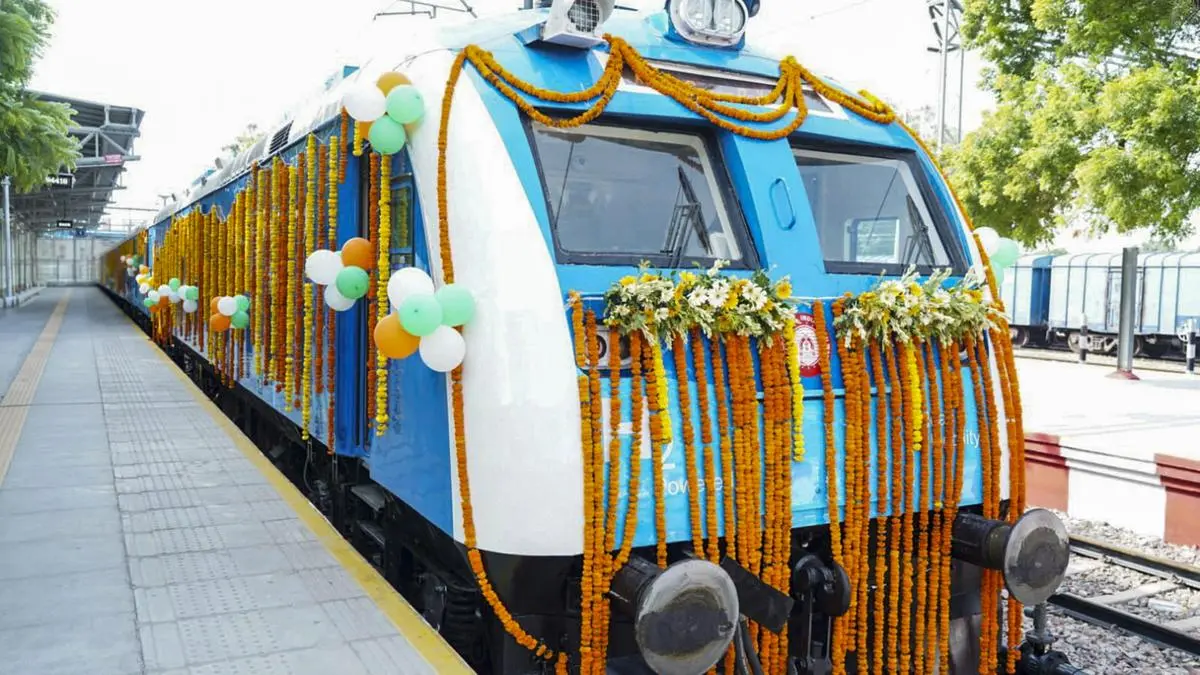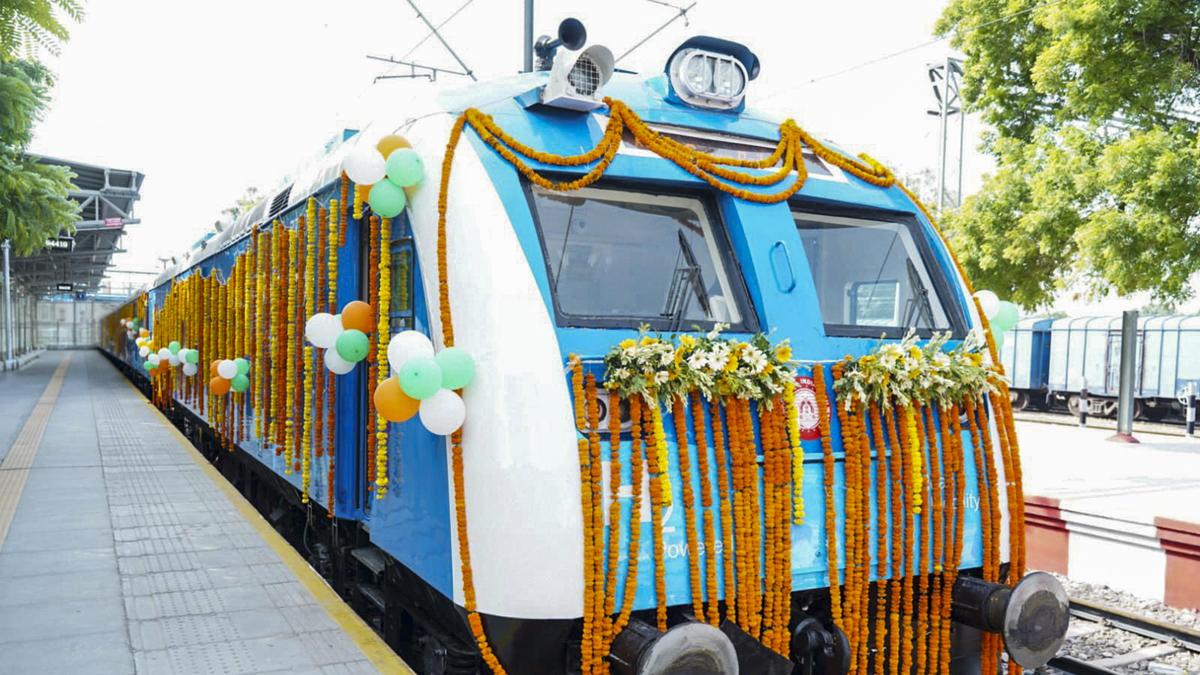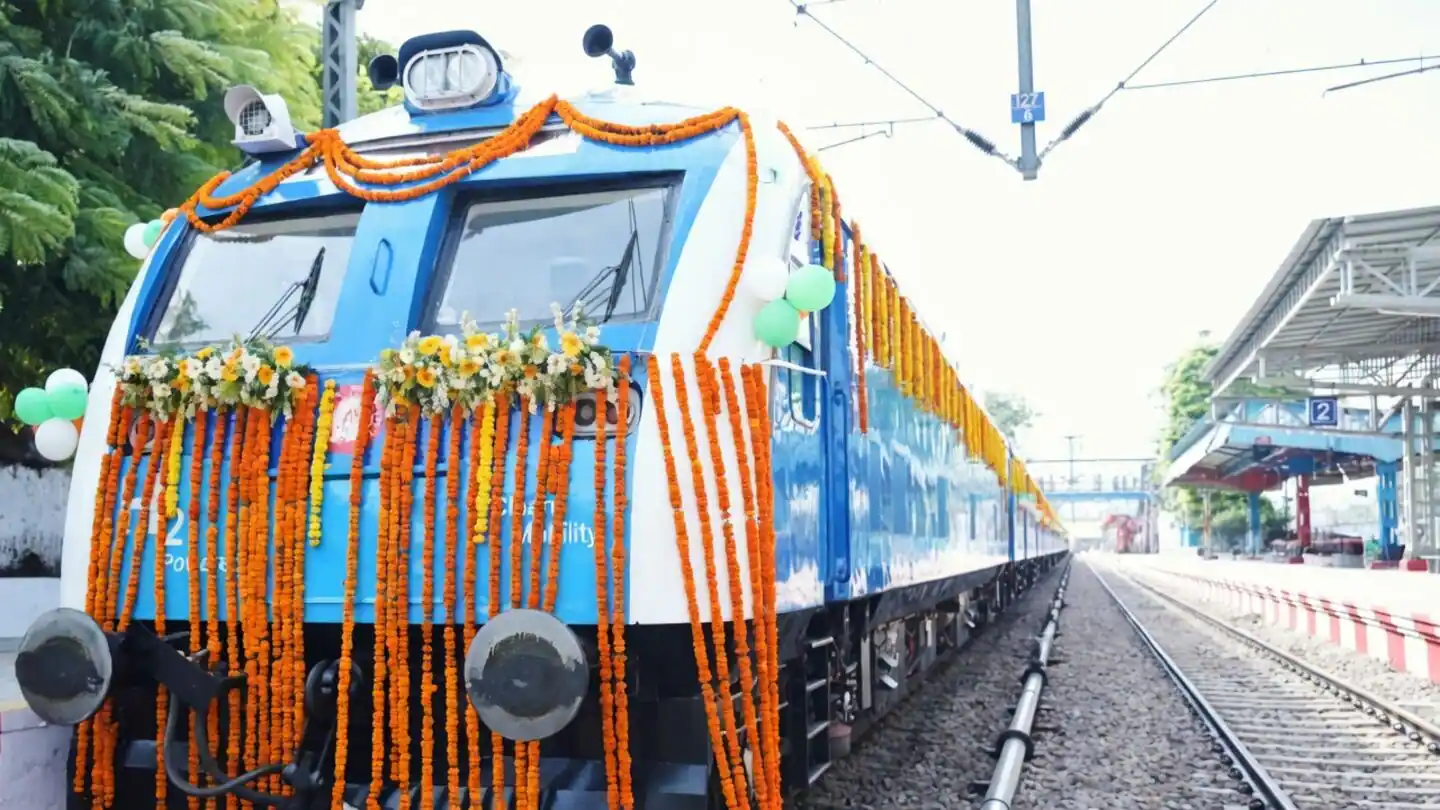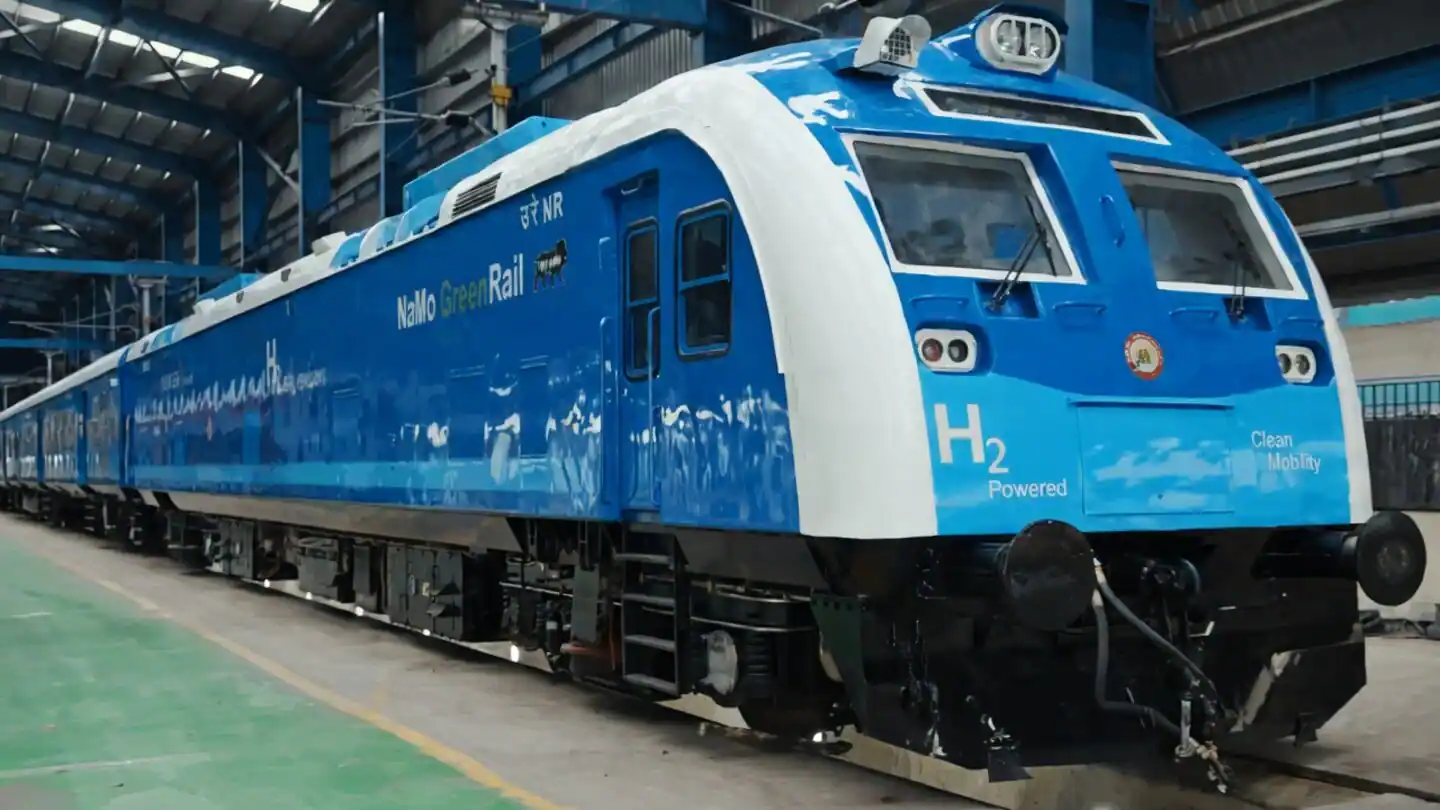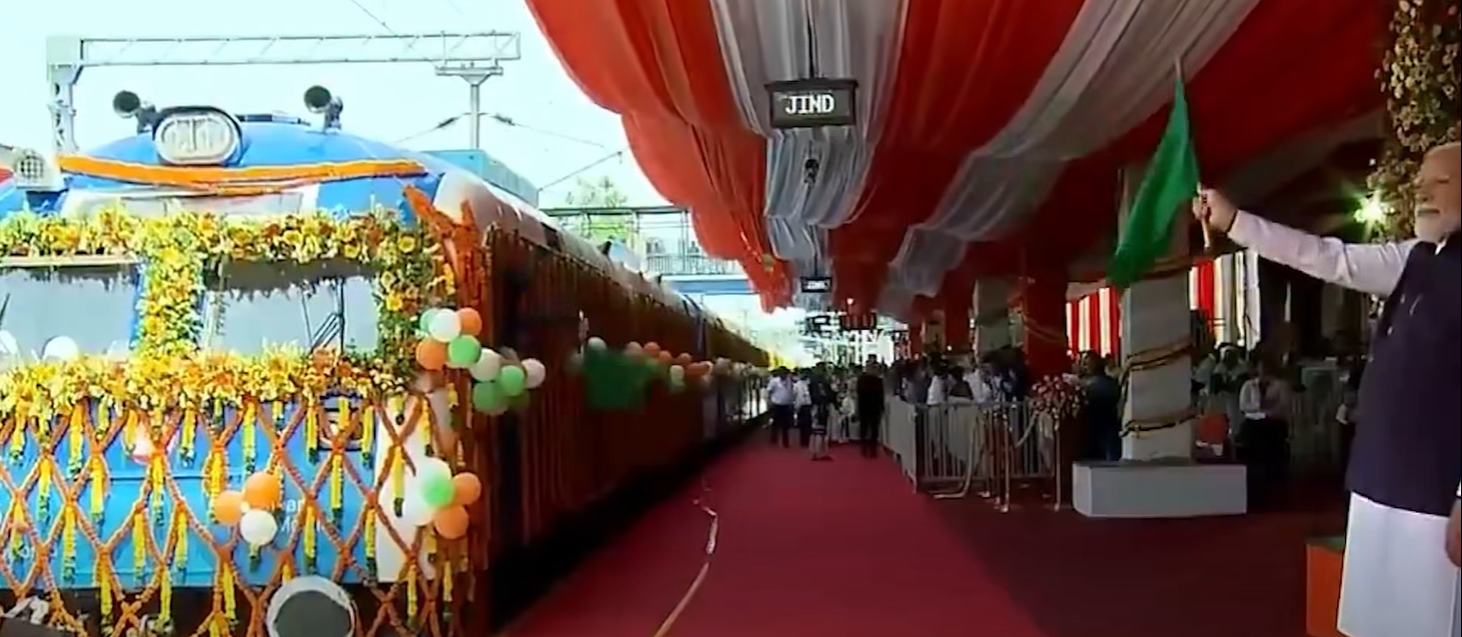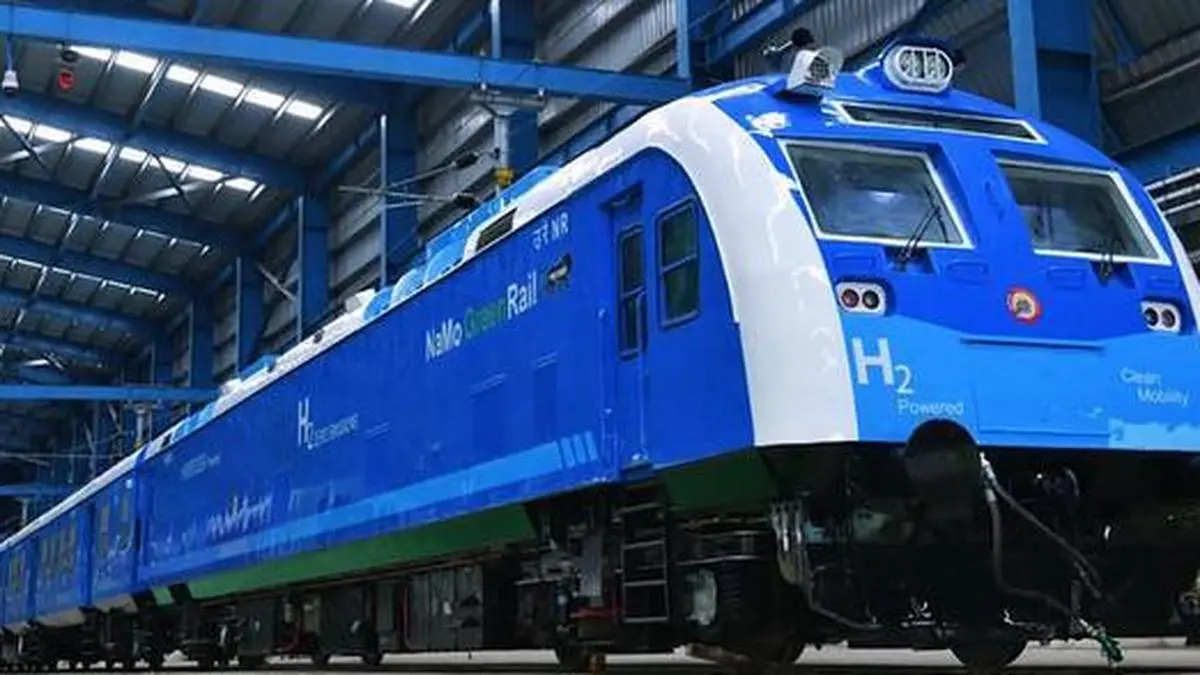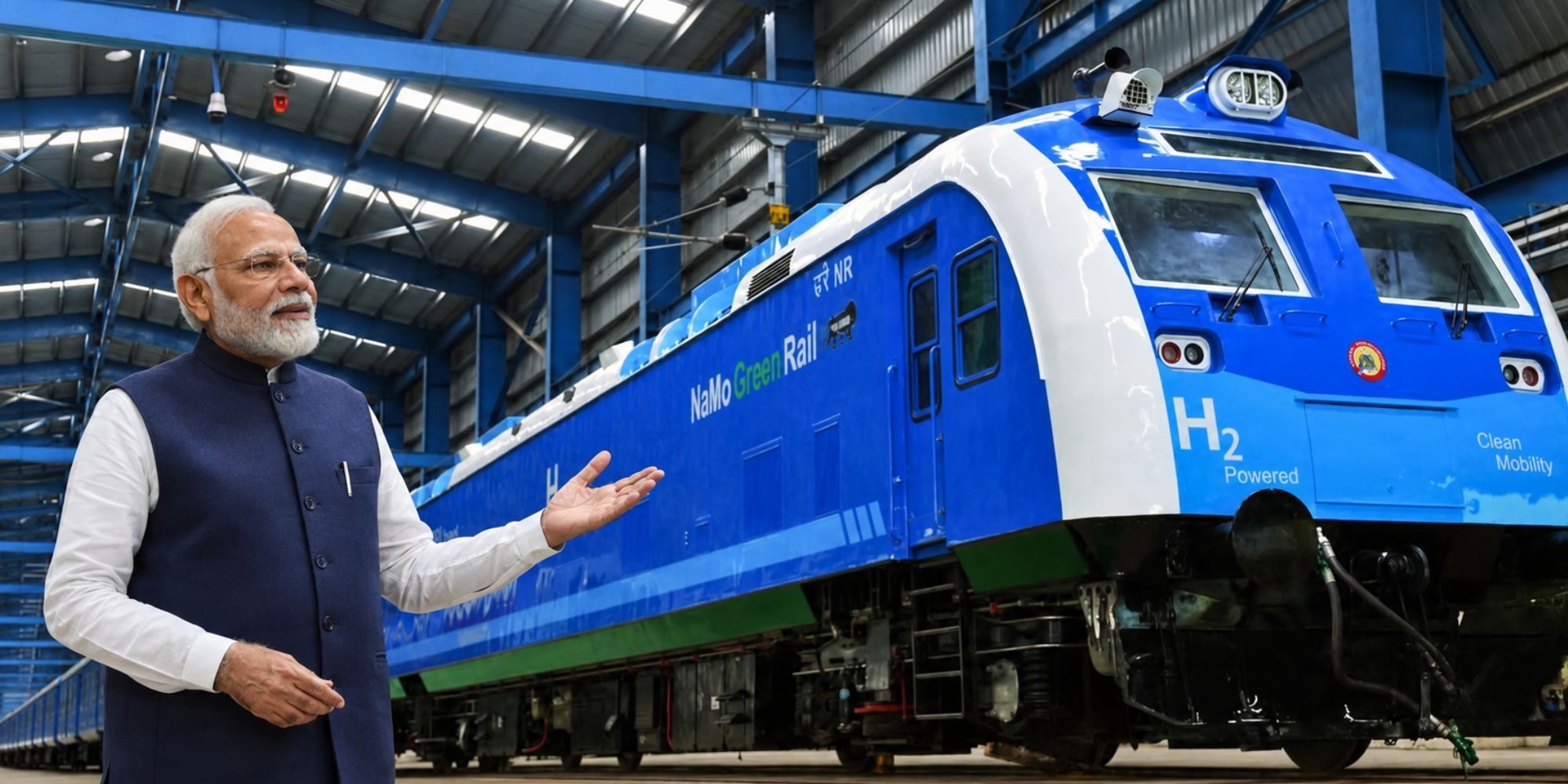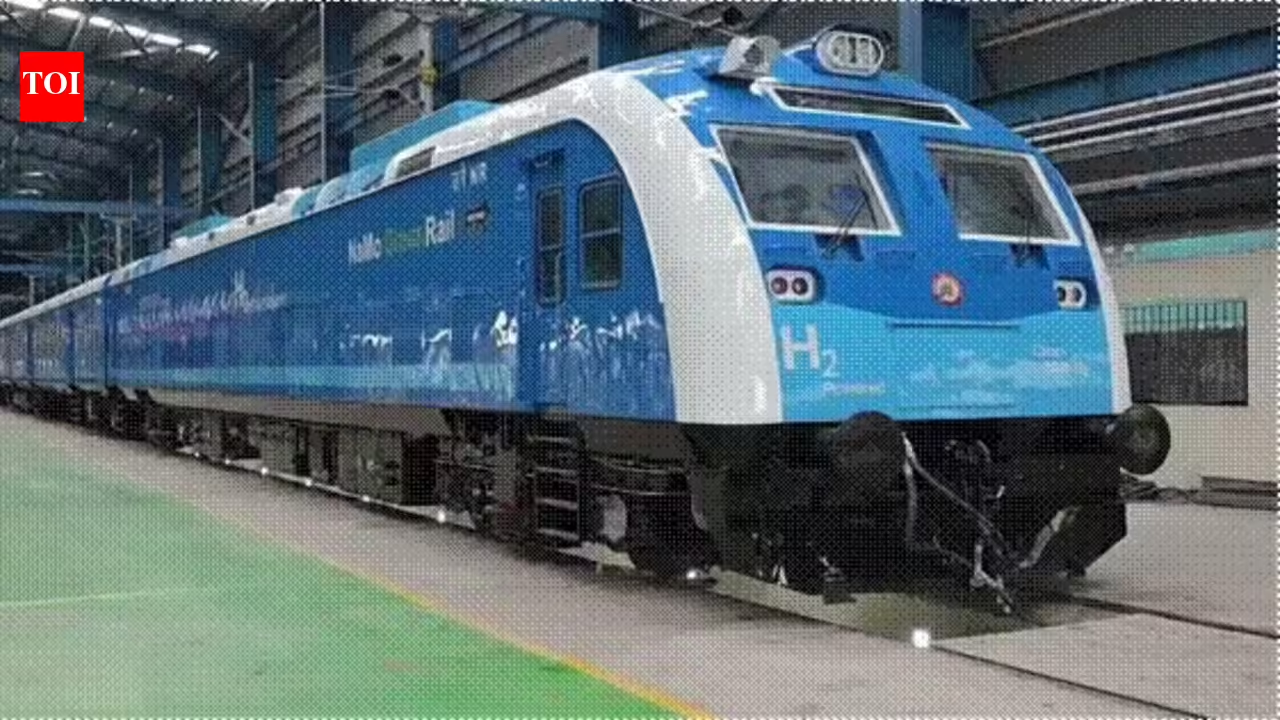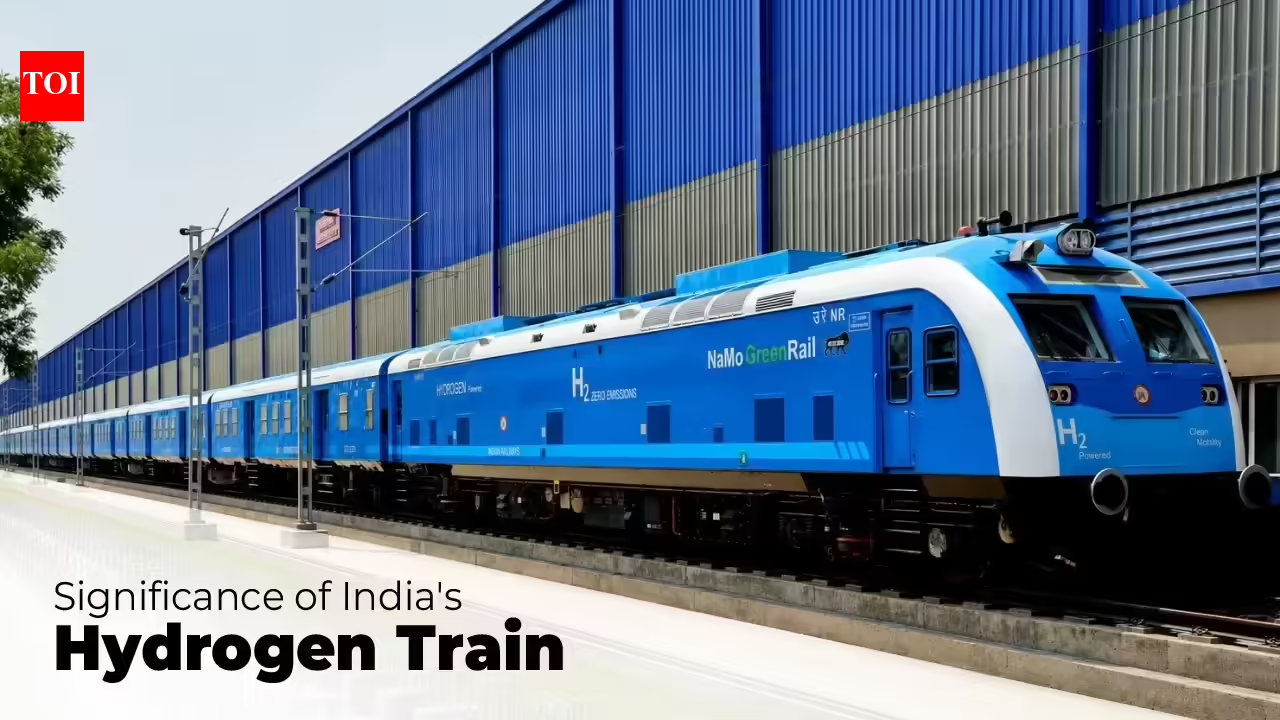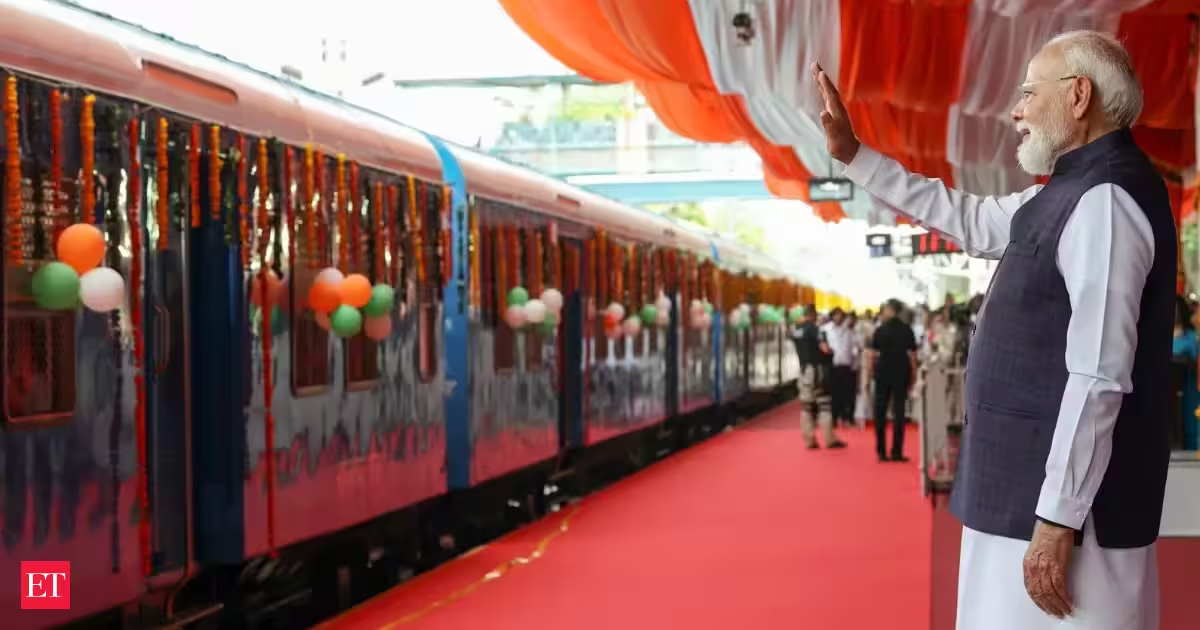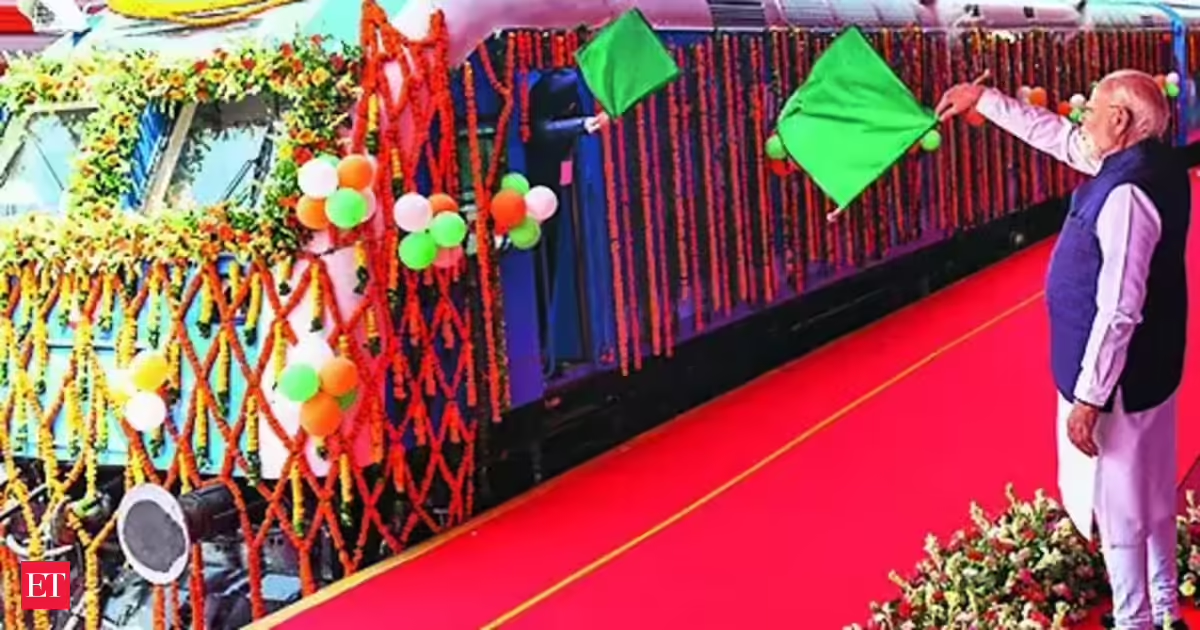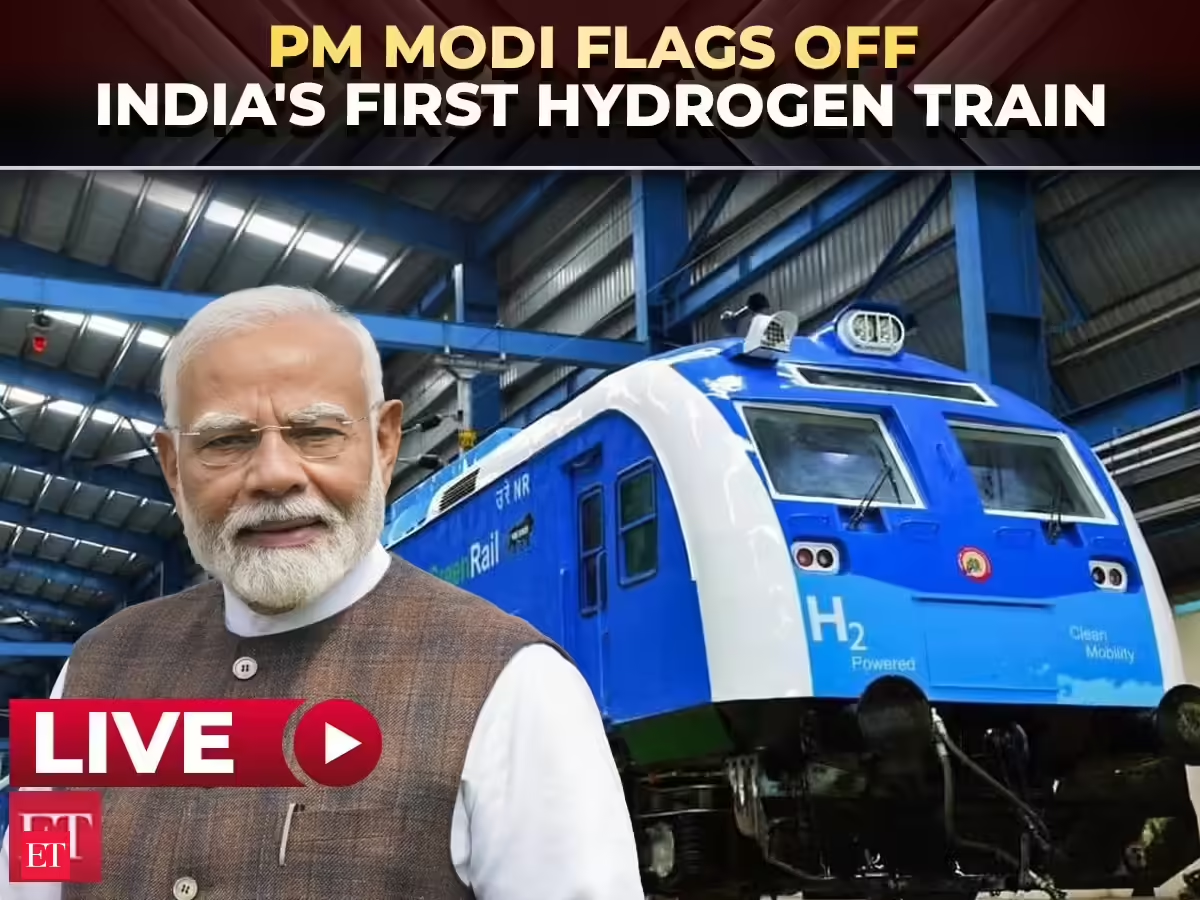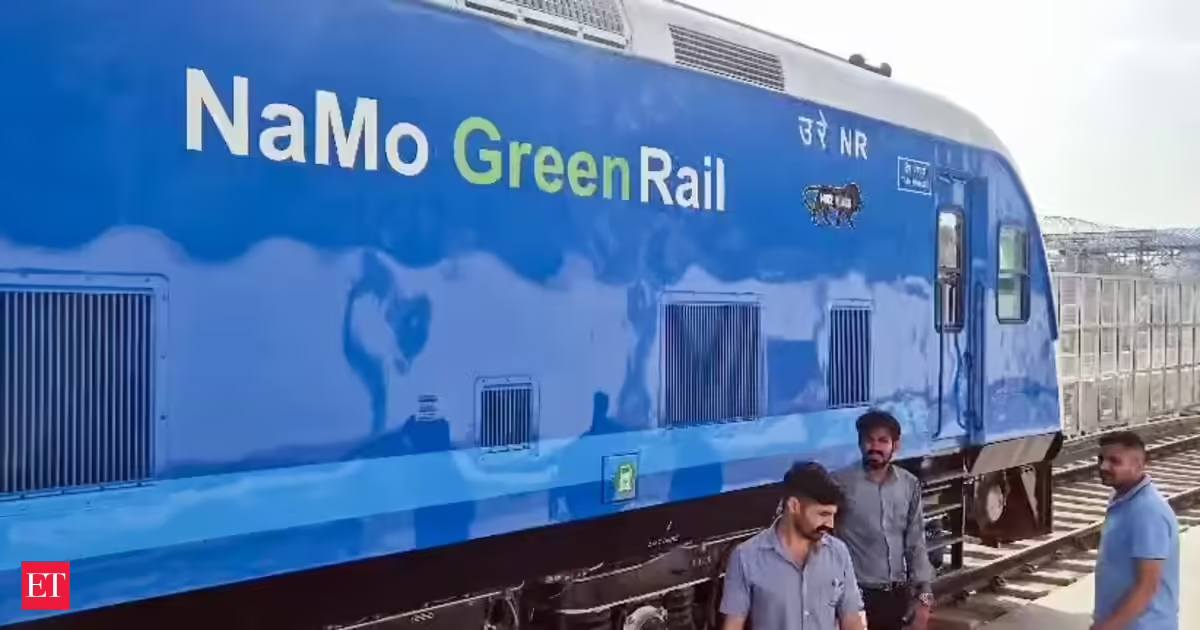
Prime Minister Narendra Modi on Friday flagged off India's first hydrogen-powered train on the Jind-Sonipat section in Haryana.The Hydrogen Fuel Cell Trainset generates its own electricity onboard through a chemical reaction between hydrogen and oxygen, producing water vapour as its only by-product, the Railways Ministry said.The 10-coach train, with a capacity of around 2,600 passengers, has an operational speed of 75 kmph and a design speed of 110 kmph on the 89-km route. It comprises two Hydrogen Driving Power Cars and eight Trailer Coaches, together generating 2,400 kW of power.Also read: Hydrogen-powered trains likely to play niche role in India: ExpertsA dedicated hydrogen storage, compression and dispensing facility at Jind, capable of storing nearly 3,000 kg of hydrogen, will support refuelling, the ministry said, calling it India's first integrated hydrogen railway ecosystem.The trainset was designed and developed indigenously, with RDSO formulating technical specifications, Medha Servo Drives integrating the train, and ICF contributing to its exterior design. The project underwent third-party safety assessment by TUV SUD, Germany, before commissioning.What is the hydrogen train?The 10-coach train has a capacity of around 2,600 passengers and comprises two Hydrogen Driving Power Cars (DPCs) and eight Trailer Coaches. Each DPC houses fuel cells, lithium iron phosphate batteries and hydrogen storage cylinders, together generating 1,200 kW of power per car. The train is approved to run at 75 kmph, with a design speed of 110 kmph, on the 89-km route connecting Jind Junction, Gohana Junction and Sonipat.How does the technology work?The train's primary energy source is a Proton Exchange Membrane Fuel Cell (PEMFC), which generates electricity by reacting hydrogen and oxygen across a proton-conducting membrane. Hydrogen carries an energy density of 120 MJ/kg, nearly three times that of diesel at 43 MJ/kg, making it among the cleanest propulsion technologies available for rail transport, per the PIB release.What infrastructure supports it?Indian Railways has set up the country's largest railway hydrogen storage and refuelling facility at Jind, capable of holding nearly 3,000 kg of hydrogen at a time. The Petroleum and Explosives Safety Organisation (PESO) has licensed the site for storage and dispensing of compressed hydrogen gas. The facility includes a hydrogen compression system and a standby compressor to ensure uninterrupted refuelling, besides technical support and critical spares.— PTI_News (@PTI_News) The ecosystem has been designed to internationally accepted standards, including NFPA-2 and the ISO 19880 series, and underwent an independent third-party safety assessment by TÜV SÜD, Germany.How safe is the train?The system uses layered safety measures, including hydrogen leak and flame detectors at production, storage and dispensing points, continuous ventilation, and automatic shut-off if heat, flame or smoke is detected. The Loco Pilot's cabin has a special emergency mode to move the train to safety, along with a real-time system health display. The hydrogen refuelling system will be monitored round the clock, with trained and certified personnel, including technical staff accompanying the train during its initial phase of operations.A maintenance facility at Shakurbasti in Delhi has been readied to support hydrogen train operations, the ministry said.Also read: Hydrogen Train Launch on July 17: Route, top speed, interior & exterior pictures, FAQs, and all you need to know about India's first alternative-fuel trainThe trainset was designed, engineered and developed indigenously, with the Research Designs and Standards Organisation (RDSO) formulating technical specifications and leading design approval. Medha Servo Drives integrated the trainset, while Integral Coach Factory (ICF) contributed to its exterior design, reflecting the vision of Atmanirbhar Bharat, per the PIB.What does it mean for India?With this launch, India joins a small group of countries, including Germany, Japan, China and the United States, exploring hydrogen-powered rail transport.Officials said the project, developed as a pilot initiative, will generate operational experience to support wider adoption of hydrogen technology across Indian Railways, including on heritage routes such as Kalka-Shimla, in line with the National Green Hydrogen Mission and the country's net-zero goals.
PM Modi flags off India's first hydrogen-powered train in Haryana, joins select global club of nations
Prime Minister Narendra Modi will flag off India's first hydrogen-powered train. This train generates its own electricity onboard using hydrogen, the cleanest fuel. It produces near-zero emissions at the point of use, reflecting a cleaner energy journey. The trainset has been designed and engineered in India using indigenous technology. This initiative signals India's leadership in sustainable mobility and its Net Zero goal.
639 words~3 min read