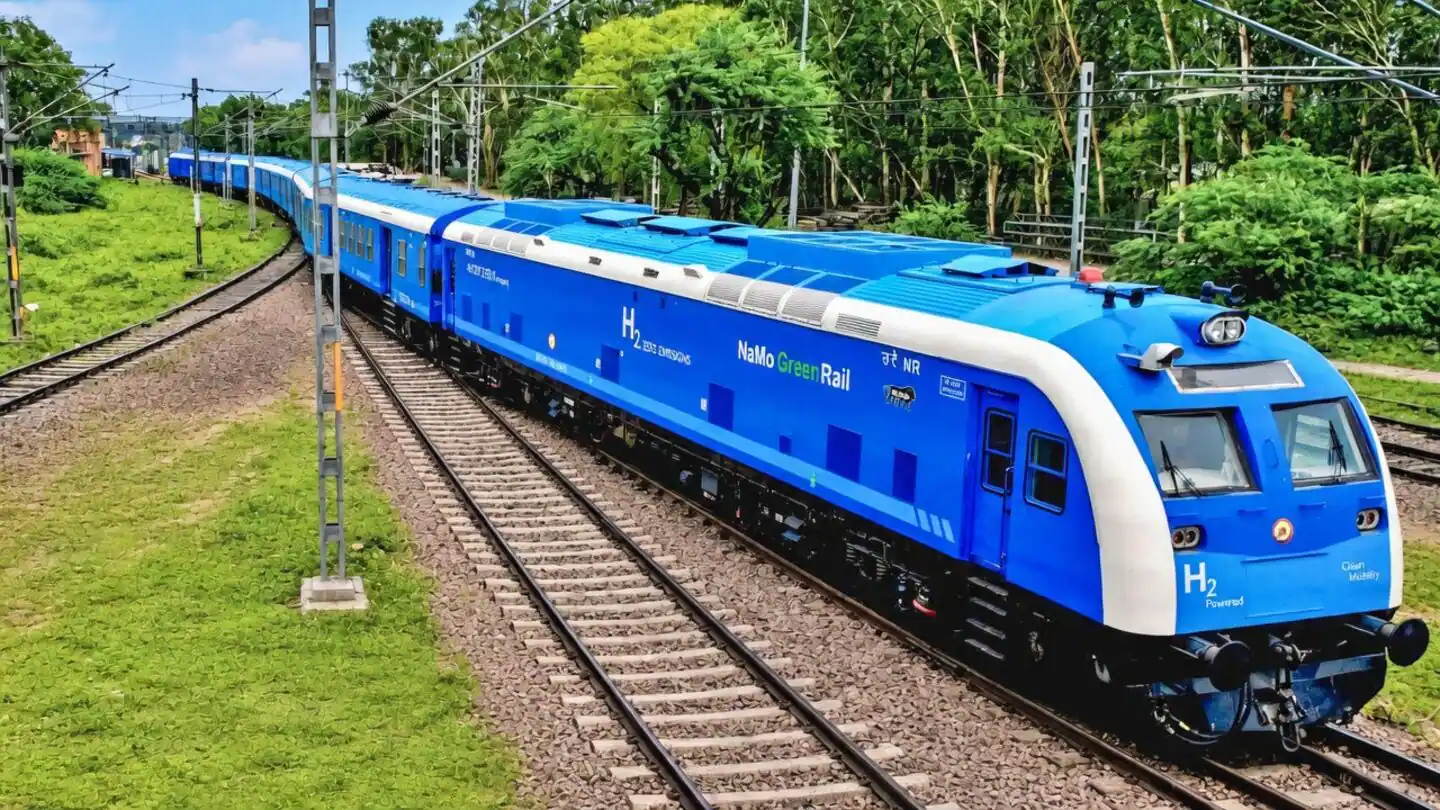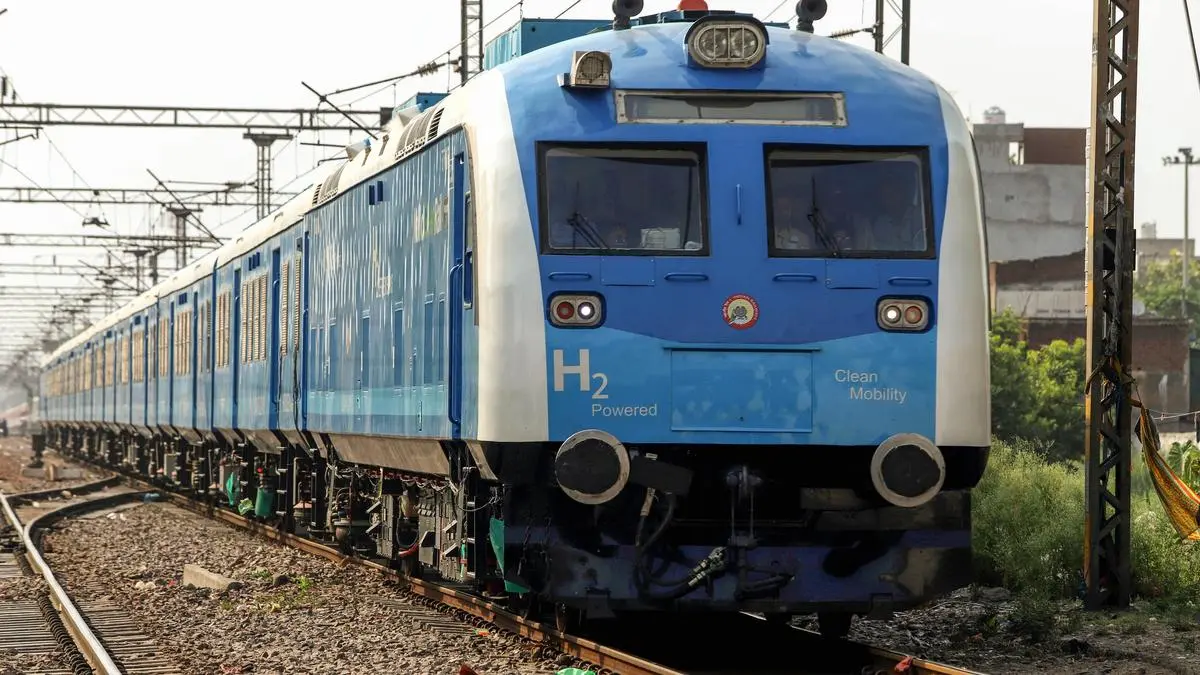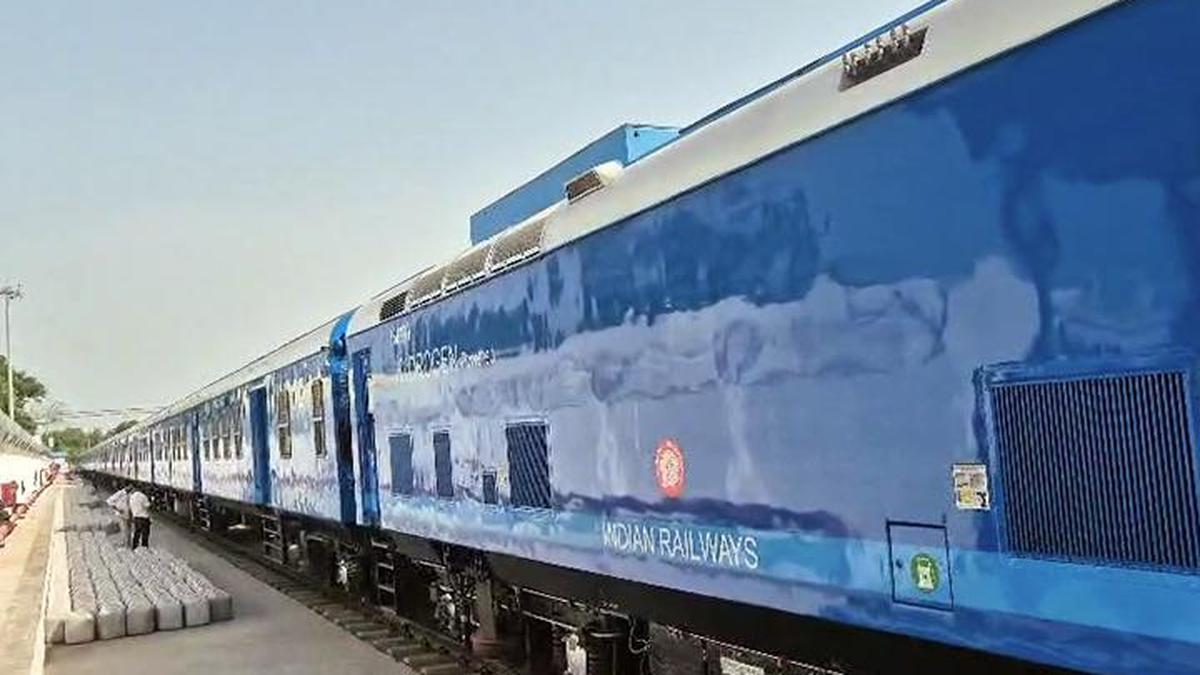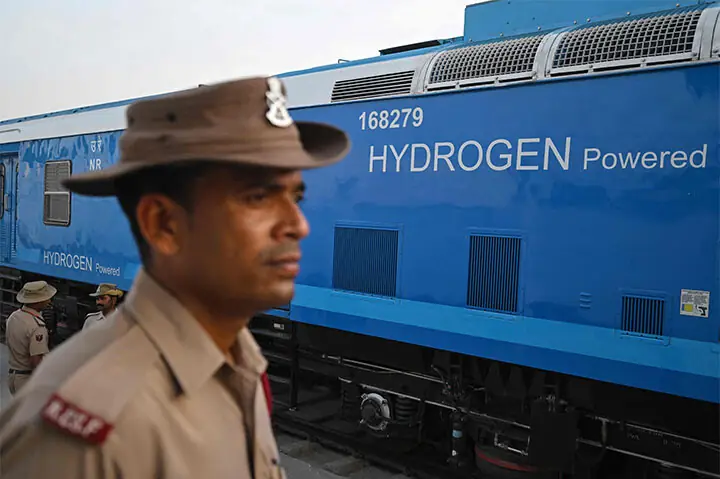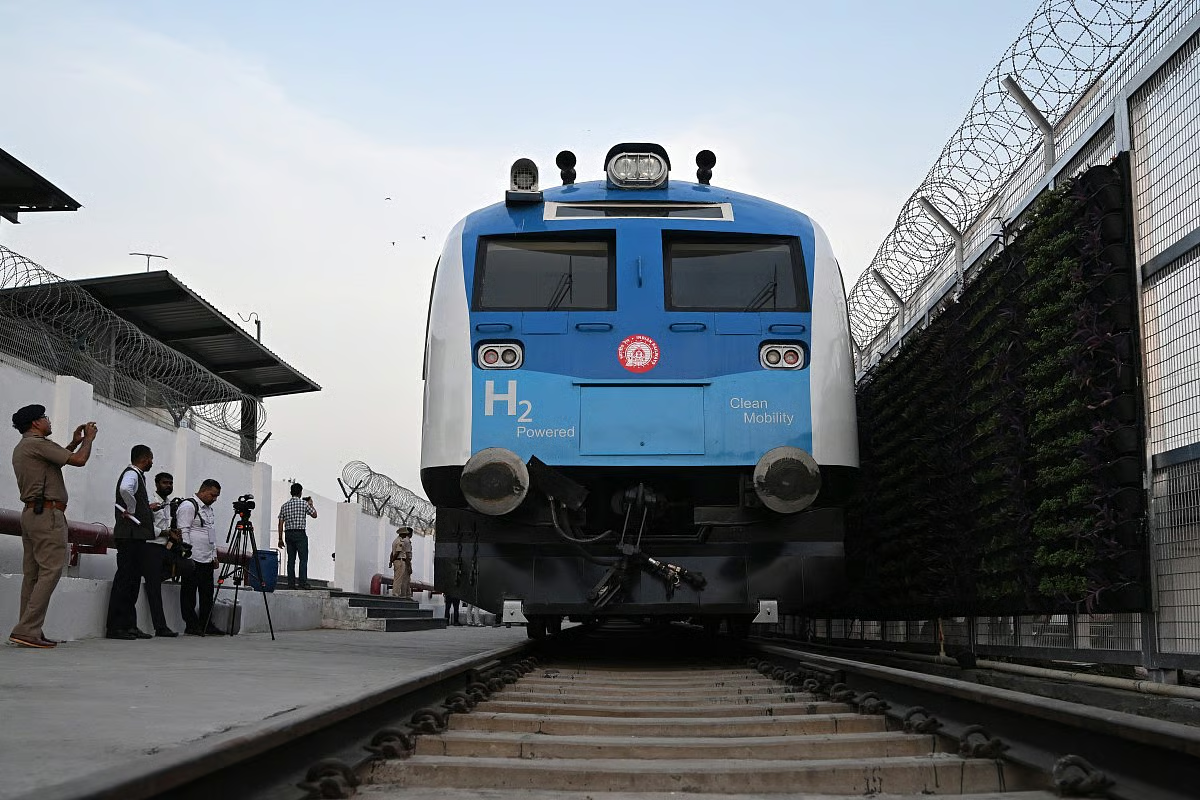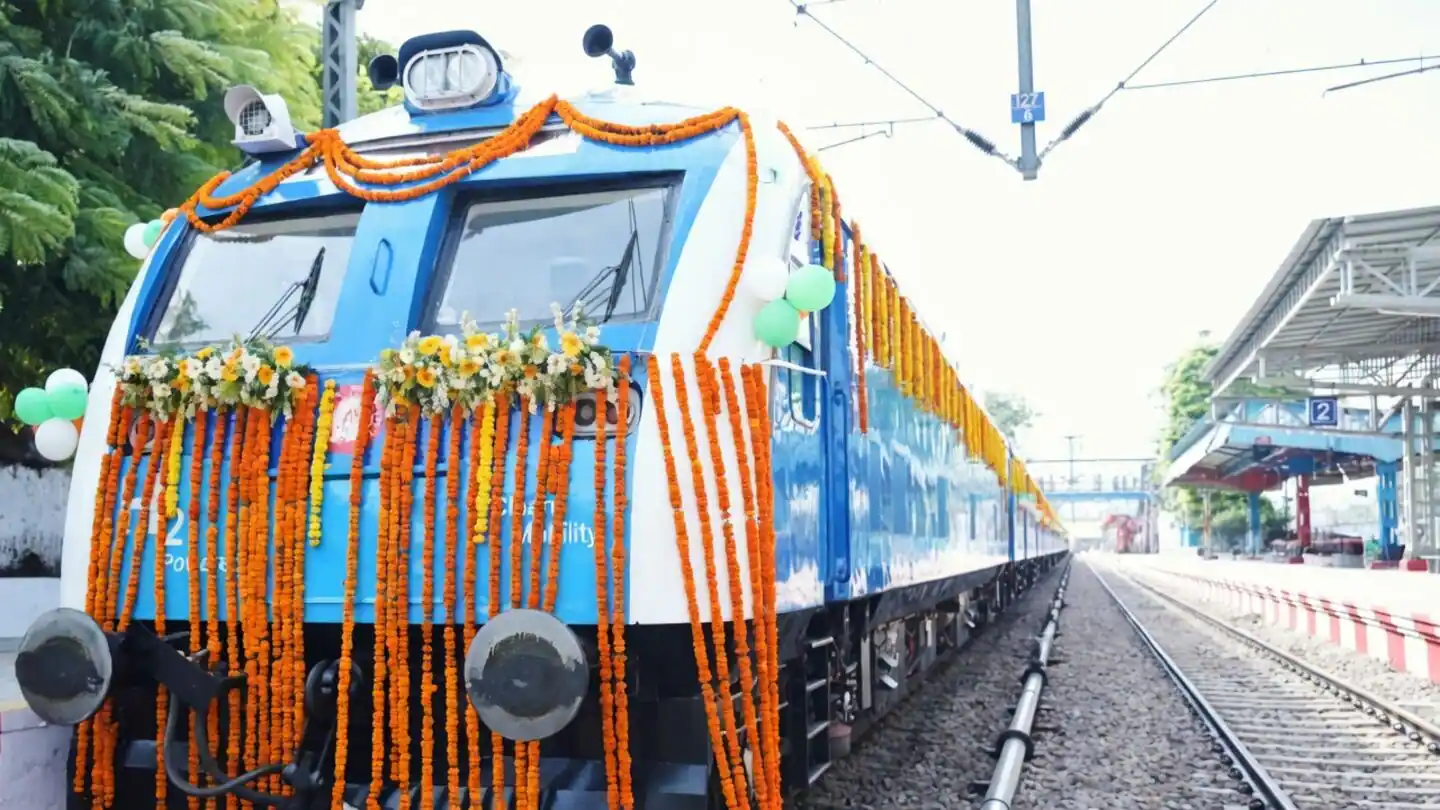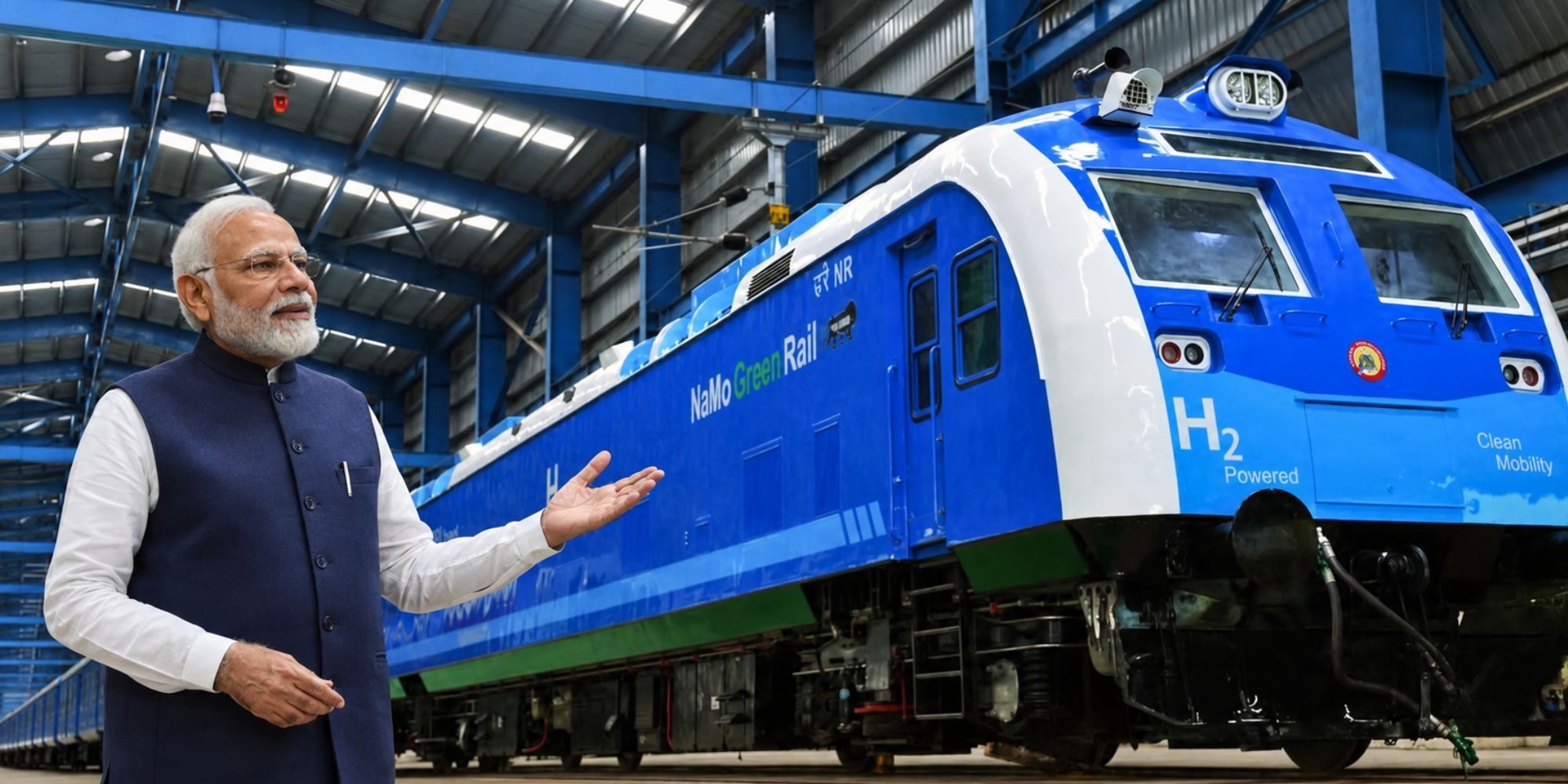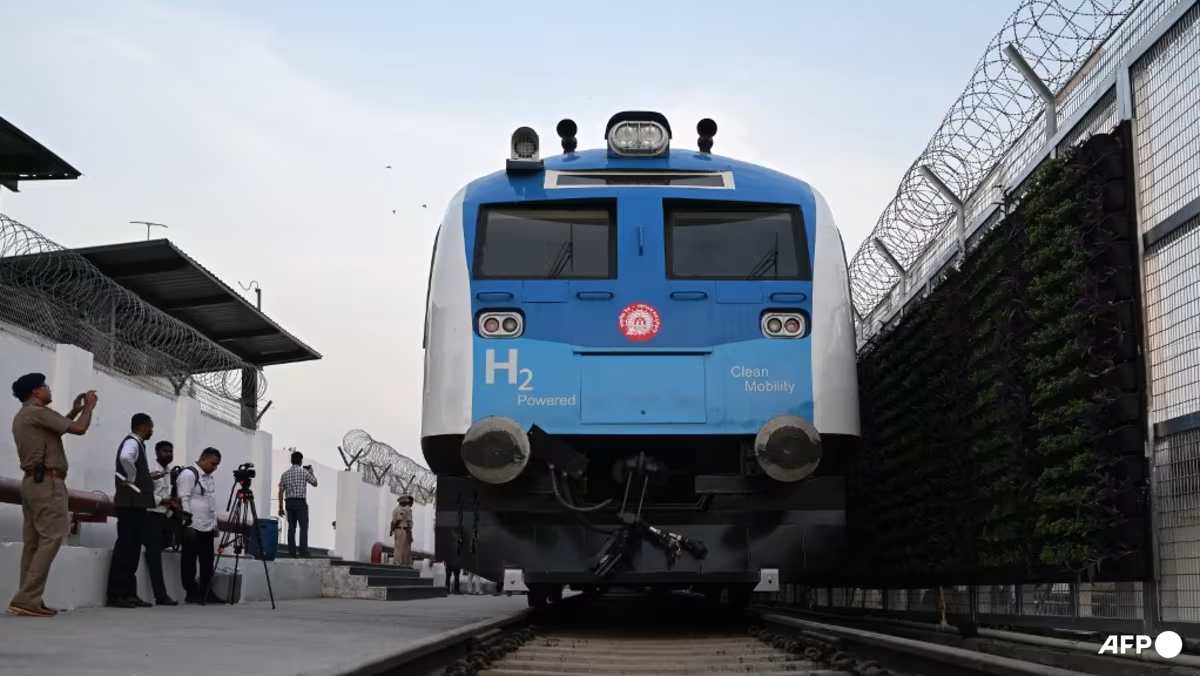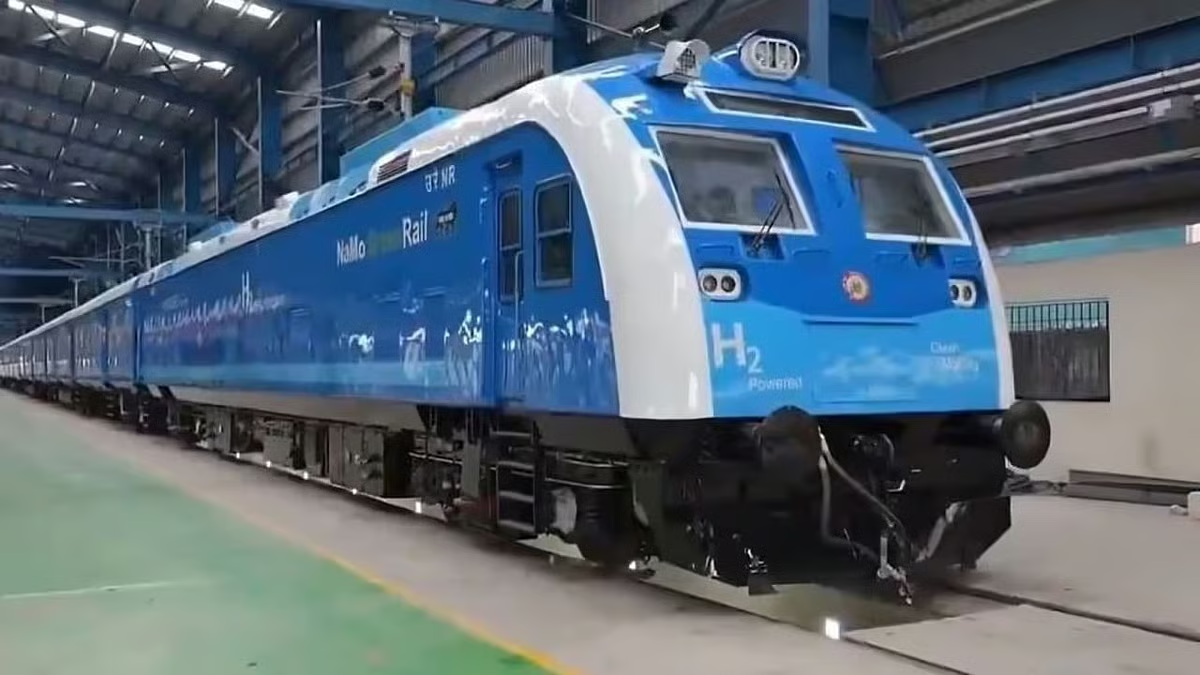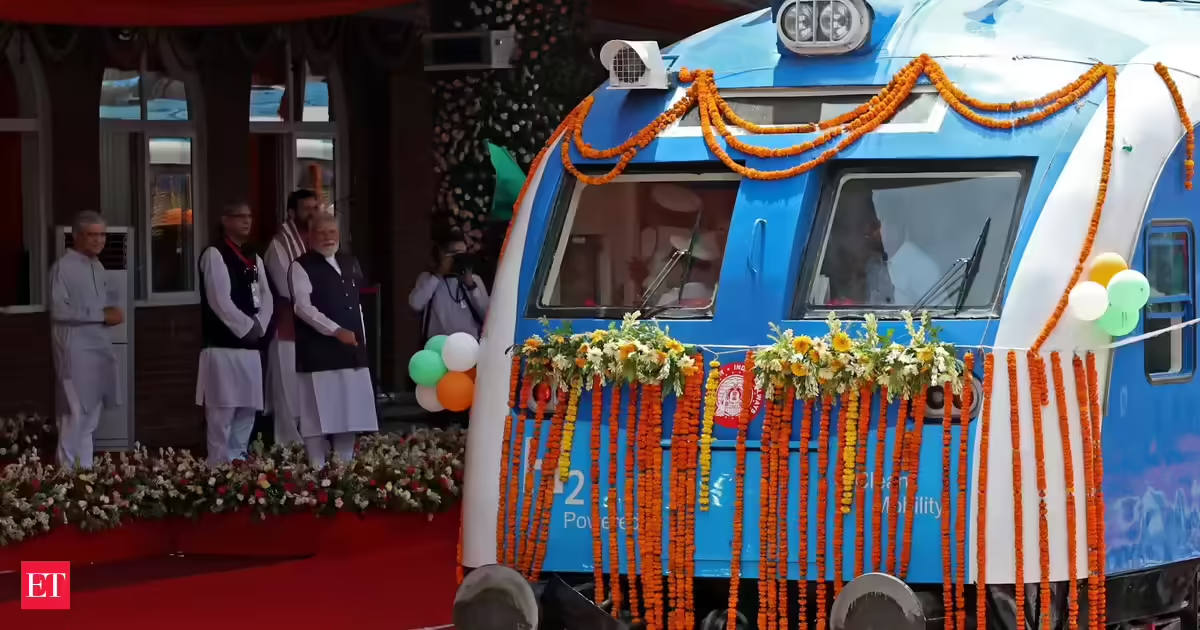
The launch of India’s first hydrogen-powered train on the Jind-Sonipat route in Haryana today marks a milestone that might appear slightly puzzling at first glance. After all, Indian Railways has already electrified more than 99 per cent of its broad-gauge network. The country has spent years replacing diesel locomotives with electric traction and is close to completing one of the world's largest railway electrification drives. So why is India suddenly experimenting with hydrogen trains?The answer lies not in railways but in India's larger energy transition. The hydrogen train is less a transport solution and more a technology demonstrator. It is a visible symbol of a much broader bet that the government is making on green hydrogen as a future industrial fuel, a storage medium for renewable energy and a strategic tool to reduce dependence on imported fossil fuels. The train is merely the most public-facing manifestation of that ambition.ALSO READ | PM Modi flags off India's first hydrogen-powered train in Haryana, joins select global club of nationsA train runs through itThe train flagged off on Friday runs between Jind and Sonipat, covering an 89-kilometre stretch in Haryana. It uses hydrogen fuel cells to generate electricity onboard. Hydrogen combines with oxygen inside fuel cells, producing electricity to power the train while emitting only water vapour. The train has two hydrogen-powered driving cars, eight passenger coaches and a dedicated refuelling facility at Jind.ALSO READ | All you need to know about India's first hydrogen-powered trainYet the obvious question remains -- why use hydrogen on railways when India has already electrified virtually its entire network?In most circumstances, direct electrification is more efficient than hydrogen. Electricity flowing through overhead wires powers a train directly. Hydrogen introduces several additional steps. Electricity is first used to produce hydrogen through electrolysis. The hydrogen must then be compressed, stored, transported and finally converted back into electricity inside a fuel cell. Every stage results in energy losses.That is why countries typically deploy hydrogen trains on non-electrified routes as a replacement for diesel. India too plans to use hydrogen trains on such routes. However, very few such routes are left. The hydrogen train therefore is not intended to replace mainstream electric railways. It is best understood as a pilot project designed to develop domestic expertise in fuel cells, hydrogen storage, safety systems and refuelling infrastructure.The target beyond transportThe strongest case for hydrogen in India lies elsewhere. Unlike batteries, hydrogen is not merely a way to move vehicles. It is also an industrial feedstock, especially in fertiliser and steel industries. Several sectors already consume large quantities of hydrogen today. The problem is that most of this hydrogen is produced from natural gas, a process that generates significant emissions.India's Green Hydrogen Mission seeks to replace this conventional hydrogen with hydrogen produced using renewable electricity. The goal is to create a domestic hydrogen economy that can support industries that are difficult to decarbonise through direct electrification alone. Many think hydrogen is a competitor to solar and wind power. It is not. Solar and wind generate electricity. Hydrogen is something that can be manufactured using that electricity and then used in places where electricity itself is difficult to deploy.The relationship is therefore complementary rather than competitive. India's hydrogen ambitions actually require a massive expansion of renewable energy capacity because producing green hydrogen consumes enormous quantities of electricity.Why fertilizers matter more than trainsIf there is one sector where hydrogen has an immediate and obvious role, it is fertilizers. Ammonia, which forms the basis of urea and several other fertilizers, is made by combining nitrogen from the air with hydrogen. The hydrogen is not merely providing energy. It becomes part of the final chemical product itself. That means electricity cannot simply replace hydrogen in fertilizer production. The hydrogen molecule is a necessary ingredient. What India can do, however, is change the source of that hydrogen.Today, most hydrogen used by fertilizer plants comes from natural gas. Green hydrogen offers a way to produce the same chemical feedstock using renewable energy instead. For a country that is among the world's largest fertilizer consumers, this represents one of the most important long-term applications of hydrogen.Steel is the next frontierSteel presents a similar challenge. Conventional steelmaking relies heavily on coal. Coal does more than generate heat. It also acts as a reducing agent, removing oxygen from iron ore and enabling the production of metallic iron. Hydrogen can perform a similar chemical function. Instead of producing carbon dioxide during the process, hydrogen-based steelmaking produces water.This is one reason governments across the world are investing heavily in hydrogen technologies. Heavy industries such as steel, cement, chemicals and refining account for a substantial share of industrial emissions. Electrifying these sectors is often much harder than electrifying cars or homes. Hydrogen offers an alternative pathway.India, as one of the world's largest steel producers, sees this as a strategic opportunity rather than merely an environmental one.The storage problem that hydrogen hopes to solveThere is another reason policymakers are interested in hydrogen. Renewable energy generation is inherently uneven. Solar plants produce power only during daylight hours. Wind generation fluctuates with weather conditions. As India's renewable energy capacity expands, periods of surplus generation are likely to become more common. Batteries can help balance the grid but they become expensive when electricity needs to be stored for very long durations. Storing energy for a few hours is one thing. Storing it for weeks or months is quite another.Hydrogen offers a possible solution. Excess renewable electricity can be used to produce hydrogen during periods of low demand. The hydrogen can then be stored and used later in industrial processes, power generation or transport. This is one of the reasons hydrogen is often described as an energy carrier. It allows renewable electricity generated at one point in time to be used somewhere else at a later date.A strategic bet as much as an energy betIndia's hydrogen push is also driven by concerns about energy security. The country remains heavily dependent on imported crude oil, LNG and other fossil fuels. When global energy prices surge because of wars, geopolitical tensions or supply disruptions, India's import bill rises sharply. Those shocks eventually ripple through the economy, affecting everything from government finances to industrial costs. Hydrogen offers a potential way to reduce some of that vulnerability. Several industries, including fertilizer manufacturing and petroleum refining, already consume large quantities of hydrogen. Today, much of this hydrogen is produced from natural gas, linking these sectors to fossil fuel markets.The idea behind green hydrogen is to change the source of that hydrogen. Instead of producing it from natural gas, India can manufacture it using water and electricity generated from domestic solar and wind projects. In effect, the country would be substituting a portion of its fossil-fuel dependence with energy derived from resources available within its own borders.The strategic significance goes beyond emissions. If India can build large-scale capacity in electrolysers, hydrogen production and associated infrastructure, it can create an industrial ecosystem that is less exposed to volatile global fuel markets. It would also strengthen the country's position in sectors that are expected to play a larger role in the global energy transition.There is also a commercial opportunity. Several countries with limited renewable resources are expected to import green hydrogen or hydrogen-derived fuels such as green ammonia in the future. India hopes that its abundant solar potential and relatively low renewable energy costs could eventually make it a competitive producer for those emerging markets.Why the train still mattersViewed purely as a railway project, the hydrogen train may not appear particularly compelling. Direct electric trains remain more efficient and more practical for a network that is already almost completely electrified.But the train's importance lies in what it says about India's broader industrial strategy. The project allows Indian companies and engineers to gain experience in technologies that may eventually find applications in fertilizers, steel, chemicals, energy storage and heavy transport such as shipping and trucking. It creates a domestic ecosystem around fuel cells, hydrogen handling and refuelling systems. It also sends a message that India intends to participate in the global race to commercialise hydrogen technologies rather than import them later.The Jind-Sonipat train is therefore best seen not as the future of Indian Railways but as a testbed for a much larger national ambition. Whether hydrogen ultimately becomes a major pillar of India's energy transition remains uncertain. What is clear is that India is determined to ensure that if a hydrogen economy emerges, India will be part of it from the beginning.
India got its first hydrogen train but bigger story lies elsewhere
India's first hydrogen-powered train, launched on the Jind-Sonipat route in Haryana, is less about transforming rail transport and more about showcasing the country's broader green hydrogen ambitions.
1,413 words~6 min read