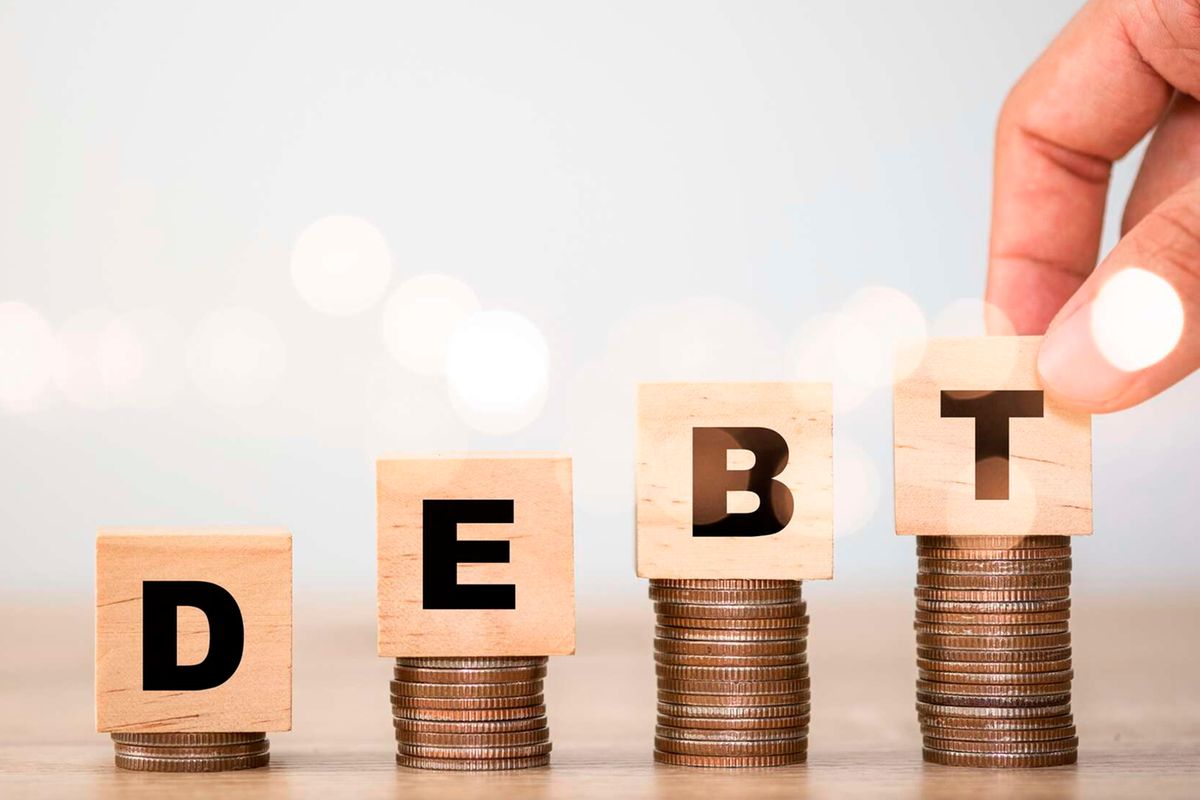
Few decisions taken by the government shape a country’s fiscal future as profoundly as the decision to incur sovereign debt. Yet, despite South Africa having progressively strengthened parliamentary oversight over public finances through measures such as the Public Finance Management Act (PFMA) and the Money Bills Amendment Procedure and Related Matters Act, one of the state’s most consequential fiscal powers, the authority to incur sovereign debt, remains largely beyond parliament’s direct approval. Parliament authorises public expenditure, adopts the national budget, and exercises oversight over the management of public resources, yet there is no legislative framework requiring it to scrutinise and approve sovereign loan agreements before the executive commits the country to legally binding debt obligations.(Karen Moolman) Sovereign borrowing assists a country to do things such as financing infrastructure, responding to fiscal pressures and supporting economic reforms. Borrowing itself is neither unusual nor undesirable. When managed responsibly, it can finance productive investment and support long-term economic growth. The concern, therefore, is not the borrowing itself, but who authorises it and how. Unlike ordinary policy decisions, sovereign debt creates obligations that outlive the government that negotiated them; it binds future administrations and limits the fiscal choices available to them.The implications of this institutional design become particularly significant when sovereign borrowing is undertaken through international financial institutions such as the World Bank and the New Development Bank (NDB), among others.In the past year alone, South Africa has entered into several substantial financing arrangements. These include about $1bn from the NDB to modernise water, sanitation, and electricity infrastructure across the country’s metropolitan municipalities; a $1.5bn World Bank Development Policy Loan to advance energy security, freight logistics, and infrastructure reform while supporting the transition to a low-carbon economy; a further $925m facility to strengthen metropolitan service delivery; and a R7bn NDB loan to Sanral for road rehabilitation and expansion. Taken together, these commitments shape South Africa’s public finances for decades. Section 66 of the PFMA authorises the minister of finance to borrow on behalf of the National Revenue Fund, including from international financial institutions. Though parliament approves the overall fiscal framework through the annual budget process, it has no corresponding role in authorising sovereign loan agreements before they are concluded. Parliament is therefore expected to oversee the fiscal consequences of borrowing decisions without having participated in approving the decisions that created those obligations. This represents a big inconsistency in South Africa’s framework for public finance.Read: ANN BERNSTEIN | Procurement reforms risk making the state less effectiveThe fiscal consequences of this institutional arrangement are becoming increasingly evident. South Africa’s gross government debt has risen sharply over the past 15 years and was projected to reach about 78%-79% of GDP in the 2025/26 financial year. Debt-service costs have become one of the fastest-growing components of public expenditure, accounting for about 15% of consolidated government spending and costing the fiscus more than R1.2bn daily in interest payments. At the same time, gross fixed capital formation has declined significantly, from about 22%-25% of GDP in the early 2010s to about 14.5%-16% in the early 2020s, while the economy recorded an average annual GDP growth rate of only 1.2% over the same period. This widening gap between rising debt and sluggish economic performance raises a legitimate question about whether borrowed funds are generating sufficient long-term value to justify their growing fiscal cost.The fiscal consequences of this institutional arrangement are becoming increasingly evident. South Africa’s gross government debt has risen sharply over the past 15 years and was projected to reach about 78%-79% of GDP in the 2025/26 financial year. Recent judicial developments reinforce the constitutional principle that significant fiscal powers should not be vested solely in the executive. In Democratic Alliance v Minister of Finance and Others, the Western Cape High Court concluded section 7(4) of the Value Added Tax Act was unconstitutional because it constituted an “impermissible delegation of legislative power to the executive”. The court reaffirmed fiscal decisions carrying significant public consequences must ultimately be exercised through parliament, not the executive alone, because democratic accountability requires that such decisions receive parliamentary scrutiny and authorisation before they take effect.This logic should also apply to sovereign borrowing. Like taxation, sovereign debt carries big public consequences as it commits future public resources, and it directly affects future generations of taxpayers. If parliament must authorise decisions that increase the tax burden, there is a compelling case that it should also authorise decisions that commit the country to substantial long-term debt.This accountability gap is made worse by weaknesses in expenditure monitoring. South Africa lacks a fully integrated, real-time system capable of tracking how borrowed funds are deployed across departments and implementing agencies. As a result, there is often limited transparency over whether borrowed resources are being translated into tangible investment.In addition to addressing the above shortcomings, South Africa should also undertake a series of institutional reforms to strengthen the governance and democratic oversight of sovereign borrowing. Foremost among these is an amendment to section 66 of the Public Finance Management Act to require prior parliamentary approval before the executive may conclude sovereign loan agreements. In a bid to prevent unnecessary delays when acquiring loans, legislation could then require parliament to consider borrowing proposals in clearly defined timeframes.Meaningful oversight would also require strengthening the Parliamentary Budget Office so MPs have access to independent technical expertise in assessing complex borrowing arrangements and their long-term fiscal implications.International experience shows stronger parliamentary oversight of sovereign borrowing is achievable. Following its debt crisis, Zambia enacted the Public Debt Management Act of 2022, requiring the minister of finance to submit a borrowing plan for approval by their parliament before borrowing may proceed. Though this arrangement might naturally differ from what could ultimately be proposed in South Africa, the underlying principle remains the same: borrowing decisions that commit the state to long-term fiscal obligations should not rest solely with the executive.Ultimately, the question is not whether South Africa should borrow. Borrowing will remain an essential instrument of fiscal policy. The real question is whether one of the state’s most consequential fiscal powers can continue to be exercised outside the framework of parliamentary accountability that governs virtually every other major public finance decision.Debt may be negotiated by governments, but it is ultimately paid by the citizens. For that reason, sovereign borrowing should be governed in a framework rooted in accountability, transparency and democratic representation.• Bokveldt is a former researcher and currently a procedural adviser in parliament. Business Day
SIBUSISO BOKVELDT | Why South Africa must reform how government borrows
International models show stronger parliamentary scrutiny can protect future generations
1,067 words~5 min read