Across Ghana, thousands of children start formal schooling every year full of promise. Yet many struggle to master basic reading and numeracy skills in the early grades.
Six in ten Primary 4 pupils in Ghana perform below basic proficiency in mathematics and half fall short in English. Primary 4 pupils are students in the fourth year of primary school, usually about 10 years old.
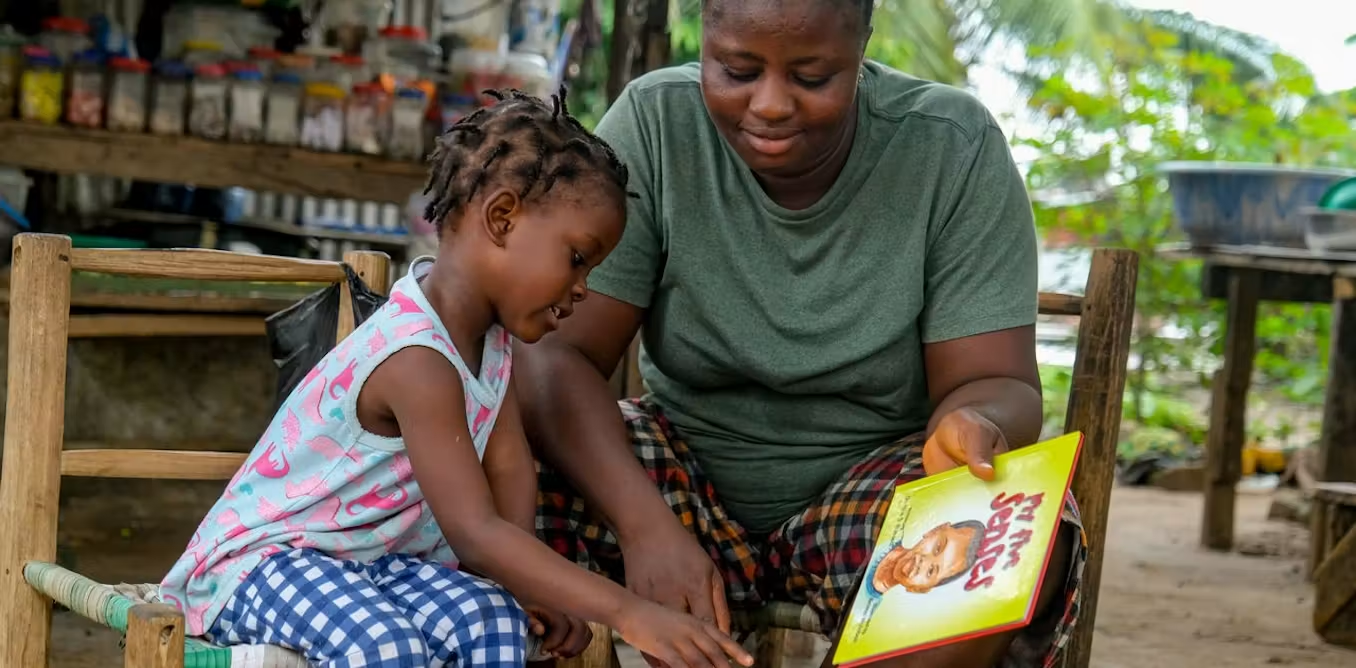
As researchers studying what helps young children learn better in Ghana, we wanted to understand something that is often overlooked: the home. Our study sheds new light on the importance of the resources available at home, the involvement of caregivers and the type of family structure.
We found that young children do better in school when their caregivers take an active role in their learning, even in families with fewer resources. The findings suggest that improving school performance in low-income settings may not always require expensive investments.
The early years are critical for children’s development. Skills acquired during kindergarten and the first years of primary school form the foundation for future learning. Children who struggle during these years often find it difficult to catch up later.