Copyright is built on the idea that human creativity deserves protection. Legally, this is known as “originality”. The principle is simple: people create valuable cultural works and the law protects that effort.
But artificial intelligence (AI) is challenging one of copyright law’s most basic assumptions. In doing so, it may force us to rethink what we mean by intellectual property.
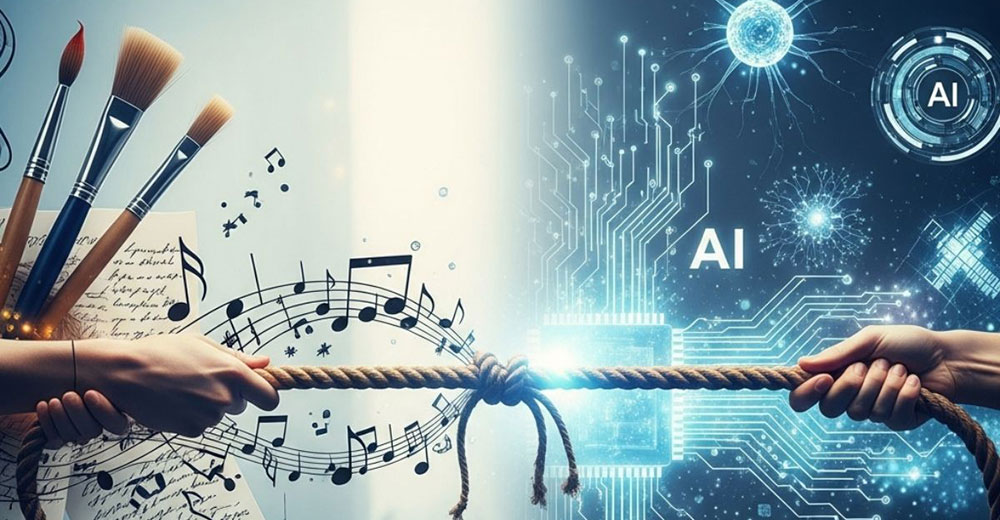
AI can now generate songs, images, novels and artworks in seconds. Many of these works are already being streamed, licensed and sold. This raises an increasingly important question: should works produced without direct human authorship receive copyright protection?
Most legal systems currently say no. They continue to place human creativity at the centre of copyright. But the history of copyright suggests things may not remain that way for long.
In the US case Thaler v Perlmutter (2023), a federal court confirmed that copyright requires a human creator. European law takes a similar approach. The Court of Justice of the European Union defines originality as the author’s “own intellectual creation”.