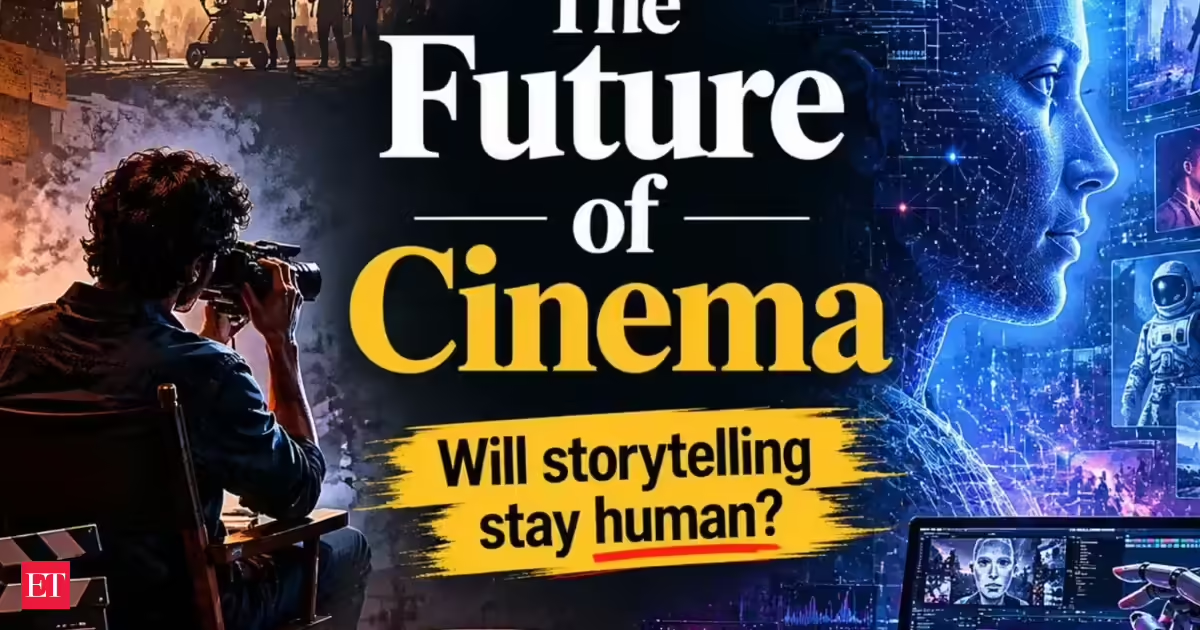
SynopsisIndian entertainment firms are heavily investing in AI for content creation, but a lack of clear copyright laws is creating significant ownership and intellectual property concerns. Lawyers warn that without specific legislation, AI-generated works face risks of duplication and misuse, leaving creators with limited legal recourse. The current copyright framework, tied to human creativity, may not protect AI-assisted content, posing challenges for licensing and monetization.ReutersIndian entertainment firms are heavily investing in AI for content creation, but a lack of clear copyright laws is creating significant ownership and intellectual property concerns (Representative Image)Mumbai: As India's entertainment companies ramp up investments in artificial intelligence to create content and music, the absence of clear copyright laws governing AI-assisted works is raising questions over ownership and protection of intellectual property, leading law firms told ET.The concern comes as AI adoption gathers pace across the industry. In the past six months, at least four media and entertainment companies-Eros Innovation, Bullet, a micro-drama start-up backed by a strategic investment from Zee Entertainment Enterprises, Collective Artists Network and JioHotstar-have announced plans to create content using AI."India currently does not have a specific legal framework governing AI-generated or AI-assisted works. As AI adoption grows in the entertainment industry, authorship, ownership and enforcement remains a grey area," said Pria Dave Thakkar, founder of Lawgical Media, a legal consultancy focused on the media and entertainment industry.An imminent threat entertainment companies face is stealing or duplication of content generated with AI tools, lawyers said."With no protective framework being laid down or absence of a legislation that mandates disclosure of AI involvement, any duplication or misuse of AI-generated works carries no legal consequence," said Priyanka Sinha, co-founder and partner at law firm A&P Partners. "The rights holder cannot establish infringement or have any remedy in a court of law apart from the copyright regime that exists as on date which is unclear on this issue," she observed. According to lawyers, Indian courts have historically tied copyright eligibility to a degree of human creative input. The Copyright Act, 1957 does not recognise AI as an author. Consequently, fully AI-generated works, in the absence of substantial human creative contribution, may not meet the threshold for independent copyright protection.For instance, an AI tool can easily replicate core elements of a film and create a template for new films. Elements such as storyline, events, dialogues and even characters can be easily duplicated with the help of AI tools. "Today, a key question is: How do you license and monetise a film which is made through AI?" Thakkar of Lawgical Media said. To deal with this, creators are increasing human involvement in content creation through AI by devising sharp and specific prompts to AI tools, she explained.Lawyers, however, pointed out that an AI-generated output is a subject of open academic and legislative discussion."When a producer invests in AI-led content, the challenge is that the resultant output may not offer the same 'exclusivity' as a traditionally authored work. This potentially creates complexities in enforcing rights against third-party duplication," said Anushree Rauta, equity partner and head of media & entertainment practice at ANM Global."Imagine a producer investing a huge amount in an AI-generated show only to find a rival platform releasing strikingly similar lead characters built from comparable prompts. " The creator will not have any "clear legal recourse available since the original character itself may never have qualified for protection," she explained.Read More News on...moreless
Lights, camera, AI: For entertainment companies, a prompt may come with copyright headache
Indian entertainment firms are heavily investing in AI for content creation, but a lack of clear copyright laws is creating significant ownership and intellectual property concerns. Lawyers warn that without specific legislation, AI-generated works face risks of duplication and misuse, leaving creators with limited legal recourse. The current copyright framework, tied to human creativity, may not protect AI-assisted content, posing challenges for licensing and monetization.
TL;DRAI
Aziende indiane investono in AI per i contenuti, ma manca un framework legale per authorship e ownership delle opere AI-generate. Senza protezione legale, il rischio di duplicazione impedisce licensing e compromette il ROI degli investimenti in content AI.
567 words~3 min read