AI generated music: Who owns it?
| Photo Credit:
Serhii Brovko
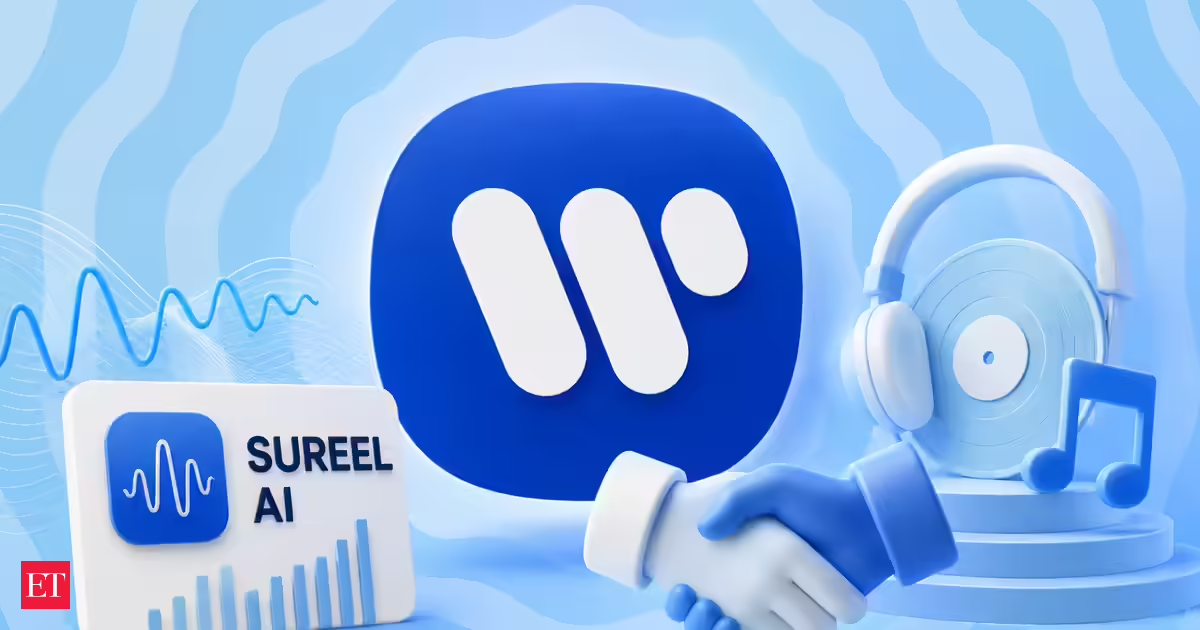
Copyright law was traditionally envisioned to achieve the goal of ‘promoting learning’ and it had adopted the mechanism of affording monopoly to the creator to achieve this end. The creator did not have the sufficient financial means to undertake the task of printing, and it necessitated a financier. This was the structure of the eighteenth-century print world. The monopoly that was afforded to the creator benefitted the large-scale print houses, who became the owner of the work leaving the creator with very limited rights.The norms of print business have changed over the course of time. Internet and other industries for social expression have democratised the creation and dissemination of knowledge. The law, now, supports its owners by increasing the tenure of Copyright protection and digital rights to keep them behind a pay wall. This has made the law counterproductive. The law that was meant to promote creativity has become the very law that prohibits creativity. If the user cannot utilise the existing creation, newer works cannot emerge. This had raised the need to challenge the hegemony of the copyright owner.Blurred linesInternet had blurred the line between the creator and the consumer. The consumer who was a passive spectator of art has become an active creator.The copyright system now experiences further strain because of the inroads made by AI. A consumer who has never had any formal training in painting, can generate paintings in the style of Rembrandt at a click of a button. Similarly, a music listener without any training can generate songs by providing lyrics and few prompts to the AI platforms. But who owns the song is a question that remains unanswered.Authorship of musicDoes providing written prompts to the AI platform enable someone to be the author of the song? The Indian copyright law, like its counterparts, expects the author to be a human to qualify for authorship of the work. It is based on the logic that copyright law was created to promote and incentivise human creativity.The songs generated by these platforms have the capability to raise monetary value and can even replace the human creation in the future for a cheaper cost. Delhi High Court at present, is grappled with the important question whether compositions generated by SUNO AI merit copyright protection.At present the Indian laws do not guarantee any ownership towards AI generated music, which is the main reason behind this suit. However, the platform through its agreement with its paid user claims that it owns the music (composition) that is generated through it.A user with a premium subscription of the platform is bestowed with ownership over the work as per its policy. What remains unanswered is, does the platform own the right in a song that is generated through it? If the answer to that is no, the platform cannot pass on a title to its user that it never had in the first place.The implicationsThe answer has long-term implications; the platform has gained acceptance from the users even though it does not meet the existing norms of authorship under copyright law. The platform has managed to alter the music business across the world and India. The platform at present has over one million paid users and more than a hundred million people have used it to create songs, and $2.45 billion now.The numbers have been impressive and signal the relevance of this platform. It had managed to enter a contract with Warner Music Group to train on its content, such licenses would signal legitimacy of the training. However, the lack of clarity around its authorship raises question, would it deter users from dabbling with it in the future? Or would it be an inconsequential question as users continue to use the platform even if they do not get rights that are granted to the owners?The writer is President & Head - Campus Operations, Manipal Academy of BFSIPublished on June 16, 2026