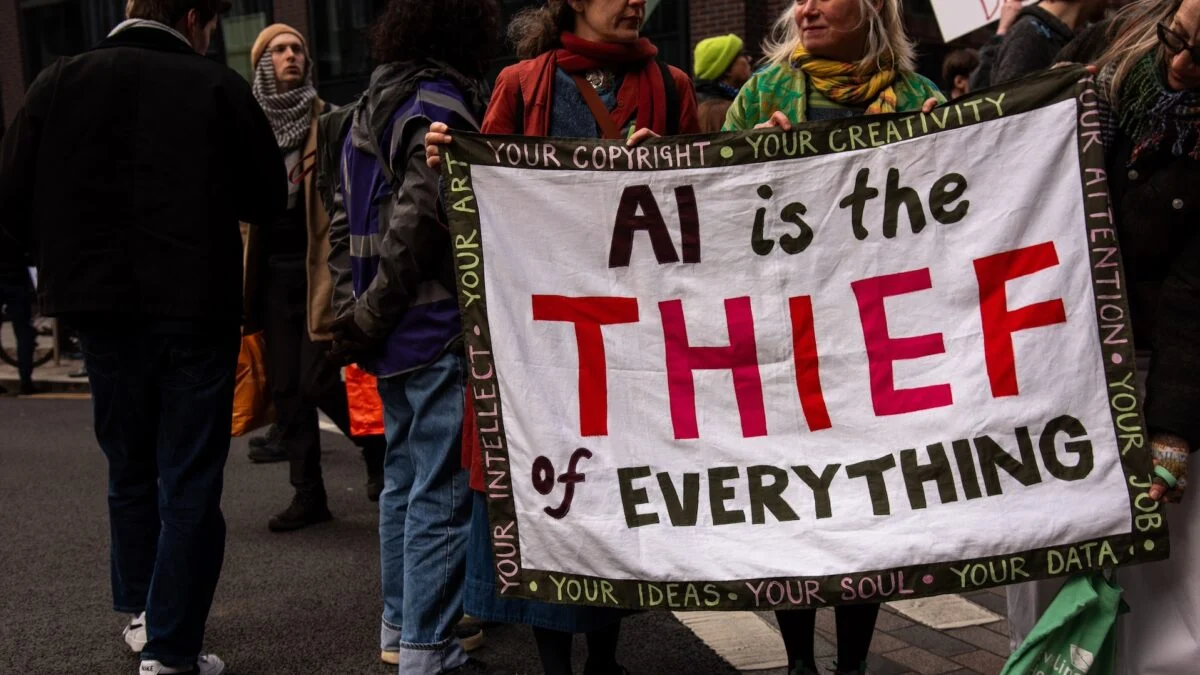
Artificial intelligence doesn’t create in a vacuum. Rather, it depends on human work to analyze data, discovering patterns and finding anomalies. That work is essential for AI’s machine learning. Therefore, categorizing such work as “fair use” misses the point.As artificial intelligence rapidly advances, a fundamental question is emerging: What happens to creators’ rights — journalists, artists, statisticians — when their work becomes essential fuel for AI systems?The original purpose of copyright is, simply, a matter of control. Copyright law ensures creators, not downstream users, capture the value of their work — an idea that becomes even more critical when that work is used at scale. These creators — authors, artists, and innovators — have the right to determine how their work is used, distributed, and monetized. That principle does not disappear simply because content is ingested into an AI model. These systems rely on vast amounts of existing writing, art, and code created by humans. If that material is necessary for the system to function, then the rights of those creators should remain firmly in place.
As AI accelerates, the demand for legal clarity is outpacing the development of case law, creating a kind of digital Wild West where the rules haven’t caught up to reality. Any claim that AI training qualifies as “fair use” misunderstands what is actually happening. Training a model is an active process of using copyrighted material to build a new product. Without that material, the system would not exist in its current form.