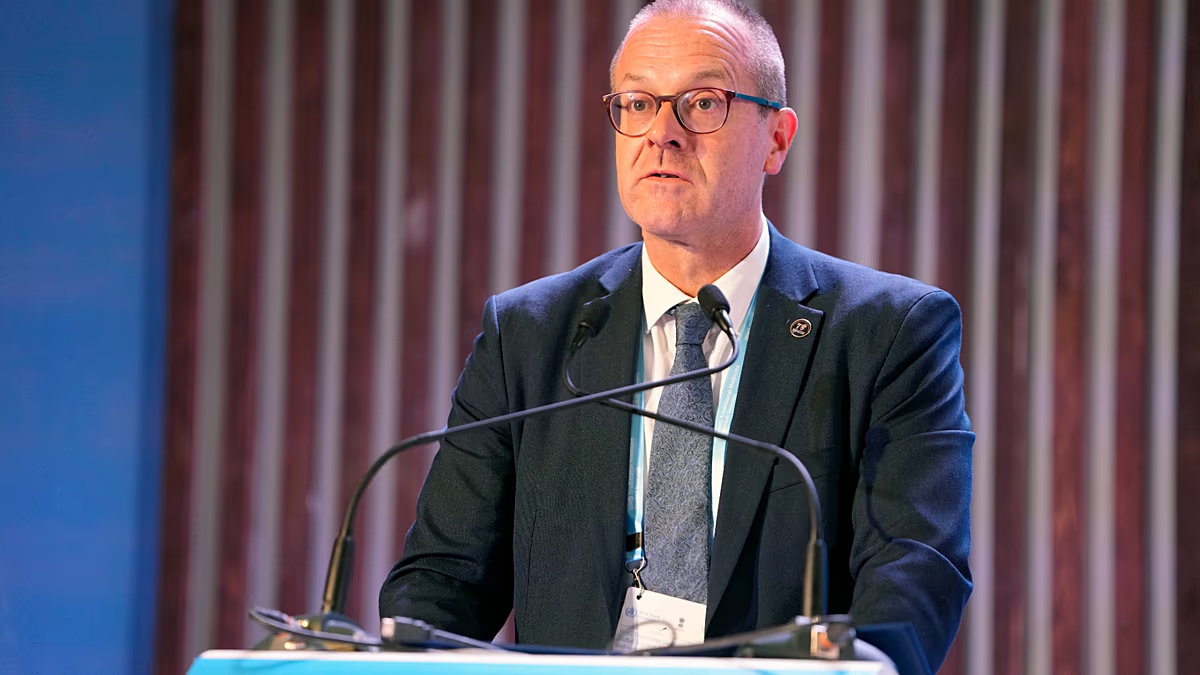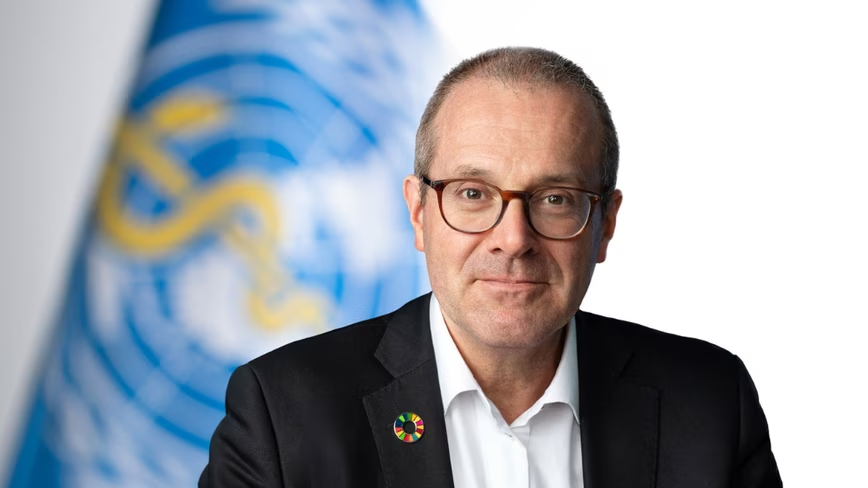
Hans Kluge opened his speech in Lisbon with a number, which is not how the World Health Organization usually does this.
“Let me start with a number: 8%,” the WHO Regional Director for Europe told delegates on 15 July. “That’s the share of countries in the WHO European Region that have a health-specific AI strategy. Just 8%.”
Against that, nearly two-thirds of the region’s countries are already deploying AI in diagnostics, and half have introduced AI-powered patient chatbots. One in 12 has a strategy to govern any of it.
“That gap, between deployment and governance, is the defining challenge of AI in health right now,” Kluge said. It is a framing that will sound familiar to anyone following Europe’s wider AI adoption problem, though here the currency is not productivity.
The 💜 of EU techThe latest rumblings from the EU tech scene, a story from our wise ol' founder Boris, and some questionable AI art. It's free, every week, in your inbox. Sign up now!The figures come from what WHO/Europe describes as the most comprehensive assessment of AI readiness ever conducted across its 53 member states, following its first snapshot of AI in EU health care in April. The picture underneath the headline number is worse than the headline number.