A global high-level conference on Artificial Intelligence (AI) in health, co-hosted by WHO/Europe and the Government of Portugal, opens today bringing together Ministers and senior government representatives from 37 countries across all six WHO regions, alongside leaders from the European Commission, World Bank, Wellcome Trust, Aga Khan University and the Bill and Melinda Gates Foundation.
The meeting comes as WHO/Europe's own assessment - the most comprehensive ever conducted on AI readiness across the Region - reveals a striking gap between ambition and governance: nearly two-thirds of countries are already deploying AI in diagnostics, yet only 8% have a health-specific AI strategy, and only 8% have liability standards defining who is responsible when an AI system fails.
The findings echo last week’s preliminary report from the UN Secretary-General's Independent International Scientific Panel on AI, which likewise called for stronger, coordinated governance as AI adoption accelerates ahead of regulatory frameworks.
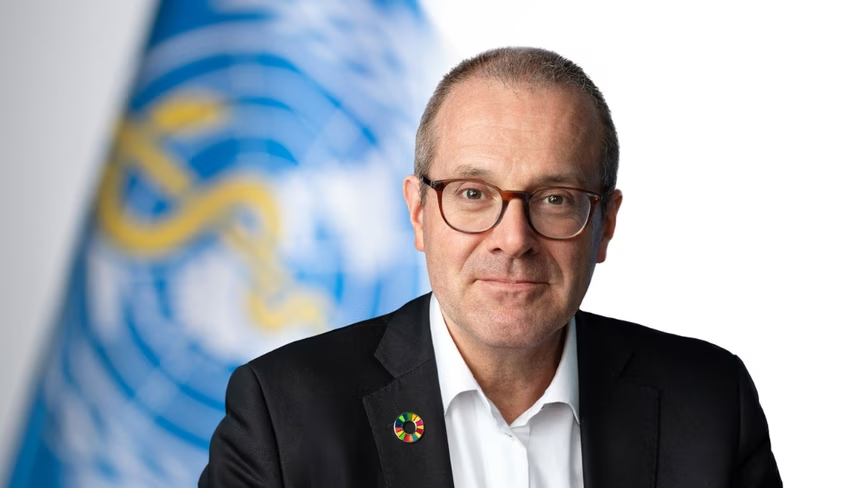
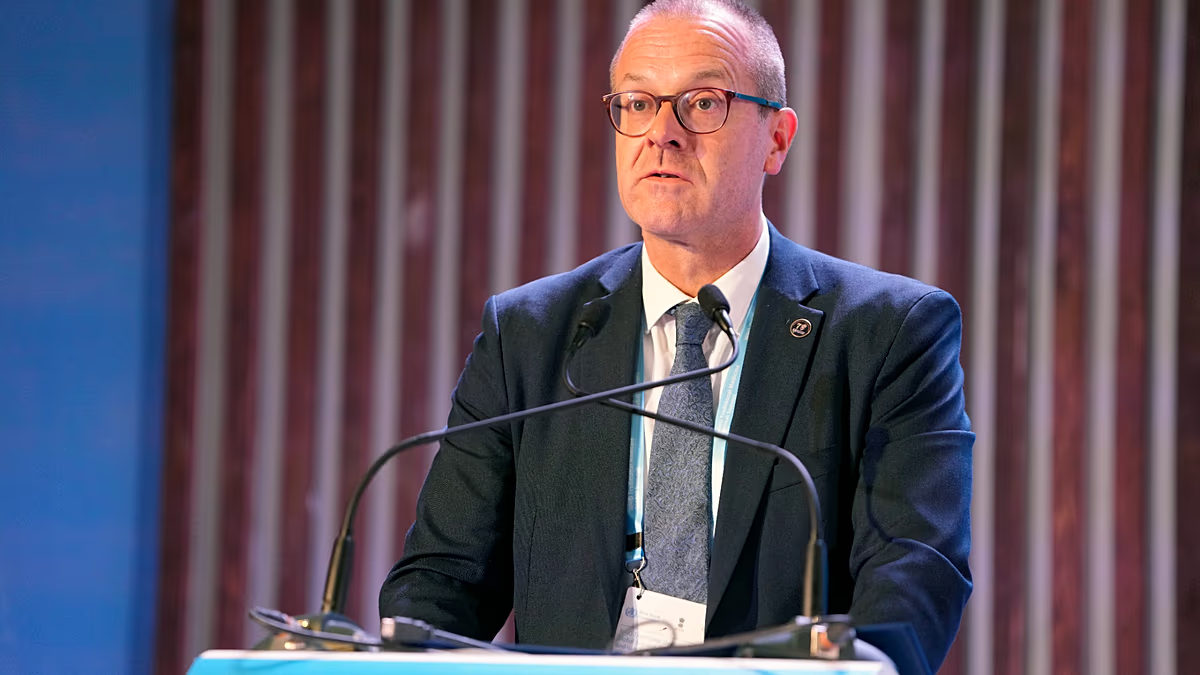
“What brings 37 countries to Lisbon is not a shortage of ambition – it’s a shortage of shared direction,” said Dr Hans Henri P. Kluge, WHO Regional Director for Europe. “Every country in the world is wrestling with the same questions right now: how do we govern AI responsibly, how do we build the health workforce to use it safely, and how do we make sure it serves patients rather than just those who can afford the technology. This gathering is where we find the common ground and where WHO listens to what Member States actually need, agrees where we can add the most value, and commits to stepping up on the things that no single country can solve alone. We leave here with a working agenda, not a communique.”