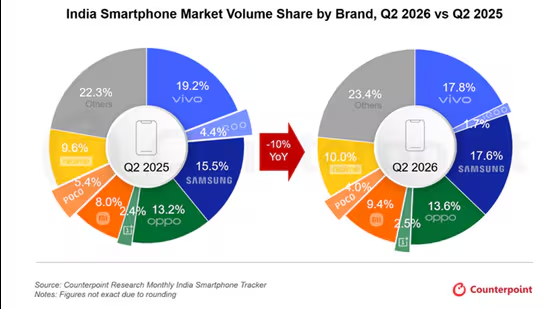
The story so far: The global smartphone industry is experiencing an unprecedented structural downturn. According to preliminary data from Counterpoint Research’s Market Monitor, global smartphone shipments have tumbled by 11% year-over-year (YoY) in the second quarter of 2026. This contraction has dragged the market down to its lowest second-quarter volumes since 2013, effectively wiping out over a decade of transactional growth. What initially surfaced as a minor supply-chain bottleneck in late 2024 has transformed into a full-scale demand crisis, driven by severe, systemic component deficit that is changing how mobile hardware is manufactured, priced, and consumed globally. The decline in shipment is causing acute localised shockwaves across major emerging markets, including India.How a silicon realignment triggered the supply shock?The root cause of this decline lies in a profound geopolitical and corporate shift within the semiconductor sector. Silicon and storage component manufacturers have systematically shifted priority toward high-margin artificial intelligence (AI) data centre infrastructure. To meet the massive computation demands of cloud-based AI systems, suppliers have restricted the capacity allocated to consumer electronics.Consequently, prices for essential storage components, specifically Dynamic Random-Access Memory (DRAM) and NAND Flash, have ballooned. As storage and memory constitute a key part of the modern mobile device’s Bill of Materials (BOM), the sustained price escalations have placed extreme financial pressure on Original Equipment Manufacturers (OEMs). The steady rise in component pricing, which began escalating rapidly in August 2025, is projected move upward through the end of 2026, giving no immediate relief for smartphone companies.How is this changing the industry at its core?Counterpoint notes that the global memory crisis has overtaken every other macroeconomic variable to become the single largest drag on the smartphone market. The baseline economics of the industry have shifted: budget-friendly entry and mid-tier devices, which constitute the vast majority of global shipment volumes, have become structurally impractical to produce at historical price brackets.Faced with an escalating BOM, global OEMs have adopted varying survival strategies, fracturing the competitive landscape into distinct approaches. Brands are repeatedly hiking retail prices, passing the component premium directly to the end user while accepting the resulting margin compression and sales velocity slowdown. Other manufacturers are artificially stretching the commercial shelf life of older-generation devices, bypassing new product development cycles entirely. Companies are relying heavily on marketing incentives and financing promotions to prevent cost-sensitive consumers from dropping out of the ecosystem. A significant segment of manufacturers is simply pulling back on product rollouts, delaying launches, and scaling down manufacturing quotas.How is this affecting India’s smartphone market?While the crisis is global, its impact on the Indian smartphone market is uniquely severe. In India, retail prices rose by up to ₹2,000 following a major structural adjustment effective November 4, 2025. As memory component shortages persist, smartphone prices have climbed up to ₹7,000 till now, disrupting upcoming product portfolios. This pricing surge is further aggravated by localised macroeconomic vulnerabilities, specifically the steady depreciation of the Indian Rupee (INR) against the U.S. Dollar (USD), which has made the import of semi-knocked-down (SKD) components significantly more expensive.Major Android manufacturers dominating the Indian landscape; including Samsung, Vivo, Oppo, Motorola, Xiaomi, OnePlus, Realme and Nothing have enacted aggressive portfolio-wide price revisions ranging from 14% to 22%. This coordinated upward shift has pushed the Average Selling Price (ASP) of mobile handsets in India up by an unprecedented 40%, completely transforming the affordability matrix for the mainstream domestic buyer.The sub-₹10,000 segment has taken the hardest hit. With thin profit margins completely erased by rising NAND and DRAM costs, brands are finding it nearly impossible to sustain products in this bracket. The mid-range segment is experiencing rapid, compounding inflation, forcing aspiring buyers to either delay purchases or compromise significantly on hardware specifications. The premium tier, above ₹30,000, are 25% to 36% higher than their immediate previous generations, turning premium mobility into an exclusive luxury.How are consumers responding to this shift in the industry dynamics?Faced with soaring retail prices and a flat 18% Goods and Services Tax (GST) on mobile handsets, consumer behaviour in India is undergoing a major shift. Millions of buyers are exiting the traditional retail channel entirely, turning instead to the unorganised grey market and the rapidly expanding refurbished smartphone market to bypass high costs and heavy tax structures.Smartphone prices are expected rise in the coming quarters and the next financial year, dragging the market even further down. In India, even the recently concluded online sale events like ‘Big Billion Day’ and ‘Prime Day’ have not been able to undo the negative sentiment present in mobile market. “Two in three models tracked were priced above their original launch price even after discounts, as memory and component shortages reshaped festive pricing across the Indian smartphone market,” noted Techarc.
Is the global smartphone industry going through a structural downturn? | Explained
The global smartphone industry is experiencing an unprecedented structural downturn. According to preliminary data from Counterpoint , global smartphone shipments have tumbled by 11% year-over-year (YoY) in the second quarter of 2026
778 words~4 min read