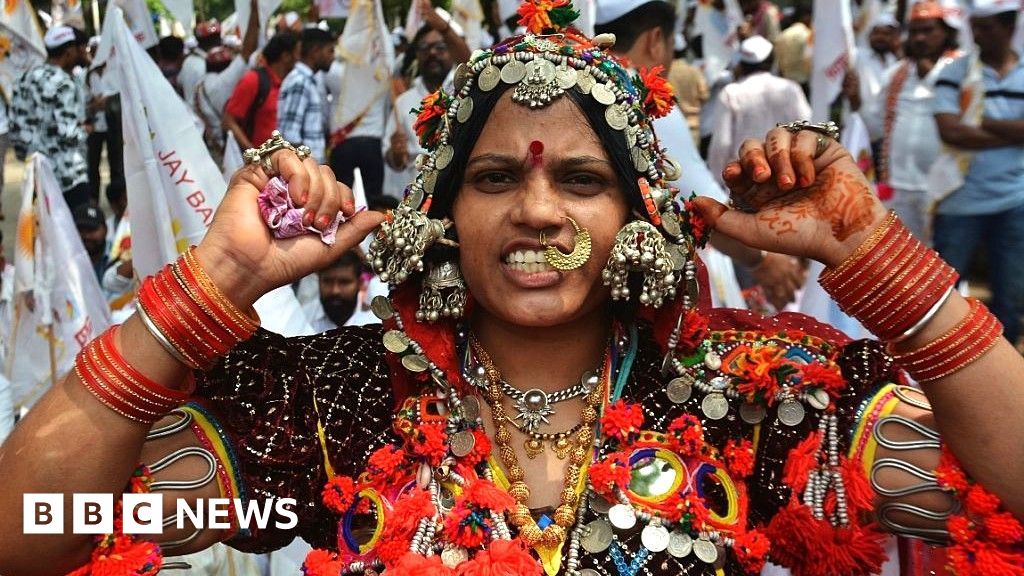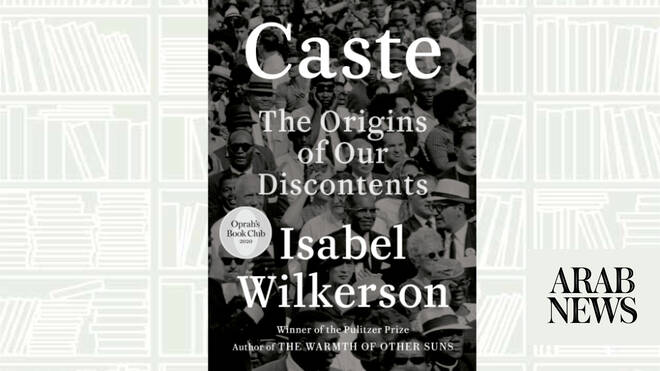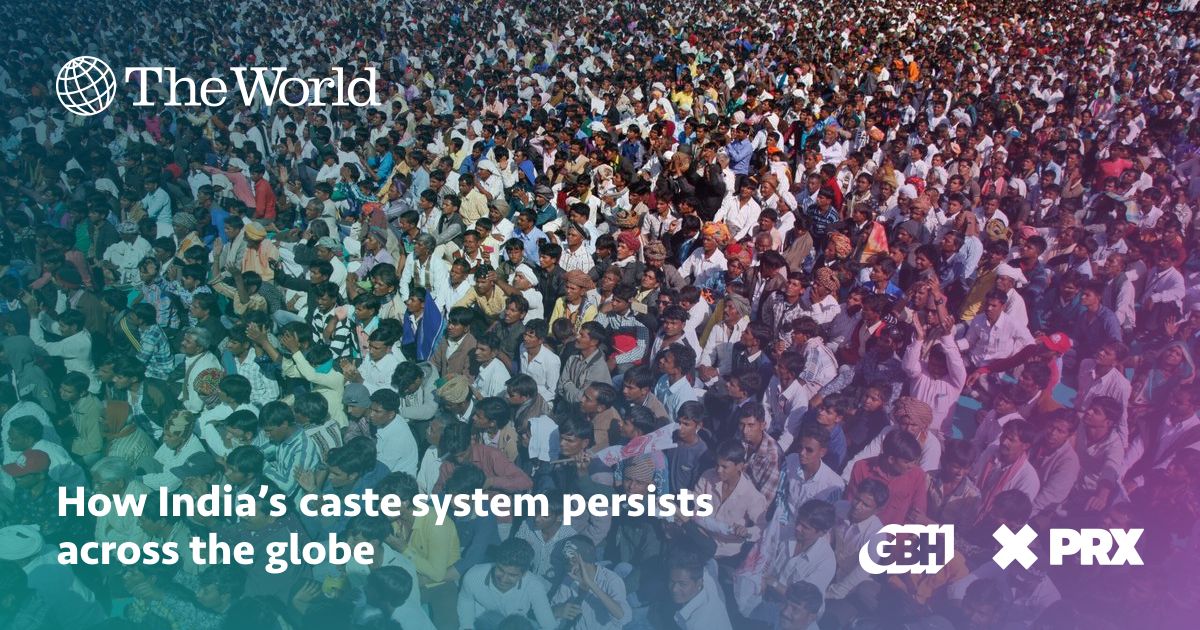
Public radio’s longest-running daily global news program.AboutContactDonateMeet the TeamPrivacyTerms of use©2026 The World from PRXPRX is a 501(c)(3) organization recognized by the IRS: #263347402.How India’s caste system persists across the globeWhen the earliest form of caste was created in ancient India, it had roots in religion. In the 21st century, it lives on as a secular institution that cuts across race, gender, sexuality and class. Suraj Yengde is one of the world’s leading experts in the study of caste. He joins Host Marco Werman to discuss why caste is so tricky, and how it reproduces itself in Indian diaspora communities worldwide. Conflict & JusticeJuly 15, 2026Updated: July 15, 202612:58Members of Gujarat’s Thakor community gather during an anti-addiction rally in Ahmadabad, India, Jan. 26, 2016. Thousands of members of the Thankor community who have been classified among the Other Backward Class (OBC) by the government of India participated in the rally aimed at creating awareness against alcohol and tobacco addiction as well as highlighting the need for education.The 2023 movie “Origin” is a biographical drama that focuses on writer Isabel Wilkerson as she sets out to research the book that would eventually become “Caste: The Origins of Our Discontents.” The main character in Ava DuVernay’s film is propelled by the killing of Trayvon Martin as she tries to understand why some humans subjugate others. She spends time in the US South. She goes to Germany to understand Nazi policy during World War II.And then, she’s goes to India where she asks, “Why is the statue caged?” while looking at a statue of Dr. B.R. Ambedkar, the leader of the so-called “untouchable” class, the Dalits, since it’s enclosed behind fencing.“This is the time when he had just completed the task of drafting India’s constitution. You will find these statues all across the country,” explained the man she was with, Suraj Yengde. He was acting, but in real life, he is also one of the world’s leading authorities on caste. He discussed caste as a global phenomenon with The World’s Host Marco Werman.Children from impoverished families play in their village on the outskirts of Samastipur, in Bihar, on May 12, 2024. Even as India’s millionaires multiply, nearly 90% of its 1.4 billion population earns less than the average annual income of around $2,770, according to a World Inequality Lab study. The richest 1% own more than 40% of the country’s wealth, while the bottom 50% of earners own only 3%.Manish Swarup/APOver time, what it essentially did was codify it as a regulated arc of organizing a society. They were creating a swath of humanity, very, very brutally, kind of organized in a way that legitimizes the dominance of a group by creating a group of untouchables. So, untouchables really became identified with a caste, and the caste then continued as a stigma over several generations, and today, we have that notion of untouchables, not just in India, [but in] South Asia. It has to be looked through the phases of colonization in the past 200 to 300 years. Slavery has produced it here in the Western Hemisphere, and we see that happening also in Latin America.India essentially equates [everything] and makes it synonymous with caste. Everything in the political structure is around caste. Prime Minister [Narendra] Modi, for example, announced himself as someone who belongs to a particular caste that doesn’t belong to [the] dominant community. So, every affair, right from education, your religious institution, the jobs you get, is surrounded through the penetrating ideas, as well as the thoughts of caste at work today. So, as a Dalit, for example, access to basic education, access to jobs, as well as access to respectable political positions are challenged because the gaze of the dominant community looks at untouchables still as these filthy, undeserving people who are among us.When I go to India, the viscerality of that experience really comes [out], even though I want to push back and challenge it. But it’s no guarantee that the other person is looking at me the same way. He may not look at me as someone who is an Ivy League professor, an author, an actor, whatnot. He or she is still casting down that gaze of patronage. It’s painful because they are not necessarily looking at the humanity here, but they are more looking at the insecurity that I bring to the position that they hold, which is to say that the untouchables are undeserving. These are people who are from the quota communities. They came here because there was a reservation. They got fewer marks. This whole idea of meritocracy, you know, looks down. When I’m not in India, for example, it’s a different ballgame because then I have more freedom to articulate my views, and there’s nobody saying, “Oh, but you belong to this caste.” That’s not the kind of conversation I’m having.Indians watch a procession to mark the birth anniversary of Bhim Rao Ambedkar in Mumbai, India, April 14, 2015. Ambedkar, an untouchable, or Dalit, and a prominent Indian freedom fighter, was the chief architect of the Indian Constitution, which outlawed discrimination based on caste. Rafiq Maqbool/APB.R. Ambedkar was someone who drafted India’s constitution. It happens to be the world’s largest, longest written constitution, and it draws inspiration from the liberalism that exists across the world, and America was one of them. He was the first untouchable who was born in 1891 to go to school, to matriculate from the Bombay province, and then he came to Columbia. He’s a proud alumni of Columbia, gets his doctorate there, and then goes to London School of Economics, gets a second doctorate. So, it’s almost like an anomaly who comes out of the trenches of the caste system and buried with the heavy weight of untouchability, breaks through it and really becomes this standing icon.The Black movement, for example, by the 19th century itself, was global in nature. As in, the abolitionists here in this part of the world where I’m right now, in the New England area, were really advocating through these channels of common wealth. And so, as a result, the liberation of Black people was very well reported and documented. And Ambedkar, being a product of what was happening during the Harlem Renaissance, we see that there are so many parallels he sees, and he makes a remarkable argument to say that untouchables here were the surplus labor. Whereas here in the Black conditions a of post-slave society, they were this kind of mass exodus of people from South to North, and that’s what they created this kind of new civilization. His mentor, John Dewey, for example, was somebody who wrote about this in Chicago and other regions, creating a new post-migrant society. So, the Black struggle in this sense was really acting as a solidarity for Ambedkar. And he was a celebrity within the Black academic culture. He was invited to Fisk University. He was reported about in Black newspapers, which I also write about as to how they capture this imagination. But somehow, that work is eclipsed by this dominance of looking through this religious nationalism that kind of takes place through Christianity here in America, through the Quaker movement, and the Hindu movement led by [Mahatma] Gandhi. So, this kind of Gandhi-led affliction really promotes this kind of nonviolent move undermining Ambedkar, who was essentially leading a more prosperous and subaltern groundswell of the people who were not having voices.Moko Jumbies wave Indian flags during Indian Prime Minister Narendra Modi’s arrival at Piarco International Airport in Piarco, Trinidad and Tobago, July 3, 2025.Jermaine Cruickshank/API mean, you look at the Indian labor, for example, in America, right? Who are these people? What’s their composition? Because when you go to India, in any college or any education institution, caste follows you. And if you are somebody who doesn’t have to carry the caste certificate, that means you are from the dominant caste community. Nevertheless, the demography is very diverse. So, people who graduate from all engineering colleges or even medical colleges or any institutions, when they essentially come to America as an H-1B laborer or a laborer within various visa categories, they come here and live within that echo chamber because [the] American system recognizes this racial disparity but doesn’t adequately pay attention to these intra-community caste-like systems. And that’s why it’s not just India or South Asia. It also occurs and happens in [the] Caribbean. That’s where one part of my book takes us.More than 38% of Indo-Trinidadians are from the Dalit background. They were the descendants of untouchables. And it makes sense, right? Why would you leave a place, the alluvial soil and the riches of your own country, and go far away to a distant island which you don’t even know? It is because of these tremors of caste system that untouchables voluntarily choose to cross across this multiple oceans to reach Trinidad and form a big corpus of Indo-Trinidadian population. But the Hinduism that they practiced is not this necessarily Brahmin caste Hinduism. For them, Hinduism was very much a memory, a distant realization of their ancestry. So, they would recite various Ram-related kathas, the “Ramayanas,” and so forth, which was not Brahminic in nature because it was subaltern Hinduism, if you know what I mean. And then, there were lots of Hindu dominant caste activities that proliferated them into becoming more Hindu by presenting Christianity as a counter. And thus, kind of within these two kinds of challenges and schisms, many untouchables assimilated into this kind of Hindu order, and many of them eventually changed their names to higher caste names. So today, if somebody in Trinidad or Guyana or Suriname identifies as an Indian of a higher caste, most likely they may not be that.Indian street kids react to the camera as they sit on a wall in a slum in New Delhi, India, Dec. 8, 2018. India has been ranked at the 103rd position among 119 countries on the Global Hunger Index, according to a news report.Altaf Qadri/APParts of this interview have been lightly edited for length and clarity.
How India’s caste system persists across the globe - The World from PRX
When the earliest form of caste was created in ancient India, it had roots in religion. In the 21st century, it lives on as a secular institution that cuts across race, gender, sexuality and class. Suraj Yengde is one of the world’s leading experts in the study of caste. He joins Host Marco Werman to discuss why caste is so tricky, and how it reproduces itself in Indian diaspora communities worldwide.
1,686 words~8 min read